
True luxury isn’t a finish applied at the end; it’s a standard of architectural integrity that begins long before the first brick is laid. When you’re investing in a high-end residence, the fear of hidden defects or corners cut on invisible specifications can be a heavy burden to carry. Your peace of mind depends on a shared vision of excellence. To secure your future, you need a robust set of questions to ask a luxury property developer that move beyond surface-level aesthetics and delve into the heart of the construction process.
We’ve designed this comprehensive checklist to help you vet builders with the precision of a master craftsman, ensuring your chosen partner shares your uncompromising standards. You’ll gain a clear framework for interviewing developers, allowing you to distinguish between marketing buzzwords and genuine excellence. From scrutinising financial stability to clarifying what bespoke truly includes, this guide ensures your home remains a source of pride and a sound financial asset. We’ll explore fifteen essential areas of enquiry, providing the confidence you need to make an informed decision for your next significant life investment.
Key Takeaways
- Learn to distinguish between surface-level branding and true high-specification craftsmanship by interrogating technical details like acoustic insulation and thermal efficiency.
- Use our structured framework of questions to ask a luxury property developer to ensure your investment is protected by a builder who shares your vision for excellence.
- Understand the precise timelines and procedures for bespoke customisation, from selecting artisan kitchen cabinetry to finalising premium flooring finishes.
- Gain long-term peace of mind by verifying structural warranty providers and establishing a clear, managed process for post-completion snagging and defects.
- Identify the value of a dedicated point of contact who oversees the entire journey, from the initial architectural concept through to comprehensive aftercare.
Why Vetting Your Luxury Property Developer is a Non-Negotiable Step
The distinction between a house and a legacy. For the discerning buyer, a luxury home represents more than just a residence; it’s a significant life investment that demands a level of scrutiny far exceeding a standard property purchase. Whilst many developers use the word ‘luxury’ as a marketing veneer, the reality of a high-specification build lies deep beneath the surface. It exists in the thickness of the floor joists, the quality of the acoustic insulation, and the precision of the architectural planning. Relying on a standard snagging list after completion is a risk few can afford. Instead, you must act as a guardian of your own future resale value. This begins with identifying the right questions to ask a luxury property developer before a single stone is laid.
A premier builder doesn’t just offer choices. They offer a partnership. The ‘Bespoke Standard’ should include a meticulous level of customisation that reflects your personal narrative. It’s about architectural excellence that stands the test of time, ensuring the property holds its value as a permanent fixture of quality. Pimlico Homes, with a 25-year heritage in high-end residential projects, understands that the developer is the visionary creator and the protector of your investment. We believe true prestige is found in the details that others might overlook.
The Risks of Surface-Level Luxury
Aesthetics can be deceptive. A developer might prioritise Italian marble worktops whilst compromising on the structural longevity of the building itself. Rectifying poor architectural planning in a new build is an expensive and stressful endeavour. These issues often could have been avoided with early transparency. When a developer is open about their ‘invisible’ specifications, it predicts a handover of uncompromising quality. Transparency is the hallmark of a master craftsman who is proud of their output and focused on the long-term satisfaction of the client.
Establishing a Professional Dialogue
Confidence is born from clarity. To elicit honest, technical responses, your enquiries should be precise and methodical. One of the most effective strategies is to visit previous developments. This allows you to verify the long-term quality of their craftsmanship and see how their executive courtyard homes or barn conversions have aged over time. It also sets the tone for communication. You deserve a developer who manages the entire process with the same care they apply to the construction itself. They should provide a steady and consistent flow of information whilst the build is in progress. This professional dialogue is essential when considering the specific questions to ask a luxury property developer regarding your future home. It ensures your chosen builder shares your vision for excellence and security.
Evaluating Technical Excellence and Build Specification
The technical soul of a home. Beyond the aesthetic allure of a grand entrance lies the complex engineering that defines true comfort. When compiling your questions to ask a luxury property developer, the focus must shift from the visible to the structural. A home that feels solid, silent, and efficient is the result of deliberate choices made in the early design stages. It’s about the difference between meeting a standard and setting a new one.
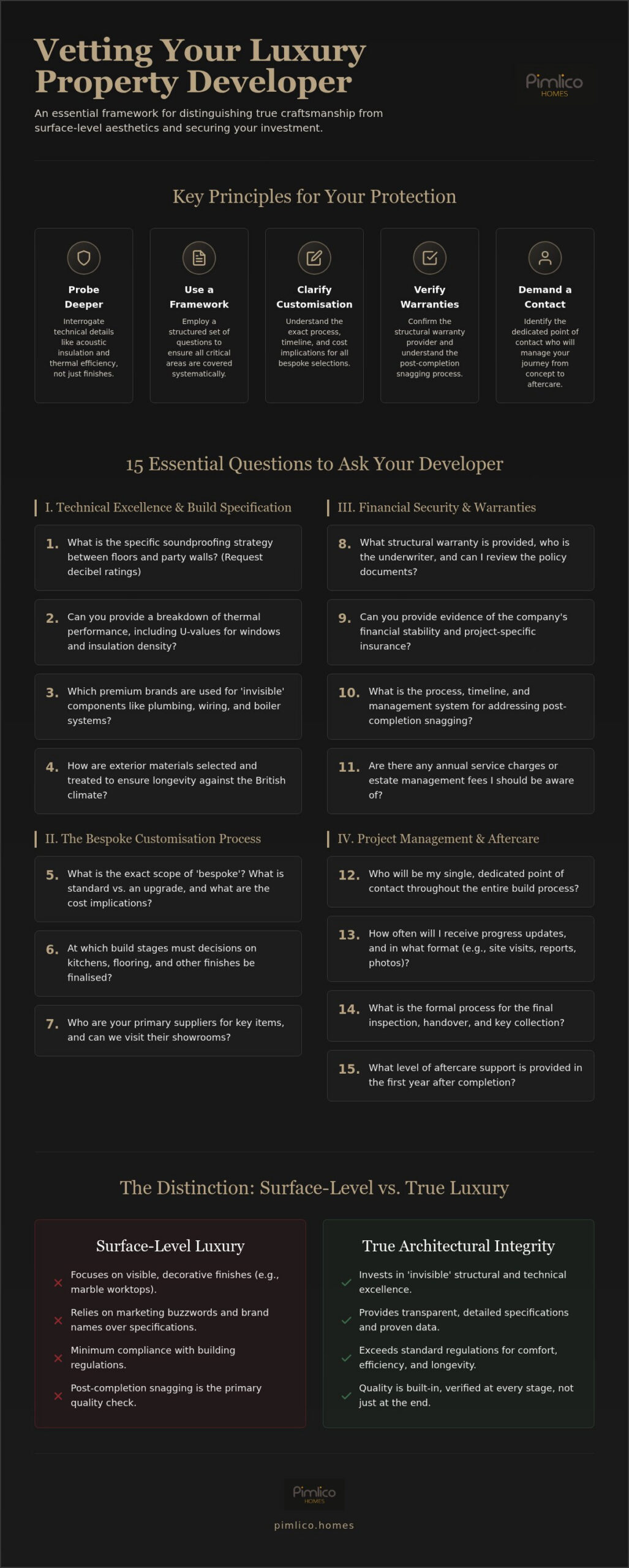
- Question 1: What is the specific soundproofing and acoustic insulation strategy between floors? Standard building regulations are a minimum, not a target. You should expect executive-grade acoustic insulation that ensures total privacy and tranquillity. Ask for decibel ratings and the specific layering of materials used to dampen vibration.
- Question 2: Can you provide a detailed breakdown of the thermal performance and energy efficiency ratings? High-specification homes should comfortably exceed current energy requirements. Enquire about specific U-values for windows and the density of wall insulation. This protects both the environment and your long-term running costs.
- Question 3: Which premium brands are used for the ‘invisible’ components like plumbing and electrical systems? Luxury is defined by what you cannot see. Premium systems from reputable manufacturers ensure reliability for decades. A developer who invests in high-end boilers and copper piping shows a commitment to permanence.
- Question 4: How do you ensure the longevity of the exterior materials against local climate factors? The British climate demands resilience. Whether it’s hand-cut stone or treated timber, the materials must be chosen for their ability to age gracefully against local weather patterns.
The Anatomy of a High-Specification Home
Precision in every joint. The difference between standard and executive-grade construction is often found in the joinery. Bespoke timber work should feel substantial and look seamless. High specification is the integration of premium materials with expert craftsmanship. This standard ensures that every element, from the window frames to the skirting boards, contributes to a sense of enduring quality and artistry.
Future-Proofing and Smart Technology
Infrastructure for the modern age. A visionary developer anticipates the needs of tomorrow. This includes integrated home automation, high-speed data cabling, and the capacity for EV charging. Renewable energy integration, such as solar panels or air-source heat pumps, is no longer a luxury; it’s a necessity for high specification new build homes. These technical questions to ask a luxury property developer will reveal if they’re building for the next decade or the next century. If you’re looking for a partner who prioritises these technical standards, exploring the bespoke luxury homes from Pimlico Homes provides a benchmark for excellence.
Navigating the Bespoke Customisation Process
The home as a reflection of the individual. True luxury is not found in a catalogue. It’s found in the ability to shape your environment to suit your unique lifestyle. This collaborative journey requires clear boundaries and a shared understanding of the construction timeline. To ensure your vision is realised without compromise, there are several specific questions to ask a luxury property developer regarding the customisation journey and the window of opportunity for change.
- Question 5: At what stage of the build does the opportunity for bespoke input end? Structural alterations, such as moving internal walls or adjusting ceiling heights, must be finalised during the early groundworks. Knowing this deadline prevents the disappointment of missing the chance for significant architectural changes.
- Question 6: What is the process for selecting high-end finishes, from flooring to bespoke kitchen cabinetry? You should expect a curated, guided experience. This involves selecting materials that resonate with your aesthetic, from hand-finished timber to book-matched marble.
- Question 7: How are variations in the original design handled and documented? Transparency is paramount. Every deviation from the initial plan should be documented formally, ensuring that both parties are aligned on the aesthetic and financial implications.
- Question 8: Can I bring in my own interior designer or specialist architect? A confident developer welcomes collaboration. They’ll work alongside your chosen specialists to integrate their unique vision into the master build plan, ensuring a seamless execution of the final design.
Defining the Limits of Customisation
Understanding the difference between choosing a finish and altering an architectural plan is vital. Whilst ‘choices’ often refer to surface-level aesthetics like paint or tiles, true ‘bespoke changes’ involve the very fabric of the building. Early involvement in an executive courtyard development often allows for deeper structural personalisation. Managing the timeline is a delicate balance. A master craftsman will guide you through this process, ensuring that bespoke elements are introduced without delaying the overall completion date or compromising the building’s integrity.
Material Sourcing and Artistry
The provenance of your home. You should enquire about the origin of the stone, timber, and artisanal finishes that define your living space. A premier developer manages a complex supply chain to secure rare or imported materials that standard builders simply cannot access. This level of detail is particularly evident in modern barn conversion interiors, where the marriage of heritage structures and contemporary luxury requires exceptional sourcing. These questions to ask a luxury property developer will distinguish a visionary creator from a high-volume builder, ensuring your home is a unique masterpiece of craftsmanship.
Financial Security, Warranties, and Long-Term Peace of Mind
The security of a significant asset. Beyond the architectural artistry and technical specifications, a luxury property represents a substantial financial commitment. Protecting that investment requires a developer who is as robust in their business practices as they are in their construction methods. When considering the questions to ask a luxury property developer, you must delve into the legal and financial frameworks that underpin the project. A builder who operates with transparency in these areas demonstrates a commitment to the longevity of your home and your peace of mind.
- Question 9: Which structural warranty provider do you use, and what exactly does it cover? High-end developments typically utilise providers like the NHBC or ICW. You should understand the specific protections offered during the first two years versus the subsequent eight.
- Question 10: What is your specific process for managing the snagging period and post-completion defects? A dedicated aftercare service is a hallmark of prestige. Enquire about response times and the personnel who will handle your requests once you’ve moved in.
- Question 11: Can you provide evidence of your company’s financial stability and track record? Longevity in the industry is a powerful indicator of reliability. Pimlico Homes, for instance, draws upon a 25-year heritage in high-end residential projects to provide clients with absolute confidence.
- Question 12: What is the history of resale values for your previous executive developments? A property built by a reputable developer often commands a premium on the secondary market. Researching past projects reveals how well their craftsmanship holds its value over time.
Understanding the Warranty Framework
Foundation for security. Comparing high-end structural guarantees like those from the NHBC or ICW is essential for understanding your protection against major defects. Whilst third-party agencies provide the insurance, a developer-led aftercare service offers a more intimate and efficient resolution for minor issues. A comprehensive 10-year structural warranty is the minimum standard for an executive home, providing the foundational security required for a high-value asset. This ensures that the responsibility for the building’s integrity remains clearly defined long after the keys are handed over.
Protecting Your Resale Value
The prestige of the name. The reputation of your builder influences the property’s future marketability as much as the location itself. Discerning buyers often seek out specific developers known for their uncompromising standards. In executive courtyard developments, the role of estate management is also vital; it ensures the communal aesthetics and security remain pristine, directly impacting the resale value of new build homes north east. To view our current portfolio and discuss the security of your investment, explore our luxury detached homes today.
The Final Walkthrough: Aligning Vision with Reality
The culmination of a shared journey. As you reach the final stages of your enquiry, the focus shifts from the physical structure to the professional relationship that will sustain the project through to completion. A luxury build is a marathon of precision. It requires a developer who remains as committed during the final handover as they were at the initial architectural briefing. These concluding questions to ask a luxury property developer are designed to test the depth of their service and the sincerity of their commitment to your long-term satisfaction.
- Question 13: Who will be my primary point of contact throughout the construction and aftercare phases? Accountability is the foundation of trust. You should have a dedicated individual who understands the intimate details of your project, ensuring that communication never falters between the site office and the boardroom.
- Question 14: How do you manage the health and safety and security of the site during the build? A pristine, secure site is the hallmark of a professional operation. It reflects a developer’s respect for the local community and the meticulous care they apply to the building materials and the structure itself.
- Question 15: Can I speak with a previous client who has purchased a similar bespoke home? Real-world testimony is the ultimate proof of excellence. A developer who is proud of their output will welcome the opportunity to connect you with a satisfied homeowner who has experienced their craftsmanship and service firsthand.
Finalising your decision requires an evaluation of the spirit in which these enquiries are met. The quality of the developer’s answers often matters as much as the technical data provided. Are they defensive or transparent? Do they offer vague generalities or precise, evidence-based responses? A builder who views your scrutiny as a sign of shared standards is a builder who will protect your investment with the same vigour as you do. Their behaviour during this interrogation predicts their behaviour during the construction process.
The Importance of Personal Rapport
A partnership, not a transaction. A luxury build is a deeply personal endeavour that spans many months. It requires a developer who possesses a genuine passion for the project and an obsessive attention to detail. At Pimlico Homes, we foster a culture of quiet confidence and prestige in every project we undertake. We believe that the human experience of the end user is the only true measure of a building’s success. This ethos ensures that every executive courtyard home or barn conversion we create is treated as a unique masterpiece of architectural excellence.
Transitioning from Buyer to Homeowner
The art of the handover. A professional luxury induction is far more than a simple exchange of keys. It is a methodical introduction to the sophisticated systems that power your residence. You should expect all bespoke manuals, technical specifications, and structural warranties to be meticulously organised and presented for your records. This ensures that you step into your new life with total clarity and confidence. To see how we translate these values into physical reality, explore our current portfolio of luxury detached and executive homes and discover the standard of excellence you deserve.
Securing Your Architectural Legacy
Mastering the dialogue between vision and execution is the final step in your journey toward a truly exceptional home. By employing these precise questions to ask a luxury property developer, you’ve moved beyond surface-level aesthetics to interrogate the very soul of the build. You now possess the framework to distinguish between mere construction and true artistry, ensuring your investment is protected by technical excellence and financial stability. This clarity is the foundation of a residence that holds its value whilst providing an unparalleled living experience.
At Pimlico Homes, we believe that a residence should be a testament to longevity and meticulous care. With over 25 years of experience in luxury residential development, we’ve built a legacy of high-specification craftsmanship across the North East. Whether you’re drawn to the unique character of bespoke barn conversions or the refined community of executive courtyard homes, our team acts as a reliable guardian of your vision. We invite you to discover the prestige and craftsmanship of a Pimlico Homes residence and begin a partnership rooted in transparency and excellence. Your future home deserves a standard that stands the test of time, crafted by those who value quality as deeply as you do.
Frequently Asked Questions
What should I look for in a luxury property developer’s portfolio?
Look for evidence of longevity and a consistent standard of craftsmanship across various building types. A portfolio spanning 25 years, featuring complex barn conversions and executive courtyard homes, demonstrates a developer’s ability to manage diverse architectural challenges. You should visit older developments to see how the materials have aged and if the prestige of the site has been maintained through effective estate management.
How do I know if a developer’s ‘high specification’ is actually premium quality?
True quality is found in the technical specifications of the building’s infrastructure. You can verify this by examining the specific brands used for heating systems and the U-values of the thermal insulation. A developer committed to high-specification reality will provide data sheets for ‘invisible’ components, ensuring that the luxury extends far beneath the surface-level aesthetics of marble and timber.
Can I request changes to the architectural layout of a luxury new build?
You can often request structural alterations if you engage with the developer before the groundworks phase is complete. This is one of the most vital questions to ask a luxury property developer during the early stages of a project. Whilst internal finishes can be decided later, changes to the architectural footprint or ceiling heights require early integration into the master build plan to ensure structural integrity.
What is the most important warranty to have on a luxury home?
A 10-year structural warranty from a reputable provider like the NHBC or ICW is the essential standard for any executive residence. This guarantee protects your investment against major defects in the building’s fabric. You should also look for a developer who provides a dedicated two-year aftercare period, ensuring that any minor settling issues are managed by the original craftsmen who understand the home’s unique construction.
How long does the snagging process usually take for a bespoke property?
The snagging process for a bespoke home typically follows a 6-to-12-month cycle to allow the building to experience a full range of seasonal changes. This period ensures that any minor adjustments to joinery or plasterwork are identified as the home settles. A professional developer will have a structured process for documenting these items and a dedicated team to resolve them with minimal disruption to your daily life.
Is it worth hiring an independent surveyor for a luxury new build?
Hiring an independent surveyor is a prudent step that provides impartial assurance of the building’s technical standards. Whilst a premier developer maintains their own rigorous quality control, a third-party professional can verify that the architectural planning and execution meet your high expectations. This extra layer of scrutiny reinforces your confidence and serves as a valuable record of the property’s condition at the point of handover.
What are the signs of a developer who might be cutting corners?
Vague responses to technical enquiries are the most common sign that a builder might be prioritising profit over permanence. When you prepare your questions to ask a luxury property developer, pay close attention to how they describe their material sourcing and site security. A lack of transparency regarding the brands of internal components or a disorganised construction site often suggests a compromise in the overall build quality.
How does the developer’s reputation affect the property’s long-term value?
A developer’s reputation acts as a powerful endorsement of the property’s future marketability and resale value. Discerning buyers in the executive market often seek out homes built by established names known for architectural excellence and heritage. This prestige ensures that your residence remains a sought-after asset, as the brand name of the builder serves as a permanent hallmark of quality and enduring craftsmanship.


