
Could the home you choose today shape the inheritance tax decisions your family faces tomorrow? For buyers investing in luxury property, a substantial purchase can become an important part of an estate. However, buying a particular home or choosing an ownership structure does not automatically reduce tax. The wider picture matters.
It is understandable to want clarity before making a significant commitment. In 2026, the inheritance tax nil-rate band is £325,000 per person. An additional residence nil-rate band of up to £175,000 may apply when a qualifying main residence is passed to direct descendants, subject to eligibility and estate-value limits. These allowances make it important to consider ownership, gifting and future plans together.
This guide explains how residential property may feature in an estate, outlines common planning approaches and their trade-offs, and highlights questions to consider before making a decision. It also covers the information to gather before speaking with a suitably qualified tax or legal professional. Pimlico Homes creates luxury detached homes, executive courtyard homes, bespoke new builds and barn conversions. Each is a significant personal choice, not a tax solution. The aim here is to provide clarity, not personal tax advice.
Key Takeaways
- Assess property as part of your whole estate, rather than judging its inheritance tax implications in isolation.
- Bring together current valuations, ownership details and mortgage liabilities to build a clearer picture of your estate.
- Compare continued ownership, lifetime gifts and trusts by considering control, timing, family needs and potential tax consequences.
- Before investing in luxury property North East, consider how a purchase fits your household plans and wider estate decisions. Do not treat it as a presumed tax solution.
- Use a practical review checklist to organise your assets, liabilities, family objectives and any intended property purchase or transfer.
Inheritance tax planning with UK property in 2026: what homeowners need to understand
Inheritance tax (IHT) may be charged on the value of a person’s estate after death, once applicable allowances and reliefs have been considered. A home can be one of an estate’s most substantial assets, so its value and ownership may affect the overall calculation. A main residence, an additional property and a jointly owned home do not necessarily receive identical treatment.
Inheritance tax planning means understanding how assets, ownership and family intentions may affect an estate. It is not a guaranteed tax-saving strategy. For anyone investing in luxury property North East, that distinction matters: a home is a personal and financial decision, not a tax solution. The outcome depends on the whole estate, liabilities, family circumstances and the rules in force at the relevant time.
How can UK property form part of an estate?
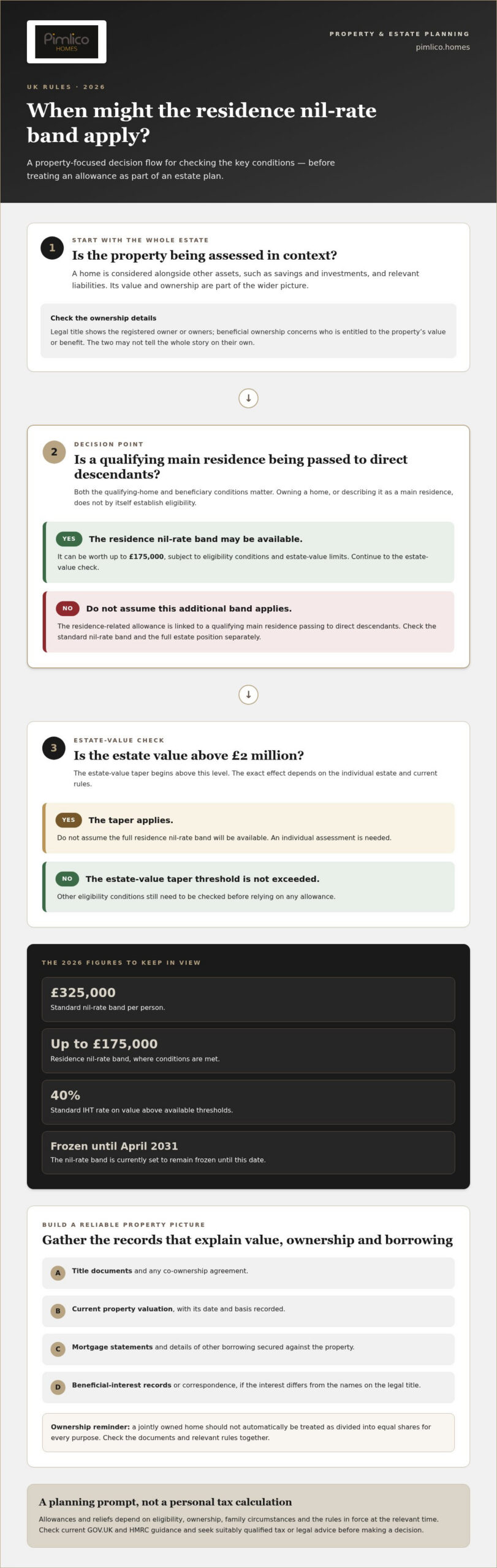
A property’s value is considered alongside other assets, such as savings and investments, and relevant liabilities. To build an accurate overview, establish whose names appear on the legal title, whether anyone else has a beneficial interest, and what borrowing remains outstanding. Legal title records formal ownership. Beneficial ownership concerns who is entitled to the property’s value or benefit. The precise effect depends on the arrangements and applicable rules.
Ownership form can also affect what happens to a home on death. Joint ownership may involve different arrangements for passing on a share than sole ownership, and a main residence may be treated differently from an additional property. Check these points against the ownership details and current rules rather than relying on assumptions for a personal tax calculation.
Which 2026 rules should readers treat as time-sensitive?
As at 2026, the standard nil-rate band is £325,000 per person. A residence nil-rate band of up to £175,000 may also be available when a qualifying home is passed to direct descendants. Eligibility conditions and the estate-value taper apply, with the taper beginning above £2 million. The standard IHT rate on value above available thresholds is 40%. These figures are subject to conditions, and the nil-rate band is currently set to remain frozen until April 2031.
Check current guidance on GOV.UK and HMRC before relying on thresholds, reliefs or effective dates. Legislation establishes the law; official guidance explains its application, while commentary may interpret it. The Inheritance tax in the United Kingdom overview offers background, but it should not replace current official guidance. A figure from a previous tax year may no longer apply, so confirm the position for the relevant date before making a property or estate decision.
How property value, ownership and family circumstances shape inheritance tax planning
Property is considered within the wider estate, subject to the ownership arrangements, applicable rules and circumstances at the relevant time. A valuation is a useful starting point, not a standalone answer. An estimate from several years ago may not reflect the property’s value when an estate is assessed or a lifetime transfer is considered. The appropriate valuation date and method depend on the purpose and circumstances, so do not treat an online estimate as a definitive tax figure.
What information helps establish a property’s place in an estate?
Gather records that show both the property’s value and how it is held. Useful documents include:
- Title documents and records of any co-ownership agreement.
- A current property valuation, with its date and basis recorded.
- Mortgage statements and details of other borrowing secured against the property.
- Documents or correspondence that help explain who has a beneficial interest, if this differs from the names on the legal title.
Legal title identifies the registered owner or owners. Beneficial ownership concerns who is entitled to the property’s value or benefit. These can align, but the details matter. For example, two people may appear on the title, while their agreement or contributions inform how they share the beneficial interest. Do not assume a jointly owned home is automatically divided into equal shares for every purpose. Consider the documents and relevant rules together.
Outstanding borrowing is also part of the picture, although how a liability is treated depends on the circumstances and current rules. A main residence and an additional property may have different relevance to particular allowances or reliefs. Neither should be assessed in isolation from the rest of the estate.
How do residence-related allowances and reliefs need to be checked?
Some residence-related tax provisions have eligibility conditions, limits and interactions with other parts of an estate. Do not assume an allowance applies simply because someone owns a home or describes it as their main residence. Family relationships, intended beneficiaries, estate value and the ownership arrangement may all be relevant. The precise outcome requires an individual assessment against current statutory wording.
For a reliable starting point, consult Official UK Inheritance Tax guidance and check that it reflects the rules for the relevant date. Official guidance can help clarify the framework, but applying it to a particular home or family situation requires care. Keep valuation records, ownership documents and borrowing details together before seeking advice on how they fit your wider plans.
A considered home purchase begins with your household’s needs and a clear view of the financial commitments involved. If you are exploring that decision, discover Pimlico Homes’ luxury homes as part of your wider long-term planning.
Comparing property ownership and inheritance tax planning approaches
There is no single ownership route that suits every household. Retaining a home, giving property away during your lifetime or placing assets in a trust can each affect control, family arrangements and tax in different ways. Ask practical questions as well as financial ones: who needs to live in the property, who will make decisions about it, and what might change over time?
The comparison below is a starting point, not a recommendation. Tax treatment depends on the property, the wider estate and the rules in force when a decision is made.
| Approach | Purpose | Considerations and trade-offs | Professional review |
|---|---|---|---|
| Continued ownership | Keep the property and retain direct control. | Offers certainty over decisions and use, but the property remains part of the owner’s wider financial picture. Future care, borrowing and family needs may also matter. | Review ownership, valuation, liabilities and how the home fits the estate. |
| Lifetime gift | Transfer some or all ownership during the owner’s lifetime. | May reduce direct control and affect the recipient’s financial position. Timing, continued occupation and the owner’s future housing needs require careful thought. | Check legal, tax and family consequences before any transfer. |
| Trust arrangement | Hold assets under terms established for chosen purposes or beneficiaries. | Can introduce a framework for control, but brings administration and legal complexity. The terms can affect flexibility and how the property is managed. | Assess the specific trust structure and current tax rules individually. |
What are the broad trade-offs between retaining and gifting property?
Keeping a property in your own name generally preserves direct control. A gift can transfer ownership or an interest, but it is more than a change on paper: it may affect where the donor lives, who makes decisions and how the recipient’s circumstances shape the home’s future. Gifts can also have separate inheritance tax implications. Under current rules, certain gifts may be relevant if the donor dies within seven years, but the treatment depends on the facts and applicable conditions. Check current HMRC guidance before relying on a time period or assumed tax result.
When might trust arrangements enter the discussion?
A trust is a legal arrangement, not a simple route to avoiding tax. Its terms determine how assets are held and managed, and the structure may involve ongoing administration, reduced flexibility and tax consequences that depend on the arrangement. For example, a family might explore whether a trust could provide a framework for managing an asset for beneficiaries, but that does not establish that it is suitable or tax-efficient. Seek individual legal and tax advice before acting.
For households investing in luxury property North East, these questions belong alongside the home’s suitability, design and long-term role in family life. Consider a property purchase on its own merits, then place it within a wider plan that reflects the household’s needs, not presumed tax advantages.
A practical 2026 checklist for reviewing property and inheritance tax plans
A clear review begins with reliable records. Before a purchase, ownership change or discussion about inheritance tax, assemble the relevant information and separate what you know from what you are assuming. This gives a solicitor or tax adviser a more useful picture of your circumstances, without turning a general checklist into a personal tax calculation.
Which documents and decisions should a property owner organise?
- 1. List your assets. Record property alongside savings, investments and other significant assets. Include the date and source of any valuation, and clearly mark estimates.
- 2. Establish ownership. Gather title documents and any co-ownership agreements. Note who holds the legal title and whether beneficial ownership may differ.
- 3. Record liabilities. Collect current mortgage statements and details of other borrowing connected with the property. Date the figures, since balances can change.
- 4. Organise estate documents. Bring together relevant wills, trust documents and records of previous gifts or transfers. Note anything that needs clarification rather than treating it as settled.
- 5. Set out family objectives. Record intended beneficiaries, plans for the property’s future use and any significant changes in the family, such as a marriage, separation or new dependent.
- 6. Check current rules. Verify applicable allowances, reliefs and effective dates against current official guidance. A previous-year figure or general online summary may not reflect the rules relevant to your decision.
If a property purchase is part of your plans, include the expected ownership arrangement, funding and intended use in your review. The luxury new build purchasing guide can help you consider the practical due diligence involved in buying a new home. This is especially useful when investing in luxury property North East, where a purchase may influence both household plans and the wider estate picture.
When should a plan be reviewed?
Revisit the information after a major purchase, property transfer, significant family change or material change to relevant rules. There is no single review interval that suits every household, and this checklist does not create a legal deadline. If ownership, a proposed gift or a trust arrangement raises individual legal or tax questions, a solicitor or tax adviser can assess the facts and explain the implications under current rules.
Thoughtful preparation makes those discussions more focused. To explore luxury detached homes, executive courtyard homes, bespoke new builds and barn conversions as part of your wider plans, explore Pimlico Homes.
Choosing a luxury home as part of a considered long-term property plan
A home should first meet the needs of the people who will live in it. Consider the layout, quality of craftsmanship, setting and how the property may support your household over time. These are lasting considerations. Do not assume that buying a particular home will produce a particular inheritance tax outcome.
Pimlico Homes is a specialist developer of luxury detached homes, executive courtyard homes, bespoke new builds and luxury barn conversions. Each is a significant residential decision, so design and practical suitability deserve careful attention in their own right. Property purchase decisions and estate-planning decisions are connected, but distinct. Neither determines or guarantees a particular tax result.
What should matter when selecting a high-end home?
Begin with how you expect to use the property. Consider whether its spaces suit daily life, whether its setting works for your routines, and whether its design can accommodate changing household needs. Quality and architectural character matter, but so does the home’s fit with your plans. A home that is right for one family may be unsuitable for another, even if both are considering a similar investment.
Resale value may also form part of a considered purchase, but future market performance cannot be promised. The new build home resale value guide offers broader points to consider when assessing value, without making future outcomes certain. Keep this assessment separate from inheritance tax planning: a property’s appeal or potential resale prospects do not establish its tax treatment.
How can a home purchase fit into wider family planning?
Before proceeding, consider the intended ownership arrangement, how the home will be used and how the purchase fits with family objectives. For example, a larger home may suit a household planning to live together for years, while another family may prefer a more manageable layout or different ownership arrangements. The same property can therefore serve very different purposes, with different implications for each household’s wider plans.
For those investing in luxury property North East, thoughtful due diligence means weighing design, suitability of setting, funding and future use, then considering how the purchase fits into the wider estate picture. Personalised tax planning requires an assessment of individual circumstances and current rules. A property decision, however carefully made, cannot substitute for that advice.
Explore residential developments designed for considered living. Discover Pimlico Homes and find a home that reflects your household’s priorities.
Make your next property decision with clarity
A home can be a defining personal choice and a substantial part of an estate. Its inheritance tax implications depend on the wider picture, including how it is owned, the value of other assets, family circumstances and the rules in force when they are relevant. For anyone investing in luxury property North East, careful preparation means gathering ownership and valuation records, understanding liabilities and considering family intentions before making decisions about a purchase, gift or trust.
Keep the property decision and tax planning connected, but distinct. Choose a home for its suitability, design and quality, not for presumed tax advantages or guaranteed future value. Individual tax outcomes require advice based on personal circumstances.
As a specialist developer of high-end residential properties, Pimlico Homes offers luxury detached homes, executive courtyard homes, bespoke new builds and barn conversions. Explore these considered residential possibilities as you shape plans for the years ahead. Explore Pimlico Homes’ considered collection of luxury homes and take your next step with confidence.
Frequently Asked Questions
Is inheritance tax payable on a UK property?
It can be, because a property may form part of a person’s estate and contribute to its total value. Inheritance tax is generally assessed on the estate as a whole, after relevant allowances and reliefs, rather than on a home in isolation. A main residence may qualify for an additional residence nil-rate band in some circumstances, while an additional property may not qualify on the same basis. Eligibility depends on current rules and individual facts.
How is a property valued for inheritance tax in the UK?
A property is generally valued by reference to its open market value at the relevant date, rather than its purchase price or an undated estimate. The appropriate valuation method and evidence can depend on the circumstances, so retain the valuation, its date and the basis used. An estate assessment should also record ownership and relevant liabilities. A valuation helps establish the property’s place in the estate, but does not determine the final tax due by itself.
Can I gift my home to my children to reduce inheritance tax?
Giving your home to your children does not automatically reduce inheritance tax. A gift can affect your ownership and control, and the tax treatment depends on the circumstances, including whether you continue to benefit from or live in the property. Gifts made within seven years of death may be relevant to IHT, subject to the applicable rules. Before transferring a home, consider your future housing needs and obtain individual legal and tax advice.
Does a mortgage affect the value of a property in an estate?
A mortgage is an important liability to record when reviewing a property’s place in an estate, but its treatment depends on the facts and applicable rules. Gather current mortgage statements alongside ownership documents and a properly dated property valuation. Do not assume the outstanding balance can simply be deducted in every situation or that it changes the property’s market value. A tax or legal adviser can assess how the borrowing affects the estate calculation.
What happens to inheritance tax if a property is jointly owned?
Joint ownership does not always mean that each owner’s share is treated identically for inheritance tax. The legal title, beneficial interests and form of co-ownership can all be relevant, as can any agreement between the owners. For instance, the arrangements for passing a share on death may differ according to how the property is held. Review title records and ownership documents before drawing conclusions, then check the current rules against the family’s circumstances.
Are trusts a way to avoid inheritance tax on property?
No. A trust is not a straightforward way to avoid inheritance tax. It is a legal arrangement that may affect control, administration and how property is held for beneficiaries, with tax treatment depending on the trust terms and wider circumstances. Setting one up can also have consequences during a person’s lifetime and after death. Treat a trust as a complex planning option, not a guaranteed tax-saving route, and seek individual legal and tax advice before acting.
What inheritance tax rules should UK property owners check in 2026?
Check the current nil-rate band, residence nil-rate band, eligibility conditions, estate-value taper and applicable tax rate against GOV.UK guidance. In 2026, the standard nil-rate band is £325,000 per person, and an eligible estate may qualify for a residence nil-rate band of up to £175,000 when a qualifying home passes to direct descendants. The residence band tapers for estates above £2 million. For anyone investing in luxury property North East, verify the rules that apply to their circumstances before making plans.





