Quiet does not happen by accident. Creating quiet zones for focus and relaxation starts with choosing a sheltered spot, then shaping it with soft, calming light, comfortable seating, clear boundaries and materials that soften everyday noise. Keep the arrangement simple and suited to how you want to use the space.
A restful corner can be hard to achieve when household activity, screens or outside sounds compete for attention. You do not necessarily need a dedicated room: a thoughtfully arranged area can offer a welcome pause in a bedroom, living room or other quieter part of the home. Choose the right location, layer lighting and soft furnishings, reduce distracting sound and make the zone feel distinct without cutting it off. The aim is a calm, considered space that supports concentration when you need to focus and invites you to unwind at the end of the day.
Key Takeaways
- Choose a calm spot away from the main flow of household activity, then give it a clear purpose for focus or rest.
- Use gentle, adjustable lighting and simple visual boundaries to help the area feel distinct without closing it off.
- Select supportive seating and soft furnishings that make reading, working or unwinding comfortable.
- Layer sound-absorbing materials such as rugs, fabric panels or acoustic panels, and address gaps where noise enters.
Benefits of quiet spaces for emotional regulation
There is no single quiet-hours timetable for every UK home or workplace. Agree household quiet periods with other occupants, and follow the noise arrangements that apply at work.
- Notice when you need a pause. If conversation, screens or household activity make concentration difficult, step away before frustration builds. Sensory overload can contribute to stress, anxiety and irritability. A calmer spot gives you room to pause, breathe and return to a task with greater composure. Creating quiet zones for focus and relaxation starts with noticing when a change of setting would help.
- Choose an activity to shape the space. Decide whether it is for reading, drawing, mindfulness or reflection, then choose elements that support that use. For example, place a favourite book and cushion beside a plant or window. These natural elements can enhance the calming atmosphere without adding visual clutter. When creating quiet zones for focus and relaxation, let the intended activity guide each design choice.
- Offer children a choice of sensory tools. Set out a small selection, such as a textured toy, drawing pad or soft blanket, and let the child choose what feels comfortable. Therapy Focus advises that children who choose their sensory tools can feel more in control of using the space. Notice which items they return to, then keep those within reach.
- Model quiet-space use. Spend time there together reading, breathing slowly or sitting without a screen. A caregiver who uses the area calmly shows that it is a place to settle, not a punishment. For instance, read a short story together, then give the child time to explore the space independently.
- Tailor the sensory setting. Notice whether bright light, certain textures or particular sounds seem welcome or uncomfortable, then adjust one feature at a time. For a child’s home sensory space, Therapy Focus advises speaking with an occupational therapist, who can complete a sensory profile tailored to the child’s needs.
There is no single quiet-hours timetable for every UK home or workplace. Agree quiet periods with other household occupants and follow the noise arrangements that apply at work.
Lighting, seating, sound, and space boundaries
For work or study, face a desk towards a clear wall and keep only current materials within reach. Agree quiet periods with other household occupants, and follow workplace noise arrangements rather than assuming one timetable suits every setting.
-
Balance Natural Light and Privacy
Position the zone near a window if daylight helps you read or work, then consider what can be seen from outside. Use curtains or blinds to manage visibility without making the space feel enclosed. Angling a desk towards the window can bring in natural light whilst limiting glare on a screen. Check how daylight changes across the day before settling on furniture placement.
-
Set Warm, Adjustable Lighting
Choose a warm-toned bulb and an adjustable lamp so the lighting suits reading, writing or reflection. Place the lamp beside the chair or desk, directing it towards the page rather than your eyes. Soft lighting can create a calmer atmosphere, and a dimmable setting lets you adapt it as natural light changes. Avoid relying on one bright overhead light for every activity.
-
Reduce Distractions and Organise the Zone
Give the area a visible boundary, such as a rug, bookcase or change in furniture layout. In a study corner, keep notebooks, pens and the current book together, then store unrelated items elsewhere. Put your phone out of sight during focused work and clear the surface when you finish. A small plant or restrained artwork can add calming visual interest without crowding the space.
Comfortable seating and soft furnishings
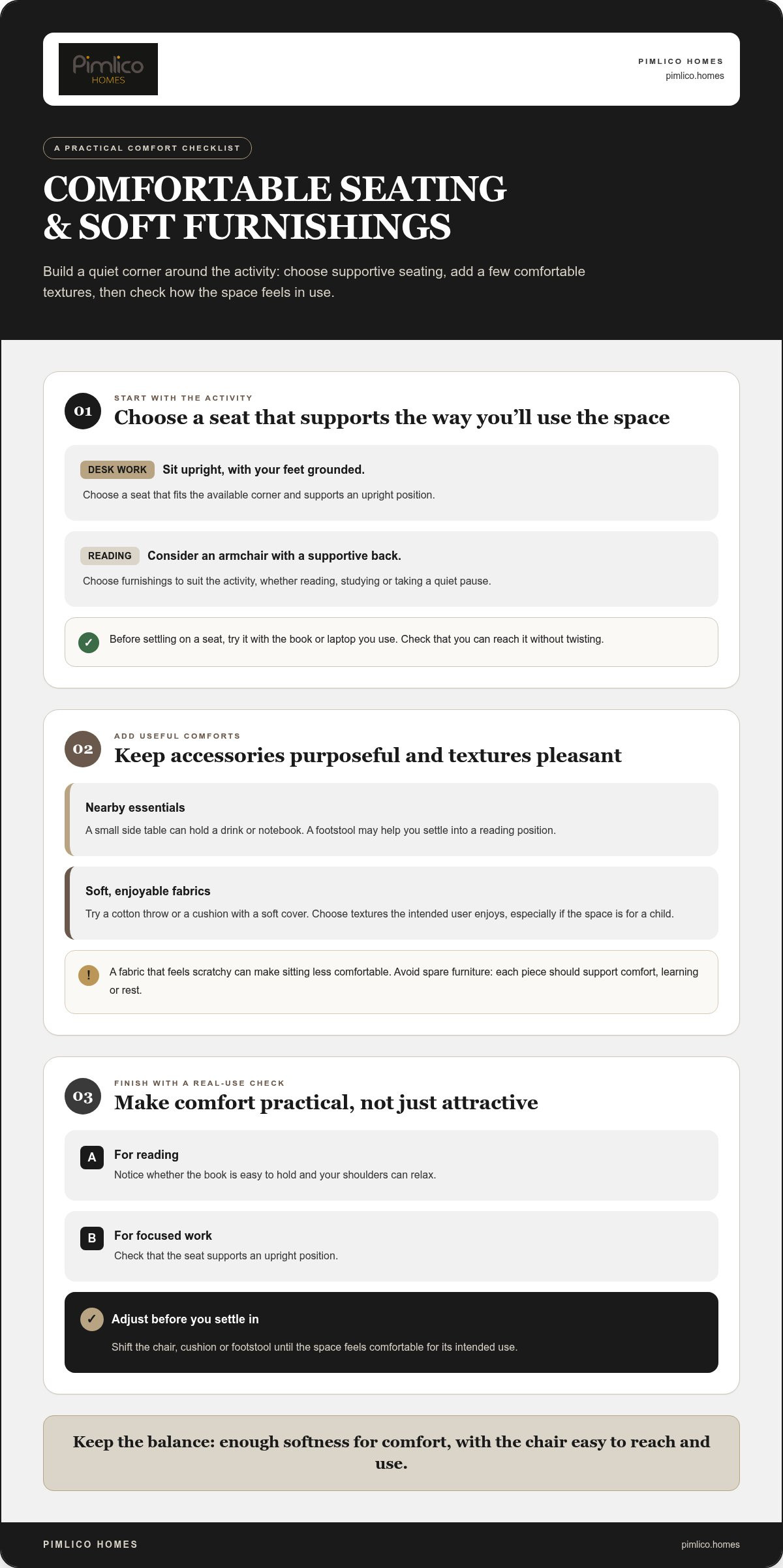
Choose furnishings to suit the activity, whether reading, studying or taking a quiet pause. A supportive seat helps make the space comfortable to use for longer.
-
Choose Comfortable Furniture and Accessories
Select a chair or armchair that supports the activity and fits the available corner. For desk work, choose a seat that lets you sit upright with your feet grounded; for reading, an armchair with a supportive back may feel more suitable. Try it with the book or laptop you use, and make sure you can reach it without twisting.
Keep nearby accessories purposeful. A small side table can hold a drink or notebook, whilst a footstool may help you settle into a reading position. Avoid filling the retreat with spare furniture: each piece should support comfort, learning or rest, not create another distraction.
-
Add Soft Furnishings for Touch and Comfort
Introduce fabrics that feel pleasant against the skin, such as a cotton throw or a cushion with a soft cover. These tactile details can make the corner more inviting without changing its purpose. Choose textures the intended user enjoys, especially if the space is for a child. A fabric that feels scratchy can make sitting there less comfortable.
A rug can soften the feel underfoot, while cushions let you adjust the seat for reading or quiet reflection. Keep the arrangement easy to maintain and leave the chair accessible. Tranquillity comes from a considered balance: enough softness to engage the senses, without piling the seat with items that need moving before use.
- Check comfort in use. Sit in the space as you would during a real activity. For reading, notice whether the book is easy to hold and your shoulders can relax; for focused work, check that the seat supports an upright position. Adjust the chair, cushion or footstool before settling in. This practical test helps the retreat serve its purpose, rather than simply look inviting.
Sound-absorbing materials and sealing gaps
In a small flat or shared home, define a quiet zone in a bedroom corner or living-room alcove, using a rug or screen to mark its boundary. Prolonged noise can contribute to cognitive fatigue, irritability and reduced productivity. There is no single indoor noise figure that suits every home or workplace, so reduce disruptive sound around the activity.
-
Choose Sound-Absorbing Materials
Start with a rug, carpet or fabric panels to soften sound around the chair or desk. These materials absorb some sound within the space, helping reduce the hard, echoing quality of bare floors and walls. Place a rug beneath the main seating area, then consider panels on a wall where sound reflects. Keep the arrangement practical and avoid blocking access or natural light.
In a shared home, soft materials can also help define the zone visually. A fabric screen or curtain gives a reading nook a clear edge whilst helping soften nearby noise. Pair these materials with a comfortable seat to create a peaceful setting for meditation or focused work.
-
Try Low-Cost Creative Soundproofing
First, locate obvious gaps around a door, then use suitable draught excluders to limit sound travelling through the opening. A thick curtain across a doorway can add another soft layer in a rented room or compact flat. Keep doors and walkways usable, and do not cover ventilation openings.
Place a full bookcase against a shared wall, or arrange cushions and a throw in the corner where you read. These simple changes will not soundproof a room, but they can make the zone feel more sheltered without extensive work. Choose a visual arrangement that stays tidy and easy to adapt.
- Shape the soundscape. Try soft music or nature sounds at a low volume, then notice whether they soothe or distract you. For example, choose silence for detailed study and gentle instrumental music for a meditation pause. Keep the sound source close to the quiet zone, rather than turning it up to compete with noise elsewhere.
Pimlico Homes: Luxury Detached Homes
If a quiet corner is not enough and you are considering a home with space for a dedicated retreat, Pimlico Homes offers Luxury Detached Homes and Bespoke Luxury Homes. These homes provide options for those planning a home around the way they want to live, with space for focused work, reading or relaxation.
Consider a different home when your current layout makes it difficult to separate quiet activities from the daily flow of household life. A dedicated area can then form part of your wider choice, alongside the rooms and spaces your household needs. Explore Pimlico Homes’ homes and consider which setting best supports your priorities.
To discuss your next home, contact Pimlico Homes or visit pimlico.homes.
Make room for a calmer daily rhythm
Let the quiet zone guide how you want your home to support everyday life. Notice when you naturally seek stillness, what helps you settle, and whether a modest nook meets that need or a dedicated room would better suit your routines. Creating quiet zones for focus and relaxation can be a practical starting point for considering how the wider home should feel and function.
As your priorities take shape, think beyond a single corner. A home designed around its occupants’ rhythms can make space for concentration, restoration and time together, each with its own place. Pimlico Homes offers Luxury Detached Homes, Executive Courtyard Homes and Bespoke Luxury Homes for those considering a home that reflects how they wish to live.
Explore a future home with Pimlico Homes, and take the next step towards a setting that feels distinctly your own.
Frequently Asked Questions
How do I create a quiet zone at home for focus and relaxation?
Choose a place for one clear purpose, such as reading, journalling or completing paperwork. In a shared home, a bedroom alcove or the quieter end of a living room can work; agree with others how the space will be used. Keep the essentials for that activity close by, and return them to the same place afterwards. That small routine helps keep the zone ready to use.
What are the best soundproofing and noise-reduction methods for a quiet room?
Start by identifying where the sound enters, then match your response to the source. A door gap may call for a draught excluder, while an echoing room may benefit from carpet or fabric. If noise travels through a shared wall, soft furnishings can lessen harsh reflections inside the room, but they will not block all sound coming through the structure. Address the main disturbance first.
How much does it cost to soundproof a room in the UK?
The cost depends on the room’s dimensions, the route sound takes and the level of work involved. Adding a rug, curtains or fabric panels involves different materials and labour from changing a wall or door. The final price is established after a quote request, with the room’s construction, access and chosen sound-reduction approach shaping the estimate. Decide which noise source matters most before planning the work.
Which colours, lighting and furniture help create a calming, focused space?
Choose colours that feel restful to the person using the room, such as muted green, soft blue or warm taupe. A reading lamp beside an armchair creates a distinct pool of light, whilst a desk needs clear illumination across its work surface. Select furniture for the intended task: a supportive chair for writing, or an armchair and side table for reading. Keep the visual scheme personally comfortable.
How can I set up a quiet zone on a budget?
Begin with items already at home and make changes in a practical order:
- Choose the calmest available corner and remove objects unrelated to its use.
- Reposition an existing chair or table to make the spot functional.
- Add a spare rug, blanket or cushions to soften the area.
- Use a table lamp if overhead lighting feels too bright.
- Try the arrangement while reading or studying, then adjust anything that distracts you.
Health risks of prolonged noise exposure and recommended indoor noise levels
Prolonged noise exposure can contribute to cognitive fatigue, irritability and reduced productivity. There is no single indoor noise level that suits every home or workplace; reduce disruptive sound around the activity.