Natural light shapes how a home feels and supports daily life. Designing for natural light to improve mood means considering how daylight enters and moves through each room, and choosing colours that make the most of it. Daylight helps regulate the body’s sleep and wake cycle, while a bright, thoughtfully arranged space can feel more welcoming.
It is easy to focus on a room’s finishes and furnishings, but window direction also influences the quality and character of its light throughout the day. Understanding this relationship helps you choose colours more thoughtfully, from the cooler light in a north-facing room to the changing sunlight in a kitchen.
This guide explains how natural light relates to wellbeing and mood, and how room orientation can inform your home’s palette. It also explores how sunlight affects the atmosphere of the kitchen, one of the home’s most-used spaces, helping you create interiors that feel composed and uplifting.
Key Takeaways
- In lower-ground rooms, consider how light wells, skylights or reflective surfaces could help daylight reach further into the space.
- Match colour choices to the direction of the windows: north-facing rooms often benefit from warmer shades, while brighter aspects can reveal more of a colour’s character.
- Use a kitchen’s orientation to think about when sunlight arrives, then plan its colours and layered lighting around the room’s daily use.
- Daylight supports the body’s sleep and wake rhythms, while a room’s brightness and atmosphere can influence how it feels throughout the day.
How Natural Lighting Keeps Us Healthy?
Daylight affects how rooms function and feel, while supporting the body’s circadian rhythms. Orientation, openings and reflective finishes all influence how light reaches the spaces you use each day.
Daylight in Different Rooms and Seasons
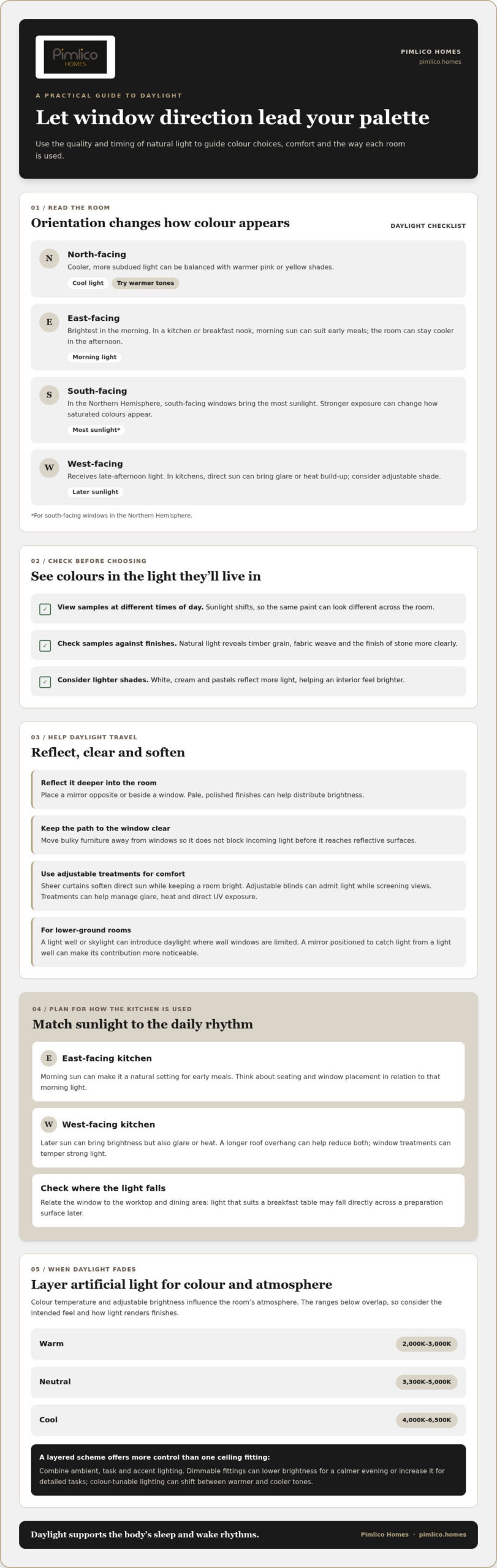
Work with the timing and direction of daylight rather than treating every room alike. East-facing rooms receive morning light; west-facing rooms brighten later, so their uses and shading needs differ. North-facing rooms receive cooler light, which pink or yellow tones can soften. In basements, a light well or skylight can introduce daylight where wall windows are limited. Window size and placement matter: larger openings can admit more light, while double or triple glazing and low-emissivity glass support temperature control. Whether new or enlarged windows or rooflights need planning permission depends on the property and the work; building regulations may also apply. Installation costs depend on the opening, glazing, access and structural work, so obtain a project-specific quote.
Daylight, Wellbeing and Mood
Daylight supports the body’s sleep and wake rhythms, making its availability relevant to wellbeing at home and work. In spaces with natural elements such as sunlight and plants, office workers report 15% higher wellbeing. Poor ventilation and working conditions are associated with Sick Building Syndrome, including headaches and respiratory problems; daylight alone does not address those causes. An estimated two million people in the UK experience winter blues or seasonal affective disorder. There is no single daily daylight duration that suits every home; regular access during waking hours depends on routine, season and the rooms available.
Reflecting Daylight Around a Room
Reflective surfaces can redirect daylight into areas that receive less direct sun. A mirror opposite or beside a window can carry brightness deeper into a room, while pale, polished finishes help distribute it. In a basement, placing a mirror to catch light from a light well can make its contribution more noticeable. Keep bulky furniture clear of windows so it does not block incoming light before it reaches reflective surfaces.
Window Treatments, Glare and Exposure
Window treatments balance daylight with privacy and comfort. Sheer curtains soften direct sun while keeping a room bright; adjustable blinds, including Venetian blinds, admit light while screening views. Filter or redirect strong sunlight to manage glare and heat, particularly in west-facing rooms that receive late-afternoon sun. Glazing choices also affect light and temperature, while curtains and blinds offer adjustable shade. Suitable window coverings can reduce direct UV exposure. Choose treatments according to the window’s orientation, the room’s use and the level of privacy you need.
Choosing colours according to room orientation
Window direction changes how colours appear, so choose a palette suited to the daylight each room receives. Natural light can also reveal the texture of finishes more clearly than artificial light.
Colour, Texture and Natural Light
Colour, texture and daylight work together: the same paint can look different as sunlight shifts across a room. North-facing spaces receive cooler, more subdued light, which warmer pink or yellow shades can balance. East-facing rooms are brightest in the morning, while west-facing rooms receive late-afternoon light. In the Northern Hemisphere, south-facing windows bring the most sunlight, so stronger exposure can change how saturated colours appear.
Light shades such as white, cream and pastels reflect more light, helping an interior feel brighter. Natural light also brings out the grain of timber, the weave of fabric and the finish of stone. Before settling on a scheme, view colour samples against these materials at different times of day. This shows how the palette responds to the room’s actual orientation, rather than relying on a single impression.
Lighting for Colour and Atmosphere
Colour temperature and adjustable brightness shape a room’s atmosphere when daylight fades. Warm artificial lighting is generally around 2,000K to 3,000K, while cool lighting is generally 4,000K to 6,500K. Neutral light sits between 3,300K and 5,000K. These ranges overlap, so consider the intended feel and how the light renders finishes, not just its label.
Dimmable fittings let you lower brightness for a calmer evening or increase it for detailed tasks. Colour-tunable lighting can shift between warmer and cooler tones, complementing the changing daylight in east- and west-facing rooms. A layered scheme, combining ambient, task and accent lighting, gives you more control than relying on one ceiling fitting. In a bespoke home, planning these choices alongside the architectural finishes helps create a coherent interior. Explore bespoke luxury homes as one way to consider light and colour from the outset.
Kitchen orientation and sunlight
A kitchen’s orientation influences when sunlight reaches its windows and how the room feels throughout the day. An east-facing kitchen or breakfast nook receives morning sun, making it a natural setting for early meals. It can also stay cooler in the afternoon, when cooking and household activity may already add warmth indoors. Consider when you use the kitchen most, then relate window placement and seating to that daily rhythm.
West-facing kitchens receive sunlight later in the day, including in the afternoon. This can bring welcome brightness, but direct sun may cause glare or heat build-up. A longer roof overhang can help reduce both, while window treatments let you temper strong light without relying entirely on artificial lighting. Consider the relationship between the window, worktop and dining area: sunlight that suits a breakfast table may fall directly across a preparation surface later.
Kitchen lighting should serve distinct tasks. Ceiling fittings provide ambient, overall illumination; task lighting makes worktops and food-preparation areas easier to see. Accent lighting can highlight a feature, such as open shelving or a dining corner. Combining these layers lets you adjust the kitchen as daylight changes, rather than expecting one ceiling light to do every job.
For example, an east-facing kitchen can make use of morning sunlight at the breakfast nook, then rely on task lighting as daylight recedes from the worktops. In a west-facing room, plan shade for late-afternoon glare and use adjustable artificial lighting for cooking or dining after sunset. Dimmable lighting lets you adjust brightness to suit the activity. These choices shape the kitchen’s atmosphere as well as visibility, helping its finishes and surfaces look considered in changing light.
Natural light and mood
Daylight can shape an interior’s emotional character, not just its brightness. Serotonin levels are higher on sunny days than cloudy days, as reported in an Australian study. Designing for natural light to improve mood starts with considering how a room feels through changing weather and seasons. The aim is not to expect sunlight to resolve low mood, but to make everyday spaces more inviting and connected to the outdoors.
Natural elements can also influence how people experience a room. A desk positioned with a garden view, for example, brings greenery into the working day without changing the room’s purpose. In shared spaces, plants near a window can soften the boundary between indoors and outdoors. These considered details help make wellbeing part of a home’s atmosphere.
Artificial light affects the emotional quality of a space after daylight fades. Cool light above 5,000K is associated with stimulating, energetic rooms, while warm light conveys comfort and intimacy. Designing for natural light to improve mood also means considering the transition into evening: adjust brightness to suit the activity, and avoid harsh illumination when preparing to rest. Bright artificial light late in the evening can contribute to sleep disturbance and increased stress.
Consider how each room supports a particular part of your routine. A work area may benefit from a more energising feel, while a sitting room can be arranged for a gentler evening atmosphere. Plants, views and adjustable lighting can work together to create that distinction. To explore how daylight might inform a home’s design, shape a home around natural light.
Pimlico Homes: Luxury Detached Homes
Pimlico Homes offers luxury detached homes for those seeking a home suited to their way of living. If natural light is central to your decision, consider how a property’s orientation, windows and room arrangement relate to your daily routines. For a home shaped around individual priorities, bespoke luxury homes offer a way to consider those preferences as part of a new-home vision. Executive courtyard homes and luxury barn conversions are also part of Pimlico Homes’ offering, each providing a distinct style of home to explore.
As you compare possibilities, think about where you spend your mornings and evenings, and how sunlight reaches those spaces. Contact Pimlico Homes to discuss your home aspirations.
Shape a home around the way you live
Lasting design decisions begin with how you want your home to feel, not with a paint chart or fitting. Consider the moments that matter in your daily routine: a calm start, a focused afternoon or a welcoming room at dusk. Designing for natural light to improve mood gives those choices a personal purpose, helping each decision support the way you live rather than follow a passing trend.
As you shape your plans, note which spaces you want to feel open, restful or uplifting. Then consider how the home’s architecture can support that intention, creating a natural connection between your routines and the rooms around you. A clear sense of these priorities can make early design conversations more purposeful.
When you are ready to explore what might suit your aspirations, contact Pimlico Homes to discuss your home. A thoughtful beginning can make the path ahead clearer and distinctly your own.
Frequently Asked Questions
What is the relation between light and the perception of spaces?
Light changes how spacious, defined and comfortable a room appears. A bright ceiling can make a low room feel less enclosed, while shadows around a doorway can emphasise its depth. To assess a space, notice where daylight falls at different times and whether dark corners interrupt the view. A clear sightline from the entrance can also make a compact room feel more open.
How does natural daylight affect mood, sleep and wellbeing?
Daylight helps the body keep its sleep and wake rhythms aligned with the day, and can influence how a room feels. A useful approach is to spend waking time in the brightest comfortable areas, then create a calmer setting as evening approaches. For example, use a window-side seat for daytime reading and softer, lower lighting to wind down later.
How can home layout and room orientation maximise natural light in the UK?
Arrange frequently used spaces around windows that receive useful daylight, and keep routes between those windows and adjoining rooms open. For instance, place a dining table near a bright opening without blocking the room’s main light path with tall storage. Internal glazed doors can preserve separation while allowing brightness to pass between spaces, which is useful in narrow UK terraces.
How can mirrors, pale colours and reflective surfaces brighten a room?
Place a mirror where it reflects a bright part of the room, rather than directly reflecting a strong patch of sun that may cause glare. Pale walls and ceilings help create a continuous, light-feeling backdrop. A glazed picture frame or polished table can add smaller points of reflection. Use these accents selectively to brighten the room without creating distracting highlights.
How can natural light be improved in north-facing or small rooms?
In a north-facing or small room, protect the available light before adding reflective finishes. Keep window areas clear, choose furniture with open legs, and avoid placing tall pieces beside the main opening. If the layout allows, a glazed internal door can share light from an adjacent room. A restrained palette across walls and ceilings also reduces abrupt visual boundaries.
How can daylight be balanced with artificial lighting during darker UK months?
Make the most of daylight where it reaches the room, then layer artificial lighting for activities that continue after dusk. In a sitting room, a ceiling fitting can provide general illumination, while a reading lamp focuses light on a chair. Keep evening settings comfortable rather than excessively bright, and adjust separate fittings independently. This creates a considered transition from daytime use to rest.