
Eco-friendly luxury homes in the North East combine renewable energy, efficient heating and thoughtful design to reduce energy demand without compromising comfort or architectural character. Geothermal heating and cooling can reduce heating energy use by as much as 70%, while solar panels can generate renewable electricity for the home. The overall effect depends on how these systems work alongside the building itself.
A beautifully finished home can still be costly to run if it loses heat or relies heavily on energy-intensive systems. Good insulation, high-performance windows and carefully planned lighting make sustainability part of a home’s everyday performance, not simply an added feature.
This guide explores how solar, geothermal technology and energy-efficient design can shape utility bills, what influences running costs, and what to look for in luxury property listings across the region. You’ll also see how sustainable features can sit naturally alongside generous space, considered materials and a distinctive sense of place.
Key Takeaways
- Compare materials such as reclaimed wood and low-impact finishes for durability, indoor comfort and environmental impact.
- Assess how solar panels and geothermal systems could work together to support a home’s energy needs.
- Look beyond heating technology: insulation, windows and lighting all influence energy demand and household bills.
- When reviewing property listings, look for specific details on sustainable features and how they are integrated into the home.
1. What Are the Benefits of Sustainable Features in Upscale Homes?
Material choices influence a home’s environmental impact, character and indoor comfort. Reclaimed wood can bring warmth to flooring or cabinetry, while recycled steel is an option for structural components. Bamboo flooring is a renewable alternative; natural stone and clay offer durable finishes with a strong connection to the landscape.
Locally sourced materials can reduce the distance products travel to a building site and help create a sense of regional identity. Compare each material’s origin, durability and intended use. Reclaimed timber may suit a feature wall, while stone can provide robust flooring in a high-traffic living space.
Finishes matter indoors, too. Low-VOC or non-toxic paints and finishes can support indoor air quality by limiting pollutants released from treated surfaces. Pair these choices with natural lighting and high-efficiency air filtration to create healthier living spaces. Consider materials and technologies together rather than treating each as an isolated design feature.
Natural resources can be used more thoughtfully through features such as rainwater collection for garden irrigation. Native planting can also reduce reliance on frequent watering. According to UK Government, all developments should incorporate sustainable resource-management approaches as far as possible. This makes water use, material selection and landscape design relevant considerations from the outset.
What planning rules apply to building a sustainable luxury home in North East England? UK Government guidance states that developments should incorporate sustainable resource-management approaches as far as possible. Consider materials, water use and landscaping as part of the overall proposal.
What are the risks and drawbacks of buying or building an eco-friendly luxury home in the North East? Some sustainable materials need careful specification, and unfamiliar finishes may require different cleaning or upkeep. Complex systems also need appropriate operation and maintenance, so understand how each feature works before making it central to your design or purchase decision.
A practical first step is to assess each choice against three aims: durability, indoor comfort and resource use. Comparing reclaimed wood, natural stone, low-impact finishes and rainwater collection this way makes sustainability a considered part of the home’s design, rather than a collection of disconnected features.
2. Solar panels and geothermal heating and cooling
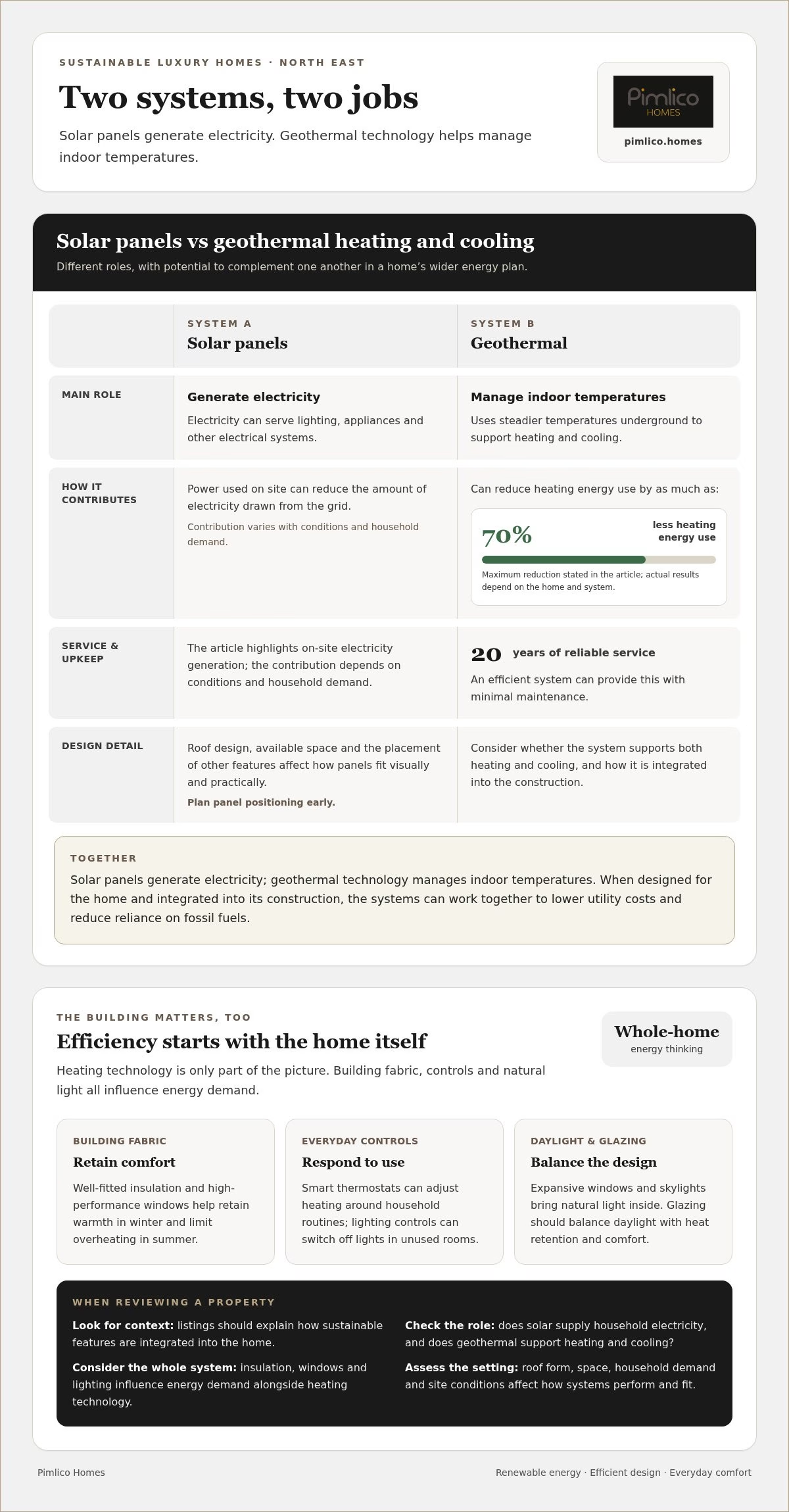
Solar panels convert daylight into electricity for a home’s lighting, appliances and other electrical systems. A solar-powered home can use that electricity on site, reducing the amount it draws from the grid. The contribution varies with conditions and household demand, so consider panels as part of the building’s wider energy plan.
Geothermal systems use the steadier temperatures underground to support heating and cooling. An efficient geothermal heating and cooling system can provide 20 years of reliable service with minimal maintenance. These systems can reduce heating energy use by as much as 70%, making them a substantial sustainable feature for a property with significant heating needs.
Solar panels and geothermal technology address different parts of a home’s energy needs. Panels generate electricity, while a geothermal system manages indoor temperatures. Used together, they can lower utility costs and reduce reliance on fossil fuels. Their value depends on how they are designed for the home and integrated into its construction.
A solar-panelled roof can incorporate panels into the home’s overall form rather than treating them as an afterthought. Roof design, available space and the placement of other features influence how panels fit visually and practically. Planning their position early can help preserve a clean architectural silhouette while making room for renewable energy generation.
For prospective buyers, listings that mention solar panels or geothermal heating deserve closer attention to how each feature serves the property. Consider whether panels supply household electricity and whether geothermal technology supports both heating and cooling. These details help distinguish a well-integrated system from a feature listed without context.
Resilient construction begins with matching technologies to a home’s energy needs. Solar generation may contribute during daylight, while geothermal heating and cooling offer another way to manage indoor comfort. Together, these systems can make environmental priorities part of the home’s design, rather than additions that compete with its living spaces.
3. Energy-efficient design and lower utility bills
In a luxury home, efficient energy use often begins with the building fabric. Well-fitted insulation and high-performance windows help retain warmth in winter and limit overheating in summer, reducing demand for heating and cooling. Consider how these elements work together rather than judging efficiency by one feature alone.
Smart-home controls can make daily energy use more responsive. A smart thermostat can adjust heating around household routines, while lighting controls switch off lights in unused rooms. Expansive windows and skylights bring natural light into living spaces, reducing reliance on artificial lighting during brighter parts of the day. Glazing should balance daylight with heat retention and comfort.
Energy-conscious design also considers the land around the property. On a coastal North East site, plan drainage, landscaping and construction access with nearby marine habitats in mind. Native planting can suit the setting and reduce irrigation needs. Inland, the same principle applies: shape the design around local landscape and site conditions, rather than importing an unrelated architectural approach.
Are there grants, incentives or financing options for energy-efficient homebuilding in the UK? Support depends on the scheme; there is no universal grant for every efficient new home. Eligibility and finance terms vary by measure, property and applicant, so distinguish new construction from retrofit when assessing a scheme.
How can buyers verify a luxury home’s energy performance and sustainability claims? Review its Energy Performance Certificate alongside information about insulation, windows, heating and cooling systems, and smart controls. For specific technologies, request the relevant design specifications and commissioning records. Together, these documents help show how the systems are intended to perform.
Buyers should compare documented performance with the home’s design and expected occupancy. A well-insulated property with efficient heating and cooling may need less energy to maintain comfort, while controls help manage use room by room. This joined-up approach makes sustainable living a practical design decision, not simply a list of features.
4. Luxury eco-friendly property listings
A sustainable property listing should connect its environmental features to the home’s design and daily use. Look for details such as solar panels, geothermal heating, insulation, ventilation and water-saving measures. A feature name alone says little about its contribution to the property’s footprint or the lifestyle it supports.
What counts as an eco-friendly luxury home in the North East of England? It combines considered materials, efficient energy use and design suited to its setting, without sacrificing comfort or architectural quality. A detached home with renewable energy, effective insulation and native planting offers a practical example.
Read each listing for evidence, not labels. Note the heating system, window performance, energy rating and any stated renewable technologies. Then consider how these features suit the climate, the home’s size and its likely occupancy. For example, a large property with geothermal heating may have different energy needs from a compact home with solar panels.
Which luxury eco homes are currently for sale in North East England? The current shortlist is the live regional listings that disclose both luxury features and sustainability measures; homes enter and leave the market over time. Compare each listing’s stated systems and property details, then assess whether they match your priorities.
Which North East developers specialise in low-carbon or Passivhaus luxury homes? Look for developers with documented projects and clear information about their low-carbon approach or Passivhaus credentials. Published project details help distinguish demonstrated expertise from broad environmental language.
When comparing listings, separate built-in performance from features that could be added later. An integrated heating system or carefully designed building fabric forms part of the property itself; garden planting or some controls may be easier to adapt. This distinction helps you weigh immediate comfort, future plans and the home’s overall environmental footprint.
Use a simple viewing checklist: identify the energy systems, find the supporting performance documents, and relate each feature to your intended lifestyle. If you are shaping a bespoke home rather than choosing an existing property, explore your design priorities as part of that early decision-making.
Pimlico Homes: Luxury Detached Homes
Pimlico Homes offers Luxury Detached Homes, Executive Courtyard Homes, Bespoke Luxury Homes and Luxury Barn Conversions. If you are considering a new home in the North East, these options provide distinct starting points, from a detached residence to a home shaped around your preferences.
For a bespoke project, establish your priorities early: how you want the living spaces to feel, which energy-efficient design principles matter to you, and how the home should sit within its setting. These decisions help frame conversations about the design and features that suit your plans.
Explore Pimlico Homes when you are ready to consider a luxury home that reflects your style and priorities. Visit pimlico.homes to learn more.
Shape a home around what matters next
Choosing an eco-friendly luxury home in the North East is ultimately a decision about how you want to live, not simply which technologies a property contains. Consider the atmosphere you want to create, the routines the home must support and the relationship you want with its setting.
Before taking the next step, write down the qualities that matter most, from a calm, light-filled interior to a distinctive architectural presence. This personal brief gives your property search or design conversation direction, helping you assess each opportunity against the life you intend to build there.
Pimlico Homes offers Luxury Detached Homes, Executive Courtyard Homes and Bespoke Luxury Homes for those seeking a home shaped around their priorities. To discuss your aspirations and explore the possibilities, contact Pimlico Homes today. A considered vision is a confident place to begin.
Frequently Asked Questions
What Are the Benefits of Sustainable Features in Upscale Homes?
Sustainable features can make a home more comfortable, resource-conscious and durable. Long-lasting materials in frequently used spaces, for example, can reduce the need for replacement, while rainwater collection can support garden use. Their value is greatest when each choice suits the home’s design and household routines. Consider upkeep alongside appearance so an attractive finish remains practical over time.
What Makes Eco-Luxury Homes Stand Out?
Eco-luxury homes bring environmental choices into the whole living experience rather than treating them as visible add-ons. Material provenance, daylight, water use and indoor comfort can all inform the design. A considered specification also accounts for how finishes age and how systems are operated. This gives buyers a fuller basis for judging quality than a sustainability label alone.
What energy-efficiency features and renewable technologies are common in North East luxury homes?
Specifications can include solar panels, geothermal heating and cooling, efficient hot-water systems, rainwater collection and smart controls. The useful comparison is how these features work as a package: for example, whether household controls coordinate heating with daily occupancy or collected rainwater is used for garden irrigation. Review the property documents to understand which features are installed and how they are designed to be used.
How do eco-friendly luxury homes compare with conventional homes on running costs and resale value?
Running costs depend on a home’s energy demand, household use, energy tariffs and system upkeep. An efficient property may require less energy for everyday comfort, but the actual bill reflects how its owners live. Sustainability features alone do not determine resale value; location, condition, design and buyer priorities also shape a property’s appeal. Compare documented performance with the home as a whole.





