
A home can shape the atmosphere of everyday life. Mental wellbeing has no single fixed meaning: according to Mind, it can describe how you feel, cope with daily life or view what feels possible at a given time. Creating a home that supports mental wellbeing means shaping spaces around what helps you feel settled, connected and at ease.
It’s natural to think first of major changes, but thoughtful details can also make a home feel restorative. Natural light, plants, considered room layouts and a quiet place to pause can all help make a space feel personal and welcoming.
This article explores practical ways to bring nature indoors, design rooms around how you want to feel, and make space for relaxation and enjoyable activities. The aim isn’t to create a perfect home, but one that feels calm, comfortable and distinctly your own.
Key Takeaways
- Bring nature indoors with daylight, natural materials and a view of greenery to make everyday spaces feel more restorative.
- Shape rooms around their purpose, using colour, soft furnishings and a quieter retreat to create an atmosphere that suits you.
- Make room for activities that help you unwind, from reading and creative pastimes to gentle movement.
- Choose indoor plants that suit your space and care routine, then place them where you can enjoy them day to day.
1. Bringing nature indoors with plants, natural materials or birdsong
Start with the view from your favourite seat. Mind says spending time in nature can improve mood and reduce feelings of stress and anger. If you can see a garden or green space, keep the area around the window clear. If not, a landscape photograph or birdsong can add a gentle natural detail.
Biophilic design brings nature into everyday rooms through daylight, fresh air, plants and natural materials. Try wooden furniture, a leafy plant on a shelf or nature-inspired artwork. These elements connect the indoors with the outdoors, even without a large garden. Mind also suggests bringing natural materials or views of nature indoors.
Make the most of daylight by moving a desk or sofa closer to a window and keeping the sill clear. Light-filtering curtains can preserve privacy while letting daylight through. Where appropriate, open a window to circulate fresh air. When planning a new home, consider how its orientation and window placement will affect the light in each room.
Affordable home improvements for mental wellbeing include rearranging furniture to enjoy a window view, clearing curtains from the glass, and adding a small plant or nature print. These changes bring in natural details without requiring structural work.
Decluttering can make a room feel more comfortable and manageable. Give everyday items a designated place, then use available shelves, baskets or cupboards to keep surfaces and walkways clear.
Support for home adaptations in the UK depends on the change needed and where you live. First, identify the adaptation, such as making a route through the home easier to use. Then explore the relevant local or national support options.
Blocked windows, crowded walkways and poorly placed pots can make rooms harder to use. Keep exits and everyday routes clear, and position plants where they won’t obstruct movement. Choose changes that suit your home and living situation.
2. Designing rooms around how people want to feel
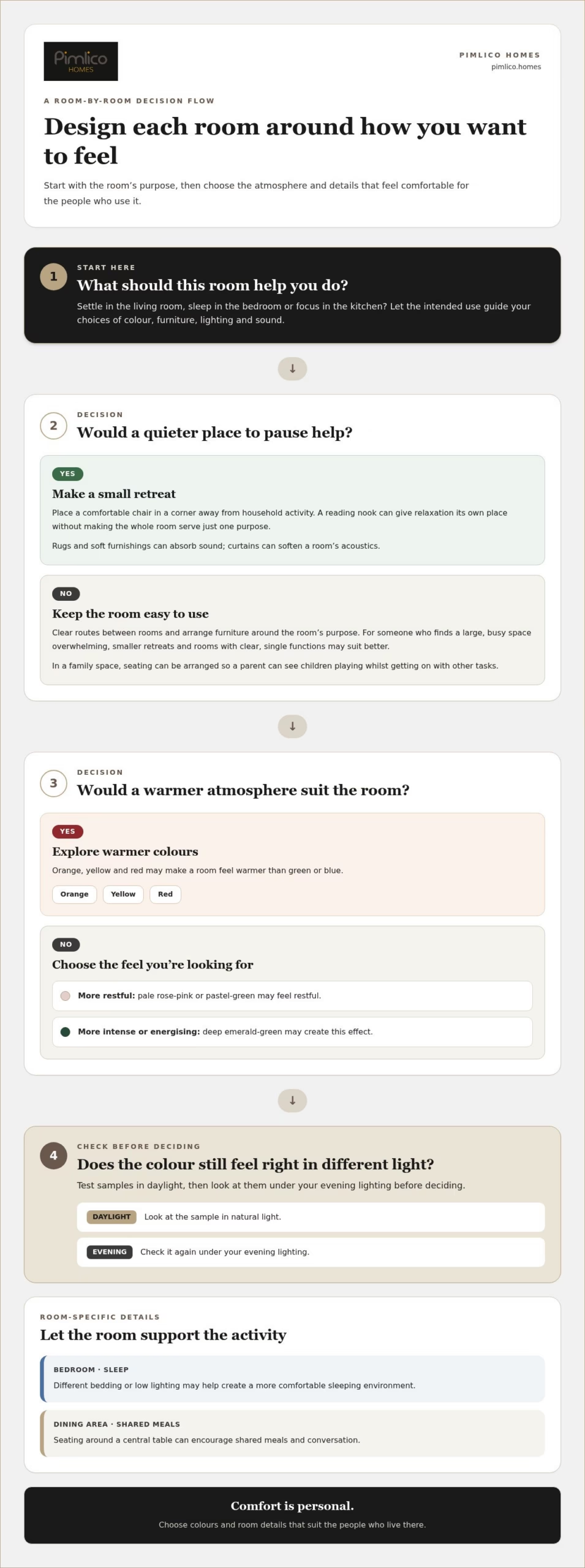
Creating a home that supports mental wellbeing starts with considering how each room should feel. Ask what would help you settle in the living room, sleep in the bedroom or focus in the kitchen. Then consider colour, furniture, lighting and sound. Mind notes that mental wellbeing can describe how someone feels or copes with daily life, so what feels comfortable will vary from person to person.
Colour shapes a room’s atmosphere through its brightness and saturation. Pale rose-pink or pastel-green may feel restful, while deep emerald-green can feel more intense or energising. Orange, yellow and red may make a room feel warmer than green or blue. Test samples in daylight, then look at them under your evening lighting before deciding.
For anyone creating a home that supports mental wellbeing, a quiet retreat can make a practical difference. Put a comfortable chair in a corner away from household activity. Rugs and soft furnishings can absorb sound, while curtains can soften a room’s acoustics. A reading nook gives relaxation a dedicated place without making the whole room serve just one purpose.
Different household members may need different settings. A smaller retreat and rooms with clear, single functions may suit someone who finds a large, busy space overwhelming. Keep routes between rooms clear, and arrange seating so a parent can see children playing while getting on with other tasks.
In the bedroom, Mind suggests that different bedding or low lighting may help create a more comfortable sleeping environment. In a dining area, seating around a central table can encourage shared meals and conversation. These choices make eating, living and resting feel more intentional, and help each room support the activities that matter to the people who use it.
3. Making time for relaxation and enjoyable activities
Make room for rest in your day as well as in your home. Mind suggests taking a break from a stressful situation, as a change of surroundings may help you relax and relieve distress. A short walk, a bath or a favourite piece of music can mark a pause between work and home life.
For sleep, make the bedroom comfortable and establish a regular bedtime routine. Mind recommends trying tech-free time before bed, avoiding bright screens and caffeine, and choosing a relaxing activity instead. Reading quietly or listening to gentle music can become a simple cue to wind down. If sleep is difficult, Mind notes that resting in bed can still help the body and mind.
Enjoyable activities need not be elaborate. Drawing at the kitchen table, baking a familiar recipe or taking photographs on a walk can provide a creative focus. Mind says activities like these may distract from difficult thoughts, support self-expression and feel calming or rewarding. Keep materials accessible so it’s easy to get started.
Learning something new can also bring positive momentum. The NHS says learning new skills can build self-confidence and self-esteem, create a sense of purpose and help people connect with others. Try a new recipe, practise a musical instrument or invite a friend to share a hobby. The activity matters less than choosing something personally enjoyable.
Movement can fit naturally into home life, too. The NHS advises choosing physical activities you enjoy rather than feeling obliged to spend hours in a gym; a walk or gentle exercise at home may suit your routine. Mind recommends starting small and building activity into daily life where possible. Shared cooking, a game night or a regular family meal can also strengthen connection and belonging. Choose ideas that feel comfortable, then give yourself time to discover what works.
4. Adding indoor plants
Choose greenery to suit the room, not just the colour scheme. A low-maintenance plant can bring nature indoors and may help reduce stress. Before choosing one, consider how much daylight reaches the intended spot and whether it’s warm or draughty. A plant suited to those conditions will be easier to care for and more likely to thrive in the room.
Start with one plant in a spot you naturally see, such as a windowsill or shelf beside your reading chair. Kitchen herbs near where you prepare meals add a living detail to an everyday routine. Keep leaves and containers clear of walkways, doors and surfaces used for cooking or eating.
Make plant care manageable. Choose one with straightforward needs, place it within easy reach and follow its care instructions. Set a regular time to check the soil and remove fallen leaves. If caring for plants becomes another source of pressure, scale back to one or choose a different natural detail, such as a branch or botanical print.
Everyone experiences a home differently, so notice how a plant makes you feel. Does a leafy corner feel restful, or does a crowded sill make the room feel busy? Try moving the plant before adding more. A single green accent beside a desk can soften the working area, while a compact arrangement on a dining table can create a natural focal point for shared meals.
For a larger project, consider how windows, shelving and usable surfaces could make room for greenery from the outset. Explore thoughtful home design as part of planning a home that feels composed and personal.
Pimlico Homes: Luxury Detached Homes
Pimlico Homes offers Luxury Detached Homes for those seeking a home that brings comfort, calm and everyday routines together. Thoughtful choices about room purpose, natural light, storage and quiet areas can shape how a home feels and functions. These priorities are worth considering when choosing a property or planning a bespoke home around the way you live.
Pimlico Homes also offers Executive Courtyard Homes, Bespoke Luxury Homes and Luxury Barn Conversions. Each provides a distinct setting in which to consider how your household uses its spaces, from shared areas to places for retreat. If you’re exploring a home that better reflects your preferences and daily life, contact Pimlico Homes to discuss your plans.
Let your home grow with you
A home’s atmosphere develops over time through the way you live in it. As routines shift, your priorities may change, too. Treat creating a home that supports mental wellbeing as an ongoing process: notice which spaces help you feel settled and what could make daily life easier.
Choose a next step that suits your circumstances. You might refine a room you already enjoy or think more carefully about the qualities you want in a future home. Consider how you want to feel when you wake, unwind or spend time with people close to you. Those personal priorities can guide decisions more clearly than a passing trend.
If a move or a new home is part of that vision, Pimlico Homes can help you explore the possibilities. Contact Pimlico Homes to discuss your home and the kind of setting you would like to create. A thoughtful beginning can make space for a home that feels increasingly your own.
Frequently Asked Questions
What is mental wellbeing?
Mental wellbeing describes how you feel, cope with everyday life and see what feels possible; Mind notes that it has no single fixed meaning. It doesn’t mean feeling happy all the time or being untouched by difficult experiences. Someone might feel worried during a demanding period yet still find moments of connection, interest or calm. Wellbeing can change over time.
What colours and lighting can improve mood at home?
There’s no single colour or lighting choice that suits everyone, so consider the room’s purpose and your personal response. Paler, less saturated shades may feel relaxing, while deeper, stronger colours can feel more energising. Try a sample on the wall and observe it in daylight and after dark. A softer lamp beside a chair can also create a distinct, restful spot in the evening.
How can natural light and ventilation benefit mental health indoors?
Daylight and a view outdoors can strengthen a room’s connection with nature. Mind says time in nature can help improve mood and reduce feelings of stress and anger. Fresh air can also make a room feel less stuffy. Choose a reading or working spot that receives daylight, and open a suitable window to air the room when conditions allow.
How can plants and nature-inspired design support wellbeing?
Plants and natural details can bring the outdoors into a room, even without a garden. Low-maintenance indoor plants may help reduce stress, while a wooden accessory, landscape artwork or birdsong can offer other ways to introduce nature. Consider a plant’s light and care needs before choosing where to put it. If plant care feels burdensome, a nature photograph offers a visual connection without regular upkeep.
How can a home support wellbeing for children, older people or neurodivergent people?
Keep everyday routes clear and tailor rooms to the people who use them. A smaller, quiet retreat and rooms with clear functions may suit neurodivergent people, while seating arranged so a parent can see children playing may help reduce anxiety. A comfortable, uncluttered layout can also make it easier to move around.





