
A luxurious new-build garden is shaped by privacy, considered shade and comfortable places to sit, not by filling every corner at once. Thoughtful garden design for luxury new build homes balances these essentials with planting and materials that complement the property. A phased plan lets the garden gain character over time while keeping the overall design cohesive.
It’s natural to want the garden to feel finished as soon as you move in. Yet the most rewarding spaces often begin with a few well-chosen foundations, then develop as you learn how sunlight, views and everyday routines shape the plot.
Here, you’ll find practical ideas for screening overlooked boundaries, creating shade and choosing inviting seating, along with a clear way to prioritise spending in stages. The result can be a garden that feels private, comfortable and distinctly yours, with each decision contributing to the whole.
Key Takeaways
- Use trees, hedges and climbers to create privacy while keeping planting suited to the garden’s light and layout.
- Plan shade and comfortable seating together, so outdoor spaces feel inviting at different times of day.
- Choose details such as water features for the atmosphere they bring, rather than adding features without a clear purpose.
- Phase garden spending by prioritising practical foundations first, then adding colour and finishing touches over time.
1. Planting trees, hedges and climbers for privacy
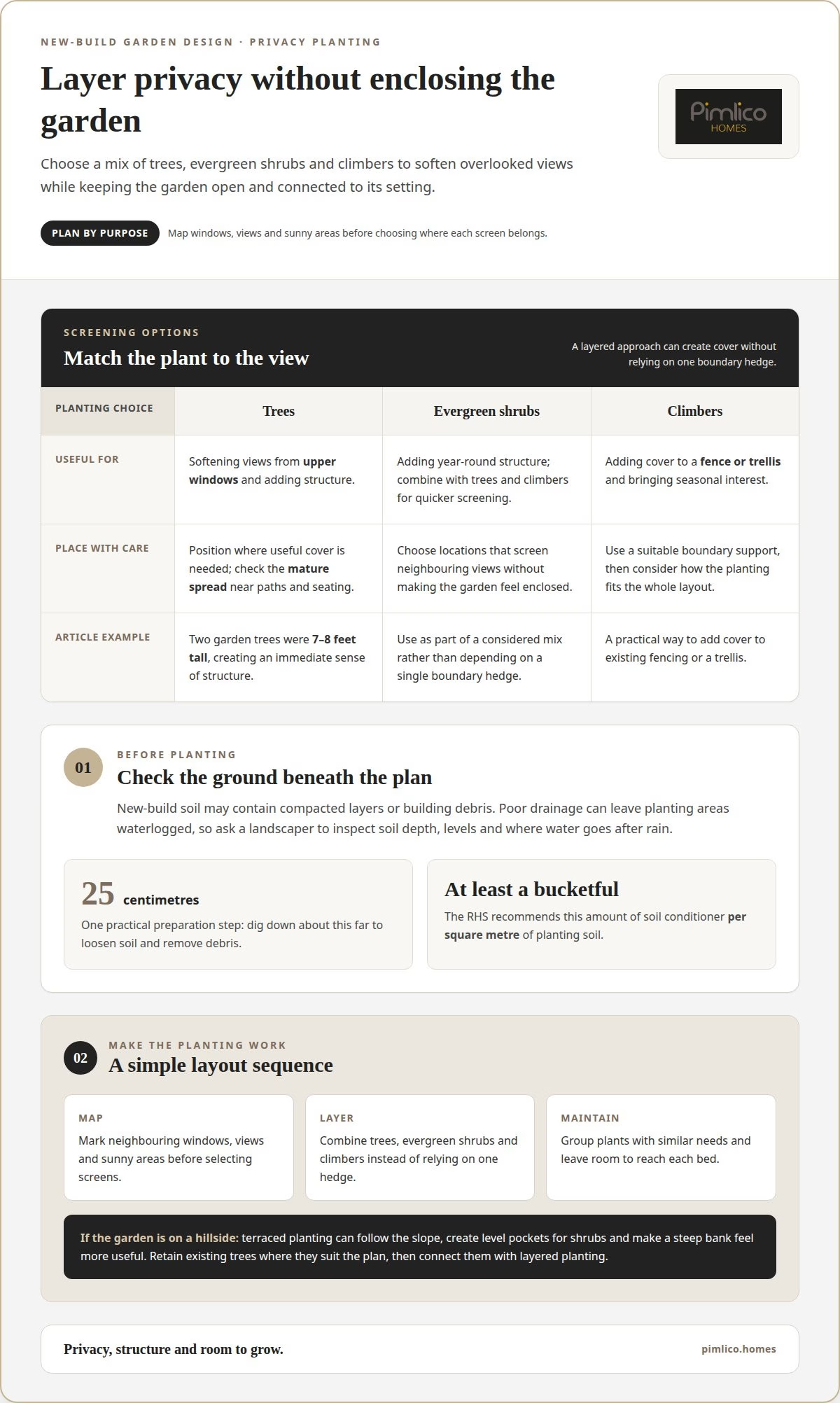
For luxury new-build gardens across the UK, seek landscape designers and landscapers whose portfolios show comparable new-build plots and coordinated planting and construction. A considered approach to garden design for luxury new build homes starts by mapping neighbouring windows, views and sunny areas before choosing privacy screens. This helps place each tree or hedge where it offers useful cover without making the garden feel enclosed.
Check the ground before planting. New-build soil can contain compacted layers or building debris, while poor drainage may leave planting areas waterlogged. Ask a landscaper to inspect soil depth, levels and the route water takes after rain. One practical preparation step is to dig down about 25 centimetres to loosen soil and remove debris. For planting soil, the RHS recommends adding at least a bucketful of soil conditioner per square metre.
For quicker screening, combine evergreen shrubs with trees and climbers rather than relying on one boundary hedge. Trees can soften views from upper windows, while climbers add cover to a fence or trellis. A homeowner’s two garden trees were 7–8 feet tall, an example of using established specimens to create an immediate sense of structure. Check mature spread before planting near paths or seating.
Keep maintenance manageable by grouping plants with similar needs and leaving room to reach each bed. On a hillside, terraced planting can follow the slope, create level pockets for shrubs and make a steep bank feel more useful. Retain existing trees where they suit the plan, then use layered planting to connect them with new beds.
For colour soon after moving in, combine spring bulbs and flowering perennials with shrubs that provide year-round structure. Add edible plants, such as herbs near the kitchen door, where they are easy to gather. If you entertain around a fire pit, keep fragrant herbs and colourful pots close to the seating area, while leaving clear routes through the garden.
2. Pergolas, shade and comfortable seating
Begin with how you use the outdoor space. Mark the route from the house, the afternoon sun and the position of doors before placing seating. A dining table near the kitchen suits outdoor entertaining; a separate lounge corner can feel quieter. Keep walking routes clear so guests can move between the two without crossing the main seating area.
A pergola gives a defined place to sit, but its effect depends on orientation and overhead cover. Slats can filter sunlight, while climbing plants soften the structure and add seasonal interest. For extra shade and privacy, one homeowner added 1-inch battens to the rear of a pergola. Use that as inspiration, then consider sightlines and sunlight before fixing the layout.
Choose furniture to suit the surface beneath it. A stable table and chairs work well on paving, while gravel can define a more informal seating area. Compact, comfortable furniture helps a smaller garden feel open; a bench against a boundary can preserve floor space. Leave room to pull chairs back, and store cushions during wet weather to reduce damage.
For a sustainable arrangement, select durable materials and pieces that can serve more than one purpose. A 19th-century French metal garden table shows how a distinctive piece can anchor an outdoor gathering spot. Pair it with moveable chairs, then add a side table for drinks or lanterns. These details make entertaining feel considered without overfurnishing the space.
Planning permission and building regulations for garden rooms, pools, walls and outdoor kitchens depend on the design and site. Consider dimensions, position, structural work, drainage and service connections early, as these affect what can be built and where.
For a new home, the garden and architecture are best considered together. Explore thoughtfully designed new homes as part of that wider vision.
3. What Makes a Garden Truly Luxurious?
In a new-build garden, a considered design can combine natural materials, layered planting, subtle lighting and a distinctive focal point. A small water feature can transform a quiet corner: a simple rill beside a path or a still basin near a bench adds movement and gentle sound. For a Zen-inspired space, use restrained stone, evergreen structure and a clear view of the water. Keep the feature in proportion, so it enriches the garden rather than dominating it.
To complement modern architecture, echo one or two details from the house, such as paving colour, timber finishes or clean geometric lines. Extend the interior’s sense of space with a clear route from the kitchen door to an outdoor dining area. For example, align a rectangular reflecting pool with a window or patio edge. Repeat a material in a low wall or planter, then soften the composition with grasses and seasonal flowers.
A luxurious garden supports different ways of gathering, from summer dining to a peaceful pause alone. Use lighting to define steps, paths and a water feature rather than illuminating every corner equally. A few well-placed fittings can add depth after dusk and help distinguish dining from relaxation spaces. Choose fittings and finishes suited to outdoor exposure, and position them to avoid glare across seating or towards neighbouring windows.
Wildlife-friendly choices can sit comfortably within a refined design. Include flowering plants for pollinators, a shallow water source and sheltered planting edges. A 13-centimetre-square gap at fence level allows hedgehogs to move between gardens. Keep that route clear of stored items and dense barriers. The result can feel carefully composed without becoming sterile: a garden with considered stonework, living texture and a water feature that offers a quiet point of inspiration.
Current design choices are less about one prescribed look than a balance of architecture, nature and everyday use. Water, layered greenery and carefully placed lighting can bring those elements together in a distinctive, welcoming whole.
4. New-build garden budgets and phased spending
Garden budgets depend on more than plot size: levels, drainage, access, material choices and existing features all affect the work. The same priorities apply to small, medium and large plots, but larger areas or complex ground can require more materials and labour. Budget bands describe the project’s scope, not a fixed price for each plot size.
These bands help frame garden ideas, from making a compact space inviting with planting and a defined patio to creating contemporary zones across a larger garden.
Material choices shape the overall spend. Compare durability, appearance and maintenance, as well as the area each material needs to cover.
A staged plan gives spending a clear order. Allocate 60% of the total garden budget to first-year foundations, 25% to year two’s colour and character, and 15% to year three’s finishing touches. Start with drainage, levels, essential paving and access. Then add raised beds, planting and lighting, before selecting final details such as containers or furniture.
For example, complete the main route and a usable seating area first, then extend the planting as the garden settles. This keeps the design coherent while letting you spread the work over time. Record each phase’s priorities and material choices together, so later additions complement the original plan rather than requiring costly rework.
For a new-build home shaped around your priorities, explore Pimlico Homes’ bespoke luxury homes as a starting point for considering the home and garden together.
Pimlico Homes: Luxury Detached Homes
Pimlico Homes offers luxury detached homes for buyers seeking considered spaces inside and out. If you are planning a move, the garden ideas in this guide can help clarify what matters most, from privacy and seating to phased improvements. Keep those priorities in mind as you explore a home, so its architecture and outdoor space feel cohesive.
For a more individual vision, Pimlico Homes also offers executive courtyard homes, bespoke luxury homes and luxury barn conversions. Each provides a distinct setting for considering how you want to live, relax and entertain. A clear sense of your preferred garden character can help shape your decision, whether you are drawn to an intimate courtyard or a more expansive plot.
To explore the homes and discuss your next step, contact Pimlico Homes or visit pimlico.homes.
Shape a garden that grows with your home
The most rewarding outdoor spaces reflect how you want to live, not a collection of fashionable features. When considering garden design for luxury new build homes, begin with the moments you want the garden to hold: a quiet morning, a long summer meal or room for friends to gather. Those priorities can guide decisions about the home and its setting from the outset.
A garden also changes with the seasons and the people who use it. Leave space for future planting, a new focal point or a more intimate place to sit. A clear vision now gives those later choices a natural place within the whole.
If you are ready to explore a home that can anchor that vision, plan your garden with Pimlico Homes. Take the first step towards a setting that feels considered, personal and ready to become part of everyday life.
Frequently Asked Questions
What Makes a Garden Truly Luxurious?
A truly luxurious garden feels cohesive, purposeful and suited to the people who use it. Quality shows in details such as carefully aligned paths, refined edging and a focal point visible from indoors. Consider how the garden looks from key rooms, then choose finishes and planting that connect those views. Thoughtful restraint often gives a space more distinction than features added without a clear purpose.
How much does luxury garden design and landscaping cost in the UK?
There is no single UK cost because the scope and conditions of each plot differ. A practical budget starts with a measured plan and a written list of essential work, such as ground preparation, access and hard landscaping. The choice of materials, complexity of levels, drainage requirements and amount of planting all affect the total. Separating essentials from later additions makes the budget easier to manage.
What features are popular in high-end new-build gardens, such as outdoor kitchens, pools and garden rooms?
Outdoor kitchens, swimming pools and garden rooms can each create a distinctive purpose, but placement matters as much as the feature itself. Position food preparation close to dining areas, and consider how a pool relates to privacy, sunlight and views from the house. A garden room can support work, hobbies or quiet retreat. Plan access, lighting and connections to the house as part of the overall layout.
What are the best low-maintenance planting schemes for a UK luxury garden?
A structured mix of evergreen shrubs and hardy perennials can provide year-round form with seasonal colour. One low-maintenance planting approach uses 60% evergreen shrubs and 25% hardy perennials. Group plants with similar watering needs, and choose varieties suited to the garden’s aspect and soil. Mulch around established planting to suppress weeds and conserve moisture, keeping it clear of stems and trunks.
How can garden design improve privacy in a new-build estate with overlooked plots?
Privacy works best when screens respond to the views that matter most. From the patio, identify sightlines from neighbouring windows, then place a tree, trellis or taller shrub to interrupt them without enclosing the whole garden. A pergola can provide overhead screening above a seating area, while a well-positioned planter can shield a dining table. Vary screen heights to preserve light and create depth.
What sustainable and wildlife-friendly features can be included in a luxury UK garden?
Choose features that support wildlife while serving everyday needs. A rainwater butt can collect water for pots, and a discreet log pile can provide shelter for small creatures. Plant flowering varieties that offer nectar across the seasons, and leave a less-manicured edge beside formal paving. Reusing sound materials from the site can also reduce waste and give the design a sense of continuity.





