
A freehold sale does not automatically end estate fees. What happens if a developer sells the freehold on a new estate depends on which rights and responsibilities transfer: the new freeholder may continue collecting charges for maintaining shared areas and facilities.
It is understandable to wonder whether a change of ownership could affect what you pay, who manages the estate or how you challenge a problem. The sale changes who holds the freeholder’s rights, but the arrangements for the estate and the documents governing your home remain central to what happens next.
This article explains how estate fees may be affected, what rights and routes to redress homeowners may have, and the options available to a developer selling the freehold. It also considers what the change may mean for residents, not just the parties to the sale.
Key Takeaways
- A developer’s sale of the freehold does not automatically end estate fees; the obligations and maintenance arrangements set out for the estate still matter.
- For the Landlord and Tenant Act 1987 right of first refusal to apply, qualifying tenants must hold more than 50% of the flats in the premises.
- UK legislation provides under the Leasehold and Freehold Reform Act 2024 for freeholders in England to challenge unreasonable estate charges and the standard of estate work at a First-tier Tribunal (Property Chamber).
- Developers can retain or transfer the freehold, with different implications for ongoing management, residents’ involvement and future sales.
Selling a freehold property with estate fees
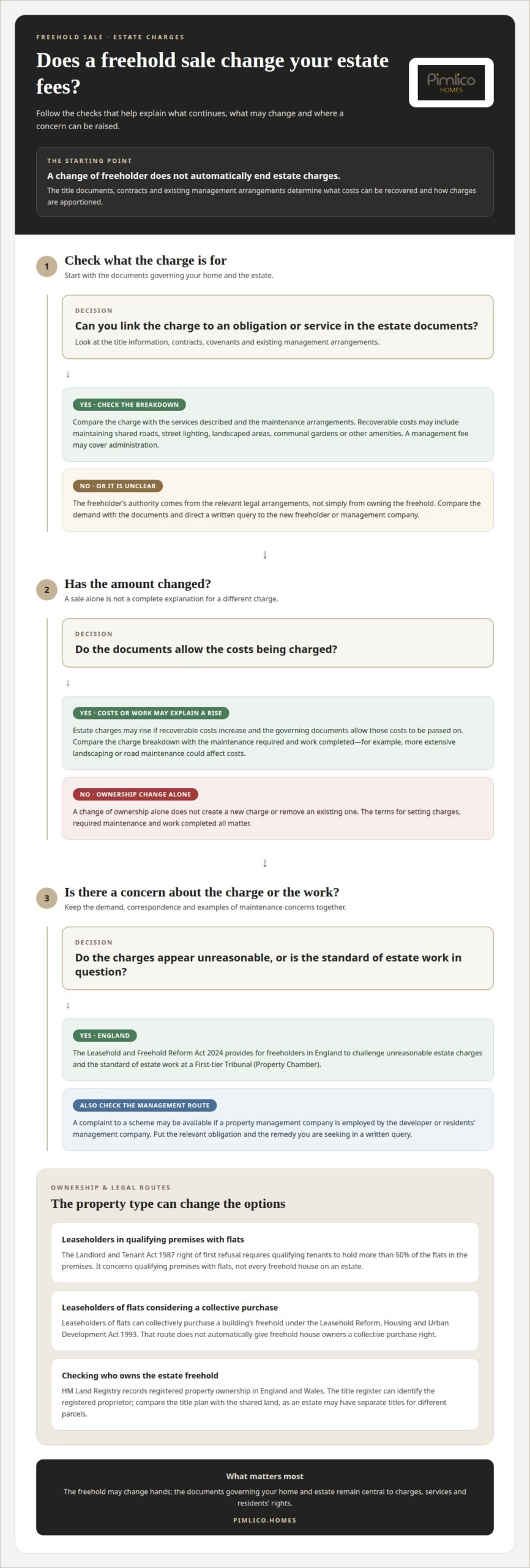
A developer’s sale transfers the freeholder’s rights, but it does not automatically end estate charges. The effect depends on the title documents, contracts and existing management arrangements.
Estate management fees
Estate management fees cover the maintenance of shared areas and the administration of that work. A new freeholder may recover relevant maintenance and other costs through service charges, and may also charge a management fee. The documents governing each home set out which costs can be recovered and how charges are apportioned.
The freeholder’s services should follow the relevant documents and the estate’s arrangements. They may include maintaining shared roads, street lighting, landscaped areas, communal gardens or other amenities. The freeholder must arrange the maintenance required by the applicable agreements, rather than provide every service residents might prefer. When reviewing a charge, check that it relates to an obligation or service attached to the estate.
If you are buying or selling a home, distinguish estate charges from ground rent and mortgage costs. Freehold ownership does not necessarily mean the council maintains shared areas or that residents pay nothing. The contract and title information explain which payment obligations continue after a freehold sale.
Changes to estate charges
Estate charges may rise after a freehold sale if recoverable costs increase and the governing documents allow those costs to be passed on. A change of ownership alone does not create a new charge or remove an existing one. The maintenance required, work completed and terms for setting charges all affect the amount payable.
Compare the services described with the charge breakdown and the estate’s maintenance arrangements. For example, more extensive landscaping or road maintenance could affect costs, while a management fee may cover administration. These details can help explain a change in charges: the sale itself is not a complete explanation.
Some leaseholders may have a right of first refusal when a landlord proposes to sell its interest. Under UK legislation, the Landlord and Tenant Act 1987, qualifying tenants must hold more than 50% of the flats in the premises for that right to apply. It concerns qualifying premises with flats, not every freehold house on an estate, so the property’s legal structure matters.
Current freeholder rights and redress
A freehold transfer changes who holds the estate’s freeholder rights, but residents’ existing arrangements remain important. Homeowners’ options for buying the freehold or challenging charges depend on whether their homes are freehold houses or leasehold flats.
Leaseholders of flats can collectively purchase a building’s freehold under the Leasehold Reform, Housing and Urban Development Act 1993. That route does not automatically give freehold house owners a collective purchase right.
In England, the Leasehold and Freehold Reform Act 2024 provides for freeholders to challenge unreasonable estate charges and the standard of estate work at a First-tier Tribunal (Property Chamber). A freeholder’s redress may also include a complaint to a scheme if a property management company is employed by the developer or residents’ management company.
Residents’ rights and covenants
Residents’ rights and covenants are the obligations and benefits set out in property deeds, titles and estate agreements. Transferring the freehold does not, by itself, rewrite those documents or cancel their terms.
For example, a covenant may require a homeowner to contribute to shared maintenance, while an agreement may set out the manager’s responsibilities. These details matter because the new freeholder’s authority comes from the relevant legal arrangements, not simply from owning the freehold. Ground rent arises from leasehold terms and is distinct from estate charges.
Checking freehold ownership
HM Land Registry records registered property ownership in England and Wales. Homeowners can search for the estate’s freehold title and review the title register to identify the registered proprietor.
Use the estate address or title information to find the relevant register, then compare its title plan with the shared land in question. An estate may have separate titles for different parcels, so the register for one road or amenity may not identify the owner of every communal area. This distinction can help residents direct queries to the right party.
Responding to a sale to a third party
If a third party acquires the freehold, establish the new owner’s identity and the effective management arrangements. Compare any notices about payments or services with the title documents, covenants and existing contracts.
Keep copies of correspondence and charge demands, along with examples of maintenance concerns, such as an unrepaired shared path. Send a written query to the new freeholder or management company, identifying the relevant obligation and the remedy you are seeking. If charges appear unreasonable or work falls below the required standard, the tribunal route available in England offers a formal way to challenge them.
Developer’s options for the freehold
To understand what happens if a developer sells the freehold on a new estate, consider the alternatives: retain it, sell it to a third party or transfer it to a residents’ management company. Each option affects who controls estate management, receives income and takes responsibility for existing arrangements. For buyers, that choice can shape how service charges and shared facilities are managed after the homes are sold.
Retaining the freehold preserves the developer’s interest in the estate and its capital value. New flats are sold on long leases, with the freehold remaining with the developer unless it chooses another approach. The developer may then oversee communal areas and collect estate charges under existing agreements. Residents’ rights and obligations remain tied to the relevant leases and property documents.
Selling to a third party transfers the freehold interest to a new owner. The developer may choose this route to realise its asset, while the purchaser takes on the responsibilities attached to that interest. Conveyancing solicitors document the transfer and address existing arrangements, including maintenance duties and any applicable rights of first refusal. The transaction changes the freeholder, but does not automatically change homeowners’ existing terms.
Transferring the freehold to a tenants’ management company gives residents a way to take greater part in estate decisions. The developer gives up the freehold’s capital value and rent, but the transfer may make homes easier to sell and ends the developer’s liability for ongoing freeholder responsibilities. The company then needs arrangements for managing shared areas and handling service charges.
A decision about what happens if a developer sells the freehold on a new estate should also account for current reform. A government consultation proposed removing disproportionate enforcement remedies available to estate managers under sections 121 and 122 of the Law of Property Act 1925. The practical choice turns on existing rights, future management and the value of retaining the freehold. Clear documents and defined responsibilities can also help prevent disputes over charges or maintenance.
Who can buy the freehold of a new-build estate and what rights do homeowners have?
Who can acquire a freehold depends on the property structure and the route used. A single purchaser may buy from the developer, while qualifying leaseholders may have statutory purchase rights for houses or flats.
For leasehold houses in England and Wales, the Leasehold Reform Act 1967 provides a legal route for qualifying tenants to buy their freehold. The right depends on the relevant eligibility rules and the property’s circumstances. Buying through a formal claim can also mean paying the freeholder’s reasonable legal and valuation costs.
Leaseholders of flats can collectively seek to buy their building’s freehold under the Leasehold Reform, Housing and Urban Development Act 1993. This applies to the building’s freehold, rather than automatically transferring every road, garden or amenity across a wider estate. Homeowners need to distinguish a block of flats from a development containing separate freehold houses.
For a whole new-build estate, residents may acquire the freehold through a negotiated sale or a transfer to a residents’ management company. The company can then hold the estate interest and oversee shared areas under its governing documents. A homeowner buying individually acquires only the interest described in the sale documents, not control of communal land by default.
Freehold ownership brings responsibilities as well as control. A freehold owner is responsible for structural repairs, exterior redecoration, outside-space maintenance and insurance of the building and boundary walls. On an estate, the transfer documents and covenants define shared responsibilities and homeowners’ continuing obligations. Review those terms alongside the estate’s management arrangements before committing. A solicitor can explain how the proposed interest relates to each property.
Considering a new home? Explore new-build homes as you assess how ownership and estate arrangements fit your plans.
Pimlico Homes: Luxury Detached Homes
Pimlico Homes offers Luxury Detached Homes for buyers seeking a considered setting for their next home. Once you understand how estate ownership and charges can work, choose a property whose design and ownership arrangements suit your priorities. The title documents and estate covenants remain essential parts of that decision.
Its homes also include Executive Courtyard Homes, Bespoke Luxury Homes and Luxury Barn Conversions. Each offers a distinct approach to space, character and everyday living, whether you value a courtyard setting, tailored design or the individuality of a converted barn.
If you are considering a new home and want to explore these options, visit pimlico.homes.
Choose your next home with clarity
Understanding what happens if a developer sells the freehold on a new estate can help you make a considered choice about where to live. Give the home itself the same attention: consider how its layout suits your routines, how its setting feels day to day and whether its ownership documents reflect the life you intend to build there.
Pimlico Homes offers Luxury Detached Homes, Executive Courtyard Homes and Bespoke Luxury Homes. Each provides a different setting to consider as you plan your next move. A clear sense of your priorities can make your search more purposeful, from the character of the architecture to the practical details that will matter over time.
To explore your options, contact Pimlico Homes. Your next home can begin with a thoughtful conversation and a clear vision of what matters most.
Frequently Asked Questions
What happens to homeowners when a developer sells the freehold of a new estate in England?
Homeowners generally remain subject to their existing property documents, while the purchaser takes over the freeholder’s interest. If a new service-charge demand arrives, compare the named payee and stated basis with previous demands and your title documents. For example, a new payment recipient alone does not explain a change in the charge itself. Keep the sale notice and any updated management correspondence with your homeownership records.





