The most striking timber façade is not always the simplest to care for. External timber cladding maintenance for luxury rural new builds begins with choosing a material and finish that suit the desired appearance, exposure and upkeep. Common UK options include oak, larch, Douglas fir, red cedar and sweet chestnut, as well as modified woods such as Accoya® and Kebony. Whichever you choose, inspect the boards regularly and renew protective finishes as they wear.
Timber’s character is part of its appeal, but sunlight, shade and damp conditions affect elevations differently. A considered care routine helps preserve the façade’s appearance and reveal emerging issues before they become more serious.
This guide explains how to clean shaded or damp cladding, which details around corners, windows and board ends need attention, and how to recognise damage, mould and discolouration. You’ll gain a clearer understanding of caring for timber cladding as your new home settles into its rural setting.
Key Takeaways
- Choose cladding with its appearance, durability and expected upkeep in mind; modified timber may offer a lower-maintenance finish.
- Give shaded, damp elevations attentive cleaning, and watch for signs that moisture is lingering on the timber.
- Pay particular attention to corners, window junctions and board ends, where sound detailing helps limit moisture entry.
- Inspect the façade regularly for changes in colour, mould or physical damage so emerging problems are easier to identify.
Exterior Timber Cladding: What are the Options?
UK cladding options include oak, larch, Douglas fir, red cedar and sweet chestnut. Modified timber offers another option, with different weathering and routine-care characteristics.
Modified timber and reduced maintenance
Modified timber is wood altered to improve its stability, durability and performance. It can suit rural homes where a consistent appearance and fewer finish treatments are priorities.
Accoya® and Kebony are examples of modified wood cladding. Some modified products are described as offering a maintenance-free finish for up to three decades, but this does not remove the need to inspect boards, joints and fixings. Weather exposure, installation and the chosen finish still affect upkeep.
Compare modified timber with natural species before deciding. Sweet chestnut heartwood does not need prior treatment, while larch and oak offer distinct grain and colour. For external timber cladding maintenance for luxury rural new builds, balance appearance and durability with the care you are prepared to provide.
Maintenance differences between timber finishes
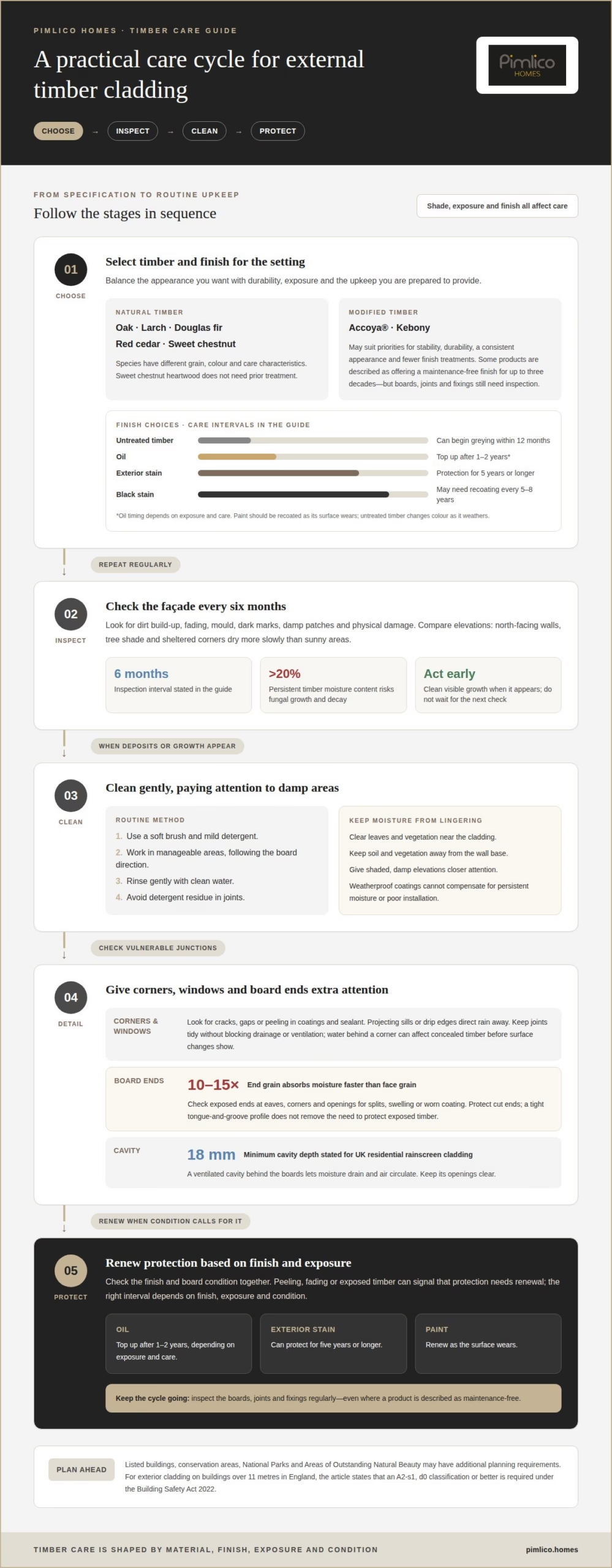
Untreated timber can weather naturally, but its colour changes; untreated cladding can begin greying within 12 months. Oiled finishes need topping up after one or two years, depending on exposure and care. Exterior stains can protect for five years or longer, while painted timber needs recoating as its surface wears.
These finishes shape both the façade’s appearance and its maintenance routine. Black-stained timber, for example, may need recoating every 5-8 years to retain colour depth. Check the finish and board condition together, since peeling, fading or exposed timber can indicate that protection needs renewal.
Cladding material should be chosen for durability, appearance and budget. Maintenance costs depend on the species, finish, exposed area, access and whether work involves recoating or replacing damaged boards. The price depends on the case and is given after a quote request.
Planning and fire requirements also affect choices. Listed buildings, conservation areas, National Parks and Areas of Outstanding Natural Beauty may have additional planning requirements. For exterior cladding on buildings over 11 metres in England, an A2-s1, d0 classification or better is required under the Building Safety Act 2022. Factor these requirements into the design before selecting boards and finishes.
Cleaning cladding in damp or north-facing locations
North-facing walls, tree shade and sheltered corners dry more slowly than sunny elevations. As a result, timber can show different colour changes and dirt levels around the same house. In the UK climate, remove surface dirt, keep vegetation and soil away from the wall base, and renew protective finishes as they wear. This helps limit moisture exposure without treating every elevation identically.
For routine cleaning, use a soft brush and mild detergent, then rinse gently with clean water. Work in manageable areas, following the board direction, and avoid leaving detergent residue in joints. Clear leaves and vegetation near the cladding, where they can hold damp against the boards. Weatherproof coatings can help prevent mould, mildew and algae, but cannot compensate for persistent moisture or poor installation.
Shade matters. A south-facing wall in full sun, a north elevation and boards beside trees can weather differently. Look for green growth, dark marks or damp patches, then clean affected areas before growth spreads. Timber that remains persistently damp above 20% moisture content risks fungal growth and decay. Softwood species such as red cedar, larch and Douglas fir have natural oils or resins, but exposure and maintenance still affect their condition.
Inspect exterior wood every six months for dirt build-up, fading, mould and other changes. Clean when deposits appear; do not wait for the next inspection if growth is visible. Oil may need topping up after one or two years, depending on exposure and care. Exterior stain can protect for five years or longer, while paint should be renewed as its surface wears. The right interval depends on finish, exposure and condition. A considered façade design for a new-build home can account for shade and weather from the outset.
Details around corners, windows and board ends
Cladding junctions affect both the façade’s appearance and its resistance to moisture. Corners, window openings and exposed board ends need careful detailing.
Corner and window details
At corners and windows, well-sealed joints help weatherproof the installation and limit water reaching the structure. Neat junctions also keep the board layout visually coherent.
Inspect the coating and sealant around each opening for cracks, gaps or peeling. A projecting sill or drip edge directs rain away from the surface below, reducing prolonged wetting. Where boards meet a window frame, the joint should remain tidy without blocking drainage or ventilation. These details matter: water entering behind a corner can affect concealed timber before changes appear on the surface.
Board-end details
Board ends expose end grain, which absorbs moisture 10-15 times faster than face grain. Protecting cut ends is therefore an important part of cladding maintenance.
Check exposed ends at eaves, corners and openings for splits, swelling or worn coating. Sealed joints and a suitable protective finish help reduce moisture entry, while clean cuts maintain a precise appearance. Tongue-and-groove boards also need attention at their ends; a tight profile does not eliminate the need to protect exposed timber. If an end is damaged, water can enter the board and affect its fixing point.
Ventilation gaps and clearances
A ventilated cavity behind the boards allows moisture to drain and air to circulate. UK residential rainscreen cladding should have a minimum cavity depth of 18mm.
Keep the cavity clear at its openings so airflow is not obstructed by debris, sealant or vegetation. Boards should terminate at least 150mm above finished ground level, reducing contact with splashback and damp soil. Drip edges at sills and other projections help shed rain rather than letting it run back across the cladding. Together, ventilation, clearance and drainage reduce prolonged wetting, which can undermine coatings and timber.
During inspections, follow the façade from corners to windows and board ends. Look for blocked gaps, failed seals and water staining, then address the specific fault rather than coating over it. Sound installation makes ongoing care more straightforward.
Inspecting cladding for damage, mould and discolouration
Inspect timber cladding every six months, checking for fading, dirt build-up, mould and physical damage. Compare exposed elevations with sheltered areas: a south-facing wall may fade differently from shaded boards beside trees. Untreated timber can begin to grey within 12 months, so colour change alone does not confirm decay. Look for soft patches, splits, lifted boards, loose fixings and staining around joints.
Prevent algae and mould by clearing leaves and vegetation, keeping soil away from the wall base, and addressing places where water collects. Check gutters for overflow and inspect joints, board ends and fixings after heavy weather. Damaged boards or poor joints can let moisture behind the cladding, where rot may spread into the underlying structure. Durable red cedar still needs regular attention; natural resistance does not make it immune to poor drainage or neglect.
Distinguish weathering from damage before choosing a repair. Even silvering across sound boards can be a natural appearance change, while localised softness, cracking or persistent damp patches call for closer investigation. Deep-charred timber may weather from black to silver-charcoal over 10-15 years. Follow the finish manufacturer’s care guidance, and assess whether the coating has worn or the board itself has deteriorated.
For repairs, identify the source of moisture first, then replace boards that are rotten, split or no longer secure. Match the replacement timber, profile and finish to the existing façade, and renew affected fixings with suitable materials. Recoating over mould or trapped moisture will not resolve the underlying cause. If damage extends behind the boards, assess the concealed structure before closing the façade again.
A carefully considered new-build home design can account for cladding exposure and junctions from the outset, helping make later inspection more straightforward.
Pimlico Homes
Pimlico Homes creates luxury homes with considered design and quality craftsmanship. Its homes include luxury detached and executive courtyard properties, bespoke new builds and luxury barn conversions.
As your new-build plans take shape, consider timber species, exposure, finish and detailing alongside the home’s architectural character. These choices influence the façade’s appearance and ongoing care, so it is worth considering maintenance priorities early. Choose a timber finish that feels at home in its rural setting and suits the level of upkeep you have in mind.
Pimlico Homes brings a focus on craftsmanship and thoughtful design to its luxury residential developments. If you are considering a bespoke home or luxury new build, contact Pimlico Homes to discuss your plans.
Plan the façade with the home
A considered approach to external timber cladding maintenance for luxury rural new builds starts with decisions made during the design process. Look beyond the initial finish: consider how the chosen timber will sit within its landscape, how its character may change over time, and what level of ongoing care suits your household. This gives the exterior a considered place in the wider vision for your home.
Pimlico Homes offers Luxury Detached Homes, Executive Courtyard Homes and Bespoke Luxury Homes. If you are shaping a rural new-build project, cladding choices can form part of the conversation about its architectural character and long-term care. Share your plans with Pimlico Homes and take the next step towards a home designed around your vision.
Frequently Asked Questions
How Long Does Timber Cladding Last on a House in the UK?
Well-maintained timber cladding in Britain can last 20 to 40 years or more. Its lifespan depends on the timber species, installation quality, weather exposure and consistency of care. A sheltered elevation with sound drainage may age differently from an exposed wall. For a realistic assessment, consider the whole cladding build-up, not just the visible boards, since concealed moisture can affect the supporting structure.
What does a surveyor look for with timber cladding?
A surveyor assesses the visible boards and, where accessible, the layers behind them. They look for movement, decay, staining, failed joints, loose fixings and signs that water has reached the substrate. In England and Wales, timber cladding may be inspected within a RICS Level 2 HomeBuyer Report or Level 3 building survey. A Level 3 survey can give more detailed advice on remedial work and likely costs where the substrate is accessible.
How do orientation, shade, rainfall and coastal exposure affect timber cladding maintenance?
Orientation and shade influence how quickly cladding dries and how its colour changes. North-facing walls and areas near trees may remain damp longer, while strong sun can weather exposed boards differently. Frequent rain makes sound drainage and intact finishes especially important. In coastal settings, inspect exposed elevations and metal fixings for deterioration, and remove surface deposits during routine cleaning to help preserve the finish.
Which timber cladding finishes preserve a luxury appearance while minimising ongoing maintenance?
Modified timber can offer a refined, consistent appearance with less finish upkeep, while natural weathering suits designs where a changing patina is welcome. If retaining a chosen colour matters, a suitable stain or coating needs periodic attention. Consider how each finish looks across different elevations, since sun and shade can produce contrasting effects. The best fit balances the desired appearance with the care routine you are prepared to maintain.