
Zinc earns its place on contemporary executive homes through a combination of corrosion resistance, weather performance and architectural versatility. A zinc roof can last up to 100 years, while natural zinc develops an even, protective grey patina over three to ten years. The zinc roofing advantages for contemporary executive homes extend beyond the roofline, with the material also creating a considered finish across external walls and details.
Zinc offers more than a striking first impression. Its changing surface brings depth and character to a home, while its versatility allows roofing and cladding to work together as a coherent design. This guide explains zinc’s practical advantages, how its patina develops and where it can be used on a building. It also covers the installation details that influence performance, so you can assess whether zinc suits your plans.
Key Takeaways
- Assess zinc for its resilience in exposed conditions and the lasting performance it can bring to a roof.
- Allow for natural zinc’s evolving patina when choosing a finish that will sit comfortably within your home’s architectural character.
- Understand how movement, ventilation and drainage details influence the performance of zinc roofing and cladding.
- Explore how Pimlico Homes’ Executive Courtyard Homes and other bespoke homes can bring a considered material palette together across the building envelope.
Why Is Zinc Roofing So Popular?
The zinc roofing advantages for contemporary executive homes include weather resistance, a protective patina and a distinctive architectural finish. Together, these qualities make zinc a durable option for carefully considered roof designs.
Weather and Corrosion Resistance
Zinc resists corrosion and does not rust, making it suitable for roofs exposed to rain, snow and hail. It is less reactive than iron or copper in the presence of moisture and air. This matters on exposed roof areas, where reliable weather protection is essential. Keeping gutters and outlets clear also helps water drain away, reducing the risk of standing water around roof details.
Protective Patina and Durability
A natural patina develops on zinc and can help protect its surface. Natural zinc typically develops an even, mid-grey finish over three to ten years. Rather than staying factory-new, its appearance changes gradually. This evolving layer contributes to zinc’s durability and gives the roof a finish that matures within its architectural setting.
Zinc Service Life
Properly installed zinc roofing can have a service life of up to 100 years. The protective patina supports durability, while effective detailing and drainage help limit persistent moisture exposure. Liverpool’s Picton Reading Room dome dates to 1879 and was refurbished after more than 130 years of service. Regular checks and clear gutters help maintain performance over time.
Comparing Roofing Materials
Standing-seam aluminium, copper, slate and tiles each bring different visual qualities and design considerations. Zinc standing seams use raised joints and concealed fixings for a clean, linear appearance. This combination of a contemporary roofline and a naturally evolving surface is among the zinc roofing advantages for contemporary executive homes. The right material depends on the home’s form and the character you want to achieve.
In the UK, whether zinc roofing needs planning permission depends on the proposed work and the property’s planning context. Conservation-area status may also be relevant, so requirements differ from one home to another.
Roofing aesthetics and patina development
Zinc gives a roof a distinctive surface that can complement contemporary forms and traditional details. Consider its finish alongside the cladding, so the building reads as a coherent architectural whole.
Natural Patina Development
A natural patina is the protective surface that forms as zinc responds to its environment. Its appearance changes gradually, giving the roof a more settled character rather than a fixed, uniform look.
Natural zinc develops an even, mid-grey patina over three to ten years. The pace and appearance of this change depend on the roof’s exposure and surrounding conditions. If you prefer a consistent colour from the outset, a pre-weathered finish provides a different starting point. Either approach lets the roof contribute to the home’s architectural identity.
Patina and Roofing Finishes
Zinc comes in a variety of colours and textures, allowing the finish to complement the wider exterior palette. Natural zinc develops a softer, less uniform surface, while a pre-weathered finish starts with a more established appearance. These choices are particularly relevant where the roof meets zinc cladding or other exterior materials.
Standing seam is one way to give a roof a crisp, directional rhythm. Its raised lines can emphasise the geometry of a contemporary home, while the selected zinc colour influences how strongly the roof contrasts with the façade. Consider both elements together: the seam pattern shapes the surface, and the finish sets its visual tone. If a distinctive material palette is part of your plans, explore bespoke home design as a way to bring exterior choices into one considered vision.
In which part of the building is zinc used?
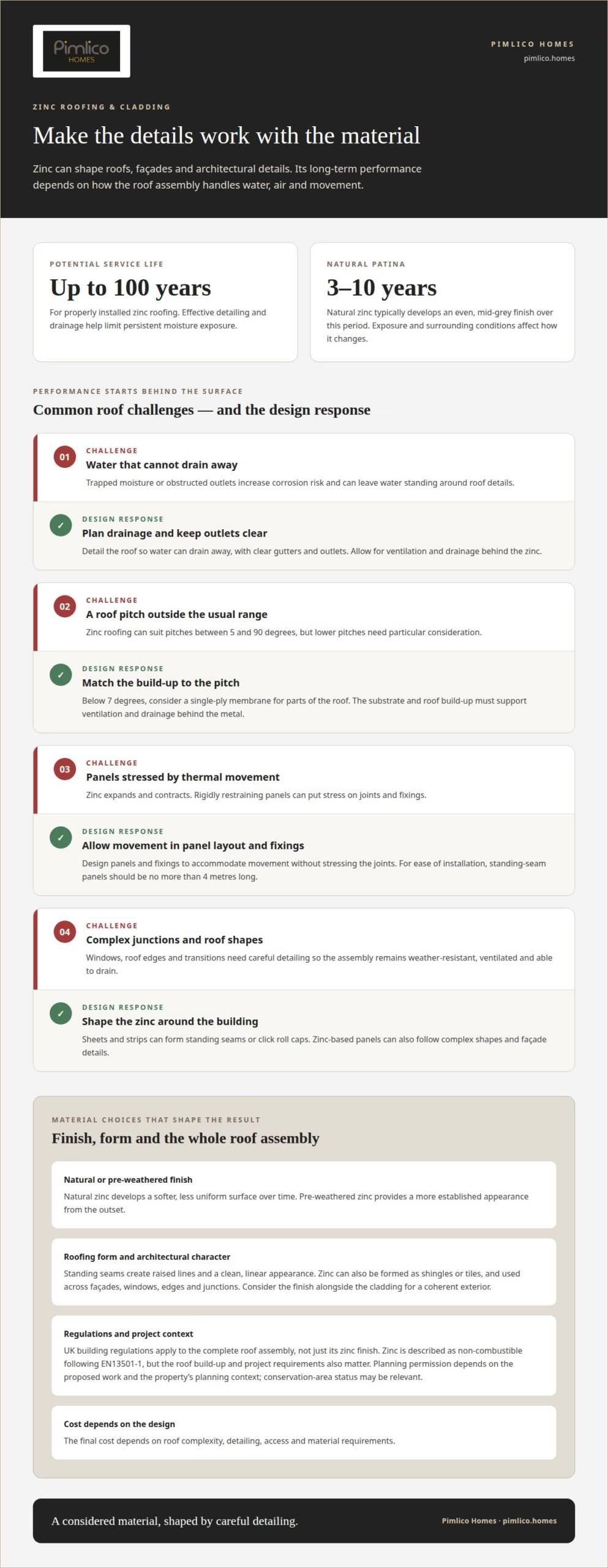
Zinc can cover roofs and façades, with panels shaped around windows, roof edges and junctions. Its performance depends on careful detailing: the design must allow for movement, ventilation and drainage behind the metal.
UK building regulations apply to the complete roof assembly, not simply its zinc finish. Zinc is described as non-combustible following EN13501-1, but the roof build-up and project requirements also matter.
The final cost depends on the roof’s complexity, detailing, access and material requirements.
Zinc roofing can suit pitches between 5 and 90 degrees. For pitches below 7 degrees, consider a single-ply membrane for parts of the roof. The substrate and build-up must support ventilation and drainage behind the zinc; a cold vented roof requires a continuous cavity and air inlets.
Thermal movement needs to be allowed for in the panel layout and fixings. Standing-seam panels should be no more than four metres long for ease of installation. Panels and fixings must allow movement without stressing the joints, while details around windows and roof edges need to remain weather-resistant.
Roofing sheets and strips can be formed into standing seams or click roll caps. Zinc-based panels can also follow complex shapes, making them suitable for varied rooflines and façade details. Installation quality matters at every transition, where water must drain and the assembly must remain ventilated.
Corrosion risk increases if moisture becomes trapped or drainage is obstructed, so careful detailing and clear outlets matter. Rain can create sound on metal roofing, while ventilation and insulation help manage condensation within the roof build-up. Correctly designed panels and fixings accommodate thermal movement without rigidly restraining the zinc.
Zinc for roofs and cladding across the building envelope
Zinc can connect a roof and façade through a consistent material palette. Rather than treating the roof as an isolated feature, consider how zinc roofing and cladding can link the building’s upper surfaces, walls and architectural details.
Zinc roofing can take the form of standing-seam panels, shingles or tiles. Each creates a different pattern and visual scale, from long, ordered seams to smaller repeated units. Zinc-based panels can also follow complex rooflines, while details around windows, edges and junctions carry the material through changes in form.
Across façades, zinc cladding extends that material language down the building. Panels can add texture and definition to external walls, creating a deliberate relationship between roof and elevation. Zinc wall panels or cladding can last over 200 years, whilst zinc roofs can last up to 100 years. These figures illustrate the material’s potential longevity, not a guarantee for every installation.
Using zinc on both roof and façade can suit a design where a unified exterior is central. A standing-seam roof paired with cladding, for example, can emphasise clean lines, while shingles or tiles create a different surface effect. Varied zinc colours and textures give designers scope to balance contrast and continuity with the home’s overall character.
The wider takeaway is that zinc is not limited to a single roof form. Its range of shapes and applications makes it suitable for roofs and walls, with detailing adapted to each junction and surface. If you are planning a new home, explore bespoke home design to consider how roofing and cladding can work together from the outset.
Pimlico Homes: Executive Courtyard Homes
Pimlico Homes develops executive courtyard homes for people planning a distinctive new home. If zinc roofing or cladding is part of your architectural vision, consider how the exterior materials relate to the home’s form and character as the design takes shape.
You can also explore luxury detached homes, bespoke luxury homes and luxury barn conversions. Each offers a distinct starting point for a home shaped around its setting and design ambitions. The right choice depends on the kind of home you want and how its exterior should feel as a whole.
For a new-build home, contact Pimlico Homes to discuss your plans.
Shape the next stage of your home
Choosing exterior materials also means choosing the character your home will convey. Understanding the zinc roofing advantages for contemporary executive homes can help you frame that decision, then consider how zinc fits into the wider design, setting and proportions of your property.
Pimlico Homes offers luxury detached homes, executive courtyard homes and bespoke luxury homes. If you are planning a new home and want its architectural details considered as part of a coherent whole, discuss your ambitions with the team. Begin with the atmosphere you want to create, the form of home that suits you and the materials you are drawn to.
Contact Pimlico Homes to discuss your project and take the next step towards a home shaped around your vision.
Frequently Asked Questions
Can zinc be recycled and upcycled?
Yes. Zinc is 100% recyclable, so roofing and cladding can re-enter material production when removed. Upcycling may also be possible when reclaimed sheets remain in suitable condition and their dimensions work for a new use. For example, recovered zinc could become a smaller architectural detail rather than returning to a roof. Reuse depends on the material’s condition and the requirements of its next application.
How is maintenance and longevity secured in zinc?
Long-term performance depends on sound detailing and straightforward upkeep. Inspect roof junctions regularly and keep gutters and outlets clear, so water drains rather than collecting against the metal. After severe weather, check for damage or blockages, particularly around edges and drainage points. These checks help preserve the roof assembly, but do not replace correct design and installation from the outset.
How is zinc used in modern architecture?
Zinc gives architects a way to connect roof and façade design through related surfaces and details. On a home with a prominent entrance, for example, it might define a roof edge and continue as a carefully placed wall feature. Its capacity to form curves and complex shapes also supports distinctive rooflines. The result can be a unified exterior without covering every surface in metal.
Is zinc considered a “green” material?
Zinc has sustainability advantages, though no material’s environmental impact is determined by one feature alone. It is 100% recyclable and requires less energy to produce than copper or aluminium. Its long potential service life can also mean fewer material replacements over a building’s use. A considered assessment should account for the full roof assembly, sourcing, transport, installation and eventual recovery of the material.
What are the future trends in design with zinc?
Instead of relying on a predicted trend, consider the design possibilities zinc already offers. Roof and façade surfaces can be coordinated, while varied colours, textures and formed shapes allow for considered contrasts. For example, a restrained zinc roof could sit alongside a distinctive façade treatment. These choices help the architecture respond to its setting and establish a lasting identity without relying on short-lived decorative effects.
What is the durability of zinc?
A properly installed zinc roof can last up to 100 years, making it a durable option for residential architecture. Its actual performance depends on the complete design, including suitable support, well-resolved junctions and effective water drainage. Material selection alone cannot compensate for poor detailing. For homeowners, durability therefore begins with treating the roof as a carefully designed system, not simply a choice of metal covering.





