A structural warranty is not a catch-all safety net. In answer to what a structural warranty does not cover, exclusions commonly include cosmetic defects, ordinary wear and tear, damage caused by poor maintenance, and household systems such as boilers, electrics and general plumbing. These systems may be relevant if a fault directly causes structural damage, but the policy wording sets the precise boundaries.
It’s understandable to expect a long-term warranty to protect every part of a new home. In practice, the focus is narrower: serious defects in the structure, rather than everyday repairs or the gradual effects of use.
This article explains what structural cover may include, why windows and interior finishes are commonly excluded, and how a warranty differs from buildings and contents insurance. It also explains how a typical two-year defects period and the later structural insurance period shape the protection, so you can see where the warranty may help and where other cover may be relevant.
Key Takeaways
- Understand how the developer’s early responsibility differs from the insurer’s role later in the warranty period.
- Learn why a fault in a household system may only matter to structural cover if it causes damage to the building itself.
- Distinguish protection for building defects from insurance against events such as fire, flooding or storms.
- Recognise which parts of a home may qualify as structural elements, and why the policy wording matters.
What Does a Structural Warranty Cover?
A typical UK structural warranty combines an initial defects period with later structural insurance. The distinction matters: responsibility and the defects considered can change after the first two years.
Insurance Periods and Developer Responsibilities
The defects liability period is the initial period when the developer is usually responsible for rectifying reported defects. In a typical warranty, it lasts for the first two years after practical completion; the defects insurance period is normally the same length. If the developer refuses to act or becomes insolvent, the warranty provider may step in, subject to the policy.
From year three onwards, the structural insurance period generally covers qualifying major structural defects, commonly through year ten. This is not simply an extension of the developer’s initial responsibilities. The policy wording sets out what qualifies, the applicable limits and how to make a claim.
Latent Defects in the Initial Cover Period
A latent defect is a fault concealed at handover that becomes apparent later, such as a hidden failure in a foundation. Its timing matters: the initial two-year period and the later structural insurance period have different roles. Latent defects discovered during the first two years are not covered by the described structural insurance period, which applies later.
During the initial period, report a defect to the developer in writing and keep a copy of the report and response. If a hidden fault emerges after that period, cover depends on whether it meets the policy’s definition of a structural defect. A cosmetic crack alone does not establish structural failure.
Design and Construction Defects
Structural cover may respond to qualifying failures in design, materials or workmanship that affect load-bearing elements. Examples include movement caused by a fault in the foundations or failure in a structural wall. A claim must establish the connection between the defect and a failure in design, materials or workmanship.
From year three, cover focuses on serious structural problems, rather than every flaw left by construction. Weather exposure alone does not make damage a structural defect; the cause and effect matter. For example, water entering through a design or workmanship failure may be relevant if it damages the structure. The policy defines covered work and exclusions.
Electrics, plumbing and windows excluded from cover
UK structural warranty exclusions vary between providers because each policy sets its own scope, limits and conditions. A practical starting question is: what does a structural warranty not cover? Usually, it excludes everyday repairs rather than qualifying defects in the building itself. A system fault may still matter if it directly causes structural damage, depending on the policy wording.
Boilers, appliances, electrical systems and general plumbing installations are usually outside structural cover. A failed boiler or leaking tap is not, by itself, a structural claim. If a plumbing defect damages a load-bearing element, the resulting structural damage may be considered under the policy. Windows are also commonly excluded.
Cosmetic defects and normal wear and tear are generally not covered. Examples include minor plaster cracks caused by shrinkage, chipped finishes and ordinary deterioration of decoration. Carpets, bathroom suites and other interior furnishings are separate from structural elements. Understanding what a structural warranty does not cover helps distinguish these finishes from defects that affect a building’s stability.
Damage caused by poor maintenance, homeowner alterations or misuse is commonly excluded. For example, a blocked gutter left uncleared can cause damp that falls outside cover if neglect is responsible. An alteration that contributes to structural failure may also affect a claim. Keep maintenance records and report suspected defects before arranging repairs.
Damp, condensation, drainage faults and water ingress are not automatically covered or excluded. The cause matters: water entering through a design or workmanship failure may qualify if it damages the structure. Damp caused by poor upkeep or weathered sealant is generally excluded. Condensation or a blocked drain alone does not establish a structural defect.
NHBC Buildmark has its own policy terms, exclusions and limits. Typical exclusions can include cosmetic damage, wear and tear, poor maintenance and alterations; this is not a complete account of Buildmark cover. For a conversion project, Luxury Barn Conversions offer a considered route to a distinctive home.
How does it differ from building and contents insurance?
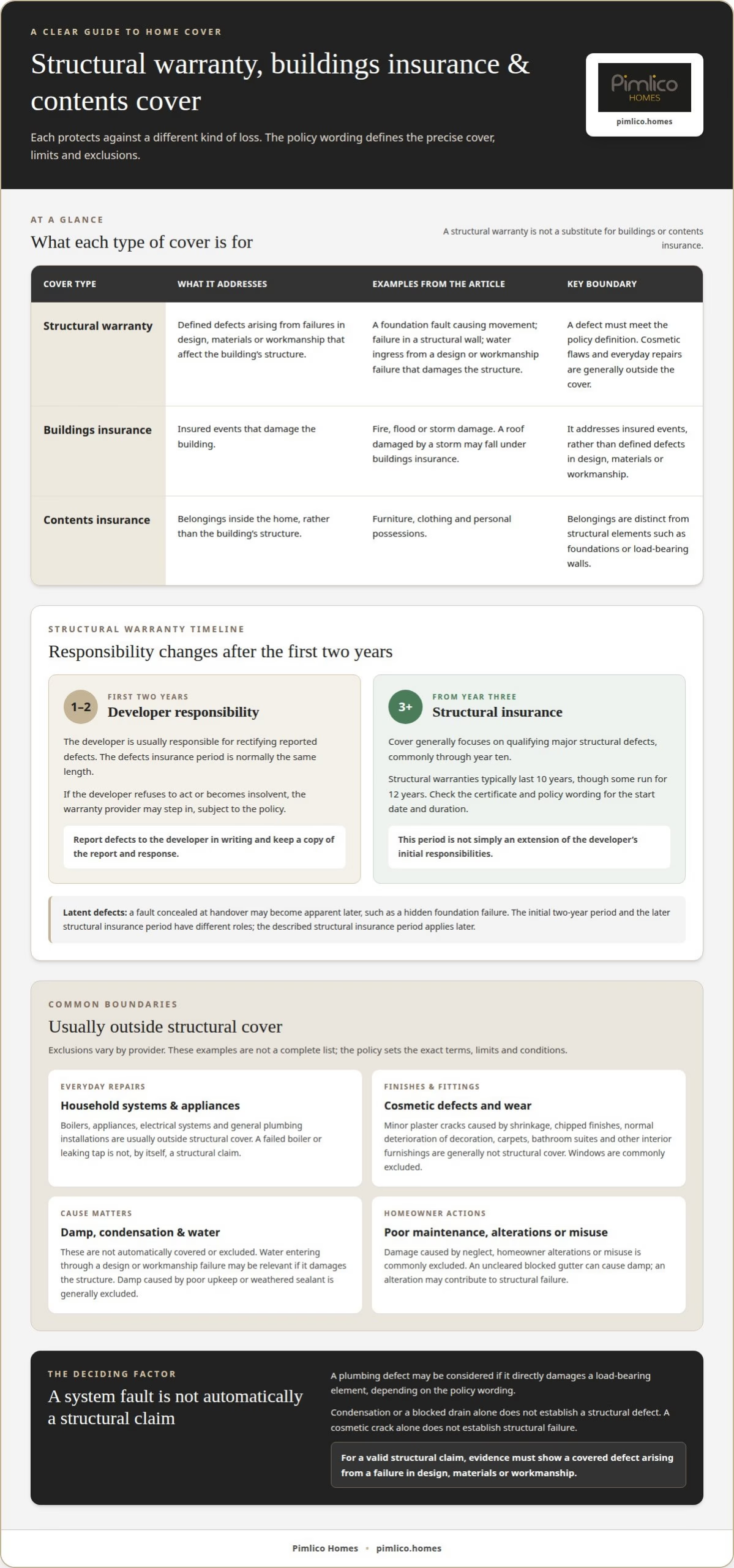
A structural warranty and buildings insurance protect against different risks. The warranty addresses defined defects arising from design, materials or workmanship. Buildings insurance generally covers insured events such as fire, flood or storm damage. A storm-damaged roof may fall under buildings insurance, while structural failure caused by faulty construction may fall under the warranty.
Contents insurance concerns belongings inside the home, not its structure. Furniture, clothing and personal possessions are distinct from foundations or load-bearing walls. A structural warranty does not replace either policy: each responds to different kinds of loss, according to its own terms and exclusions.
Structural warranties typically last 10 years, though some run for 12 years. In a typical policy, the developer is responsible during the first two years after practical completion. The structural insurance period generally begins in year three and continues through year ten, or longer where the policy provides 12 years’ cover. The certificate and policy wording set out the start date and duration.
A valid structural claim must show that a covered defect exists and arose from a failure in design, materials or workmanship. The warranty provider assesses the evidence against the policy, including its exclusions, excess and claim limits. Keep the certificate of insurance and relevant policy documents together, as they support a claim and show what cover is in force.
Mortgage lenders often require an accepted structural warranty before approving finance for a new-build home. A recognised warranty can therefore matter beyond future repairs; it may also form part of the property’s purchase arrangements. Building-regulations checks and warranty inspections are separate processes. Warranty inspections operate alongside building control rather than replacing it.
Insurer financial strength is another consideration. An insurer rated ‘A’ or higher is a stated benchmark when assessing a warranty provider. A high rating does not change the policy’s exclusions, but it relates to the insurer’s financial standing. Read the certificate and policy together to understand the cover period, claim conditions and responsible insurer.
What structural warranties cover
The central question is whether a defect affects the building’s structure, rather than simply requiring routine repair. Typical cover focuses on major failures linked to design, materials or workmanship, with the policy defining the precise scope.
Foundations, load-bearing walls, structural floors and the roof structure are key examples. If faulty materials cause a supporting wall to fail, the issue is materially different from a small crack in decorative plaster. Structural cover addresses the building’s stability and safety, not every imperfection visible after completion.
Water ingress may also fall within cover when a design or construction fault causes it. For example, defective waterproofing that allows water into a basement or protected roof area may lead to a qualifying claim. The key detail is the cause and its effect on the structure, not simply the presence of damp.
Some policies include repairs needed to reach a covered defect, debris removal or alternative accommodation if the home becomes temporarily uninhabitable. These are supporting benefits, not automatic additions to every policy. Their limits and conditions sit alongside the main structural cover in the policy wording.
The initial defects insurance period and later structural insurance period serve different purposes. In a typical UK warranty, the first two years focus on defects the developer is responsible for addressing; structural insurance then concerns serious qualifying defects. A mortgage lender may require a recognised warranty, but the certificate alone does not make every repair claim valid.
Wear and tear, cosmetic blemishes and routine maintenance remain outside the central purpose of structural cover. A sound claim needs evidence of a structural problem and its connection to a covered design, material or workmanship failure. This distinction helps separate a genuine building defect from ordinary upkeep, whether the property is a home or commercial premises.
For a home shaped around your priorities, explore your new-build home options.
Pimlico Homes
Pimlico Homes creates luxury new-build homes for buyers considering the long-term quality and care of a significant investment. Understanding a structural warranty’s exclusions can help distinguish protection for serious building defects from cover for everyday repairs, and inform the questions you bring to a new-home purchase.
Whether you are considering a Luxury Detached Home, an Executive Courtyard Home or a Bespoke Luxury Home, the property’s design and construction matter alongside the policy that accompanies it. For a character-led project, Luxury Barn Conversions offer another distinctive direction. Each choice brings its own considerations, so clarity about the home and its warranty is valuable before you decide.
If you are exploring a new home and would like to discuss your plans, contact Pimlico Homes.
Move towards your next home with clarity
Knowing what a structural warranty does not cover gives you a more grounded way to assess a new home. It is one part of understanding the property you may make your own, alongside its design, construction and accompanying documents. Bringing considered questions to a purchase can help align expectations with the significance of this investment.
Pimlico Homes offers Luxury Detached Homes, Executive Courtyard Homes and Bespoke Luxury Homes. The right setting is personal: you may value the privacy of a detached home, the arrangement of courtyard living or a design shaped around your preferences. Let your priorities guide the conversation, alongside the practical considerations that matter to you as a future homeowner.
Contact Pimlico Homes for advice about your plans and the home you are considering. A thoughtful first conversation can help bring your next steps into focus, so you can move forward with confidence.
Frequently Asked Questions
What do I do if I spot a defect?
Record the defect and report it to the developer in writing during the defects period. Include when you first noticed it, where it appears and how it changes; photographs can help create a clear record. Keep copies of your report and any reply. If the issue may fall under the structural insurance period, notify the warranty provider and obtain written agreement before arranging repairs.
What is a new build warranty?
A new build warranty is insurance arranged by the developer to protect the buyer against specified defects in a newly built home. It commonly lasts 10 years, although the cover and duration depend on the policy. The warranty certificate identifies the policy, while the wording explains what it protects, when cover begins and how to make a claim.
What is it, and how is it different from a defects liability period?
A defects liability period is the initial phase when the developer is generally responsible for addressing reported defects. A structural warranty is the insurance policy that sets out protection across its cover period. In a typical UK arrangement, the initial defects period lasts two years after completion. The warranty provider may step in if the developer fails to act, subject to policy terms.
What defects are excluded from a UK structural warranty?
Common exclusions include cosmetic blemishes, ordinary wear and tear, and damage caused by poor maintenance or homeowner alterations. A small crack in decoration, for example, is different from movement that affects a load-bearing wall. Weather damage and problems with existing work may also be excluded. The policy wording determines whether the defect’s cause, location and effect meet the cover criteria.
Are plumbing, electrical and heating system failures covered by a structural warranty?
Standalone failures in plumbing, electrical systems, boilers or appliances are generally outside structural cover. A faulty boiler, for instance, is not itself a structural defect. The distinction changes if a system fault directly damages the building’s structure. In that situation, the resulting damage may be considered under the policy, which defines the covered cause and repair.
What are the claim time limits, excesses and financial limits for structural warranty cover?
There is no single claim deadline, excess or maximum limit that applies to every UK structural warranty. The policy sets the applicable period, minimum claim value, excess and cap. Report defects promptly, since issues known but not reported during the defects period may fall outside later structural cover. Before repairs begin, notify the provider and obtain written agreement.