
A new-build home can be beautifully finished and still reveal small snags once daily life begins. In the first 30 days of living in a new build home, make four considered checks: look for settlement cracks and defects, locate essential systems, test everyday fixtures and appliances, and begin getting to know your neighbours. Report concerns to the builder during the warranty period.
It’s natural to focus on unpacking and making each room your own; a little attention to the details now can help you feel more at ease in your new surroundings. This guide explains what to look for, how to recognise common snags and where to find key controls such as the water shut-off and circuit breaker. It also offers simple ways to meet the people and discover the community around your home.
Key Takeaways
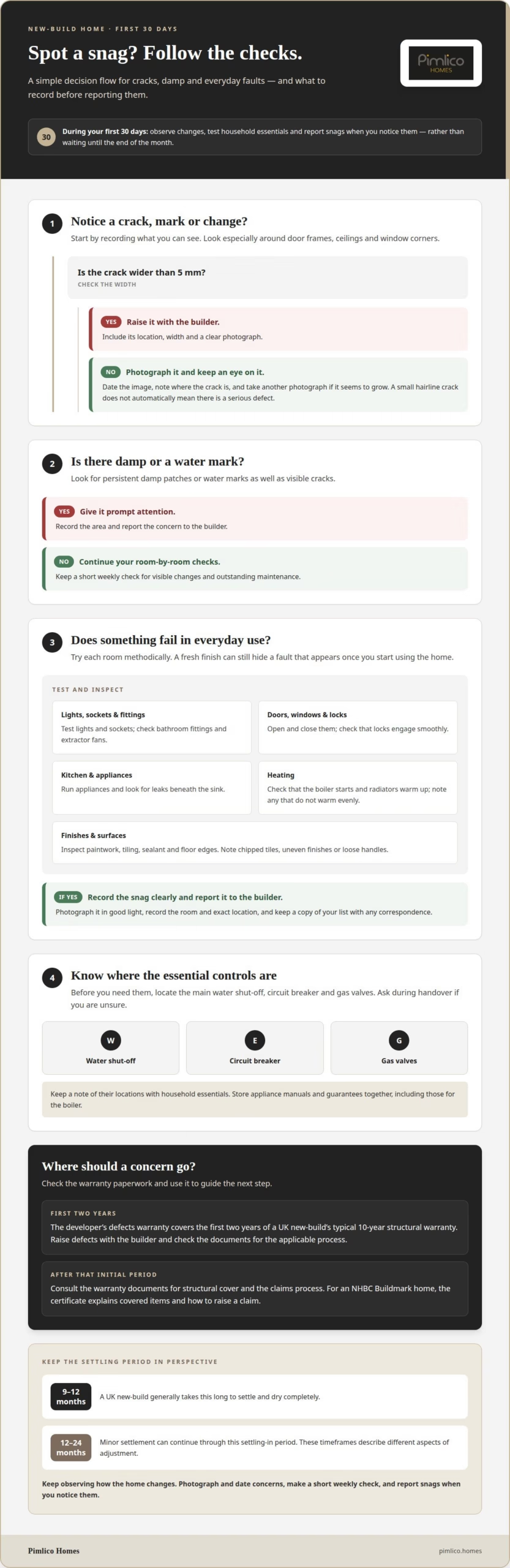
- Keep an eye on cracks as your new home settles, and raise any wider than 5 mm with the builder.
- Test everyday fixtures and appliances, and note any snags clearly so you can report them.
- Find the water shut-off, circuit breaker and gas valves before you need them in an emergency.
- Make introductions and explore local events to begin building connections in your new community.
1. Settlement cracks and home maintenance
During the first 30 days of living in a new build home, allow time to settle before judging every detail. Unpacking, arranging furniture and learning how rooms work all take attention. Keep completion and deposit paperwork together, then collect photographs of any cracks or marks you notice. A dated image makes it easier to show whether a line changes over time.
Some movement is part of a new home settling. Minor settlement can continue through a settling-in period of 12 to 24 months, while a UK new-build generally takes 9 to 12 months to settle and dry completely. These periods describe different aspects of adjustment, so a small hairline crack does not automatically signal a serious defect. A crack wider than 5 mm should be raised with the builder.
Look closely at plaster around door frames, ceilings and window corners. Note where a crack appears and how wide it is, and take another photograph if it seems to grow. Report new-build snags to the builder when you notice them, rather than waiting until the end of your first month. Persistent damp patches or water marks also need prompt attention.
During the first weeks, keep the home at an even, comfortably warm temperature. Open windows regularly to help the building dry and reduce condensation; in colder weather, trickle vents can provide airflow without letting in as much chill. Avoid sudden temperature changes, which can contribute to materials shrinking as moisture leaves. A new home needs time to settle, so keep observing how it changes.
Set aside a short weekly check for visible changes and outstanding maintenance. If you live alone, you are entitled to a 25% single-person council tax discount, according to the Ministry of Housing, Communities and Local Government. That practical detail can make settling in more manageable while you introduce yourself to the routines of your new home.
2. Getting to know neighbours and the local community
A new address becomes familiar through small, repeated encounters. In your first weeks, introduce yourself to immediate neighbours when you see them outside or by the front door. A greeting and your name are enough to start; there is no need to arrange a formal visit. If moving day has left you tired, wait for a quieter moment rather than forcing a conversation.
Shared spaces can make introductions easier. If your development has a communal entrance, green or residents’ noticeboard, pause to read any local information. A notice may point to a residents’ group, a community event or practical arrangements for shared areas. Keep useful details with your household essentials so you can find them after unpacking.
Explore nearby amenities with a short walk from home. Find the nearest food shop, pharmacy, bus stop and green space, then note which routes suit your usual routine. A local pub can be a relaxed place to eat, while a library or community centre may advertise events. These visits help you understand what the area offers beyond the new-build development.
Give connections time to develop. Attend a local event that suits your interests, or return to the same shop or café and become a familiar face. If you have children, a dog or a particular hobby, these can offer natural conversation starters with neighbours who share those interests. Keep expectations simple: a brief chat is a good first step.
Make room for community alongside the practical work of settling in. Once the kitchen is organised and essentials are within reach, take an evening to walk around the neighbourhood. Keep builder paperwork in a separate folder, then use the rest of the day to get to know your surroundings. Familiar streets and friendly faces can help a new property feel like home.
3. Locating shut-offs, panels, appliances and home systems
Before an emergency, locate the main water shut-off, circuit breaker and gas valves. Ask during handover if you are unsure where they are, then keep a note with your household essentials. Knowing how to reach each control can help you act calmly if a pipe leaks or the power fails.
During your first 30 days, test kitchen appliances, heating and bathroom fittings. Check that the boiler starts, radiators warm up and extractor fans operate. At completion, you should receive instruction manuals and guarantees for every appliance, including the boiler. Store these together, and note each system’s recommended service intervals and warranty coverage.
UK new-build homes typically have a 10-year structural warranty, with the first two years covered by the developer’s defects warranty. After that initial period, consult the warranty documents for structural cover and the applicable claims process. For an NHBC Buildmark home, the first two years fall within the developer defects period; the certificate explains covered items and how to raise a claim.
Set up household accounts by recording your move-in date and meter readings. Contact the council about council tax, register with the relevant water company, and arrange an energy account using the property’s supply details. Switching energy supplier takes about 21 days. Broadband is best ordered six to eight weeks before the expected move, so arrange it early if your move is still ahead.
Plan furnishing costs alongside appliance needs. These are separate expenses, and appliance costs depend on what the property already contains and what you choose to add. Confirm what is included before buying, and keep removal-day essentials accessible while you finish arranging the rooms.
4. Common snags in new-build homes
A fresh finish can still conceal practical faults that appear only through daily use. Check each room methodically: test lights and sockets, open and close doors and windows, and confirm that locks engage smoothly. In the kitchen, run appliances and look for leaks beneath the sink. Test radiators too, noting any that fail to warm evenly.
Inspect paintwork, tiling, sealant and floor edges. A chipped tile, uneven finish or loose handle is easier for the builder to address when described precisely. Photograph each snag in good light, record its room and location, and keep a copy of your list with any correspondence.
Some changes are normal as a new home dries, but persistent efflorescence, the white mineral deposits sometimes seen on masonry, may indicate water ingress. Raise it with the builder, particularly if it returns after cleaning or appears alongside damp patches. Check garden drainage too: standing water or washed-away topsoil can signal an issue worth recording.
Report defects to the housebuilder in writing, with photographs, room locations and a clear description. Raise concerns during the warranty period and retain the builder’s replies; response times depend on the issue and the applicable customer-care process. It commonly checks finishes, fixtures, doors, windows, lights, sockets, appliances and radiators, producing a documented list of visible defects.
For homeowners, a snag is not a verdict on the whole property. It is a precise item to document and resolve, allowing the home’s considered design to show through. Before the excitement of moving gives way to routine, complete a room-by-room review and submit the list together. If you are planning a future move, explore new-build homes designed for considered everyday living.
Pimlico Homes
Pimlico Homes creates homes for people considering what they need from their next move. The practical checks in this guide can also help you identify the qualities that matter most to you, such as considered layouts, enduring materials, useful storage and spaces that suit daily routines.
Pimlico Homes offers Luxury Detached Homes, Executive Courtyard Homes, Bespoke Luxury Homes and Luxury Barn Conversions. Whether you are planning a move or weighing different styles of home, these priorities can shape an informed decision. Consider how rooms connect, where household systems are located and how the setting supports your lifestyle.
If you are considering your next home, contact Pimlico Homes to discuss what you are looking for.
Make your next move with confidence
A home becomes truly personal through the choices you make over time. The first 30 days of living in a new build home can help clarify what matters most to you: the way rooms support daily routines, the details that make a space feel settled, and the setting you want around you. Carry those insights into any future property decision. They can help you look beyond first impressions and focus on how a home may suit your life as it changes.
Pimlico Homes offers Luxury Detached Homes, Executive Courtyard Homes and Bespoke Luxury Homes. If you are considering a move and would like to explore these possibilities, contact Pimlico Homes to begin a conversation about your next home.
With a clear sense of what you value, you can take the next step with confidence and look forward to making a place your own.
Frequently Asked Questions
What is the new-build snagging process and when should you arrange an inspection?
Snagging is a systematic inspection to identify unfinished work, damage or faults for the builder to address. If the developer is signed up to the New Homes Quality Code, buyers have the right to a professional pre-completion snagging inspection on their behalf. After moving in, make a room-by-room record of issues, noting their location and effect. Send the list to the builder and keep a copy of your correspondence.
How do you find the electricity, gas and water meters and record opening readings?
Start with the handover information, which may identify meter locations. Check utility cupboards, external meter boxes and any designated meter room. Photograph each meter’s display and serial number, ensuring the reading is legible. Record the date alongside each image, then give the readings to the relevant energy or water supplier. If a meter is behind a locked communal door, ask the building manager how authorised access works.
What should you know about heating, ventilation and condensation in a new-build home?
Use kitchen and bathroom extractor fans when cooking and bathing, and keep vents clear so moist air can escape. Opening windows briefly can improve airflow; trickle vents offer another route, particularly in colder weather. If condensation forms on glass, wipe it away and review your ventilation habits. Report persistent damp patches or recurring white deposits on masonry to the builder, as they can indicate water ingress.
What are common new-build defects and which need urgent attention?
Typical snags include uneven finishes, sticking doors, damaged tiles, faulty sockets and appliances that do not work as expected. Prioritise active leaks, water entering the property and faults that make a room or fitting unsafe to use. Report these promptly through the builder’s customer-care process. For less urgent cosmetic issues, record the exact location and take clear photographs so each item can be tracked.
How do you check drainage, appliances, windows, doors and safety systems after moving in?
Run taps and showers, flush each toilet, and check that sinks and baths drain without backing up. Test appliances according to their operating instructions, and take windows and doors through a full open, close and lock cycle. Test installed alarms using their controls and follow the manufacturer’s instructions. Record anything that fails, including the room and circumstances, then report it through the builder’s customer-care process.
What documents, manuals and warranties should a housebuilder provide at handover?
At completion, buyers should receive instruction manuals and guarantees for every appliance, including the boiler. Keep these with the home’s warranty paperwork, and note relevant service intervals and coverage before maintenance is due. A simple index can make the pack easier to use: list each appliance, its room and the document relating to it. Add service records as work is completed.





