
Handover is a beginning, not a finish line. For homeowners, building a relationship with the developer’s aftercare team means knowing who to contact and how to report concerns clearly. The Developer’s Rectification Period lasts 24 months from legal completion, giving the developer time to respond to legitimate build defects.
A new home is a significant investment, and questions can arise as you settle in and learn how its systems work. Under the New Homes Quality Code, registered developers must attend to emergency defects within 24 hours and acknowledge non-emergency defects within five working days. Non-emergency defects must be resolved within 30 calendar days unless you agree a longer period.
This guide explains how aftercare works following handover, which team members may help with different concerns, and how to communicate effectively. You’ll also learn how the rectification period fits into the wider aftercare process, so you can approach any issue with clarity and confidence.
Key Takeaways
- Build a clear point of contact with the aftercare team and keep communications focused, specific and constructive.
- Understand how the rectification period applies to reported build defects and how it fits into your wider aftercare support.
- Use aftercare conversations to learn how your home’s systems work and raise questions as you settle in.
- On-site teams can help address feedback, fine-tune building systems and explain their operation.
Named aftercare managers and dedicated teams
A named manager gives your aftercare correspondence a clear point of continuity. They can help route questions to the right specialist, track progress and explain who is responsible for the next response. Building a relationship with the developer’s aftercare team starts with a useful first step: save the manager’s name and the contact route provided at handover.
Make each report clear and specific. Name the room or location, describe what you observed and say when it began. Instead of writing “the heating is not working”, explain which room is affected and what happens when you use the controls. Add photographs if they help show the issue, and keep a dated copy of your message.
- Use the designated aftercare contact route supplied with your handover information.
- Group related observations together, but describe separate defects individually.
- Keep replies and agreed appointments in one record so the history stays clear.
Ask the manager who will handle a technical question and what happens next. A question about a heating control, for example, may need input from someone familiar with the building services. Clear responsibility makes it easier to track progress without sending the same report to several people.
If a complaint remains unresolved, write to the developer, set out the issue and explain the outcome you seek. Keep the original report, replies and supporting evidence together. If the matter is still unresolved, you can escalate it to the New Homes Ombudsman where its scheme applies, following its complaint process. For a defect that may be covered by your home warranty, contact the warranty provider and follow its claims procedure.
Constructive feedback also helps the team understand the effect of a defect in daily use. Describe the practical impact, such as a room becoming uncomfortable when the heating is on, rather than assuming its cause. A calm, specific exchange gives managers and technical staff a stronger basis for investigating the concern.
Developer’s Rectification Period
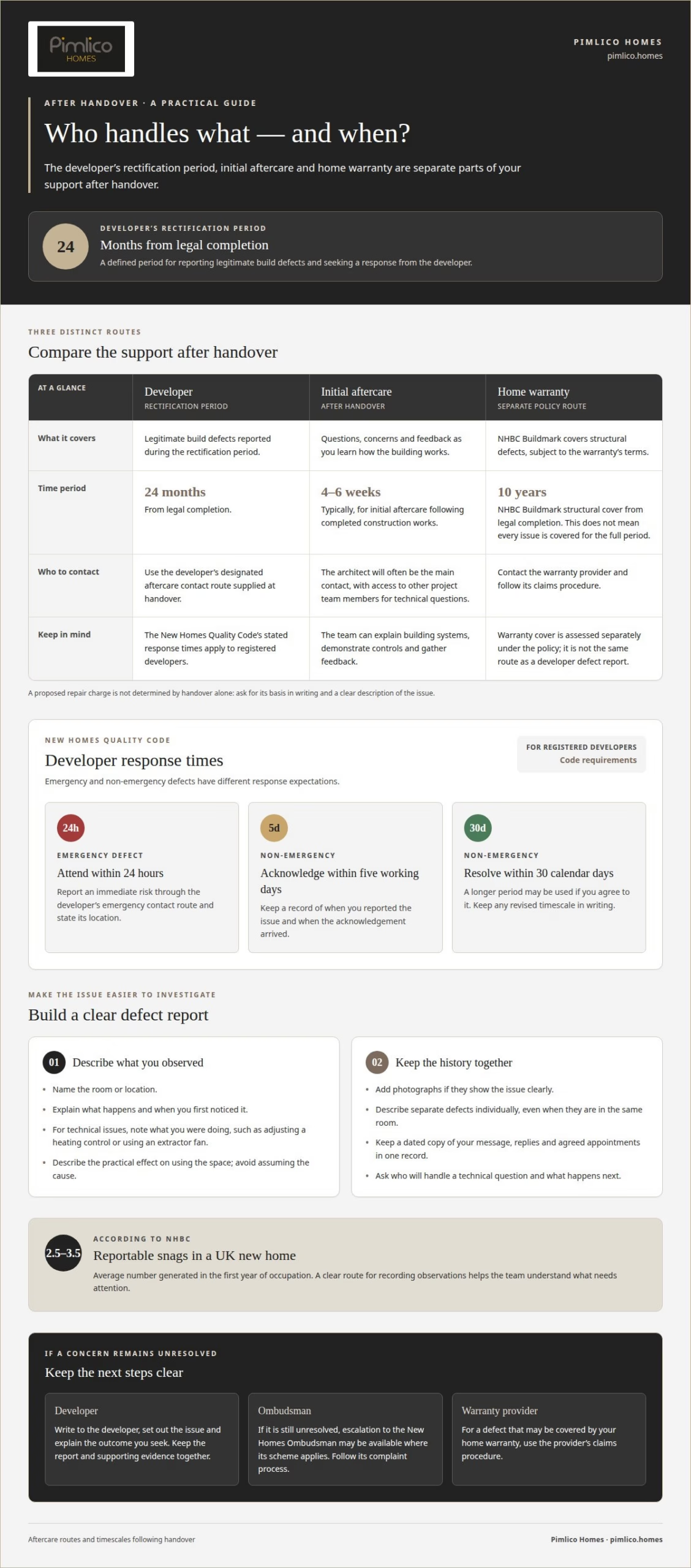
The Developer’s Rectification Period runs for 24 months from legal completion. It sets a defined period for reporting legitimate build defects and seeking a response from the developer.
Developer and warranty responsibilities
The developer’s aftercare obligation and a home warranty are separate routes for addressing defects. Under the New Homes Quality Code, the rectification period lasts 24 months from legal completion. The code also requires registered developers to resolve non-emergency defects within 30 calendar days, unless you agree a longer period. This distinction matters: the developer handles qualifying defects, whilst a warranty provider considers claims under its own policy terms.
NHBC Buildmark covers structural defects for 10 years from legal completion. That does not mean every issue is covered for that full period. For example, a concern about a structural element may need to be considered under the warranty’s terms, while a reported build defect during the rectification period goes to the developer.
Repair costs after handover
Handover alone does not determine whether a repair is chargeable or free. The key question is whether the issue is a legitimate build defect or damage or another matter outside the developer’s responsibility. Warranty cover is assessed separately under the policy.
If a charge is proposed, ask for its basis in writing and a clear description of the issue. A fault in an installed component, for example, may need different consideration from accidental damage to it. Keep the response with your defect report so the reason for the decision is clear.
Response and repair times
The New Homes Quality Code sets distinct times for emergencies and non-emergency defects. Registered developers must attend to emergency defects within 24 hours and acknowledge non-emergency defects within five working days. Non-emergency defects must be resolved within 30 calendar days, unless you agree a longer period.
Report an immediate risk using the developer’s emergency contact route, and describe the concern and its location. For a non-emergency issue, keep a record of when you reported it and the acknowledgement. If a repair will take longer, agree the revised timescale with the developer and keep it in writing.
Initial aftercare after handover
Initial aftercare for completed construction works typically lasts four to six weeks. During this period, homeowners can raise questions as they learn how the building operates.
The aftercare team’s role
The aftercare team helps occupants understand building systems, raise concerns and share feedback after handover. The architect will often be the main contact during initial aftercare, with access to other project team members for technical queries. This matters because a question about heating controls, for example, may need input from someone familiar with the system’s design and operation.
Aftercare meetings give occupants an opportunity to ask questions and hear explanations about the building. A team member can demonstrate how a control works, discuss an operational issue and gather feedback about the result. According to NHBC, a UK new home generates an average of 2.5 to 3.5 reportable snags in its first year of occupation. A clear route for recording observations helps the team understand what needs attention.
Information for defect reports
A useful defect report explains what is happening, where it is happening and when you first noticed it. Identify the affected room and describe, for example, whether a window sticks when opening or closing. Include photographs if they show the issue clearly, and explain how it affects use of the space. These details help the aftercare team distinguish the observed problem from its possible causes.
For a technical issue, note what you were doing when it occurred, such as adjusting a heating control or using an extractor fan. List separate concerns individually, even if they occur in the same room, and keep a record of when you sent the report. At a meeting, refer to your observations and ask the relevant team member to demonstrate how the system is intended to operate. This gives everyone a shared basis for agreeing the next step.
The period typically lasts 4 to 6 weeks, though complex buildings may need longer and simple buildings less. The architect will often be the occupants’ main point of contact, with good access to project team members for building services queries.
Meetings can explain how the building operates, answer users’ questions and gather feedback. Under the New Homes Quality Code, UK developers must acknowledge non-emergency defects within 5 working days. During the 1-year extended aftercare period, regular reviews identify problems, provide training and fine-tune building systems.
On-site aftercare team
An on-site aftercare team gives residents a direct route to share feedback with the people responsible for the building. The soft landings approach involves design and construction team members in aftercare, where they can respond to observations, fine-tune systems and support their proper operation. Direct contact helps ensure practical concerns reach the relevant people.
For example, a resident who finds a ventilation control difficult to use can describe the issue during a walkabout. Team members can observe the system in context, gather feedback and consider whether its operation needs adjustment. Regular walkabouts also help assess building performance and gather useful information about how spaces and systems are working.
Meetings with facilities managers offer another way to understand how a building operates. Managers can explain its systems and gather feedback from people who use or manage them. A question about a shared heating system, for instance, may be easier to address when the resident’s experience is considered alongside the facilities manager’s operational knowledge.
Some aftercare teams may issue fortnightly newsletters during initial aftercare. These can summarise problems encountered and progress made, helping residents understand what is being addressed across the building. Use a newsletter as context, but report an issue affecting your home through the designated aftercare route. This keeps decisions about individual defects focused on their specific details.
If the team does not respond or resolve an issue, follow up in writing with a concise description of the concern and its ongoing impact. Keep the report and replies together, then use the developer’s formal complaints process if the matter remains unresolved. Where the developer is covered by the relevant scheme, the New Homes Ombudsman may provide a further route; warranty claims follow the warranty provider’s process.
For a considered approach to a new home, explore thoughtfully designed homes.
Together, these channels help keep operational observations, feedback and updates in view. Walkabouts assess performance and gather data; meetings with facilities managers explain how systems operate and collect feedback; and fortnightly newsletters may share information about problems and progress. Each provides a distinct way to discuss building operation and aftercare.
Pimlico Homes
Pimlico Homes creates new homes, including detached and executive courtyard homes, bespoke homes and barn conversions. Understanding how aftercare works can help you consider the support that matters after handover, alongside a home’s design, layout and character. Clear expectations are part of making a considered decision about a significant investment.
If you’re exploring a new home or considering your next move, Pimlico Homes can help you explore its homes and the qualities that suit your priorities. Start with what matters to you, from architecture and setting to how the spaces support daily life.
Contact Pimlico Homes to discuss your interest in a new home.
Choose your next home with confidence
Building a relationship with the developer’s aftercare team is one part of feeling prepared for life in a new home. As you consider your next move, let your priorities guide conversations about design, daily living and the experience you want your home to provide.
Pimlico Homes offers Luxury Detached Homes, Executive Courtyard Homes and Bespoke Luxury Homes. Each provides a distinct context for considering how architecture and space can support the way you live. Reflect on the qualities that matter to you, then explore the possibilities with Pimlico Homes.
Contact Pimlico Homes to begin a conversation about your next home. A considered choice today can be the beginning of a place that feels unmistakably yours.
Frequently Asked Questions
How can homeowners build a constructive relationship with a developer’s aftercare team?
Build a constructive relationship by treating the aftercare team as partners in resolving a shared issue. Explain clearly whether an agreed repair solved the problem, and describe any remaining effect without assigning blame. After a door adjustment, for example, say whether it now closes smoothly or still catches. This measured feedback helps the team understand the result and decide whether further action is needed.





