
The most advanced glazing isn’t automatically the right choice for every room. Triple glazing can improve thermal performance, but it may also reduce solar gain and daylight. The performance benefits of triple-glazed aluminium-clad timber windows come from more than the extra pane: the timber frame provides an insulating interior, while external aluminium cladding adds a durable protective layer.
It’s natural to ask whether double or triple glazing will keep a home warmer. The answer depends on the balance you want between insulation, natural light and solar heat, as well as the performance of the complete window, not just its glass. This article explains how glazing and frame materials work together, what aluminium cladding contributes, and how whole-window U-values and Window Energy Ratings can help you compare options. You’ll have a clearer basis for choosing a specification that suits your home and its design.
Key Takeaways
- Weigh triple glazing’s insulation benefits against its potential effect on daylight and solar gain when considering each room.
- Understand how external aluminium cladding helps protect a timber frame, while upkeep still matters for long-term performance.
- Use whole-window U-values and Window Energy Ratings to assess the complete window, not just the glazing unit.
- Compare frame materials as a system: timber contributes insulation, while aluminium cladding brings a durable exterior finish.
Double or triple-glazing?
Triple glazing adds a pane and an insulated cavity, which can reduce heat transfer compared with double glazing. The performance benefits of triple-glazed aluminium-clad timber windows depend on more than the number of panes: consider thermal performance alongside daylight, solar gain, sound insulation and the frame’s capacity to support the glass.
Triple-glazing construction and thickness
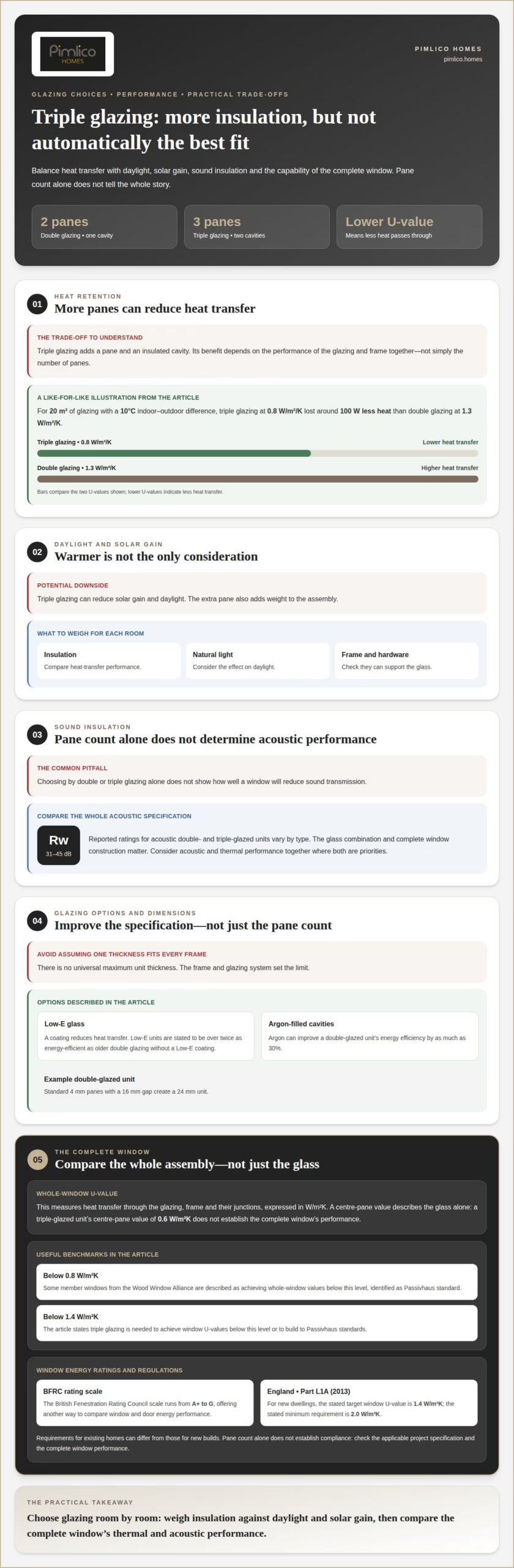
Triple glazing has three panes separated by two cavities; double glazing has two panes and one cavity. The resulting thermal transmittance is expressed as a U-value, with lower figures indicating less heat transfer. In one comparison, 20 m² of triple glazing at 0.8 W/m²/K lost around 100 W less heat than double glazing at 1.3 W/m²/K, with a 10°C indoor-outdoor difference. There is no universal maximum unit thickness: the frame and glazing system set the limit. For comparison, standard 4 mm panes with a 16 mm gap create a 24 mm double-glazed unit.
Acoustic performance and glazing options
Acoustic glazing is designed to reduce sound transmission, which can matter for homes near roads. Acoustic double- and triple-glazed units have reported ratings from Rw 31-45 dB, depending on type. Pane count alone does not determine sound insulation; the glass combination and complete window construction matter. Compare acoustic and thermal performance together where both are priorities.
Low-E glass and argon gas
Low-E glass uses a coating to reduce heat transfer, while argon can fill the cavities between panes. Low-E units are stated to be over twice as energy-efficient as older double glazing without a Low-E coating. Argon-filled units can improve a double-glazed unit’s energy efficiency by as much as 30%. These options can be used with double or triple glazing, so compare the full specification when assessing the performance benefits of triple-glazed aluminium-clad timber windows.
Suitability and drawbacks for UK homes
Triple glazing can suit UK homes, including older and listed buildings, when the design is appropriate. The extra pane adds weight, so the frame and hardware must support the assembly. It can also reduce solar gain and daylight. The value of upgrading depends on the existing glazing, heating use and improvement achieved, so triple glazing is not automatically the best choice for every home.
Resistance to corrosion, fading and warping
Aluminium cladding shields the timber exterior from the weather, helping it resist corrosion, fading and warping. It leaves the timber visible indoors while providing a durable outer finish suited to varied architectural designs. In coastal locations, salt and moisture make regular cleaning particularly important. Aluminium windows near the coast benefit from cleaning with warm, soapy water a few times a year to remove deposits before they build up.
For homes within 5 miles of the coast, marine-grade powder coating is recommended for aluminium windows. This finish is intended for harsher exposure, where salt-laden air can place greater demands on external surfaces. Cladding colour can also be tailored to a homeowner’s preferred scheme, allowing the exterior to complement the building without changing the timber interior. Triple glazing addresses heat and sound, while the cladding protects the frame from the elements.
Wind-load resistance depends on the complete window’s construction and installation, not the cladding alone. Weather tightness, operation and strength are relevant performance measures, covered by BS 6375 Parts 1 and 2. The window must remain securely fixed and operate as intended under its exposure conditions. A coastal or exposed site therefore calls for attention to the full assembly, including the frame, glazing, hardware and how the window meets the building.
Maintenance is straightforward but not absent: clean the powder-coated aluminium periodically, and allow for hardware adjustment over time. In coastal settings, use warm, soapy water a few times a year. Timber can be repaired and refinished to extend its service life; aluminium windows can have a lifespan of 40+ years. These figures describe different materials, so they should not be treated as a guaranteed lifespan for every combined window. Regular care helps preserve appearance and function.
Whole-window U-values and Window Energy Ratings
A glass unit’s rating does not tell the whole story. Assess the complete window, its energy rating and the applicable Building Regulations requirements.
Understanding whole-window U-values
A whole-window U-value measures heat transfer through the glazing, frame and their junctions, expressed in W/m²K. Lower values mean less heat passes through the window, making this figure useful when comparing replacement windows and their potential effect on heating demand. A centre-pane value describes the glass alone, so it can look better than the whole-window result. For example, a triple-glazed unit with a centre-pane value of 0.6 W/m²K does not establish the performance of the complete assembly.
Some member windows from the Wood Window Alliance have whole-window U-values below 0.8 W/m²K, described as Passivhaus standard. Triple glazing is needed to achieve window U-values below 1.4 W/m²K or to build to Passivhaus standards. These benchmarks help frame a specification, but the complete window’s figure remains the meaningful comparison for a home.
Window Energy Ratings and regulations
The British Fenestration Rating Council’s Window Energy Rating scale runs from A+ to G. It provides a separate way to compare the energy performance of windows and doors, rather than relying on U-values alone. Triple-glazed windows can meet regulatory performance requirements, but the pane count alone does not establish compliance: the whole-window specification matters.
In England, Part L1A of the 2013 Building Regulations gives new dwellings a target window U-value of 1.4 W/m²K and a minimum requirement of 2.0 W/m²K. Requirements for windows in existing homes can differ from those for new builds, so check the specification for the project. These figures distinguish new-build and replacement contexts, so apply the relevant requirement to the project.
Energy-efficient aluclad windows are described as a premium feature that can increase property value and attract potential buyers. Their contribution depends on the wider home, but a strong whole-window specification can support its appeal alongside considered architectural design.
Aluminium and timber frame comparisons
Aluminium-clad timber windows pair an aluminium exterior with a timber interior. The materials have distinct roles: external aluminium provides a protective finish, while timber contributes insulation indoors. This differs from an all-aluminium frame, where the material’s high thermal conductivity makes thermal breaks necessary to reduce heat transfer.
Timber frames are described as providing up to 1,100 times better insulation than aluminium frames. That comparison concerns the frame materials, not the performance of every finished window. Glazing, frame design and installation all influence the complete window’s efficiency. A well-insulated timber interior can therefore be a relevant consideration when comparing combined-frame options with an all-aluminium alternative.
Aluminium windows can have a lifespan of 40+ years, but this figure should not be assumed for every aluminium-clad timber window. The materials are combined, not interchangeable: the exterior aluminium protects the timber, while the timber remains part of the internal frame. Regular maintenance also matters. Powder-coated aluminium needs periodic cleaning, and hardware may need adjustment over time.
Compared with uPVC, aluminium-clad timber offers a visible timber interior and an aluminium outer finish; the materials alone do not establish which complete window is more efficient. Compare whole-window U-values and Window Energy Ratings, alongside the frame construction and glazing. For a new home, these choices influence both the architectural character and thermal performance of the finished building. Explore how material choices shape a bespoke new-build home as part of the wider design.
Pimlico Homes
Pimlico Homes creates luxury homes where material choices contribute to the character and performance of the finished building. When planning a new home, consider glazing, frame materials and whole-window ratings as part of the wider design. These choices work alongside the architecture, natural light and the way you intend to use the home.
From Luxury Detached Homes and Executive Courtyard Homes to Bespoke Luxury Homes and Luxury Barn Conversions, Pimlico Homes creates distinct settings for considered residential design. Understanding window performance helps you approach design choices with greater clarity, whether you’re planning a new build or considering the qualities you value in a future home.
To discuss your plans, contact Pimlico Homes.
Shape a home around considered choices
Window specification is one part of a larger design conversation. The performance benefits of triple-glazed aluminium-clad timber windows matter most when considered alongside the home’s orientation, architectural character and how each space will be used. Bring these priorities into early planning so the glazing and frame choices contribute to a coherent vision rather than being treated as an isolated detail.
For a new home, the right questions go beyond materials. Consider the atmosphere you want to create, the balance of natural light and comfort, and how the design should feel over time. These priorities can give your project a clear direction.
Pimlico Homes creates Luxury Detached Homes, Executive Courtyard Homes and Bespoke Luxury Homes, each offering a distinct setting for considered residential design.
Ready to discuss your plans? Contact Pimlico Homes and take the next step towards a home shaped around your priorities.
Frequently Asked Questions
What are Aluclad Windows?
Aluclad windows have timber frames with an aluminium exterior; the term describes the frame, not the glass specification. They can be paired with double or triple glazing, so “aluclad” alone does not define thermal or acoustic performance. For a renovation, considering the frame material separately from the glazing choice helps clarify how each decision affects appearance and function.
What are the U-values of triple-glazed aluminium-clad timber windows?
There is no single U-value for every triple-glazed aluminium-clad timber window: the figure applies to a particular complete-window specification. Size, opening style and the proportion of glass to frame can affect the result. For a meaningful comparison, look at values for windows with similar dimensions and configurations, rather than treating one example as a universal measure of performance.
How do triple-glazed aluminium-clad timber windows compare with double glazing for energy efficiency?
Triple glazing generally limits heat transfer more than double glazing, but the difference in a home depends partly on the windows being replaced. Replacing older, draughty windows may affect comfort differently from upgrading relatively modern double glazing. Consider the windows alongside the building’s insulation and airtightness, since glazing alone cannot address heat loss through walls, roofs or poorly sealed joints.
How do triple-glazed aluminium-clad timber windows reduce noise and condensation?
Triple glazing can reduce noise transmission when the glass make-up and installation suit the sound source; traffic noise and low-frequency sounds can behave differently. A well-sealed frame also limits sound paths around the glass. The inner pane may stay warmer than in a less insulating unit, which can reduce surface condensation, though indoor moisture and ventilation also influence condensation levels.
What are the pros and cons of aluminium-clad timber window frames?
The main advantage is the combination of materials: timber provides an insulating interior, while aluminium protects the exterior. This can suit designs where both materials matter visually and practically. Trade-offs include a heavier assembly than some alternatives, the need to match the frame and glazing appropriately, and ongoing cleaning or hardware care. It may be less suitable when simplicity is the main priority.





