
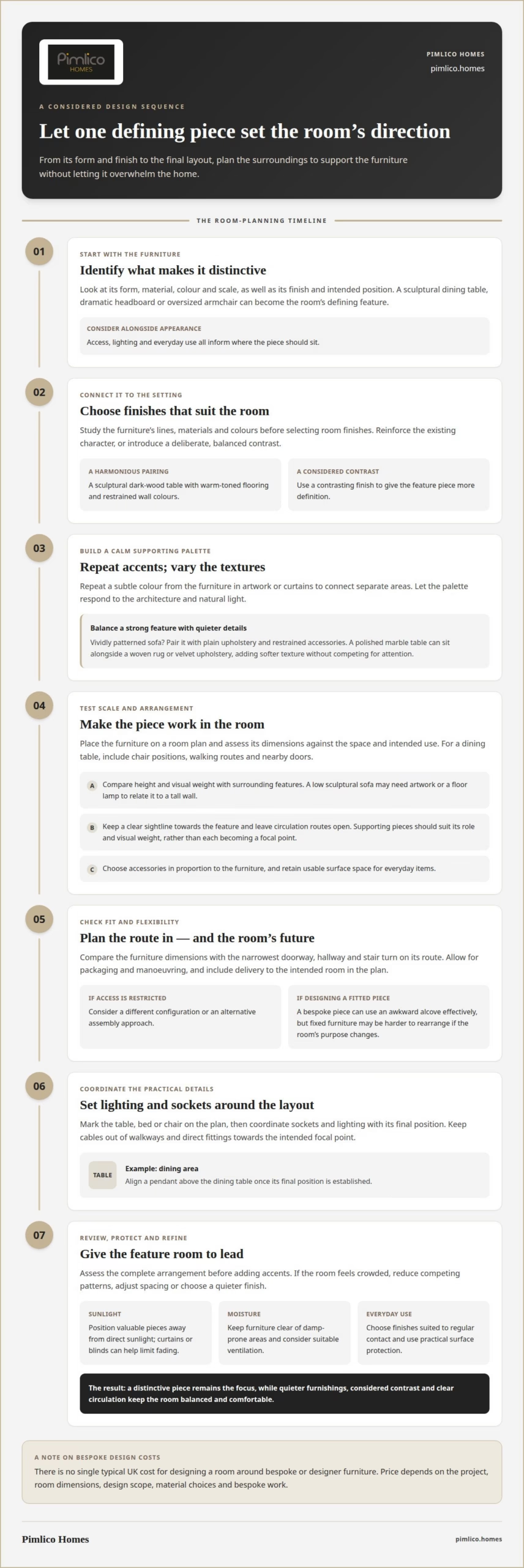
A statement piece should shape a room without dictating every choice. Building a home around a specific statement piece of furniture starts with identifying what makes it distinctive: its form, material, colour or scale. The architecture, palette and furnishings can then support its presence while keeping the space balanced and comfortable.
A sculptural dining table, dramatic headboard or oversized armchair can draw the eye and give a room its character. The challenge is to complement that defining piece without letting it overwhelm the home.
This guide explains how statement furniture can inform a home’s style, materials and colour palette, and how to choose complementary pieces at a considered scale. Repeated accents, thoughtful contrasts and a well-planned layout help create a cohesive setting that feels distinctive rather than overdesigned.
Key Takeaways
- Identify the furniture’s defining qualities, then use them to guide the home’s materials, style and palette.
- Let bold pieces lead while quieter furnishings and contrasting textures bring balance.
- Choose supporting furniture and accessories in proportion to the feature piece and the room’s layout.
- Repeat selected accent colours through the interior to create a considered, cohesive feel.
How professionals let a statement piece guide a home’s style, materials and colours
Start with the furniture’s form, finish and intended position, then plan the room around it. Consider appearance alongside access, lighting and everyday use.
Harmonising furniture with room style
A designer studies the piece’s lines, materials and colours before selecting finishes for the room. A sculptural dark-wood table, for example, might sit comfortably with warm-toned flooring and restrained wall colours. The aim is either to reinforce the room’s existing character or introduce a deliberate, balanced contrast.
Professionals arrange the supporting details with care. Repeating a subtle colour from the furniture in artwork or curtains can connect separate areas, whilst a contrasting finish can give the feature more definition. The chosen palette should also suit the room’s architecture and natural light.
Custom furniture in home design
Planning furniture into a new home’s design can make an unusual shape or precise dimension feel integral to the architecture. A fitted piece can make effective use of an awkward alcove and establish a focal point. The trade-off is reduced flexibility: fixed furniture can be harder to rearrange if the room’s purpose changes.
Professionals weigh those benefits against the household’s likely needs, access requirements and future layout. They also consider materials and finishes alongside the wider scheme, so a bespoke element feels intentional rather than isolated.
There is no single typical UK cost for designing a room around bespoke or designer furniture. The price depends on the project, and a quote is provided following a request. Room dimensions, design scope, material choices and bespoke work all affect the brief.
Plan access by comparing the furniture’s dimensions with the narrowest doorway, hallway and stair turn along its route. Account for packaging and the space needed to manoeuvre, then include delivery to the intended room in the plan. If access is restricted, consider a different configuration or assembly approach.
Furniture plans also inform electrical and lighting positions. The designer marks the table, bed or chair on the layout, then coordinates sockets and lighting so cables do not cross walkways and fittings illuminate the intended focal point. A pendant above a dining table, for example, needs to align with its final position.
Protect furniture through thoughtful placement and material choices. Position valuable pieces away from direct sunlight, keep them clear of damp-prone areas and choose finishes suited to everyday contact. Curtains or blinds, suitable ventilation and practical surface protection can help limit fading, moisture exposure and wear.
How professionals balance bold furniture with understated pieces
Give the central piece visual space, then choose surrounding furniture to suit its role and weight. A large dining table can be paired with substantial chairs to create a composed setting, rather than leaving the table visually unsupported. A grand armchair, by contrast, may need only an understated side table. Balance comes from considering the pieces together, not treating every item as a focal point.
Pattern and colour determine how much detail a room can comfortably carry. If a sofa has a vivid print, plain upholstery and restrained accessories help its design remain legible. Neutral surroundings need not feel bare: varied finishes and considered shapes add depth without competing for attention. If the arrangement feels crowded, replace a busy cushion or patterned rug with a quieter alternative.
Material contrast offers another way to soften a strong feature. A smooth, polished marble table, for example, can sit alongside a woven rug or velvet upholstery. The softer textures temper the stone’s sheen, while the table retains its presence. Professionals consider how surfaces look together and how the room will be used, so delicate finishes do not become impractical in high-use areas.
Placement matters as much as selection. A bold chair can anchor a reading corner, with a simple lamp and side table serving a purpose without creating another centrepiece. In a living room, an open sightline towards the feature lets it stand out, while clear circulation keeps the arrangement functional. Repeated shapes or finishes can connect supporting pieces, even when their profiles are understated.
For a polished result, professionals assess the complete arrangement before adding further accents. They may reduce competing patterns, adjust spacing or choose a quieter finish where the eye needs rest. This measured approach lets a distinctive piece lead without making the rest of the room feel secondary. Explore bespoke home design to consider how a balanced interior can inform the wider home.
How professionals choose furniture and accessories with suitable scale and proportion
Assess a statement piece against the room’s dimensions and intended use. A broad dining table needs enough visual presence for its setting, but must not dominate the available floor area. Place it on the room plan, then consider chair positions, walking routes and nearby doors. This shows whether the piece will function comfortably as well as attract attention.
Compare the furniture’s height and visual weight with surrounding features. A low, sculptural sofa can look diminished beneath a tall, empty wall, while a high-backed chair may feel imposing in a compact room. A carefully chosen floor lamp or artwork can relate the furniture to the room’s vertical proportions without crowding its footprint.
Accessories need a similar sense of scale. A small vase may disappear on a generous console, while an oversized arrangement can obscure the console’s shape. Professionals consider the furniture’s surface area, silhouette and practical purpose before choosing objects. They also leave usable space for everyday items, so decorative styling does not interfere with how the room works.
In a dining room, a sculptural table can sit beneath a bold chandelier to establish a clear focal point. Consider the table’s shape, the fitting’s visual weight and the ceiling height together. Supporting pieces should relate to that composition rather than compete with it. In a more intimate room, a smaller pendant or simpler fitting may preserve balance.
Proportion also guides how furnishings relate to one another across the whole layout. Professionals assess sightlines from the entrance and adjoining rooms, then adjust placement if a large piece blocks views or disrupts movement. A carefully scaled rug can define the seating area, while a lighter occasional chair can prevent a cluster of substantial pieces from feeling heavy. The result serves both the furniture’s purpose and the room’s character.
How professionals create a cohesive colour palette around statement furniture
Professionals build the palette from the statement piece’s dominant colour, undertones and finish. A deep green velvet sofa, for example, could inform softer green accents, warm neutrals and restrained metallic details. The aim is not to copy its colour across every surface. Instead, selected repetitions make the room feel connected while preserving the furniture’s distinctive presence.
Wall colour and flooring cover the largest visual areas, so assess them alongside the furniture before choosing finishes. Pale walls can give a richly coloured cabinet more prominence, while a muted, warm wall tone may sit naturally beside dark timber. Flooring matters too: a strongly patterned rug or pronounced wood grain can compete with intricate furniture, so a quieter surface may create better balance.
Professionals consider how colours change under the room’s lighting. A fabric that appears cool beside a window may seem warmer under evening lamps. They review paint, flooring and upholstery samples together in the intended room, then adjust the palette to suit its natural and artificial light. This helps prevent separate finishes from appearing disconnected once installed.
Accent colours can extend beyond the focal piece through curtains, rugs or artwork. A chair in deep jewel tones, for instance, might inspire a restrained cushion colour and a small detail in nearby artwork. These echoes create continuity without making every furnishing match. Texture helps too: a matte painted wall can set off a glossy finish, while a woven rug can soften polished furniture.
The clearest takeaway is to repeat colour selectively, then let neutral or complementary surfaces provide visual rest. Professionals judge each choice against the furniture, the room’s light and the overall material palette. To carry this considered approach into a new home, explore a bespoke home design shaped around the pieces that matter to you.
Pimlico Homes
Pimlico Homes can be a natural next step when statement furniture is shaping your vision for a new home. Its bespoke luxury homes are designed around the character and priorities you want the finished home to express. Luxury detached homes, executive courtyard homes and luxury barn conversions offer different forms for that vision.
Bring the statement piece into the conversation early, especially if its scale or preferred position influences how you imagine using a room. It gives the wider home design a clear point of reference without making every space revolve around one object. The aim is a considered relationship between the furniture, the architecture and everyday living.
To discuss your vision for a home shaped around the pieces you value, contact Pimlico Homes.
Give your vision room to grow
Building a home around a specific statement piece of furniture is an opportunity to create a setting with lasting personal meaning. As your plans take shape, consider how the piece will relate to changing routines, future furnishings and the atmosphere you want each room to hold. A home should honour a distinctive object without limiting how you live in it.
Pimlico Homes offers luxury detached homes, executive courtyard homes and bespoke luxury homes, with each project shaped around its priorities. If a treasured piece is already central to your vision, sharing its form, finish and intended place can make it part of the conversation from the outset.
Contact Pimlico Homes about your project to discuss how your ideas could inform a home designed around the life you want to lead. Your statement piece can be the beginning of a distinctive, considered vision.
Frequently Asked Questions
What Makes a Statement Piece?
A statement piece is a distinctive furnishing or object that gives a room a strong visual identity. Its impact may come from an unusual silhouette, expressive material, vivid colour or substantial scale. A sculptural console, antique cabinet or striking light fitting can each play this role. It need not be the room’s largest item; what defines it is the attention and character it brings.
How do professionals design a home around a statement piece of furniture?
Building a home around a specific statement piece of furniture begins with understanding why it matters and how it will be used. Professionals include those priorities in the wider design brief, considering the piece alongside windows, doors and adjoining rooms. For example, a treasured cabinet might inform an entrance’s character while remaining easy to access. This approach gives the home a personal reference point without letting one object dictate every decision.
How do professionals plan room dimensions and circulation space around a large statement sofa or table?
Map the furniture’s footprint onto the room plan and trace the routes people need between entrances, seating and storage. A sofa near a doorway must allow the door to open fully; a dining table needs clear access to each chair. Consider how the piece will reach the room, including stair turns and narrow passages, before finalising its position.
What interior design principles help balance a bold furniture piece with colour, lighting and decor?
A useful principle in building a home around a specific statement piece of furniture is to give it visual priority, then keep nearby patterns and decorative objects restrained. Layered lighting can serve different purposes, from general illumination to a focused fitting that highlights the feature. For example, a coloured cabinet against a calm wall can be paired with artwork in compatible, rather than identical, tones.





