
Floor-to-ceiling windows can transform a room, but their value depends on more than the view. The pros and cons come down to balance: they can bring in daylight, frame the landscape and make a room feel more open, while raising questions about privacy, cleaning and indoor comfort. Opening panels can also let fresh air circulate.
The appeal of a bright, spacious interior is clear. Practical details matter just as much, particularly when glass covers a large area of a wall or faces direct sunlight.
This guide explains what large windows can offer and where their trade-offs lie. You’ll learn how placement, privacy measures, upkeep and glazing choices shape the experience, helping you decide whether this distinctive feature suits the way you want your home to look and feel.
Key Takeaways
- Consider how window placement will frame the garden or wider view, and how the room’s layout will work with less wall space.
- Plan for privacy and structural requirements early, particularly where glazing faces a neighbouring property or sits in a load-bearing wall.
- Think about how you’ll reach and clean large panes; the glass’s position and exposure affect ongoing upkeep.
- Match glazing and shading choices to the home’s orientation to help manage heat, glare and warmth indoors.
What are the benefits of large windows or floor-to-ceiling glass?
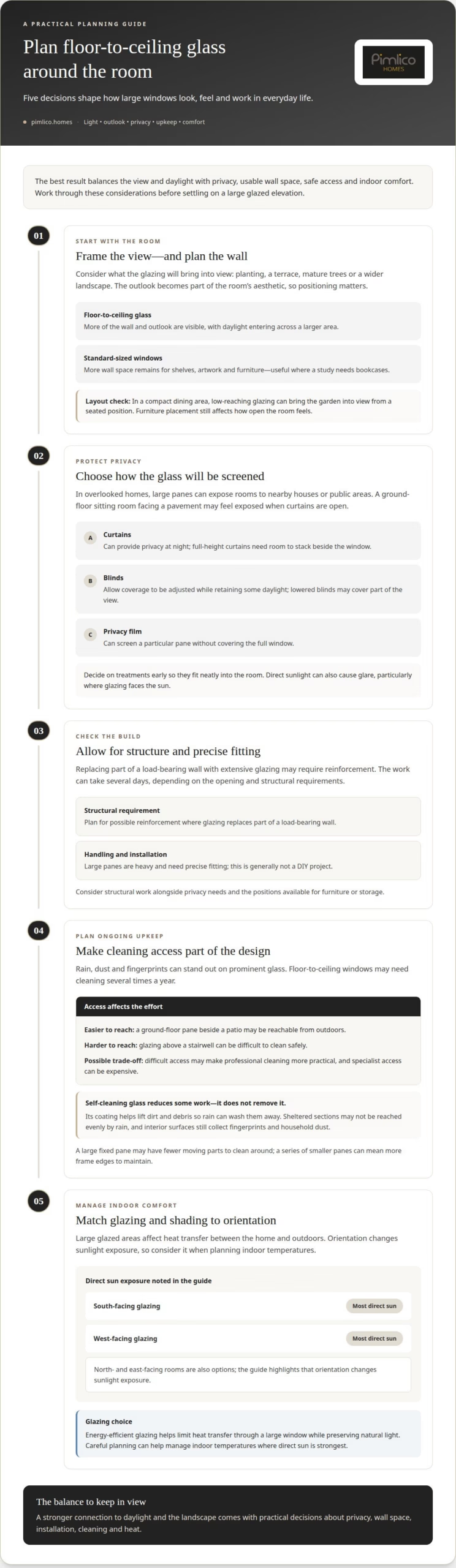
Floor-to-ceiling glass can admit more natural light, open views across a garden and make the outdoors part of a room’s aesthetic. Its impact depends on the space: consider how daylight, outlook and room layout work together.
Natural daylight and well-being
Natural daylight can support everyday activities and contribute to a sense of openness. For example, a kitchen with broad glazing may feel more inviting for breakfast than one relying mainly on artificial light. Daylight may also reduce the need to switch on lights during the day, limiting electricity use when conditions are bright.
Views and connection to the garden
Large windows make the garden or surrounding landscape part of the interior. A living room facing mature trees, for instance, gains a changing outlook through the seasons, strengthening the connection between indoor and outdoor spaces. Since the view becomes part of the room’s aesthetic, positioning matters: a considered frame can draw attention to planting, a terrace or a wider landscape.
Daylight and perceived space
Daylight can make a room feel more spacious by brightening surfaces and softening the boundary between indoors and outdoors. In a compact dining area, glazing that reaches close to the floor can bring the garden into view from a seated position, extending the perceived space beyond the walls. This can create an airy impression, although furniture placement still affects how open the room feels.
Large versus standard-sized windows
Compared with standard-sized windows, floor-to-ceiling designs bring more of the wall into view and admit daylight across a larger area. Standard windows preserve more wall space for shelves, artwork or furniture; larger glazing gives the outlook greater presence. A room arranged around a garden, for example, may benefit from a broad glazed elevation, while a study needing bookcases may suit smaller windows better.
Privacy, installation and maintenance drawbacks
Large glazed areas affect more than a room’s appearance. Their height can influence privacy, glare, furniture placement and installation requirements.
Privacy in overlooked homes
In an overlooked home, floor-to-ceiling glass can expose indoor spaces to views from nearby houses or public areas. A ground-floor sitting room facing a pavement, for example, may feel exposed when the curtains are open. This matters most in rooms used throughout the day, where homeowners want daylight without feeling observed. Direct sunlight can also cause glare, particularly where glazing faces the sun.
Large windows can make a room feel more open, but leave less wall space for bookcases, artwork or larger furniture. A television or tall storage unit may have fewer suitable positions in a living room with a broad glazed wall. Consider these trade-offs alongside the benefits and the view.
Curtains, blinds and privacy film
Curtains, blinds and privacy film can help manage visibility through large windows. In a bedroom facing neighbouring homes, curtains provide privacy at night; blinds let homeowners adjust coverage while retaining some daylight. Privacy film is another option when the aim is to screen a particular pane without covering the full window.
Each treatment changes how the glass looks and functions. Full-height curtains need space to stack beside the window, while lowered blinds may cover part of the view. Choosing a treatment early can help it sit neatly within the room instead of interrupting the intended aesthetic.
Installation may also involve structural work. Replacing part of a load-bearing wall with extensive glazing may require reinforcement, and the work can take several days depending on the opening and structural requirements. Large panes are heavy and need precise fitting, so this is generally not a DIY project. Plan for these details alongside privacy and furniture needs to weigh the practical drawbacks before committing.
For a home shaped around its outlook and the way each room is used, explore Pimlico Homes’ bespoke luxury homes.
Cleaning and ongoing maintenance
Large windows make glass a prominent feature, so marks can stand out in a bright interior. Rain, dust and fingerprints may show clearly, especially on panes facing a garden or frequently used outdoor space. Floor-to-ceiling windows may need cleaning several times a year. Their height and position affect how easily both surfaces can be reached.
Access is an important part of upkeep. A ground-floor pane beside a patio may be reachable from outdoors, while glazing above a stairwell can be harder to clean safely. The drawback is not only the time involved: difficult access may make professional window cleaning more practical, and specialist access can be expensive. Plan for this before glass becomes a defining feature of the room.
Self-cleaning glass can reduce some of the work. Its coating lifts dirt and debris from the surface, allowing rain to wash them away. This may help on an exposed pane where dust gathers between cleaning visits. It does not mean the glass never needs attention: rain may not reach sheltered sections evenly, and interior surfaces still collect fingerprints and household dust.
Consider upkeep as part of the design. A large fixed pane may have fewer moving parts to clean around than an opening window, while a series of smaller panes can mean more frame edges to maintain. In a living space used daily, handprints near doors or low glazing may call for more frequent attention than higher sections. These details help you decide whether the view and daylight justify the extra cleaning.
Energy efficiency and thermal performance
Large glazed areas affect heat transfer between a living space and the outdoors. Floor-to-ceiling windows can suit north-, south-, east- or west-facing rooms, but orientation changes sunlight exposure. South- and west-facing glazing receives the most direct sun, so careful planning helps manage indoor temperatures.
Heat loss and efficient glazing
Energy-efficient glazing helps limit heat transfer through a large window while preserving natural light. Double- or triple-glazed options insulate better than single-glazed glass, helping reduce heat loss in colder weather. Low-emissivity coatings reflect heat while allowing light through, and can reduce ultraviolet exposure to interior finishes. These choices matter in a contemporary living room, where a striking glazed wall should not come at the expense of comfort. Weighing floor-to-ceiling windows pros and cons means considering warmth as well as appearance.
Solar warmth and energy use
Sunlight through south-facing windows can warm a property, potentially reducing heating use and household carbon emissions. The effect depends on the room’s exposure and how warmth is managed. In a bright space, overhangs, trees or window treatments can limit excess heat and glare while retaining daylight. Thermal curtains can also help keep warmth inside as outdoor temperatures fall, supporting comfort after sunset.
Window suitability by room orientation
Orientation affects when direct sunlight reaches a room. South- and west-facing windows receive the most direct sunlight during the day, which can raise indoor temperatures and cooling demand without suitable planning. North- and east-facing rooms have different daylight patterns, so consider how each space is used and how much solar warmth it receives. A bedroom and a living area may call for different glazing and shading choices. This room-by-room approach makes weighing floor-to-ceiling windows pros and cons more practical.
Before installation, consider glazing performance alongside the window’s position, shading and intended use. This joined-up approach helps balance daylight, heat retention and solar gain, rather than treating glass choice as a purely aesthetic decision. Explore home design options with orientation and year-round comfort in mind.
Pimlico Homes
Pimlico Homes creates luxury homes where architectural choices form part of a considered overall design. If you are weighing expansive glazing, consider its effect on privacy, upkeep and comfort alongside the outlook, room layout and connection with the garden. These choices can help shape a distinctive home suited to everyday living.
Pimlico Homes offers luxury detached homes, executive courtyard homes, bespoke luxury homes and luxury barn conversions. Each provides a different setting in which light, views and interior spaces contribute to the overall design. The right choice depends on the kind of home and atmosphere you want to create.
To discuss your plans, contact Pimlico Homes.
Shape a home around the way you live
Choosing floor-to-ceiling windows is also an opportunity to define the character of a future home. Before settling on a design, picture how you want each room to feel at different times of day and how its outlook will relate to daily routines. A quiet reading corner, an open living space or a garden-facing dining area may each call for a different balance of glazing and solid wall.
Weighing the pros and cons of floor-to-ceiling windows in this wider context helps make an appealing feature a considered part of your home’s architecture. Explore how these design decisions can fit into a new home shaped around your priorities and vision with Pimlico Homes.
Discuss your home plans with Pimlico Homes and take the next step towards a space that feels distinctly yours.
Frequently Asked Questions
Are there any disadvantages to having large windows?
Yes. Large windows can reduce usable wall space, increase cleaning demands and make privacy harder to manage. They may also need structural reinforcement if installed in a load-bearing wall. Consider how the room will function before committing: a dining room may benefit from broad garden views, while a study requiring extensive shelving may need more uninterrupted wall space.
Can large windows cause overheating?
Yes. Direct sunlight through extensive glazing can raise indoor temperatures, particularly in south- and west-facing rooms. A west-facing lounge used in the evening, for example, may receive strong afternoon sun. External shading, suitable window treatments and opening panels for ventilation can help manage heat and glare. Consider glazing performance and room orientation together, rather than selecting them independently.
Do full-height windows make sense for your new home?
They can suit a new home when the design accounts for room use, privacy and the views from each elevation. A garden-facing living room may gain a strong visual connection to its setting, while a bedroom could need carefully planned screening. Including glazing choices early in the design also helps coordinate furniture layouts and balance open views with practical wall space.
Do floor-to-ceiling windows require planning permission?
Planning requirements vary with the work involved and the property’s circumstances. Creating a new opening or substantially changing an exterior may raise different considerations from replacing existing glazing. Treat permission as a project-specific question and establish the relevant requirements before work begins, rather than assuming the same answer applies to every home.
What affects the cost of large windows?
The price depends on the dimensions, frame material, glazing specification and whether the design is fixed or opens. Structural alterations, installation requirements and access to the opening can also affect the overall cost. A broad glazed wall with bespoke framing involves different work from a single fixed pane. The price is determined after a quote request, based on these project details.
Why are large windows so popular?
Large windows appeal to homeowners because they make views and daylight part of a home’s architecture. A glazed elevation can frame a garden throughout the year, giving an interior a changing outlook without altering its furnishings. Clean lines also suit contemporary designs, while considered frames and placement can help them complement a more traditional property.





