
The roof of a detached garage need not be a blank plane. Green sedum roofs on luxury detached outbuildings create a planted finish using hardy, low-growing plants over a suitable roof build-up. They can bring colour and wildlife to a property while making the outbuilding feel considered as part of the wider design.
It’s natural to want a roof that looks beautiful without demanding constant attention. Sedum suits shallower growing media than many plants, and these roofs are typically low maintenance, requiring minimal watering and fertilisation.
This guide explains what a green roof involves, why autumn is often a favourable time to install one, and which hardy sedum varieties may suit different conditions. It also looks at planting across a home and detached garage, and why the roof structure, waterproofing and drainage need attention before the design is settled.
Key Takeaways
- Understand how sedum, drainage and growing medium combine to create a living roof with seasonal colour.
- Use autumn as a useful starting point for planning installation, while considering the roof design and planting needs.
- Compare hardy sedum varieties by their growth habit, colour and tolerance of local conditions.
- Plan roof planting for a home or detached garage only after considering structural capacity, waterproofing and drainage.
WHAT IS A GREEN ROOF?
A green roof layers plants and growing medium over a waterproofed roof. For garden rooms, garages and studios, the right system balances planting and maintenance with the structure beneath.
Sedum Coverage and Seasonal Colour
Sedum forms a low-growing cover, with roof plants typically reaching 10-15 cm in height. Its compact growth suits shallow growing media, while different varieties bring changes in colour and flowering through the seasons. Some sedum varieties can add seasonal colour and may attract pollinators. Album Coral Carpet can flower during drought and retain winter colour and coverage. Together, these qualities give a roof changing detail without the height of shrubs.
Extensive and Intensive Systems
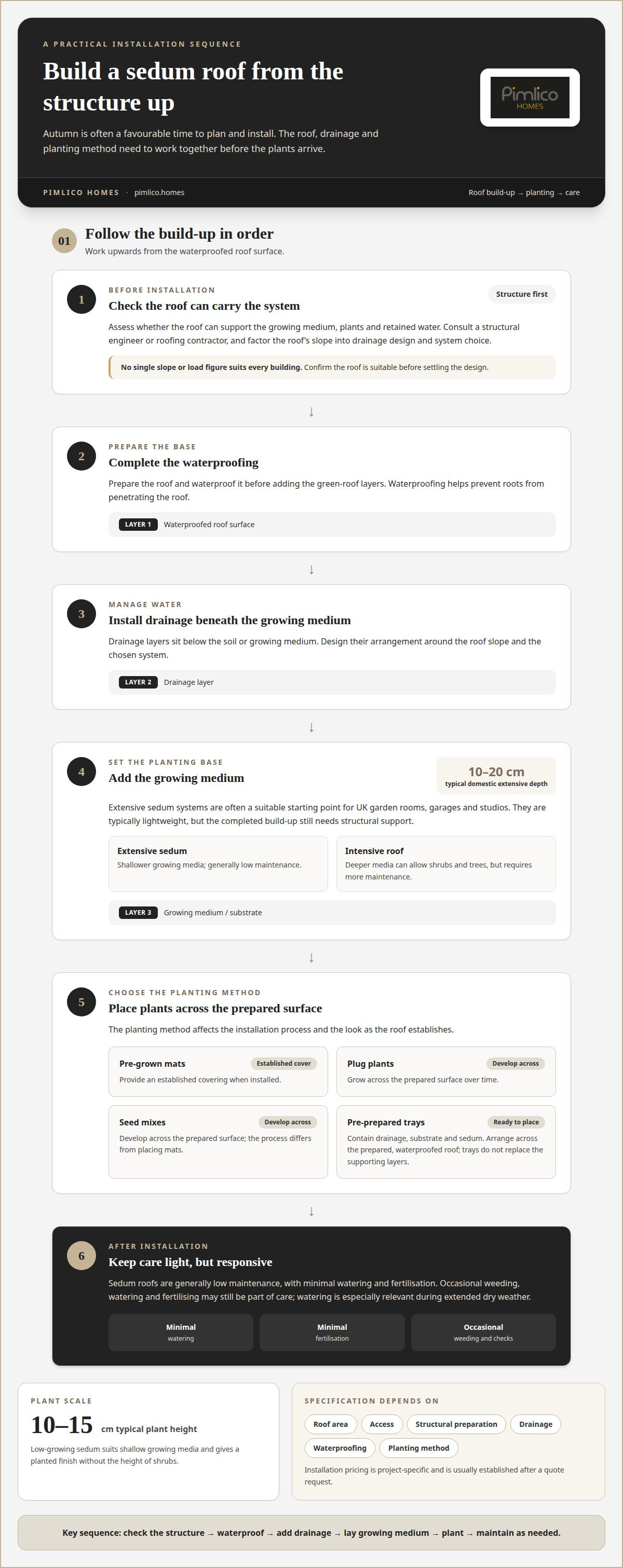
For UK garden rooms, garages and studios, an extensive sedum system is often the suitable starting point. Domestic extensive roofs are typically lightweight, with growing depths of 10-20 cm, although the roof must still support the completed build-up. Intensive systems use deeper growing media and more soil, allowing shrubs and trees but requiring more maintenance. Sedum roofs are generally low maintenance, with minimal watering and fertilisation; wildflower roofs use a deeper medium and need more care. Both sedum and native wildflower mixes can support wildlife, including pollinators. Plants may be installed as pre-grown mats, plug plants or seed mixes. Installation pricing is project-specific and is usually established after a quote request; roof area, access, structural preparation, drainage, waterproofing and planting method all shape the specification.
Roof Structure and Waterproofing
Before installation, assess whether the roof structure can support the growing medium, plants and retained water. Consult a structural engineer or roofing contractor, and account for the roof’s slope when designing drainage and choosing a system. No single slope or load figure suits every building. Waterproofing helps prevent roots penetrating the roof, while drainage layers sit beneath the soil or growing medium. These checks establish whether an extensive sedum system suits the existing roof or requires a different design.
Recommended timing for installation
Autumn is often considered a favourable time to design and install a sedum roof, but preparation starts with the roof itself. The growing system, drainage arrangement and planting must suit the structure and intended appearance. Planning these decisions together helps establish the installation sequence before the plants arrive.
Installation follows the roof build-up from the waterproofed surface upwards. First, prepare the roof and complete the waterproofing. Install drainage layers before the growing medium, then add planting as mats, plug plants or seed mixes. Each method has a different installation process: pre-grown mats provide an established covering, while plugs and seed mixes develop across the prepared surface.
Pre-prepared sedum trays contain drainage, substrate and sedum. Place them on a waterproofed roof and arrange them across the prepared area to create continuous coverage. Fully grown trays can arrive ready to unstack and place, making the handling sequence straightforward. The waterproofing and supporting layers must still be in place first; trays do not replace that preparation.
Sedum roofs are generally low maintenance after installation, requiring minimal watering and fertilisation. Occasional weeding, watering and fertilising may still be part of their care, with watering especially relevant during extended dry weather. Seasonal appearance also depends on plant selection: Album Coral Carpet can flower during drought and retain winter colour and coverage. A sedum roof offers more than a single moment of summer colour; its planting and installation method shape how it looks through the seasons.
Choosing hardy sedum species
Choose sedum for the roof’s exposure and the appearance you want through the seasons. Sedum leaves store water, helping these plants withstand harsh conditions. There are thought to be around 55 sedum species in Europe, with a wider range of forms and colours available. A considered mix can bring variation to a roof without relying on a single flowering period.
For a compact, sculptural effect, Reflexum is slow-growing and clump-forming, with blue, spruce-like foliage. Its distinct form creates a different look from a uniform green carpet. Album Athoum is described as tolerating extreme heat, drought and cool temperatures, making its resilience relevant when choosing plants for changing conditions. Sedum Acre Aureurm is described as retaining its colour in all conditions, which may matter when consistent colour is central to the design.
The environment matters as much as the variety. Coastal-grown sedum is hardened by exposure to salt-laden air and harsher weather, so those growing conditions can inform plant selection for exposed sites. Consider how the plants’ colour, growth habit and flowering will sit alongside the building and surrounding landscape. The planting system depends on plant choice, desired appearance and roof size, so species selection shapes both the look and the roof build-up.
Wildlife can also be part of the design. Flowering sedum can provide food for insects, while green roofs more broadly offer habitat for birds and other wildlife. For a stronger pollinator focus, native wildflower mixes can support local wildlife and pollinators in the UK, but need a deeper growing medium and more maintenance than sedum. It is a matter of balance: sedum offers a low-growing roof covering, while a wildflower mix creates a more meadow-like character. Match the planting to the environment and the intended upkeep.
Sedum green roofs on homes and detached garages
A living roof can visually connect a house and its detached garage through planting, while adding seasonal interest. A strong design considers both buildings’ structures, appearance and practical roof performance.
Roof Type Comparisons
Compared with metal or slate, sedum adds living plants, seasonal colour and potential wildlife habitat. Metal and slate provide a harder finish without the same planted character. Compared with a conventional flat roof, sedum can absorb rainwater and provide additional insulation, although its effect varies with the water saturation of the growing medium. These differences make appearance, maintenance and roof construction central to choosing a finish.
Planning permission may be needed for a green roof, particularly in an urban area, so establish whether it applies before installation. Building regulation considerations include structural capacity, waterproofing and drainage. A planting layer does not replace sound construction.
Roof Performance Risks
Failed waterproofing can lead to leaks, while poor drainage can leave water where the design should carry it away. Wind uplift and fire performance also need consideration in the roof design, as does the risk of plants failing to establish. Specify the complete roof build-up rather than treating sedum as a surface covering alone.
Before work begins, assess whether the structure can support the completed roof, including retained water. Detail waterproofing and drainage as connected layers, then choose plants suited to the roof’s conditions. Sedum can cool a building in summer and help retain warmth in winter, but insulation varies through the year. Spring growth and flowering add seasonal character, while occasional care supports the living roof.
For a new home and garage, consider the roof finish as part of the overall architectural composition. Explore Luxury Detached Homes with Pimlico Homes as a starting point for shaping a home around the setting and its outbuildings.
Pimlico Homes: Luxury Detached Homes
Pimlico Homes creates Luxury Detached Homes for those planning a distinctive home and considering how each building contributes to its setting. A sedum roof can form part of that wider design conversation, particularly when a detached garage or garden studio should sit comfortably alongside the house. The planting, roof structure and appearance need to work together from the outset.
For a project shaped around individual priorities, Bespoke Luxury Homes offer a relevant starting point. Executive Courtyard Homes and Luxury Barn Conversions provide further possibilities, depending on the property’s character and setting. Consider these options when your plans extend beyond a roof covering to the design of a home and its surrounding buildings.
Contact Pimlico Homes to discuss your plans.
Shape the next stage of your home
The next step is to consider the roof as part of the complete setting, not an isolated finish. Green sedum roofs on luxury detached outbuildings can contribute to a cohesive design when their planting, proportions and relationship to the main home are considered together. That vision begins with the way you want to live, the character of the site and the role each building should play.
Pimlico Homes offers Luxury Detached Homes, Executive Courtyard Homes and Bespoke Luxury Homes. Each provides a distinct starting point for shaping a residence around its surroundings and your priorities. As plans develop, considered decisions about the home and its outbuildings can help create a more unified architectural composition.
When you are ready to explore how your ideas might take form, begin a conversation with Pimlico Homes. A considered vision can start with one clear next step.
Frequently Asked Questions
What are green roofs?
A green roof is designed to support living plants above a building’s roof structure. With green sedum roofs on luxury detached outbuildings, the planting becomes part of the architecture, helping a garage or garden studio relate more closely to the surrounding landscape. The final appearance depends on roof dimensions, plant selection and setting. It is a constructed roof system, not simply soil and plants laid over a covering.
What is sedum?
Sedum is a group of succulent plants in the Crassulaceae family. Its fleshy leaves store water, helping the plants withstand challenging growing conditions. Roof planting can include different forms, from ground-covering varieties to clump-forming types such as Reflexum. The selected mix influences texture, colour and seasonal character. Combining varieties can create a more varied appearance than planting a single type.
How much does a sedum roof cost per square metre in the UK, including installation?
There is no single UK price per square metre for every installed sedum roof. The cost of green sedum roofs on luxury detached outbuildings depends on roof area, access, structural preparation, waterproofing, drainage and planting system. Trays, plugs, mats and seed mixes involve different materials and installation requirements. A project-specific price reflects the complete roof specification and is provided after a quote request.
How are sedum roofs installed on a detached outbuilding, step by step?
Installation follows a sequence that prepares the roof and establishes the planting:
- Assess the structure and prepare the roof surface.
- Complete the waterproofing and drainage details.
- Install the drainage layer and growing medium.
- Place sedum trays or install mats, plugs or seed.
- Water the planting as needed while it establishes.
The precise installation method depends on the chosen system and roof design.
How much maintenance does a sedum roof need, and how long does it last?
A sedum roof generally needs periodic care, including occasional weeding and watering during extended dry weather. Fertilising may also suit the planting system. No single lifespan applies to every roof: service life depends on waterproofing, drainage, construction and upkeep. Keep drains clear to help rainwater flow away, and use seasonal checks to spot areas where plants need attention.
Which UK sedum roof suppliers and installers serve luxury outbuildings, and what warranties do they offer?
A suitable system needs to match the outbuilding’s roof design, structure, access and planting brief. Warranty terms vary by product and installation scope, so there is no single duration or cover for the UK market. Review the written terms for coverage of materials and workmanship, and note how maintenance requirements or exclusions affect that cover.





