
The strongest glass isn’t necessarily the most secure window. With a large pane, protection depends on the whole assembly: the glass, frame, locks and how accessible the window is from outside. These security considerations for large windows matter as much as the choice of glazing.
It’s natural to focus first on the glass, and its specification can affect both protection and cost. Yet a robust pane in a weak frame can still leave an opening vulnerable, while the window’s size and position help determine which features deserve attention. This guide explains how laminated and toughened glass differ, what influences security-glass costs, and how reinforced frames, multi-point locks and window location shape the decision. It also considers how to balance security, natural light and your home’s architectural character.
Key Takeaways
- Assess security as a complete window system: strong glazing works best alongside a reinforced frame and effective locks.
- Understand how laminated and toughened glass differ, and how BS EN 12150, identified by the British Standards Institution, relates to toughened safety glass.
- See why glass specification, pane dimensions and installation requirements influence security-glass costs, without assuming one option suits every home.
- Consider how a window’s position and accessibility affect the security features that matter most, particularly for large panes.
Why Do Modern Large Windows Use Reinforced Frames?
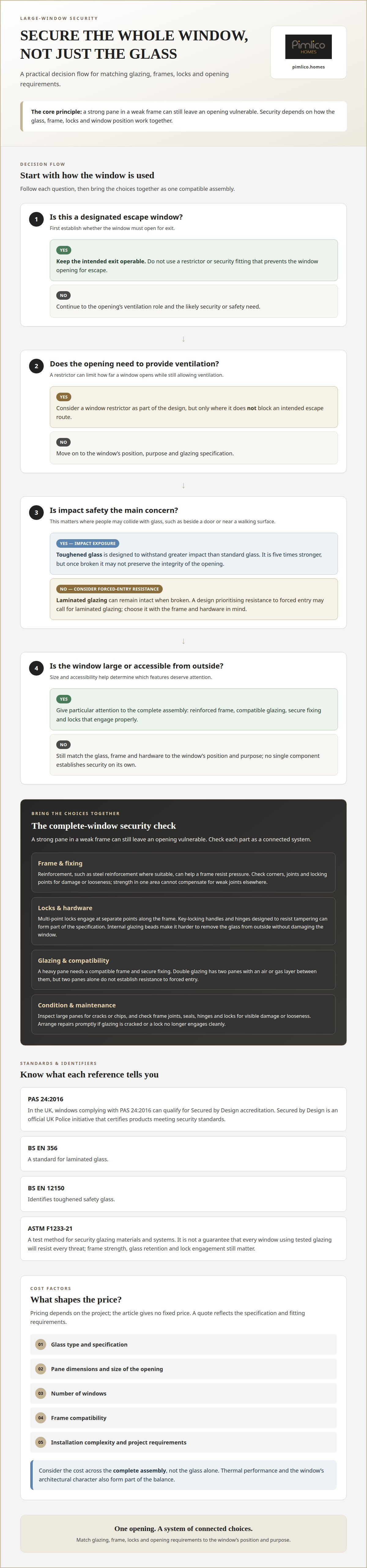
A large pane creates a broad opening, so security depends on more than glass. If a strong pane sits in a weak frame, forced entry can still leave the window vulnerable. Reinforced frames help the glass, locks and frame function as one assembly in both residential and commercial security glazing.
In the UK, windows complying with PAS 24:2016 can qualify for Secured by Design accreditation. Secured by Design is an official UK Police initiative that certifies products meeting security standards. BS EN 356 is a standard for laminated glass. These identifiers help distinguish tested glazing from a general claim that a window is secure.
Window restrictors limit how far a window opens while allowing ventilation. Fire-safety requirements depend on the building and the window’s role; a restrictor must not prevent an intended escape window from opening for exit. Specify restrictors as part of the window design, while preserving access for escape.
Large windows can be protected without obstructing exits by combining reinforced frames, suitable locks and glazing selected for the likely threat. Keep designated escape windows operable, and avoid security fittings that prevent their intended use. A window restrictor may suit a ventilation opening, but not where it blocks an escape route.
Double glazing consists of two panes with an air or gas layer between them. This construction can contribute to window security, but two panes alone do not establish resistance to forced entry. Laminated glazing can remain intact when broken, while professionally installed fragment-retention film may reduce hazardous fragments in certain applications.
Maintenance helps preserve the performance of the whole assembly. Inspect large panes for cracks or chips, and check frame joints, seals, hinges and locks for visible damage or looseness. A damaged seal can admit water and weaken the surrounding frame over time. Arrange repairs promptly if glazing is cracked or a lock no longer engages cleanly.
Safety glazing matters where people may collide with glass, such as beside a door or near a walking surface. The right specification depends on the window’s position and purpose. In homes and commercial buildings alike, choose glazing and frame reinforcement together, rather than treating glass as a standalone security measure.
Window locks, reinforced frames and toughened glass
Security depends on how the frame, glazing and hardware work together. Each component must suit the window’s size and design.
Reinforced frame construction
A reinforced frame strengthens the structure that holds the glazing and locking points. Steel reinforcement can help a frame resist pressure during a forced-entry attempt. This is especially relevant for a broad window, where frame movement may affect several locks at once. Reinforcement must suit the frame material and construction; adding strength in one area cannot compensate for weak joints elsewhere.
Treat the frame as part of the complete glazing system. A heavy pane needs a compatible frame and secure fixing, so its weight and resistance do not place undue strain on the assembly. Check corners, joints and locking points for damage or looseness. These details affect how the window performs as a whole.
Secure hardware and glazing compatibility
Secure hardware includes multi-point locks, key-locking handles and hinges designed to resist tampering. Multi-point locks engage at separate points along the frame, helping hold a large sash closed across its width. Internal glazing beads also make it harder to remove the glass from outside without damaging the window. Hardware should align with the frame and chosen glazing.
ASTM F1233-21 is a standard test method for security glazing materials and systems, according to ASTM International. It describes a test method, not a guarantee that every window using tested glazing will resist every threat. Frame strength, glass retention and lock engagement still matter. A compatible specification treats these components as one system.
Locks and toughened glass
Window locks secure the opening, while toughened glass is designed to withstand greater impact than standard glass. Toughened glass is five times stronger than standard glass. However, once broken, it may not preserve the integrity of the opening, so strength alone does not determine whether it is suitable for delaying forced entry.
On a casement window, side hinges and a multi-point locking system can work together to secure the sash. Sash windows can also use secure locks and toughened glazing. Choose according to the window type and the role of each component, rather than treating glass or locks as a standalone solution.
Good specification starts with the complete assembly: reinforced frames, compatible glazing and hardware that engages properly. A weakness in any one element can leave the opening vulnerable.
How Much Does Window Security Glass Cost?
Security-glass pricing depends on the pane, its dimensions, the frame and installation requirements. The right specification balances security, thermal performance and the window’s character.
Security-glass cost factors
The price depends on the project and is provided after a quote request. Key cost factors include glass type, pane size, the number of windows, frame compatibility and installation complexity. A large bespoke opening may require a different specification from a standard replacement pane, affecting materials and fitting work.
Project requirements also shape the choice. A design prioritising resistance to forced entry may call for laminated glazing, while a window exposed to impact may need a different safety specification. The frame and glazing must work together, so consider cost across the complete assembly rather than for the glass alone.
If a proposal names STV dry glass bonding technology, assess it within the full glazing specification. Its relevance depends on the design and installation requirements, alongside the chosen frame and pane. A named bonding approach does not, by itself, describe the security performance of the finished window.
Glass types and coatings
Laminated glass has a durable plastic layer between two panes and can remain intact when broken. Toughened glass is a different option: the British Standards Institution identifies BS EN 12150 as a standard for toughened safety glass. Toughened glass may lose the integrity of the opening when it breaks, so it is not automatically the best choice for delaying forced entry.
Low-emission coatings and insulating glass can support thermal performance alongside the intended security specification. Secure windows can help reduce heat loss in winter and prevent overheating in summer. Double glazing uses two panes separated by an air or gas layer, but the coating and glass should suit the project’s performance priorities.
For a considered comparison, specify the pane dimensions, glass type, coatings, frame and installation requirements together. This clarifies the trade-offs and keeps the cost discussion focused on the complete window, rather than one material in isolation.
Large-pane and window-location considerations
Large windows create broad openings, and their position affects how easily someone can reach them. For UK homeowners, security considerations for large windows start with exposure to forced entry and the risk of damage where glass is close to people or circulation routes.
Security risks of large windows
A large pane can make an accessible opening more exposed, particularly at ground level or beside a terrace. A secluded side elevation may be less visible than a street-facing window, so the same glazing design can face different practical risks. Consider what is behind the glass, likely threats, vulnerabilities and the protection you want before choosing a specification.
Pane location also affects the consequences of breakage. For example, glazing beside a doorway or stair landing is close to areas where people move through the home. Security and safety are distinct considerations: consider both the risk of entry and the risk of injury if glass is damaged.
Window location considerations
Map each large window against the approach from outside. A ground-floor window beside a patio, one above an accessible balcony and one overlooking an open garden each have different access conditions. Nearby doors, boundary features and routes across the property also affect exposure. Location helps establish which protection priorities matter most.
Indoors, note whether a pane is beside a door, walking route or staircase. These factors can influence the appropriate safety-glazing choice, independently of the security specification. A window intended to provide ventilation also needs to remain practical to use, rather than being treated solely as a barrier.
For a new design, consider window position, access and the intended use of each room together. This can inform expansive glazing without sacrificing daylight or the connection between indoors and garden. Security considerations for large windows may differ across elevations: a secluded rear opening can call for different priorities from a prominent front window.
Planning a home around large panes? Explore bespoke home design with security and window location considered as part of the wider brief.
Pimlico Homes
Pimlico Homes develops luxury detached, executive courtyard and bespoke luxury homes, where expansive glazing can be considered as part of the wider design. If you are planning a new build, think about window size, position and intended use early, alongside the home’s layout and architectural character. This gives practical security considerations a place in the design process, rather than leaving them as an afterthought.
Whether you are planning a contemporary detached home, a courtyard setting or a luxury barn conversion, the right priorities depend on your design. For a considered next step towards a home shaped around your requirements, contact Pimlico Homes.
Shape a home with confidence
Large glazing can define a home’s atmosphere, bringing in daylight and strengthening its connection with its surroundings. Treat security considerations for large windows as part of the design from the outset, alongside how each room will be used and how the home meets its setting. This helps balance protection, openness and architectural intent.
For a new home, these choices can form part of a broader conversation about the design you want to live with over time. Pimlico Homes brings together the planning of distinctive residential spaces, allowing your priorities to inform the home as a whole.
Contact Pimlico Homes for advice about taking the next step with your home plans. Thoughtful design can make security feel considered, not imposed, and leave your home ready to welcome the light and life you envision.
Frequently Asked Questions
Which window locks and restrictors are recommended for large windows?
Multi-point locks and key-locking handles are useful options for large or accessible windows. A restrictor limits how far a window opens while allowing ventilation, making it useful where controlled opening matters. For example, a ground-floor window may need a different arrangement from an upper-floor window. Keep the window’s intended use in mind, particularly if it also serves as an escape opening.
Are laminated or toughened security glass options best for large windows?
Laminated glazing is often more relevant when the aim is to hold broken glass together and delay access through the opening. Toughened glass is designed for impact resistance, but may not remain in the opening after breakage. The better choice depends on the window’s position, likely hazards and desired protection. For a pane beside a busy walkway, safety after breakage may be a key consideration.
How much does it cost to upgrade large windows with security glazing or locks in the UK?
The cost depends on the project and is provided after a quote request. Factors include the number and dimensions of panes, glazing type, frame compatibility, hardware and installation complexity. Replacing one pane may involve different work from upgrading several large windows within an existing frame. The full specification matters, as glass, locks and fitting requirements can affect the scope together.
How can large sliding, bifold and tilt-and-turn windows be secured against forced entry?
Use locking hardware designed for the specific window type, and ensure the frame, glazing and locking points work as a complete assembly. Sliding and bifold systems should close and engage their intended locks without obstruction. Tilt-and-turn windows can tilt for ventilation or open fully, so their locking arrangement should suit both functions. Avoid fittings that prevent the window from being used as intended.
Do window alarms, sensors or security film improve protection for large windows?
Alarms and sensors can add an alerting layer, but they do not strengthen glass or frames. Security film may help retain fragments in certain applications, but it is not equivalent to laminated security glazing. Its performance depends on the film, attachment system, existing glass, frame and installation. For example, film applied to a large pane should be assessed as part of the full window assembly.
What maintenance checks help keep large window locks, frames and glazing secure?
Inspect panes for chips or cracks, and check frame joints, seals and glazing beads for visible damage or movement. Open and close each window, checking that handles operate smoothly and locks engage fully. For sliding or bifold windows, clear debris that obstructs normal movement. If a lock sticks or a frame appears loose, arrange repair before relying on that opening for security.





