
The most enduring symbol of success is no longer a display of overt opulence, but the mastery of subtle, sensory permanence. In an era of fleeting digital aesthetics, the discerning homeowner seeks something far more substantial. You likely recognise the frustration of navigating a market saturated with short-lived fads that threaten to date a property before the keys are even turned. It’s a delicate task to balance high-specification technology with the soulful, tactile nature of traditional craftsmanship. This guide identifies the pivotal interior design trends for luxury homes 2026, ensuring your residence remains a timeless sanctuary that reflects your heritage and retains its significant value.
We’ll examine the sophisticated architectural shifts defining the UK’s most prestigious residences, from the rise of dedicated wellness wings to the return of artisanal, textured finishes. You’ll learn how to harmonise modern innovation with a sense of quiet grandeur. By focusing on meticulous artistry and visionary planning, we’ll show you how to create a space that feels both contemporary and permanent, reflecting the quiet confidence of a life well-lived.
Key Takeaways
- Understand the shift from clinical minimalism to “Quiet Grandeur,” focusing on spaces that prioritise emotional resonance and architectural permanence.
- Explore the 2026 colour landscape, where grounding earth tones and celestial blues create an atmosphere of security and prestige.
- Discover how interior design trends for luxury homes 2026 embrace tactile artistry through unfitted natural wood and curated metal patinas.
- Learn to implement “broken-plan” layouts that balance the airy flow of open living with the necessary privacy of an executive estate.
- Gain insight into the collaborative architectural process that ensures a bespoke new build remains contemporary whilst retaining long-term value.
Defining Quiet Grandeur: The Luxury Design Philosophy of 2026
The pursuit of excellence is evolving. We’re witnessing a decisive shift in interior design trends for luxury homes 2026, moving away from the cold, sterile environments that once defined high-end modernism. This new era belongs to “Quiet Grandeur”. It’s a philosophy rooted in depth and soul, where every element serves a purpose beyond mere decoration. A home should be an anchor. It’s an investment in your emotional well-being as much as your financial future.
Discerning buyers now prioritise the emotional resonance of a space over a simple aesthetic display. They seek environments that feel grounded and permanent. This is achieved through the integration of invisible technology, where high-specification systems are woven into the fabric of the building. Lighting, acoustics, and climate control should operate flawlessly without cluttering the visual field. This meticulous approach to design doesn’t just improve the daily experience; it significantly bolsters the resale value of premium properties amongst an increasingly sophisticated audience who recognise quality that lies beneath the surface.
The Departure from Strict Minimalism
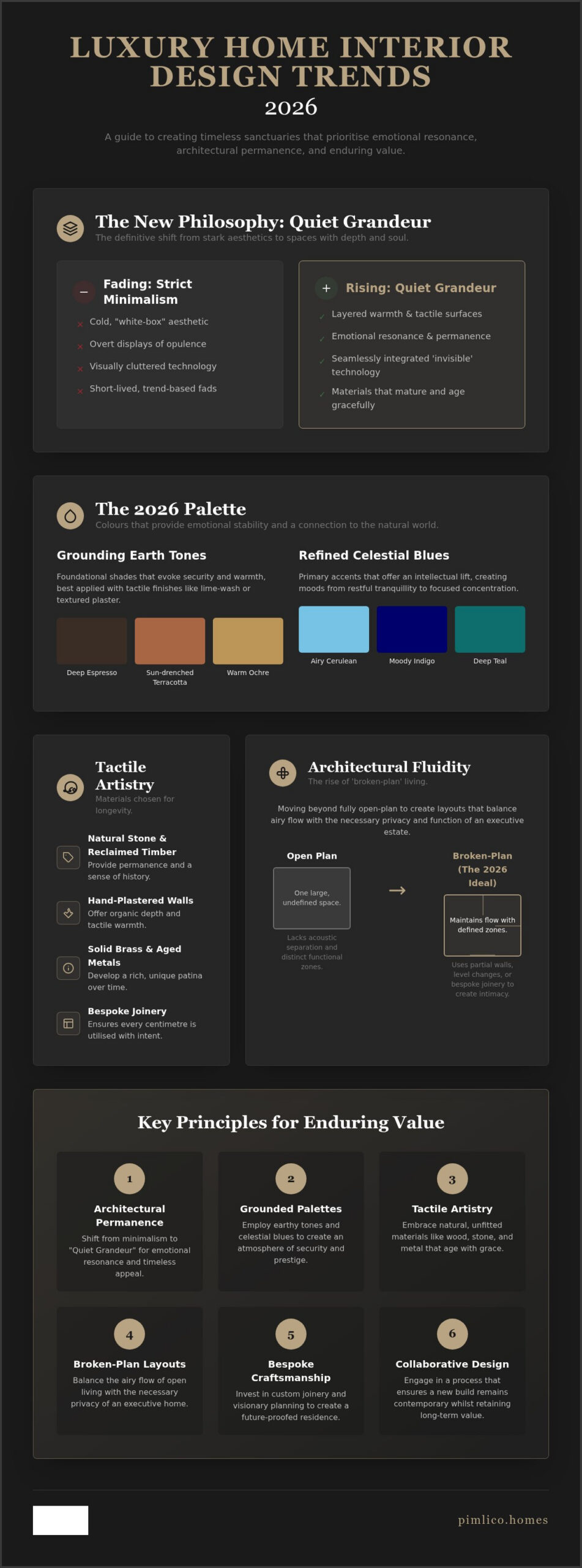
The “white-box” aesthetic is fading. Today’s most prestigious residences favour layered environments that offer tactile warmth and visual complexity. We’re seeing a deliberate inclusion of architectural “imperfections”-the subtle grain of hand-plastered walls or the slight variations in hand-cut stone-that suggest a sense of history and character. Quiet Grandeur is the precise point where unwavering prestige meets the profound comfort of home.
Longevity as the Ultimate Luxury
True luxury doesn’t date. It matures. In 2026, the focus is on materials that age with grace, such as natural stone, solid brass, and reclaimed timber. Our extensive work with luxury barn conversions has proven that heritage materials provide a sense of permanence that off-the-shelf luxury solutions simply cannot replicate. Bespoke joinery is a cornerstone of this movement. Custom-built cabinetry and architectural woodwork ensure that every centimetre of the home is utilised with intent. This level of future-proofing through high-specification structural planning creates a residence that remains contemporary whilst honouring traditional values of craftsmanship.
The 2026 Palette: Earthy Pigments and Celestial Blues
Colour is the silent architect of mood. In the context of interior design trends for luxury homes 2026, we’re seeing a decisive departure from the high-contrast jewel tones that dominated the early 2020s. The focus has shifted towards a palette that provides emotional stability and a sense of permanence. It’s about creating a sanctuary. This is achieved through the use of pigments that feel deeply rooted in the natural world, offering a sophisticated backdrop for a life of quiet prestige.
The most successful schemes in 2026 don’t rely on clashing accents to create interest. Instead, they employ monochromatic layers where depth is built through texture rather than variety. This approach is particularly effective in luxury detached homes where expansive glazing allows natural light to interact with these subtle shifts in tone throughout the day. It creates a living environment that feels both expansive and intimate.
Grounding Earth Tones
Resilience meets warmth. The rise of “Grounding Browns” marks a return to interiors that evoke a sense of security. We’ve moved beyond the pale mushrooms of previous seasons into richer, more decisive territories. Think deep espresso, sun-drenched terracotta, and warm ochre. These shades are not merely decorative; they’re foundational. They provide a physical connection to the landscape, especially when applied using traditional methods.
Application is as vital as the hue itself. Rather than flat, synthetic paints, 2026 favours the organic depth of lime-wash and textured plasters. These materials allow light to catch the wall in varied ways, creating a soft, tactile surface that feels historic yet fresh. For those investing in executive courtyard developments, these earthy pigments provide a seamless transition between the exterior stonework and the internal living spaces, reinforcing the architectural integrity of the home.
The Return of Refined Blues
Blue is reclaiming its status as the primary accent for the executive home. Whilst earthy tones provide the foundation, celestial blues offer the necessary intellectual lift. We’re seeing airy cerulean in master suites to promote rest, whilst moody indigo and deep teal are becoming the standard for executive studies. It’s a colour that suggests authority and calm, perfectly suited for spaces dedicated to focus and reflection.
Pairing is essential to prevent these pigments from feeling cold. These blues are best balanced with warm, tactile metalwork. Hardware and lighting fixtures in aged brass or patinated bronze provide the perfect counterpoint to a deep blue wall or bespoke cabinet. This combination is a hallmark of the new era of grandeur. If you’re considering how to integrate these sophisticated palettes into your next project, you might explore our bespoke design process to see how we harmonise colour and light in our visionary developments.
Tactile Artistry: Materials that Demand to be Touched
The tactile experience is the new frontier of prestige. When considering interior design trends for luxury homes 2026, the focus has shifted from the purely visual to the profoundly sensory. It’s no longer enough for a room to look expensive. It must feel substantial. This is the era of Sensory Permanence. We’re seeing a move towards materials that possess an inherent weight and a story of their own. We reject the mass-produced in favour of the meticulously crafted.
Texture is the primary language of 2026. Every surface should invite the hand to linger, from the cool grain of a stone worktop to the warmth of hand-stitched leather. This focus on the physical interaction with one’s surroundings creates a home that feels deeply personal and grounded. It’s a departure from the sleek, untouchable surfaces of the past decade, replaced by an environment that celebrates the artistry of the maker.
The New Woodwork Standard
The revival of “unfitted” natural wood elements is a defining feature of the bespoke kitchen. We’ve moved away from uniform, clinical cabinetry. Instead, we’re seeing a preference for grain-heavy woods like American walnut and charred oak. These materials bring a sense of the forest indoors. Bespoke joinery creates a seamless flow between living spaces, where a kitchen island might transition into a library wall. We prioritise sustainably sourced British timber. It’s a choice that reflects both environmental responsibility and a commitment to local heritage.
Metals and Masonry
2026 rejects the rigidity of matching metal finishes. The modern executive home embraces curated patinas. We use tactile metalwork for handles, switches, and lighting fixtures, where the metal is designed to age and change with use. It creates a connection between the inhabitant and the architecture. In spa-like bathrooms, mosaic tiles and small-scale prints are returning to provide a sense of artisanal detail. We’re also seeing the integration of stone monoliths. These are massive, hand-carved blocks of marble or granite that serve as functional art in bespoke luxury homes, grounding the space with their immense presence.
Textural Textiles and Big Art
Textural textiles provide the necessary softness to balance these hard architectural lines. We’re seeing a heavy use of bouclé, mohair, and raw silk. These fabrics provide a layered, luxurious feel that synthetic alternatives cannot match. Finally, the inclusion of “Big Art” has become essential. These are large-scale, commissioned pieces that often dictate the room’s layout. The architecture is frequently designed around the art, ensuring the home serves as a gallery of personal success and curated taste.
Architectural Fluidity in Modern Executive Estates
The architectural shell of a residence is the ultimate expression of luxury. In the context of interior design trends for luxury homes 2026, we’re moving beyond the simplistic open-plan layouts of the past decade. The focus has shifted towards architectural fluidity. This involves creating spaces that feel expansive yet offer the seclusion required for a modern executive lifestyle. It’s a sophisticated dance between visibility and privacy. We’re no longer satisfied with mere square footage. We demand spaces that breathe.
Biophilic design is no longer an optional extra. It’s a fundamental influence on 2026 floor plans. We’re seeing homes designed to wrap around internal courtyards, ensuring that nature is a constant, calming presence. Simultaneously, the Wellness Suite has transitioned from a basement afterthought to a primary architectural requirement. These high-specification spaces often include infrared saunas and meditation areas, positioned deliberately to capture the morning light. It’s an investment in the self.
Modern estates must also cater to the multi-generational family. This requires a visionary approach to zoning. We design secondary master suites and private living quarters that maintain a cohesive aesthetic whilst providing genuine independence for adult children or ageing parents. It’s about ensuring every generation feels both connected and respected within the home’s grand vision without compromising on style or personal space.
The Broken-Plan Evolution
Privacy is the new currency. The broken-plan evolution uses internal glazing and decorative screens to divide large volumes without sacrificing light. This allows for the creation of intimate snugs within expansive detached properties. These smaller, textured rooms provide a necessary retreat from the home’s more public areas. Additionally, the modern executive study is being redesigned for permanent hybrid working. It’s no longer a repurposed bedroom, but a high-specification command centre with integrated acoustics and professional-grade lighting.
Heritage Meets Modernity
Tradition provides the soul; innovation provides the comfort. We often see how modern barn conversion interiors influence new build design through their use of exposed trusses and double-height voids. These elements create a sense of drama and scale that is difficult to replicate with standard construction. The challenge lies in balancing this period charm with the efficiency of a high-specification new build. By integrating advanced climate control and sustainable energy systems into these traditional forms, we create a residence that is both timeless and technologically superior.
If you’re ready to define your own era of quiet grandeur, contact us to discuss your bespoke luxury home vision.
Realising the Vision: Bespoke Design with Pimlico Homes
The evolution of the home requires a partner who understands that luxury is a living, breathing concept. As we have explored, the interior design trends for luxury homes 2026 are defined by a move toward Sensory Permanence and Quiet Grandeur. At Pimlico Homes, we don’t merely react to these shifts. We anticipate them. With over 25 years of industry experience, our visionary architectural planning ensures that every residence we create serves as a benchmark for the new era of executive living.
Realising such a sophisticated vision requires a collaborative process that is as meticulous as the construction itself. We guide you from the initial concept through to the final completion, acting as both a visionary creator and a reliable guardian of quality. This journey is about more than just aesthetics; it’s about the emotional weight of a significant life investment. We handle the complexities of high-end development, providing a steady and consistent delivery of information that builds trust at every stage.
Our commitment to excellence ensures that your property remains contemporary whilst retaining its long-term resale value. By prioritising meticulous craftsmanship over fleeting fashions, we create homes that mature with grace. This focus on high-specification interiors and structural integrity is what separates a Pimlico home from the standard market offering. We don’t just build houses. We curate legacies.
A Legacy of Excellence
Pimlico Homes stands as an authoritative guardian of quality in the UK residential market. Our executive courtyard developments are designed to offer unrivalled privacy and prestige, creating secure enclaves that reflect the success of their inhabitants. Similarly, our luxury barn conversions demonstrate our deep respect for heritage. We blend the raw, tactile nature of original structures with modern innovation, ensuring that the soul of the building remains intact whilst providing every contemporary comfort and efficiency.
Your Bespoke Journey
Acquiring or building your dream home is a deeply personal endeavour. The process begins with a conversation about your aspirations and how you wish to live. We specialise in integrating your personal heritage and style into a high-specification framework, ensuring the final result is a unique reflection of your success. Our methodical approach ensures nothing is left to chance:
- Discovery: Defining your vision and identifying the ideal location for your bespoke new build.
- Design: Collaborating with our architects to harmonise personal style with 2026 trends.
- Delivery: Overseeing the meticulous construction process to ensure every detail meets our exacting standards.
We invite you to explore the Pimlico Homes portfolio for inspiration and to see how we bring the most prestigious visions to life.
Defining Your Future Heritage
The transition toward Sensory Permanence marks a significant milestone in how we conceive of the home. It’s a move away from the ephemeral and toward the enduring. By embracing the interior design trends for luxury homes 2026, you’re choosing a residence that prioritises emotional resonance and architectural integrity. Whether it’s through the grounding warmth of earthy pigments or the sophisticated flow of a broken-plan layout, the goal remains the same: a sanctuary that reflects your personal journey and success.
Pimlico Homes stands as a dedicated partner in this creative endeavour. With over 25 years of expertise in high-end residential development, we specialise in bespoke luxury and executive courtyard homes that define their surroundings. Our reputation for meticulous craftsmanship and architectural excellence ensures your investment is protected for generations. We invite you to discover our portfolio of visionary luxury homes and begin the journey toward a residence of quiet grandeur. Your vision deserves a guardian of quality that understands the weight of excellence.
Frequently Asked Questions
What are the dominant interior colour trends for luxury homes in 2026?
The 2026 luxury palette is defined by a shift toward grounding earth tones like espresso and terracotta, complemented by celestial blues. These pigments provide a sense of emotional security and permanence. We recommend layering these colours using textured finishes such as lime-wash or polished plaster to add depth. This approach ensures a sophisticated backdrop that feels both contemporary and timeless whilst avoiding the sterility of previous minimalist eras.
How can I ensure my new build home design doesn’t go out of style?
Avoid fleeting fads by prioritising the philosophy of Quiet Grandeur and investing in heritage materials that age with grace. Choosing solid wood joinery, natural stone, and hand-finished metals ensures your home matures rather than dates. By focusing on architectural integrity and meticulous craftsmanship, you create a residence that remains prestigious regardless of shifting aesthetic cycles. It’s about choosing quality that possesses an inherent soul.
What is “broken-plan” living and why is it trending in luxury homes?
Broken-plan living is an evolution of open-plan design that uses internal glazing, decorative screens, and level changes to create distinct zones. It’s trending because it offers the privacy and acoustic separation required for modern executive lifestyles whilst maintaining a sense of light and space. This layout allows for intimate retreats, such as snugs or studies, within a larger, fluid architectural shell. It provides the seclusion that traditional open layouts often lack.
Are barn conversions still a popular choice for luxury buyers in 2026?
Luxury barn conversions remain a premier choice for discerning buyers who value the intersection of heritage and innovation. These properties offer unique architectural drama through double-height voids and exposed structural elements that standard new builds often lack. We find that the tactile nature of original stonework and timber provides a sense of permanence that is central to the interior design trends for luxury homes 2026. They represent a unique link to the past.
How does smart home technology integrate with traditional interior design?
Successful integration relies on “invisible technology” where hardware is concealed within bespoke joinery or behind textured wall finishes. High-specification systems for lighting and climate control should enhance the atmosphere without cluttering the visual field. By planning these systems during the architectural phase, we ensure that modern convenience never compromises the traditional craftsmanship or aesthetic soul of the residence. The goal is a home that thinks for itself without shouting about it.
Which materials are considered most prestigious for luxury kitchens in 2026?
The most prestigious kitchens in 2026 feature “unfitted” elements made from grain-heavy woods like walnut and charred oak. Stone monoliths, such as hand-carved marble islands, serve as functional art and ground the room with their immense physical presence. These materials are chosen for their tactile quality and ability to age beautifully, reflecting a commitment to artistry over mass-produced luxury solutions. Every surface should invite the hand to linger and appreciate the maker’s skill.
How do interior design trends affect the resale value of a luxury property?
Adopting interior design trends for luxury homes 2026 that focus on Sensory Permanence significantly bolsters the resale value of a property. Discerning buyers in the UK market recognise and pay a premium for meticulous craftsmanship and architectural fluidity. Conversely, following short-lived, low-quality fads can date a home quickly, making it less attractive to high-net-worth individuals who seek a secure, long-term investment. Quality is the most reliable driver of appreciation.
Can I customise the interior design of a new build home during the construction phase?
Customisation is a hallmark of the bespoke luxury home process, provided you engage with the developer during the early planning or construction phases. This allows you to integrate personal heritage and specific lifestyle requirements into the high-specification framework. From selecting bespoke joinery finishes to reconfiguring room layouts for broken-plan living, early collaboration ensures the final residence is a unique reflection of your vision. We guide you through every choice with expert care.


