
Invisible excellence. The most profound luxury in a modern home is often the one you cannot see. When you’re envisioning a bespoke interior, the last thing you want is a series of bulky radiators dictating where your furniture must sit or interrupting the flow of a grand, open-plan living space. You’ve likely felt the frustration of cold spots in a large room or worried about the rising costs of heating a detached property. Understanding the benefits of underfloor heating in new builds is essential for anyone seeking a home that balances aesthetic purity with uncompromising warmth. It’s a choice that prioritises both your comfort and your creative vision.
This article explores how invisible engineering transforms a residence into a sanctuary of thermal efficiency and architectural freedom. We’ll examine how the 2026 Future Homes Standard is making low-temperature systems a necessity, with a maximum flow temperature of 55°C ensuring your home is future-proofed. You’ll discover how water-based systems can be up to 30% more energy-efficient than traditional alternatives, lowering your carbon footprint while enhancing resale value. From the technical precision of smart zoning to the simple joy of a warm floor, we’ll detail why this system is the silent foundation of a high-specification home.
Key Takeaways
- Reclaim your architectural vision by eliminating intrusive radiators, allowing for bespoke cabinetry and expansive, floor-to-ceiling glazing.
- Experience the superior comfort of radiant heat, which provides a more uniform thermal environment than the erratic convection of traditional systems.
- Maximise your investment by understanding the long-term benefits of underfloor heating in new builds, from superior EPC ratings to enhanced property desirability.
- Cultivate a healthier, more hygienic sanctuary by reducing airborne dust and allergens through the gentle delivery of silent, invisible warmth.
- Future-proof your residence with high-specification heating that aligns with the latest environmental regulations and low-carbon technologies.
The Evolution of Thermal Comfort: Why UFH is the Standard for Luxury New Builds
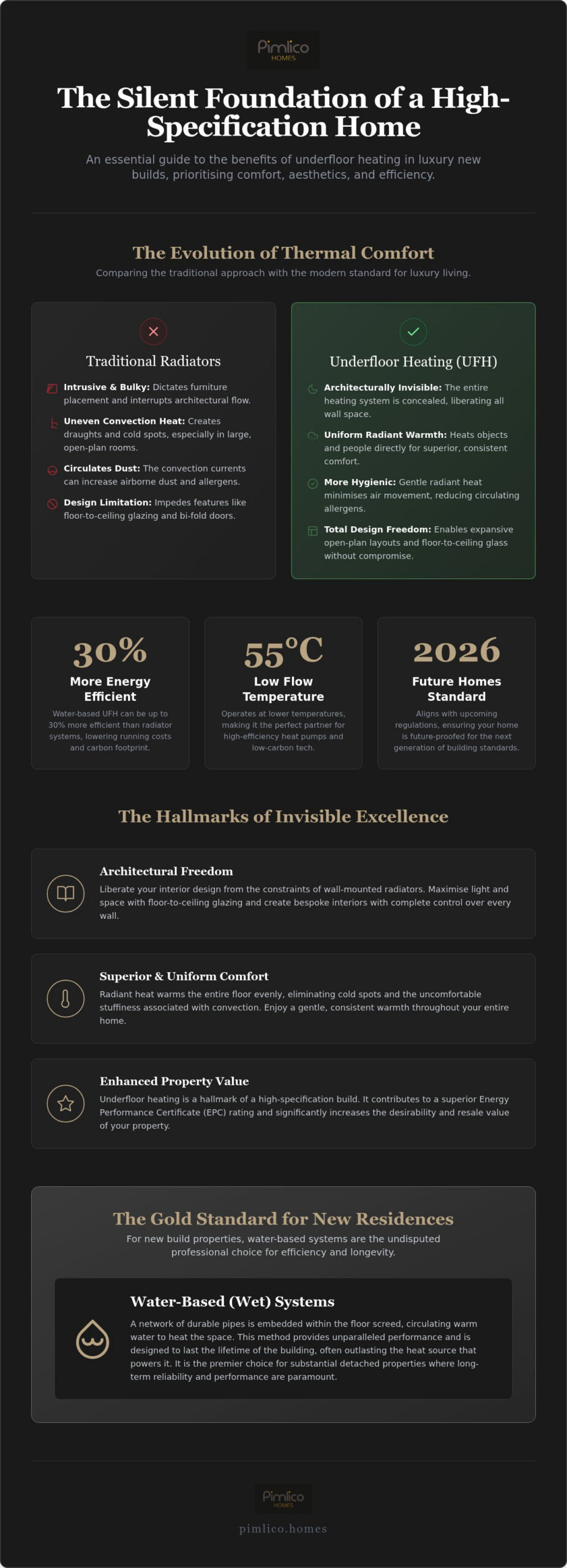
Modern prestige is defined by what’s absent. In a contemporary executive home, the visual clutter of traditional radiators is increasingly a relic of the past. Underfloor heating represents the pinnacle of this evolution, offering a seamless integration of warmth into the very fabric of the building. By circulating heat beneath the floor surface, underfloor heating systems eliminate the need for wall-mounted units, allowing the architecture to speak for itself. It’s a sophisticated approach that aligns perfectly with the high-specification finishes expected in a Pimlico home.
The logic behind this shift is grounded in modern engineering. Today’s building regulations, particularly the 2026 Future Homes Standard, demand higher insulation levels and lower carbon emissions. Because modern luxury builds are so well-insulated, they don’t require the intense, localised heat of a radiator. Instead, they thrive on the gentle, consistent radiant warmth that underfloor heating provides. This synergy between structure and system highlights the many benefits of underfloor heating in new builds, ensuring the property remains efficient whilst maintaining a constant, comfortable temperature.
Wet vs. Electric Systems in New Construction
For a primary residence, water-based or “wet” systems are the undisputed gold standard. These systems involve a network of durable pipes embedded within the floor screed, through which warm water circulates. They’re designed for longevity, often outlasting the boilers or heat pumps that power them. When integrated with air source heat pumps, they operate at a much lower flow temperature, typically 55°C, which is significantly more efficient than the high temperatures required for radiators. This long-term reliability makes them the preferred choice for substantial detached properties where performance is as vital as aesthetics.
The Shift from Utility to Lifestyle
Heating was once a mere utility; now, it’s a fundamental lifestyle choice. There’s a quiet confidence in a home that stays perfectly tempered without a single visible machine. It’s an experience that begins the moment you step onto a warm stone floor on a winter morning. This transition from a premium “extra” to a baseline expectation is a key theme in our buying a luxury new build guide. In the current market, the presence of UFH isn’t just about warmth. It’s a hallmark of a property designed without compromise, where every detail is curated to enhance the human experience.
Architectural Freedom: Designing Without the Constraint of Radiators
The architectural integrity of a luxury residence relies on the absence of compromise. Traditional radiators often force a choice between thermal comfort and design vision, acting as an unwanted focal point that dictates furniture placement. One of the primary benefits of underfloor heating in new builds is the total liberation of wall space. This freedom allows for the installation of floor-to-ceiling glazing or expansive bi-fold doors; features that define the modern executive home. Without the need for perimeter heating units, these glass walls can stretch uninterrupted, inviting the landscape inside whilst maintaining a pristine interior silhouette.
This “wall-free” approach is particularly vital in modern barn conversion interiors. In these structures, where soaring double-height ceilings and exposed timber frames are the stars, a standard radiator feels like an intrusion. By hiding the heating system beneath the floor, the original character of the building is preserved. It’s a subtle form of engineering that supports a healthier air quality by reducing dust movement, ensuring the home feels as fresh as it looks.
Maximising Open-Plan Potential
Large, open-plan spaces are the heart of contemporary living, yet they often suffer from “dead zones” far from a heat source. Underfloor heating solves this by turning the entire floor into a heat emitter. It ensures a uniform temperature from the centre of the room to the edges. In a luxury kitchen-diner, where walls are often occupied by bespoke cabinetry or high-end appliances, UFH is the only logical solution. You can place a grand dining table or a modular sofa anywhere you wish. The heat isn’t blocked by furniture; it rises gently around it.
Compatibility with Premium Flooring Materials
The success of a radiant system is closely tied to the materials it warms. Porcelain, natural stone, and engineered oak are exceptional conductors of heat. They retain warmth long after the system has cycled off. This makes traditionally “cold” materials feel incredibly inviting underfoot. When you’re selecting finishes for bespoke luxury homes, the thermal benefits of underfloor heating in new builds allow you to choose stone for a master ensuite or timber for a library without the tactile chill often associated with these surfaces. It’s a sensory experience that adds a layer of quiet luxury to every step you take.
The Science of Radiant Heat: Efficiency Meets Superior Comfort
True comfort is felt, not heard. Whilst traditional radiators rely on convection, circulating warmed air that inevitably rises to the ceiling, underfloor heating employs radiant heat. This process warms the objects and people in a room directly, rather than just the air between them. It eliminates the “cold feet, warm head” phenomenon that often plagues older heating methods. Instead, you experience a uniform, gentle warmth that begins at ground level and permeates the space evenly. It is a more natural form of heating that mirrors the warmth of the sun, creating an environment that feels inherently right.
The technical benefits of underfloor heating in new builds are anchored in thermal efficiency. Traditional systems often require water temperatures as high as 70°C to be effective. In contrast, a well-designed water-based system operates at a significantly lower flow temperature, often between 35°C and 55°C. This lower threshold is not just a matter of preference. It is a core requirement of modern efficiency standards, allowing the system to work in harmony with the building’s insulation. By operating at these reduced temperatures, water-based underfloor heating can be 25-30% cheaper to run than standard radiators in a well-insulated home.
Zonal Control for Modern Life
Modern executive living demands flexibility. Intelligent thermostats allow for precise, room-by-room zoning, ensuring that energy is never wasted on unoccupied spaces. You can maintain a crisp, cool environment in guest suites whilst ensuring the primary living areas remain invitingly warm. Integration with smart systems like the Tado° X or Nest Learning Thermostat provides seamless control via smartphone. Research indicates that such smart integration can lead to annual savings of between £100 and £500 on heating bills for many UK homes. It is a level of control that matches the pace of a contemporary lifestyle.
Future-Proofing Through Low-Temperature Heating
The regulatory landscape is shifting. The upcoming 2026 Future Homes Standard mandates a maximum flow temperature of 55°C for new water-based systems to ensure they are compatible with low-carbon heat sources. By choosing a system designed for these temperatures today, you are securing the property’s status as a resilient, high-value asset. Underfloor heating is the perfect partner for air source heat pumps, which operate most efficiently at these lower levels. It is a commitment to longevity and sustainability, positioning the home as a leader in a changing energy landscape.
Wellness and Hygiene: The Sensory Experience of a Radiant Home
The sensory experience of a home is often the most enduring mark of its quality. Whilst radiators rely on the constant movement of air to distribute heat, underfloor heating remains perfectly still. This lack of convection is one of the most overlooked health benefits of underfloor heating in new builds. Traditional radiators create a cycle of rising and falling air that lifts dust, pollen, and other airborne allergens, redistributing them throughout the room. By warming the floor directly, you eliminate these miniature wind tunnels, creating a significantly cleaner environment that feels fresh and untainted. It is a subtle but vital distinction for the discerning homeowner.
There is a profound tactile pleasure in walking barefoot across a warm stone or timber floor on a frost-nipped morning. In a high-specification residence, materials like Italian porcelain or engineered oak are chosen for their beauty, yet they can feel uninvitingly cold without the right engineering. Radiant heat transforms these surfaces into a source of comfort. It provides a constant, gentle warmth that radiates upwards, ensuring the floor is the most inviting part of the room. This sensory satisfaction is a hallmark of executive wellbeing, turning a house into a sanctuary where every touchpoint is considered.
A Healthier Indoor Environment
For residents with asthma or seasonal allergies, the air quality inside a home is paramount. Radiators can significantly dry out the air, leading to respiratory discomfort and irritated skin. Underfloor heating maintains more natural humidity levels by avoiding the intense, localised heat of a metal unit. In bathrooms and entrance halls, the system serves a dual purpose by ensuring floors dry rapidly after use. This reduces the risk of slips and prevents the buildup of moisture that can lead to mould, keeping these high-traffic zones hygienic and safe for the whole family.
The Quietest Luxury
Silence is the ultimate indicator of high-end engineering. Traditional heating systems are often accompanied by the audible clicking of expanding pipes or the rush of water through copper veins. Underfloor heating operates in total silence. There are no mechanical interruptions to the domestic atmosphere, allowing you to fully appreciate the high-specification acoustic insulation of your property. This lack of noise provides a psychological reassurance that the home is functioning perfectly. It creates a serene environment where the only thing you notice about the heating is how comfortable you feel.
If you are ready to experience this level of uncompromising comfort in your next residence, explore our latest collection of luxury new build homes designed with your wellbeing in mind.
Investing in Excellence: High-Specification Heating as a Value Driver
A home’s true value is often a reflection of the invisible decisions made during its construction. High-specification heating is a prime example of this principle. One of the most significant financial benefits of underfloor heating in new builds is the positive impact on the Energy Performance Certificate (EPC) rating. In a market where energy efficiency is increasingly scrutinised, a superior EPC rating makes a property more attractive to discerning buyers. They aren’t just looking for a beautiful facade. They’re looking for a sophisticated, low-carbon asset that aligns with modern environmental standards. Research indicates that water-based underfloor heating can be 25-30% cheaper to run than standard radiators, providing a tangible return on investment through reduced energy expenditure.
Choosing UFH is a clear signal of a developer’s commitment to excellence. It shows they haven’t cut corners in the pursuit of profit. In the luxury residential sector, this attention to detail translates directly into higher resale values. A home equipped with radiant heating commands a premium because it offers a lifestyle that traditional systems simply cannot match. It’s a hallmark of a property that’s been built to the highest possible standards, where every element is curated for the long-term satisfaction of the owner.
A Hallmark of Quality Construction
Discerning buyers often use the presence of UFH as a litmus test for overall build quality. If a developer has invested in a high-specification, water-based underfloor system, it’s highly likely they’ve also prioritised superior insulation, premium glazing, and artisanal finishes. This correlation is particularly evident in bespoke barn conversions. In these unique structures, UFH is an essential component that reinforces the prestige of the conversion. It ensures the interior remains uncluttered whilst providing the consistent warmth necessary for large, vaulted spaces that would otherwise be difficult to heat efficiently.
Long-Term Asset Protection
Beyond immediate comfort, UFH offers significant advantages for long-term asset protection. Maintenance requirements are remarkably low. Unlike radiators, which can leak or require regular bleeding, a modern screed-embedded system is designed for permanence. These systems often have a lifespan that matches the building itself, lasting for many decades with minimal intervention. This durability protects the property’s marketability. It ensures the heating remains a selling point rather than a future liability. It’s a secure investment in the longevity of the residence.
At Pimlico Homes, we view every property as a significant life investment. Our commitment to excellence means that high-specification finishes like underfloor heating are a standard expectation, not an optional extra. We invite you to explore our vision of luxury living and discover how our bespoke standards create homes of enduring value and quiet prestige.
Securing Your Vision of Modern Living
The decision to integrate radiant warmth is a commitment to a lifestyle without compromise. By removing the visual and physical constraints of radiators, you reclaim the architectural integrity of your home, allowing for bespoke design and expansive, light-filled spaces. The benefits of underfloor heating in new builds extend far beyond mere temperature. It’s about the sensory delight of a warm floor on a winter morning, the quiet efficiency of a low-carbon system, and the long-term value of a property built to the highest specifications. This invisible luxury ensures your residence remains a sanctuary of comfort and prestige for decades to come.
At Pimlico Homes, we bring 25 years of architectural excellence to every project. We specialise in expertly crafted luxury detached homes where high-specification finishes are a standard expectation, not an afterthought. Your future home should be a masterpiece of both form and function; a place where innovative engineering meets traditional values. Explore the uncompromising quality of our luxury new builds and discover a living experience designed with meticulous care. We invite you to begin your journey toward a home that reflects your standard of excellence.
Frequently Asked Questions
Is underfloor heating more expensive to run than traditional radiators?
No, water-based systems are typically 25% to 30% more efficient to run than traditional radiators in well-insulated properties. Because the system operates at lower flow temperatures, often between 35°C and 55°C, it doesn’t place as much demand on your heat source. This efficiency is one of the primary financial benefits of underfloor heating in new builds, especially when paired with modern air source heat pumps that thrive at these lower thermal thresholds.
How long does it take for underfloor heating to warm up a large room?
Warm-up times depend on the system type and floor construction, but wet systems typically take between one and two hours to reach the desired temperature. The screed surrounding the pipes acts as a thermal mass, absorbing heat before radiating it into the room. Whilst this means it’s slower to start than a radiator, the floor retains its warmth for much longer after the system has been switched off, providing a more stable climate.
Can I have underfloor heating with any type of floor covering?
Most modern floor coverings are compatible with radiant heating, provided they are installed correctly. Natural stone and porcelain tiles are the most effective conductors, offering the best thermal performance. Engineered oak and high-quality laminates also work exceptionally well, though you should check the manufacturer’s maximum temperature limits. Thick carpets can be used, but the combined tog rating of the carpet and underlay should ideally not exceed 2.5 for optimal efficiency and heat transfer.
Is underfloor heating suitable for the upper floors of a new build?
Yes, underfloor heating is perfectly suitable for every level of a new build residence. On upper storeys, we typically use lightweight aluminium spreader plates between timber joists or low-profile screed boards. These methods ensure that the heat is distributed evenly across the floor surface without adding excessive weight to the structure. It allows you to enjoy the same architectural freedom and wall-free design in bedrooms and ensuites as you do on the ground floor.
Does underfloor heating require regular maintenance or servicing?
Underfloor heating systems are remarkably low-maintenance compared to traditional radiator networks. There are no moving parts beneath the floor, meaning the pipework itself should last as long as the building. We recommend an annual check of the manifold and the circulating pump to ensure everything is operating at peak performance. This simple inspection is usually carried out alongside your standard boiler or heat pump service, ensuring the system remains a reliable asset for decades.
What happens if a pipe leaks under the floor?
Leaks are extremely rare because the pipework is installed as a single, continuous loop with no joints beneath the floor surface. Any potential points of failure are located at the manifold, which is easily accessible for inspection. The piping used is typically high-density polyethylene, which is incredibly durable and pressure-tested before the screed is poured. In the unlikely event of damage, specialised thermal imaging cameras can pinpoint the exact location for a precise, localised repair without disruption.
Can underfloor heating be used with a traditional gas boiler?
Yes, underfloor heating integrates seamlessly with traditional gas boilers. A blending valve is used at the manifold to mix the high-temperature water from the boiler with cooler return water, ensuring it enters the floor at a safe and efficient temperature. Whilst it works perfectly with gas, the system is also future-proofed for renewable technologies. This versatility is amongst the long-term benefits of underfloor heating in new builds, allowing for a simple transition to low-carbon heat sources later.
How does underfloor heating improve the air quality in my home?
Air quality is improved by the elimination of convection currents. Radiators warm the air, causing it to rise and carry dust and allergens around the room in a constant cycle. Radiant heat warms the floor and objects directly, which keeps the air relatively still. This reduction in airborne particles creates a much healthier environment, particularly for those with respiratory sensitivities. It also maintains natural humidity levels, preventing the dry, stuffy atmosphere often associated with traditional forced-air heating.


