
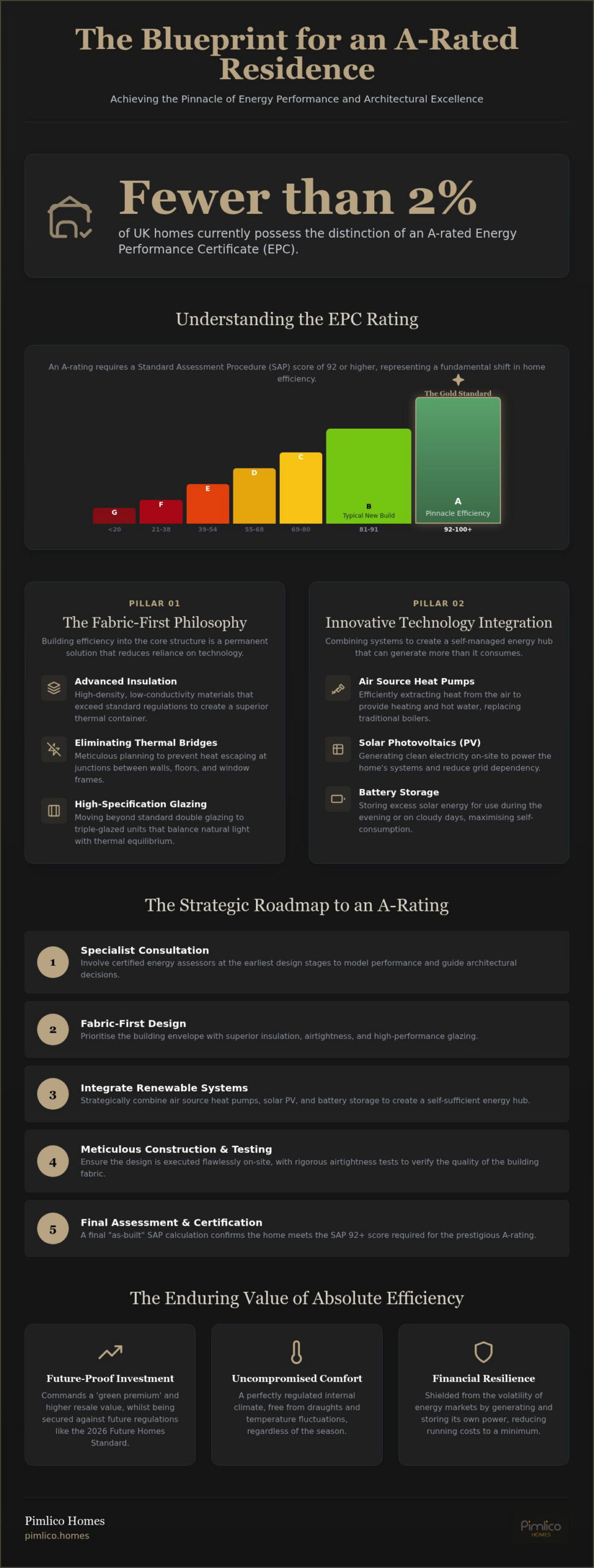
Did you know that fewer than two per cent of UK homes currently possess the distinction of an A-rated Energy Performance Certificate? For the discerning homeowner, this isn’t just a number on a document. It’s a hallmark of architectural excellence and a testament to a property’s enduring value. Achieving an A-rated energy performance certificate requires more than just a few solar panels or a heat pump. It demands a visionary approach where sustainability is woven into the very fabric of the home. You might worry that such rigorous efficiency could compromise the aesthetic integrity of your residence, but the reality is quite the opposite.
We understand the complexity of navigating the 2026 Future Homes Standard and the nuances of the upcoming Home Energy Model. It’s natural to feel overwhelmed by the shifting regulatory landscape or the fear that modern technology might clutter a bespoke design. This guide provides the clarity you seek. You’ll discover the meticulous architectural strategies and innovative technologies required to secure this prestigious rating. From the fabric-first philosophy to the integration of smart energy hubs, we’ll outline how to future-proof your investment while maintaining the uncompromising luxury you expect.
Key Takeaways
- Understand why an A-rating requires a SAP score of 92 or higher and how it represents the pinnacle of modern architectural standards.
- Learn why a fabric-first approach to insulation and airtightness is more vital for comfort than the gadgets installed within the home.
- Discover the strategic roadmap for achieving an A-rated energy performance certificate by involving specialist assessors at the earliest design stages.
- Explore how combining air source heat pumps with solar PV and battery storage creates a self-managed energy hub for your residence.
- Realise how integrating visionary energy technology preserves the long-term investment value of a luxury property without sacrificing its aesthetic character.
What is an A-Rated EPC and Why is it the Gold Standard?
The Energy Performance Certificate (EPC) is a familiar document, yet within its colour-coded bands lies a profound statement of quality. It moves from the draughty, inefficient realities of a G-rating to the pinnacle of architectural achievement: the A-rating. Achieving an A-rated energy performance certificate requires a Standard Assessment Procedure (SAP) score of 92 or higher. This isn’t just a slight improvement over the average home; it’s a fundamental shift in how a residence breathes and functions. At Pimlico Homes, we see this rating not merely as a target, but as a foundation for a life lived without compromise.
According to industry data, only about 1 to 2 per cent of UK homes currently reach this standard. For a luxury property, this rarity signals more than just environmental awareness; it signals an uncompromising commitment to excellence. We’re moving beyond simple energy saving measures. Modern luxury builds are now energy generating hubs that contribute to the grid rather than just drawing from it. This transition from consumption to contribution is what defines the next generation of executive housing.
The Distinction Between A and B Ratings
For those committed to achieving an A-rated energy performance certificate, the journey involves more than standard compliance. Most modern new builds naturally fall into Band B. Reaching Band A is the extra mile that separates the exceptional from the merely compliant. It involves a holistic embrace of the 2026 Future Homes Standard years before it becomes mandatory. This rating acts as a sophisticated insurance policy. It shields the homeowner from the volatility of energy markets whilst ensuring the internal climate remains perfectly regulated, regardless of the season.
Prestige and Property Value
The modern executive buyer views a home as a long-term investment. They expect a residence that reflects their values of innovation and sustainability. A green premium is now a tangible reality in the luxury market. Properties with superior certifications often command higher resale values because they’re future-proofed against incoming regulations, such as the 2030 MEES requirements for rental standards. An A-rated EPC is the ultimate certification of a home’s thermal and technological integrity. It offers a sense of security and exclusivity that only the finest bespoke builds can provide.
The Fabric-First Philosophy: Building Efficiency into the Core
The foundation of a truly efficient home isn’t found in its mechanical systems, but in its structural integrity. This is the essence of the fabric-first philosophy. Achieving an A-rated energy performance certificate begins long before the first heat pump is delivered to the site. It starts with the building’s envelope. By prioritising the floors, walls, and roof, we create a thermal container that retains heat with extraordinary efficiency. It’s a permanent solution that doesn’t rely on software updates or mechanical maintenance. It’s about building for longevity.
A well-designed envelope ensures that the energy required to heat the home is kept to an absolute minimum. This isn’t just about meeting the 2026 Future Homes Standard. It’s about exceeding it. When we focus on the core structure first, we reduce the burden on renewable technologies, allowing them to operate at their most efficient levels. This creates a residence that feels naturally tempered, regardless of the weather outside.
Advanced Insulation and Thermal Bridging
Structural design must account for thermal bridges. These are the hidden gaps in a building’s insulation where heat escapes, often at junctions between walls and floors or around window frames. Eliminating these requires meticulous planning during the concept phase. We utilise high-density, low-conductivity materials that exceed standard building regulations to ensure every corner of the residence remains warm. This approach is particularly vital for bespoke luxury barn conversions. These projects offer unique opportunities to blend heritage aesthetics with modern thermal performance, provided the insulation strategy is integrated into the original stone or timber structure from the outset.
Glazing: The Balance of Light and Heat
Large expanses of glass are a hallmark of modern executive design. They invite natural light and connect the interior with the landscape. However, they also present a challenge for thermal equilibrium. Moving beyond standard double glazing is essential for those serious about achieving an A-rated energy performance certificate. High-specification triple glazing is becoming the standard for 2026. It offers superior U-values whilst allowing us to maintain the architectural elegance of floor-to-ceiling windows.
Orientation plays a critical role here. By positioning large glass spans to harness solar gain during the winter, the home becomes a passive energy collector. We balance this with advanced coatings that prevent overheating in the summer. This ensures the home remains a sanctuary of comfort. Our luxury new build homes embody this balance, ensuring that grand architectural visions never compromise environmental performance. Superior airtightness is the final piece of the puzzle. We pair a sealed envelope with Mechanical Ventilation with Heat Recovery (MVHR) systems. This ensures a constant flow of fresh, filtered air without losing the precious warmth we’ve worked so hard to retain.
Innovative Technologies Powering A-Rated Residences
Once the structural envelope is perfected, the focus shifts to the active systems that breathe life into the home. Achieving an A-rated energy performance certificate requires a transition from passive conservation to active generation. We replace traditional boilers with low-carbon alternatives like Air Source or Ground Source Heat Pumps. These systems extract ambient heat from the environment with a Coefficient of Performance (COP) often between 3 and 4. This means for every unit of electricity consumed, they produce three to four units of heat. It’s a level of efficiency that fossil fuels simply cannot match.
The integration of these technologies must be seamless. It’s not enough to simply install equipment; the systems must be sized and calibrated to the specific thermal demands of the residence. This ensures that the home operates at its peak potential, providing a climate of constant, gentle warmth without the spikes in energy consumption associated with traditional heating methods.
Renewable Energy Generation and Storage
Solar Photovoltaics (PV) are no longer an optional addition. They’re a necessity for reaching the highest EPC bracket. We integrate these panels directly into the roofline to preserve the home’s aesthetic purity. However, generation is only half the story. Battery storage is the critical link that ensures the residence uses the energy it creates. By storing excess power during the day, the home remains self-sufficient long after sunset. With the introduction of smart export tariffs, a well-managed luxury home can even become a revenue generator by selling surplus energy back to the grid during peak demand.
Climate Control and Air Quality
The airtightness required for Band A necessitates a sophisticated approach to ventilation. Mechanical Ventilation with Heat Recovery (MVHR) acts as the lungs of the residence. It extracts stale air from kitchens and bathrooms whilst using its thermal energy to pre-warm fresh, filtered air being drawn inside. This prevents damp and ensures a constant supply of oxygen-rich air without the heat loss associated with traditional window vents.
These technologies work best when paired with underfloor heating. Because heat pumps operate at lower temperatures than gas boilers, the large surface area of a heated floor provides the perfect medium for distribution. Zoned systems allow for precise climate control, ensuring energy is only used in occupied rooms. This level of real-time optimisation is managed by a Home Energy Management System (HEMS), which provides the homeowner with a seamless interface to monitor and adjust their environmental footprint. It’s a sophisticated interplay of hardware and software that defines the modern executive home.
The Roadmap: 5 Essential Steps to Achieving an A-Rating
Achieving an A-rated energy performance certificate is not a happy accident. It’s the result of a methodical, multi-stage process that begins long before the first spade hits the ground. Unlike lower ratings that can often be reached through retrospective tweaks, the A-rating must be designed into the DNA of the property. This requires a level of foresight that transcends standard building practices. It’s a commitment to a higher standard of living.
- Design-Phase SAP Modelling: Engaging a specialist assessor at the concept stage to simulate various architectural scenarios.
- Superior Material Specification: Selecting high-performance components that exceed the 2026 Future Homes Standard requirements.
- On-Site Supervision: Maintaining rigorous quality control to ensure that theoretical designs are translated into physical reality without compromise.
- Integrity Testing: Conducting mid-build pressure tests to identify and rectify any minor air leakages before the final fit-out.
- Evidentiary Finalisation: Compiling a comprehensive portfolio of photographic and technical evidence for the final as-built SAP calculation.
The Importance of Early SAP Assessment
Success is found in the details. By involving a specialist SAP assessor during the architectural design phase, we can model the precise impact of glazing ratios and insulation depths. This allows us to make informed decisions about the orientation of the home and the integration of renewable technologies. With the launch of the new Home Energy Model expected in the second half of 2027, this early-stage modelling becomes even more critical. It ensures that your residence isn’t just compliant today, but remains a leader in efficiency for decades to come.
Quality Execution and Documentation
A visionary design is only as good as its execution. The role of the developer is to act as a guardian of quality, ensuring that every thermal junction is perfectly sealed and every insulation board is correctly fitted. This level of meticulous care is what separates a Pimlico home from a standard development. During the construction of our luxury new build homes, we document every stage with photographic evidence. This isn’t just for our internal standards; it’s a requirement for the final EPC audit. Choosing a developer with a proven track record in high-specification builds is the most reliable way to ensure you succeed in achieving an A-rated energy performance certificate for your investment. It provides the peace of mind that comes from knowing your home is built to the absolute limit of modern possibility.
The Pimlico Standard: Where Luxury Meets Absolute Efficiency
At Pimlico Homes, we believe that true luxury is found in the invisible details. It’s the silent, effortless operation of a heat pump or the perfect, steady temperature of a grand hallway on a frost-bitten morning. Achieving an A-rated energy performance certificate is the natural conclusion of our meticulous design process. We don’t view sustainability as a modern addition or a regulatory burden. It’s the core of our bespoke luxury homes. We blend the steady hand of traditional craftsmanship with visionary energy technology to create spaces that are as elegant as they are efficient. This isn’t just about building; it’s about creating a legacy that reflects your values.
A Vision of Permanent Excellence
Our 25-year heritage in the industry has taught us that quality is a long-term investment. We build homes that stand the test of time, both structurally and environmentally. Every project is a testament to our role as a visionary creator and a reliable guardian of quality. This commitment is backed by a high-specification new build warranty, offering you absolute peace of mind in an uncertain world. We invite you to explore our current developments. They serve as a benchmark for what is possible when excellence is the only acceptable standard. The human experience remains at the centre of every decision we make, from the initial sketch to the final handover.
Investing in a Sustainable Legacy
Choosing a home with an A-rating carries a significant emotional and financial weight. It’s a statement about your vision for the future and your respect for the environment. Our executive courtyard homes and luxury detached residences redefine modern living by proving that efficiency doesn’t require a sacrifice in comfort or aesthetic beauty. Achieving an A-rated energy performance certificate is the ultimate gift to the future owners of our residences. It ensures that the home remains a prestigious, future-proofed asset in a world where environmental standards are constantly evolving. For more insights into this process, read The Ultimate Guide to Buying a Luxury New Build Home in 2026. We are proud of our output, but we remain focused on the life you will build within these walls. Your investment is protected by our unwavering focus on longevity and artistic care.
Securing Your Architectural Legacy
The journey toward achieving an A-rated energy performance certificate is a deliberate act of stewardship. It requires a seamless union between a robust, fabric-first structural envelope and the sophisticated renewable technologies that define modern executive living. By prioritising early-stage SAP modelling and meticulous material selection, you ensure your home remains a sanctuary of comfort that’s insulated from the volatility of future energy markets. It’s about more than compliance; it’s about the pride of owning a residence that leads the market in both artistry and environmental integrity.
With 25 years of specialist luxury development experience, Pimlico Homes stands as a visionary guardian of quality. We don’t just build houses. We craft bespoke, high-specification environments designed for longevity. Our commitment to visionary energy-efficient designs ensures your investment is as sustainable as it is beautiful. We invite you to discover the pinnacle of executive living with Pimlico Homes. Your vision for a future-proofed home is within reach, and we’re here to guide you through every meticulous detail of the process.
Frequently Asked Questions
Is it possible to achieve an A-rated EPC for a barn conversion?
Yes, it is entirely possible, though it requires a bespoke approach to insulation and glazing. Since barn conversions often involve historic stone or timber, internal insulation strategies must be meticulously planned to avoid thermal bridging whilst preserving the original character. Achieving an A-rated energy performance certificate in these projects often relies on integrating high-performance air source heat pumps and discreetly placed solar arrays to offset the heat loss inherent in older structures.
How much more does it cost to build an A-rated home compared to a B-rated one?
Transitioning from a standard B-rating to the pinnacle of Band A involves a strategic investment in superior fabric efficiency and integrated renewables. Whilst we don’t provide generic costings due to the bespoke nature of our projects, the primary difference lies in the specification of triple glazing, enhanced insulation densities, and the inclusion of battery storage. This investment is often recovered through significantly lower running costs and the long-term preservation of the property’s market value.
Do I absolutely need solar panels to achieve an A-rating in 2026?
Solar photovoltaics are almost always essential for reaching a SAP score of 92 or higher. Whilst the fabric-first approach reduces the energy demand, the A-rating specifically rewards on-site generation. In 2026, the inclusion of solar PV paired with battery storage is the most reliable method for ensuring a residence reaches the highest band. New regulations for plug-in solar panels also offer additional flexibility, though integrated roofline systems remain the executive standard for aesthetic purity.
Does an A-rated EPC really increase the resale value of a luxury property?
Superior energy performance creates a tangible green premium in the luxury market. Discerning buyers now view an A-rated EPC as a marker of a future-proofed investment, particularly with the 2030 MEES deadline approaching for rental standards. A home that generates its own energy and maintains thermal equilibrium without reliance on fossil fuels is increasingly positioned as a more desirable asset, often commanding a higher valuation than comparable properties with lower efficiency ratings.
What is the difference between a SAP rating and an EPC rating?
The SAP (Standard Assessment Procedure) is the technical methodology used to calculate the energy performance, whilst the EPC is the resulting public-facing certificate. SAP scores range from 1 to 100 plus; achieving an A-rated energy performance certificate requires a score of 92 or above. The SAP rating considers the home’s construction, heating systems, and lighting, providing the data that determines which band the property ultimately occupies on the EPC scale.
Can an older luxury property be retrofitted to achieve an A-rating?
Retrofitting an older residence to Band A is an ambitious undertaking but remains achievable with a comprehensive overhaul. This process typically involves stripping the property back to its structural shell to install high-performance insulation and airtight membranes. Because traditional buildings weren’t designed for modern thermal standards, success depends on a holistic strategy that combines advanced glazing with low-carbon heating systems like ground source heat pumps to overcome the limitations of the original fabric.
How often do I need to renew the EPC for my new build home?
An Energy Performance Certificate is valid for ten years from the date of issue. You aren’t legally required to renew it sooner unless you intend to sell or let the property after making significant improvements. However, if you’ve invested in new technologies like a heat pump or solar PV, obtaining a fresh certificate is often beneficial. It ensures the property’s current efficiency is accurately reflected in its market documentation and investment profile.
What happens if my new home fails to reach the targeted A-rating during construction?
Proactive management is designed to prevent this, but if a property falls short, we re-evaluate the technical specification. This might involve enhancing the solar PV capacity or refining the airtightness through additional pressure testing and sealing. Because we involve SAP assessors at the concept stage, any potential issues are usually identified and rectified in the digital model before construction begins. This methodical approach ensures the final as-built calculation meets our uncompromising standards.


