
The true value of a luxury home isn’t found in the fresh paint or the manicured gardens of opening day. It’s found in the restraint of the developer a decade later. It’s a common concern that a secluded sanctuary might eventually be encroached upon by subsequent phases of high-density housing or declining build standards. You’ve worked hard to secure a position of exclusivity, and the thought of that privacy evaporating is understandably unsettling. When assessing the long-term vision for a new development, one must look far beyond the immediate aesthetic to understand the underlying philosophy of the masterplan.
You deserve the absolute certainty that your investment will retain its quiet prestige and architectural integrity for decades to come. This guide provides a definitive framework for evaluating a residential vision with the scrutiny of a seasoned connoisseur. We’ll explore how to identify signs of lasting quality, from the deliberate spacing of executive courtyard homes to the developer’s historical commitment to excellence. You’ll gain the confidence to distinguish between a fleeting architectural trend and a permanent legacy that matures with grace.
Key Takeaways
- Understand why a developer’s overarching strategy acts as a better guarantor of future value than the immediate specification of an individual home.
- Master the art of assessing the long-term vision for a new development by scrutinising the masterplan for architectural harmony and intentional restraint.
- Identify the hallmarks of timeless design and consistent material palettes that ensure your property matures with grace rather than following fleeting trends.
- Learn to evaluate green infrastructure and energy-efficient features that safeguard a home’s desirability and performance in an evolving climate.
- Discover how to interrogate a developer’s heritage and previous projects to ensure their commitment to excellence remains steadfast decades after completion.
Understanding the Anatomy of a Long-Term Vision
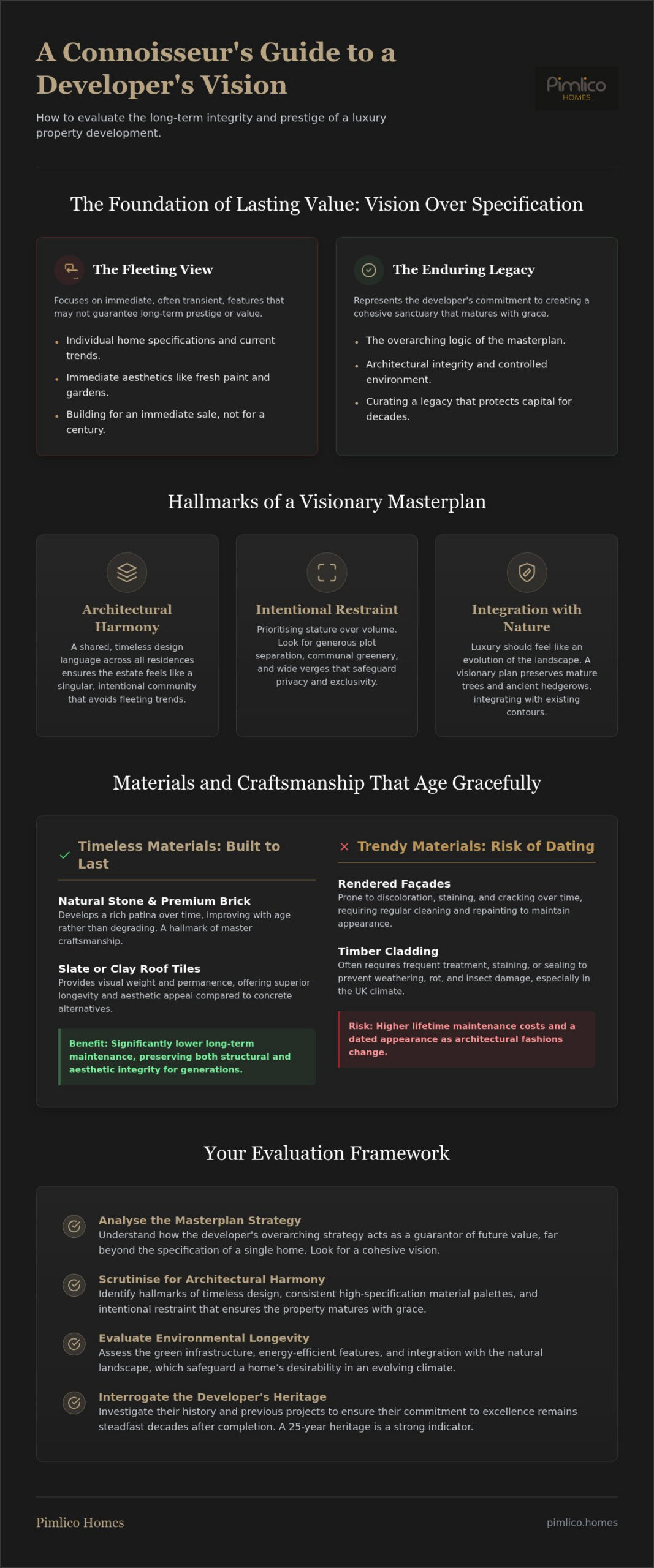
Vision isn’t a marketing slogan. It’s the invisible thread that binds a collection of residences into a cohesive sanctuary. It represents the difference between a developer who builds for an immediate sale and one who curates for the next century. While high-specification interiors are expected in the luxury market, they remain secondary to the enduring logic of the masterplan. Assessing the long-term vision for a new development requires a shift in perspective from the micro to the macro. You aren’t just buying a floorplan; you’re investing in a controlled environment that will protect your lifestyle and your capital for decades.
A “project” often feels like a temporary disruption of the land. A “legacy estate” feels like an inevitable addition to it. This commitment to longevity is what differentiates volume builders from specialist creators with a 25-year heritage. A clear vision acts as a safeguard for resale value. It ensures that the exclusivity you enjoy today won’t be eroded by future over-development or a sudden shift in architectural style. Key markers of permanence include:
- Natural, high-specification materials like stone or brick that acquire a patina over time.
- Generous plot separation that respects the stature of luxury detached homes.
- The preservation of ancient hedgerows and mature trees within the site boundary.
The Interplay of Aesthetics and Environment
Luxury shouldn’t feel like an intrusion on the landscape. It should feel like an evolution of it. Architectural rhythm creates a sense of established prestige, as if the homes have always belonged to the site. This is achieved by assessing how the development integrates with existing contours and treelines. When the initial masterplan dictates the future character of the enclave, it prevents the disjointed aesthetic that often plagues larger estates. Every home should speak the same design language. This ensures a harmonious visual experience that stays relevant regardless of passing trends.
Restraint as a Luxury Indicator
True luxury is often defined by what isn’t there. High-density developments frequently sacrifice privacy for profit, but a visionary approach prioritises stature over volume. Evaluating the density of a site is a primary step in assessing the long-term vision for a new development. You should look for “negative space”, which includes communal greenery, wide verges, and generous plot boundaries. In executive courtyard homes, this restraint is visible through clever site orientation. It ensures that your private life remains just that; private.
Analysing the Masterplan for Architectural Harmony
Architectural harmony isn’t born from repetition; it’s the result of a shared vocabulary. When you’re assessing the long-term vision for a new development, the most critical element to scrutinise is the design language. Is it merely contemporary, or is it truly timeless? Trendy facades might catch the eye today, but they often lack the gravitas required to maintain prestige over decades. A visionary masterplan, backed by a 25-year heritage of excellence, incorporates bespoke luxury homes that act as anchors, establishing a standard of quality that permeates the entire enclave.
Consistency is the silent guardian of value. A unified material palette across detached residences and courtyard developments ensures the estate feels like a singular, intentional community. When a developer applies the same high-specification finish to every corner of the site, it reinforces the sense of exclusivity. Future-proof features, such as oversized windows and generous ceiling heights, avoid the cramped feel of traditional new builds. This ensures the home remains desirable as lifestyle expectations evolve, protecting your investment against the shifting sands of architectural fashion.
Materials and Craftsmanship That Age Gracefully
The choice of materials is a declaration of intent. Natural stone and premium brickwork are favoured by master craftsmen because they don’t just last; they improve. Unlike render, which can discolour, or timber cladding, which often requires frequent treatment, high-quality masonry develops a rich patina. This focus on materiality extends to the roofs and joinery. Using slate or clay tiles instead of concrete alternatives provides a visual weight that suggests permanence. Investing in these superior exteriors leads to significantly lower long-term maintenance, preserving both the building’s structural integrity and its aesthetic allure for generations.
The Courtyard Advantage: Privacy by Design
Executive courtyard homes represent a sophisticated approach to modern living. They offer a sense of secure, shared heritage while maintaining absolute personal boundaries. By carefully analysing the “flow” of the masterplan, developers can ensure that residential behaviour remains quiet and respectful. These layouts naturally discourage through-traffic, creating a peaceful haven. The psychological benefits of a low-traffic environment are profound. It fosters a feeling of safety and serenity that is often missing from higher-density projects. This deliberate layout is a hallmark of a developer who understands that privacy is the ultimate luxury.
Evaluating Infrastructure and Environmental Longevity
Assessing the long-term vision for a new development involves looking beneath the surface at the systems that will sustain it for fifty years or more. True prestige is found in the resilience of a site’s infrastructure. It isn’t enough to plant a few ornamental trees; a visionary developer creates a comprehensive green infrastructure that fosters biodiversity and manages surface water through elegant, natural drainage systems. These hidden elements ensure the estate remains beautiful and functional regardless of the season. They protect the ground from erosion and the community from the stresses of an unpredictable climate.
Equally vital is the digital and physical foundation of the enclave. You should expect gigabit-capable broadband and EV charging readiness as standard. These aren’t just modern conveniences. They’re essential components of a home that remains relevant as technology advances. When a developer invests in high-capacity drainage and robust utility networks from the outset, they’re protecting your peace of mind and your property’s future marketability. This level of foresight is what separates a short-term project from a lasting legacy.
Sustainable Elegance: Future-Proofing Energy Needs
Luxury new build homes must now balance opulence with ecological intelligence. High EPC ratings and superior thermal efficiency aren’t just about reducing bills; they’re about maintaining a stable, comfortable environment in a changing world. Discerning developers integrate renewable energy sources, such as air-source heat pumps or discreet solar arrays, with an artist’s touch so they never detract from the home’s architectural grandeur. Sustainable luxury is the marriage of environmental responsibility and uncompromising comfort.
Connectivity and the Modern Executive Lifestyle
The modern executive requires a home that functions as a high-performance workspace. This means digital infrastructure must be woven into the very fabric of the development to support seamless global communication. Physical connectivity is just as important. A well-placed development offers the rare duality of swift access to transport links whilst preserving a sense of rural serenity. This foresight accounts for the evolving needs of the modern family, where the boundaries between professional excellence and private relaxation are increasingly fluid. A curated development doesn’t just provide a house; it provides a platform for a successful life.
Interrogating the Developer’s Commitment to Excellence
Assessing the long-term vision for a new development is impossible without examining the developer’s history. A developer with a 25-year heritage leaves a trail of evidence across the landscape. Visit a site they completed a decade ago. Does the masonry remain clean? Are the communal spaces still pristine? A volume housebuilder often prioritises short-term density, whereas a specialist luxury developer treats every site as a permanent addition to their reputation. This commitment manifests in the final product through a sense of weight and presence that cannot be faked.
Transparency and support are the hallmarks of a prestige builder. The sales process should be as refined as the architecture itself. A visionary builder doesn’t disappear once the keys are handed over; they provide a level of post-purchase support that reflects their pride in the build. This relationship is built on trust and a mutual desire to see the community thrive. When you invest in a home, you’re also investing in the integrity of the people who created it.
The Pedigree of the Builder
Verifying a track record is essential for any discerning buyer. Look for a portfolio that includes complex projects like luxury barn conversions or executive courtyard developments. These niche projects require a level of craftsmanship and problem-solving that standard new builds do not. Choosing a premier developer is essentially a form of investment insurance. You’re buying into a lineage of quality that has already been tested by time and weather.
Understanding New Build Warranties
Confidence is often quantified in a warranty. A developer who is certain of their vision and build quality will offer comprehensive peace of mind and protection. In the luxury sector, a warranty is more than a legal requirement; it’s a testament to the durability of the materials and the precision of the construction. You should look for terms that cover structural integrity and high-specification finishes, ensuring your sanctuary remains exactly as intended. To see how 25 years of expertise translates into a lasting legacy, explore our current luxury new build homes.
Securing Your Future in a Curated Development
The final step in your journey is moving from analysis to action. Choosing a home isn’t merely a financial transaction; it’s a profound alignment of your personal values with a developer’s philosophy. When you find a community that shares your standard for excellence, the decision carries a significant emotional weight. It’s the moment you stop looking for a property and start securing a legacy. Assessing the long-term vision for a new development culminates in this moment of clarity, where the architectural details and environmental strategy coalesce into a singular, compelling future.
A curated development offers more than just a collection of buildings. It provides a lifestyle defined by the company you keep and the environment you inhabit. The quiet confidence found in our developments stems from a refusal to compromise on density or quality. This restraint ensures that the enclave remains an exclusive sanctuary, shielded from the pressures of surrounding urban expansion. By prioritising the human experience, we create spaces that don’t just hold their value; they grow in stature as the community matures.
The Final Walkthrough: Interrogating the Vision
Before committing, you must look beyond the immediate charm of the show home. Interrogate the vision by asking specific, probing questions about the site’s evolution. What are the plans for adjacent land? Are there legally binding density caps for future phases? A truly visionary masterplan will have these answers readily available. You should also look for unique selling points that are inherently permanent, such as the orientation of luxury detached homes to maximise natural light and privacy. If a brochure focuses solely on internal finishes and ignores the landscape, it may lack a genuine long-term strategy.
Your Legacy in a Pimlico Development
Our 25-year history is built on the belief that a home should be a source of enduring pride. Whether you’re drawn to the intimacy of executive courtyard homes or the character of luxury barn conversions, each project is a testament to this philosophy. We don’t just build houses; we curate environments where families can flourish for generations. This methodical approach to construction ensures that every detail, from the drainage to the roof tiles, contributes to a sense of permanence. We invite you to move forward with total confidence and explore the luxury new build homes currently available, knowing that your future is in the hands of a dedicated guardian of quality.
Investing in a Timeless Legacy
A luxury home is more than its present-day aesthetic; it’s a promise of future sanctuary. You’ve learned that true prestige is found in the deliberate restraint of a masterplan and the selection of materials that age with grace. When assessing the long-term vision for a new development, the focus must remain on the developer’s philosophy of permanence. It’s about finding a creator who views a plot of land as a canvas for a multi-generational legacy rather than a short-term project.
Pimlico Homes brings 25 years of luxury residential expertise to every site we curate. Our award-winning attention to architectural detail and bespoke designs tailored to the executive market ensure a living experience of unparalleled quality. We invite you to explore the visionary developments of Pimlico Homes and discover a sanctuary crafted with quiet confidence. Your journey toward an exclusive and enduring home begins with a shared vision of excellence.
Frequently Asked Questions
How can I tell if a new development will become overcrowded in the future?
Check the site’s density and the developer’s historical approach to plot separation. Overcrowding is often a result of volume-led planning, so you should interrogate the masterplan for legally binding phase limits. A visionary creator prioritises “negative space” and communal greenery over the number of units. This ensures that the estate remains an exclusive sanctuary rather than becoming a high-traffic thoroughfare. You deserve the certainty that your privacy will be protected for decades.
What are the key markers of a high-specification new build home?
High-specification markers include natural stone masonry, clay roof tiles, and premium brickwork that acquire a patina over time. Inside, look for oversized windows, underfloor heating, and bespoke joinery that reflects a master craftsman’s touch. These elements indicate a commitment to artistry rather than just construction. When these materials are paired with high EPC ratings and smart home readiness, the property establishes a standard of excellence that remains relevant as trends evolve.
Why is the developer’s track record so important for resale value?
A proven track record acts as investment insurance for your future resale value. When you can visit a developer’s project from a decade ago and see that the architectural integrity remains intact, you gain confidence in their build standards. Assessing the long-term vision for a new development includes vetting the creator’s reputation. A 25-year heritage suggests that the developer is a reliable guardian of quality who builds for longevity rather than short-term profit.
Does a luxury new build offer better long-term value than a period property?
Luxury new builds often provide superior long-term value through energy efficiency and reduced maintenance liabilities. Whilst period properties carry a certain charm, they frequently require significant capital for thermal upgrades and structural repairs. A bespoke new build combines traditional values with innovative thinking, offering the executive lifestyle without the hidden costs of aging infrastructure. This balance of modern performance and timeless design ensures the property remains a highly desirable asset in any market.
What should I look for in a development’s masterplan regarding privacy?
Look for site orientation that minimises overlooking and generous plot boundaries that respect your personal space. The masterplan should use natural contours and mature landscaping to create secluded enclaves. Privacy isn’t just about fences; it’s about the “flow” of the development. Assessing the long-term vision for a new development involves looking for executive courtyard homes that use clever layouts to discourage through-traffic. This creates a peaceful environment that feels both secure and deeply private.
How do I assess the environmental sustainability of a luxury home?
Start with the Energy Performance Certificate (EPC) and the integration of renewable technologies like air-source heat pumps. Sustainable luxury is the marriage of environmental responsibility and uncompromising comfort. You should also evaluate the “green infrastructure”, such as natural drainage systems and the preservation of ancient hedgerows. A home that manages resources efficiently whilst respecting the local ecology will maintain its desirability and performance as climate regulations and buyer expectations continue to shift.
What is the “executive courtyard” concept and why does it maintain value?
The executive courtyard is a sophisticated architectural concept that prioritises a secure, shared heritage whilst maintaining absolute personal boundaries. This layout naturally creates a low-traffic environment, fostering a sense of quiet prestige and community harmony. By avoiding the linear sprawl of traditional estates, courtyard developments preserve a sense of stature and exclusivity. This intentional design maintains value because it offers a rare combination of security, privacy, and architectural uniqueness that is difficult to replicate.
Can I customise a home within a new development to fit my long-term vision?
Bespoke luxury homes often provide opportunities for early-stage customisation to align with your specific requirements. Whether it’s adjusting the internal configuration for a home office or selecting high-specification finishes, these choices ensure the property fits your lifestyle perfectly. Working with a specialist developer allows for a more intimate level of service compared to volume builders. This collaborative process ensures that the final residence isn’t just a house, but a tailored platform for your future success.


