
The true measure of an architectural masterpiece isn’t found on the day the keys are handed over, but in how it matures over its inaugural twelve months. For the owner of a bespoke property, the transition from a pristine construction site to a lived-in sanctuary is a delicate period that requires more than just admiration. It demands a curated approach to first year maintenance on a new build home to ensure that every hand-finished detail retains its initial brilliance.
You likely feel a sense of profound pride in your investment, yet it’s natural to feel a flicker of anxiety when the first hairline settling cracks appear in those expensive plaster finishes. Distinguishing between the inevitable drying out process and genuine structural defects can be confusing, especially when your schedule leaves little room for managing complex upkeep. This guide provides a sophisticated schedule of care designed for the discerning homeowner. We’ll explore how to navigate the drying period with confidence, organise professional servicing for your high-spec systems, and preserve the long-term value of your executive residence through meticulous stewardship.
Key Takeaways
- Understand the natural evaporation process to manage the home’s settling period with quiet confidence and patience.
- Discover why first year maintenance on a new build home requires a seasonal approach to protect external masonry and bespoke timber elements.
- Learn the precise calibration required for underfloor heating and hand-crafted joinery to maintain the pristine state of internal finishes.
- Distinguish between structural snags and homeowner responsibilities through professional documentation and photographic evidence.
- Build a comprehensive stewardship calendar that guarantees the longevity of high-spec systems and preserves premium resale value.
Understanding the Drying Out Process in a New Residence
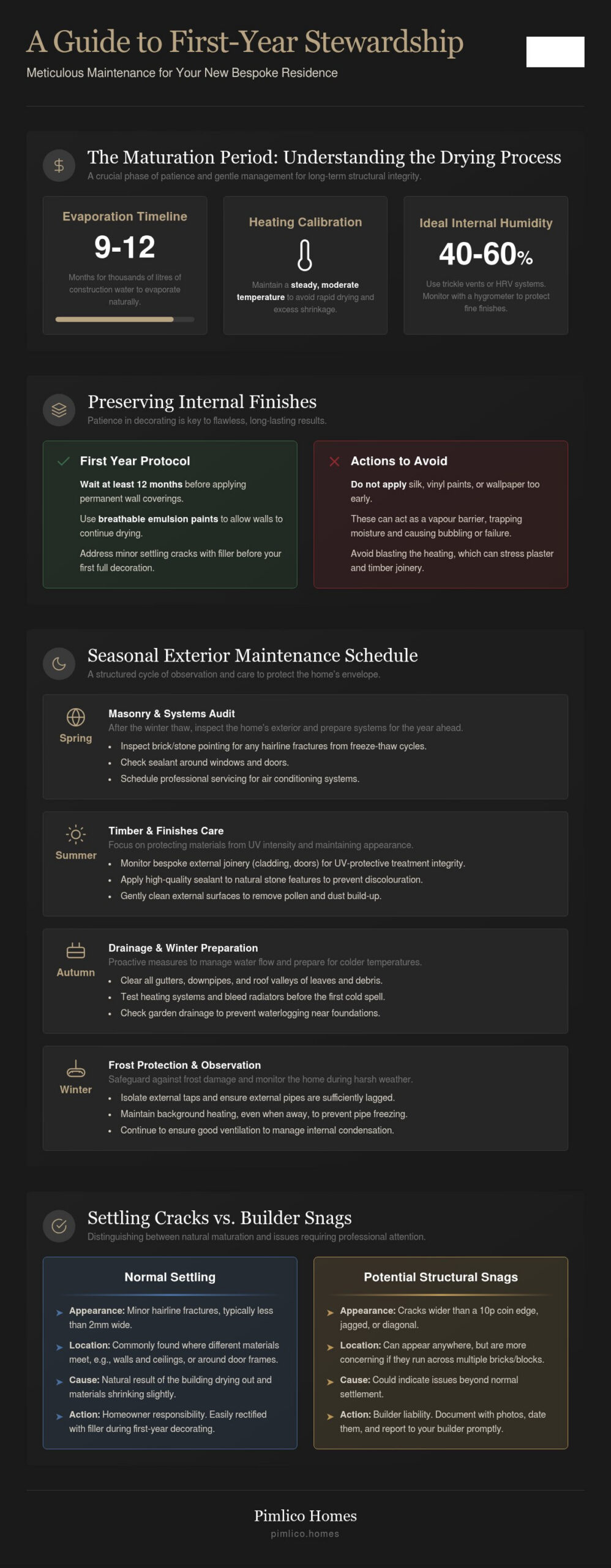
Every architectural masterpiece requires a period of quiet maturation. When you first step into your new home, it contains thousands of litres of water absorbed by the materials during the construction phase. From the concrete in the foundations to the plaster on the walls, this moisture must evaporate naturally. For a high-specification property, this process typically spans between nine and twelve months. It’s a fundamental stage of first year maintenance on a new build home that requires patience rather than intervention.
Luxury residences often feature thicker masonry or bespoke timber frames. These materials possess a greater thermal mass and density than standard builds, meaning they require a more nuanced approach to evaporation. Whilst the instinct might be to warm the house quickly, consistency is paramount. Blasting the heating during the first autumn can force moisture out too rapidly, leading to excessive shrinkage and unnecessary stress on the building’s skeleton. Maintaining a steady, moderate temperature allows the structure to settle into its environment with grace. Understanding these home maintenance basics ensures your investment remains protected from the outset.
As the home breathes, you might notice minor hairline fractures appearing, particularly where walls meet ceilings. These are known as settling cracks. They are a sign of the house finding its permanent position as it dries. These aesthetic shifts are distinct from structural concerns and are easily rectified during your first year decorative touch-ups. If a crack appears significantly wider or is accompanied by signs of damp, it’s then time to consult your professional snagger.
Managing Internal Humidity and Ventilation
Ventilation is the silent partner in preserving your home’s interior. Even during the colder months, keeping trickle vents open is essential. This background airflow prevents condensation from gathering on cold surfaces, which can lead to mould if left unmanaged. Many executive homes now feature Heat Recovery Ventilation (HRV) systems. These sophisticated units assist the settling process by ensuring a constant exchange of fresh air without sacrificing thermal efficiency. For the discerning homeowner, a hygrometer is a wise investment. Monitoring moisture levels allows you to keep the environment between 40% and 60% humidity, which is the ideal range for protecting bespoke woodwork and fine finishes.
Decorating and Finishing During the First Year
Patience is perhaps the most important tool in your maintenance kit. The golden rule for any new residence is to wait at least twelve months before applying permanent wall coverings or silk paints. These materials can act as a vapour barrier, trapping moisture within the plaster and potentially causing it to bubble or fail. Breathable emulsion is the preferred choice for this initial period, as it allows the walls to continue their natural drying process whilst providing a refined aesthetic. Patience in decorating preserves the integrity of the plasterwork.
Seasonal Exterior Maintenance: Protecting the Home Envelope
A luxury residence is a living entity, constantly interacting with the elements. Whilst the interior maturation process is subtle, the exterior envelope faces the direct rigour of the British seasons. Effective first year maintenance on a new build home begins with a structured cycle of observation and care. This proactive stewardship ensures that the architectural vision remains as striking as the day of completion.
Spring serves as the ideal window for a comprehensive masonry audit. After the first winter, you should inspect the pointing for any signs of movement or hairline fractures caused by freeze-thaw cycles. Summer then shifts the focus to timber. Bespoke external joinery, such as cedar cladding or oak entrance doors, requires monitoring to ensure UV-protective treatments remain robust against the sun’s intensity. As the year turns, Autumn demands attention to drainage. High-specification homes often feature complex rooflines with valley gutters; these must be kept free from debris to prevent water from backing up. Finally, Winter requires the activation of frost-protection measures. Ensuring external taps are isolated and pipes are sufficiently lagged prevents the inconvenience of seasonal bursts.
Stewardship of Premium External Materials
The materials that define luxury new build homes require specific, elevated care routines. Natural stone features, whilst durable, are porous and susceptible to atmospheric staining. Applying a high-quality sealant within the first year can prevent deep-set discolouration from rainwater or organic growth. Similarly, the belief that powder-coated aluminium window frames are entirely maintenance-free is a misconception. To maintain their signature lustre, frames and bi-fold door tracks should be wiped down with a non-abrasive solution to remove corrosive salt and grit. You must also ensure that landscaping does not compromise the home’s breathability; soil levels should always remain at least two brick courses below the damp-proof course.
Landscaping and Estate Management
The grounds of an executive property are an extension of its grandeur. During the first twelve months, new lawns require consistent hydration to establish deep root systems, particularly during their first summer. Mature specimen trees, often included for immediate privacy, may need their staking checked after seasonal gales to ensure they remain upright during the bedding in phase. Boundary integrity is equally vital. Inspect executive fencing and stone walling for any signs of lean or looseness following heavy winds. Finally, check that patio drainage channels remain clear. Silt accumulation can lead to water pooling against the main structure, which risks moisture ingress and can mar the finish of premium paving.
Preserving High-Specification Internal Finishes
The interior of an executive home is a tapestry of natural materials and advanced engineering. Stewardship here is about protecting the artistry of the build. Whilst the structural elements settle, the refined finishes within your residence require a dedicated approach to ensure they age with distinction. Effective first year maintenance on a new build home involves a transition from admiring these details to actively preserving their integrity.
As the first autumn arrives, the activation of underfloor heating (UFH) requires a methodical hand. You shouldn’t simply set the thermostat to your desired maximum immediately. Instead, increase the temperature by just one or two degrees each day. This gradual escalation prevents thermal shock to the floor screed and ensures that premium finishes, such as marble or engineered timber, expand at a controlled rate. Similarly, bespoke joinery is a hallmark of luxury. Whether it’s a hand-crafted oak staircase or fitted dressing room wardrobes, these organic elements will react to the first year of central heating. Minor adjustments to hinges or drawer runners are common as the timber breathes and finds its equilibrium within the home’s micro-climate.
Natural stone and marble surfaces demand a specific, pH-neutral cleaning regime. Avoid acidic or abrasive household cleaners that can strip away protective sealants and dull the stone’s natural radiance. Beyond the tactile finishes, your home’s intelligence requires regular nourishment. Ensuring software updates are performed on integrated security and lighting systems is a vital part of modern property care. These updates maintain both operational efficiency and digital security, keeping your sanctuary protected and intuitive.
Kitchen and Utility Excellence
Quartz and granite worktops are celebrated for their durability, yet they are not invincible. Use trivets to prevent thermal shock from hot cookware, as sudden temperature shifts can cause invisible micro-fissures. It’s also prudent to service high-end integrated appliances within the first twelve months. This not only ensures peak performance but often validates extended manufacturer warranties. After the initial six months of use, perform a cursory check of plumbing connections under sinks and behind appliances to ensure that minor vibrations or house settling haven’t loosened any fittings.
Floor Care and Protection
Engineered oak flooring is designed for stability, yet it remains in constant dialogue with the drying subfloor. Maintain a consistent internal environment to minimise gapping between planks. For those with deep-pile executive carpets, the first year is a period of “shedding.” Use a vacuum with adjustable height settings or a suction-only function to avoid over-agitating the delicate fibres. In tiled areas, you may notice minor grout shrinkage. This is a natural consequence of the settling process and is easily addressed once the home has fully dried out.
Navigating the Snagging List and Builder Liability
The relationship between a developer and a homeowner is a partnership in quality. Whilst your residence is crafted to the highest standards, the first twelve months are a period of discovery. Distinguishing between a genuine “snag” and routine first year maintenance on a new build home is vital for maintaining this harmony. A snag is typically a defect in workmanship or material failure, such as a misaligned door or a faulty electrical circuit. Conversely, maintenance involves the active stewardship we’ve previously discussed, like cleaning filters or managing internal humidity.
A professional approach to snagging reflects the prestige of the property. When you identify an issue, document it with clear, technical descriptions and high-resolution photographic evidence. This clarity allows the aftercare team to allocate the correct specialist immediately. For a bespoke executive home, commissioning an independent professional snagging survey is often a prudent investment. These experts possess the technical sight to identify subtle issues that might elude a layperson; they ensure that your home meets every exacting specification before the initial liability period concludes.
Reporting Defects with Confidence
Effective communication ensures your home remains a sanctuary. First, you should categorise any issues into urgent and non-urgent. Urgent matters, such as plumbing leaks or loss of power, require immediate attention. Cosmetic settling, like the hairline cracks mentioned in our discussion on drying out, are non-urgent. It’s best to maintain a single, chronological log of all correspondence with the aftercare team to ensure nothing is overlooked. A wise strategy is to allow the building to “rest” for the full twelve months before addressing minor cosmetic imperfections. This ensures that repairs are performed once the structure has finished its primary movement.
The Legal Framework of New Build Warranties
Premium new builds in the UK are typically protected by a ten-year structural warranty from providers like the NHBC. This is divided into two distinct phases. During the first two years, the builder is responsible for rectifying most defects. From year three to ten, the warranty covers major structural issues. You can explore this further in our guide on Luxury New Build Warranties: Ensuring Peace of Mind. Be mindful that unauthorised alterations, such as structural changes or modifications to high-spec HVAC systems, can compromise this coverage. Protecting your investment through meticulous first year maintenance on a new build home requires a commitment to the original design’s integrity. If you’re considering a new investment, explore our range of luxury new build homes to see our commitment to excellence.
Long-Term Stewardship: Beyond the First Twelve Months
The completion of your home’s inaugural year marks a significant milestone. It is the moment the structure fully integrates with its surroundings. Whilst the intensity of observation required during the first year maintenance on a new build home begins to subside, it’s replaced by a more methodical rhythm of stewardship. This transition from immediate care to long-term preservation is what separates a mere building from an enduring legacy. You’re no longer just watching for settlement; you’re cultivating the home’s future.
Establishing a rigorous annual service calendar is the cornerstone of this phase. Your high-specification systems require professional attention to maintain their peak efficiency. For instance, an annual boiler service in the UK typically ranges between £80 and £120, a modest investment to ensure the heart of your home remains robust. Similarly, professional gutter cleaning, generally costing between £50 and £150, prevents debris from compromising your bespoke drainage systems. These aren’t merely chores; they’re acts of preservation that honour the craftsmanship of the original build. They ensure that every innovative feature continues to perform exactly as intended.
Maintaining Resale Value in Premium Estates
In the executive market, provenance is everything. A meticulously documented maintenance log serves as a testament to your home’s health, providing absolute confidence to future high-end buyers. This record should include every service receipt, software update, and professional inspection performed since the day you moved in. You can learn more about this strategic approach in our guide on Maximising Resale Value in Premium Properties. We also recommend keeping a “home file” containing original specifications, such as exact paint codes and stone types. This ensures that any future touch-ups or extensions perfectly mirror the architectural intent of the estate, protecting its unique character.
The Pimlico Commitment to Excellence
Every Pimlico residence is built upon 25 years of industry experience and a focus on executive-market standards. The standard of aftercare we provide is a hallmark of luxury living, ensuring that your investment is supported by authoritative expertise long after the intensive period of first year maintenance on a new build home has concluded. We remain dedicated guardians of the quality we create, standing as a reliable partner in your home’s journey. We invite you to explore The Definitive Guide to Luxury Detached Living to discover how our vision for excellence continues to redefine the modern sanctuary.
Cultivating an Enduring Architectural Legacy
The journey through your residence’s first twelve months is a transformative period where construction becomes a sanctuary. By embracing a methodical approach to first year maintenance on a new build home, you ensure that the initial artistry of the build is preserved for decades to come. It’s about more than simple repairs. Whether you’re managing the delicate drying out of bespoke masonry or servicing integrated smart systems, your commitment to stewardship is the ultimate protector of value.
At Pimlico Homes, we bring over 25 years of experience to the creation of high-end residential developments. Our reputation is built upon meticulous craftsmanship and sophisticated design; qualities that define every one of our bespoke barn conversions and executive courtyard homes. We understand that a luxury property is a significant life investment. It’s an emotional weight we respect. We’re dedicated to supporting that investment through every stage of its maturation.
The care you invest today ensures your home remains a benchmark of excellence. We invite you to explore our current portfolio of executive luxury developments and discover the next chapter in your journey of refined living. Your home is a masterpiece. Treat it with the reverence it deserves.
Common Enquiries Regarding New Home Stewardship
Is it normal for cracks to appear in my new build home during the first year?
Yes, hairline fractures are a natural part of the drying out process and are entirely expected. As moisture evaporates from the thousands of litres used in construction, materials like plaster and timber contract slightly. These minor aesthetic shifts typically appear where walls meet ceilings or around door frames. They don’t indicate structural failure, but rather the home finding its permanent position as it matures into a settled, stable sanctuary.
How much should I heat my new build home during the drying out period?
Maintain a consistent, moderate temperature throughout the property to encourage even evaporation. You should avoid “blasting” the heating to dry the home faster, as rapid moisture loss causes excessive shrinkage and deep cracking. Aim for a steady environment around 18 to 20 degrees Celsius. This gentle approach allows first year maintenance on a new build home to remain focused on preservation rather than repairing avoidable damage caused by thermal stress.
Can I hang heavy mirrors or artwork on the walls in the first year?
You can, provided you use the correct high-specification fixings for your specific wall type. However, many owners of bespoke properties choose to wait several months before hanging substantial pieces. This delay allows the primary settling and drying out to occur. It ensures that the weight of heavy mirrors doesn’t exacerbate minor tension in the fresh plaster or interfere with the natural movement of the internal partitions during their inaugural year.
When is the best time to conduct a professional snagging survey?
The most effective time is usually just before legal completion or within the first few weeks of occupation. This allows you to identify defects before you’ve fully settled into the residence. However, many homeowners also choose to perform a follow-up inspection at the eleven-month mark. This ensures any issues arising from the full cycle of seasons are logged before the builder’s initial two-year liability period officially concludes.
Does the builder have to fix every small crack that appears?
Builders are generally only required to rectify cracks that exceed a specific width, often 2mm as per NHBC standards. Minor hairline fractures are considered part of the natural drying out process and are usually the homeowner’s responsibility to fill during redecoration. A professional survey can help you distinguish between these expected cosmetic shifts and genuine defects that require the developer’s attention under the terms of your structural warranty.
What maintenance tasks am I legally required to perform to keep my warranty valid?
You must adhere to the manufacturer’s servicing schedules for all major systems to ensure your protection remains intact. This includes an annual boiler service and maintaining any high-spec heat recovery or ventilation units. Neglecting first year maintenance on a new build home, such as failing to clear gutters or ignoring minor leaks, can give warranty providers grounds to reject a claim if the damage is deemed a result of poor stewardship.
Why should I wait before wallpapering a new build home?
Wallpaper acts as a vapour barrier that traps moisture within the walls. If applied too early, this moisture can cause the adhesive to fail or lead to unsightly bubbling, peeling, and even damp issues behind the paper. Waiting at least twelve months ensures the underlying plaster is thoroughly dry and stable. This patience preserves the integrity of your interior design and prevents the need for costly remedial work once the home has fully matured.
How often should I service the ventilation system in a new property?
Most high-specification Heat Recovery Ventilation (HRV) systems require a professional service once every twelve months. You should also check and clean the filters more frequently, typically every three to six months, depending on your local environment. Keeping these systems in peak condition is essential for managing internal humidity and ensuring your residence remains a healthy, well-ventilated environment during the critical period when building materials are still releasing moisture.


