
What if the most enduring symbol of your home’s elegance is also the one most susceptible to the passage of time? In a bespoke luxury residence, a hardwood floor isn’t merely a surface; it’s a living testament to craftsmanship and architectural heritage. You likely understand the weight of this investment, yet the question of how to care for new hardwood floors often brings more anxiety than clarity. Between the fear of micro-scratches and the confusion over which bespoke chemicals are safe for high-end finishes, the path to preservation can feel unnecessarily complex.
We recognise that your home is a vital life investment, and maintaining its lustre is an act of stewardship. This guide provides the meticulous rituals and professional secrets required to protect the longevity of your floor. We’ll examine the nuances of underfloor heating, the selection of the right tools, and the precise maintenance routines that safeguard your home’s resale value. You’ll gain a sophisticated strategy to ensure your floors remain as breathtaking as the day they were installed, allowing you to enjoy your space with absolute peace of mind.
Key Takeaways
- Distinguish between the tactile warmth of natural oil and the refined sheen of protective lacquer to ensure your cleaning methods align with the specific heritage of your finish.
- Establish a sophisticated maintenance routine by mastering how to care for new hardwood floors through daily microfibre dusting and the implementation of a firm “shoes-off” policy.
- Regulate your home’s internal humidity and mitigate UV exposure to prevent the natural timber from expanding, contracting, or losing its original depth of colour.
- Adopt a strategy of immediate intervention for spills to ensure moisture never compromises the structural integrity of the joints or the beauty of the bespoke finish.
- Recognise that consistent stewardship is a vital investment that preserves the aesthetic soul of your residence whilst protecting its long-term market prestige.
Understanding the Heritage of Your Hardwood Finish
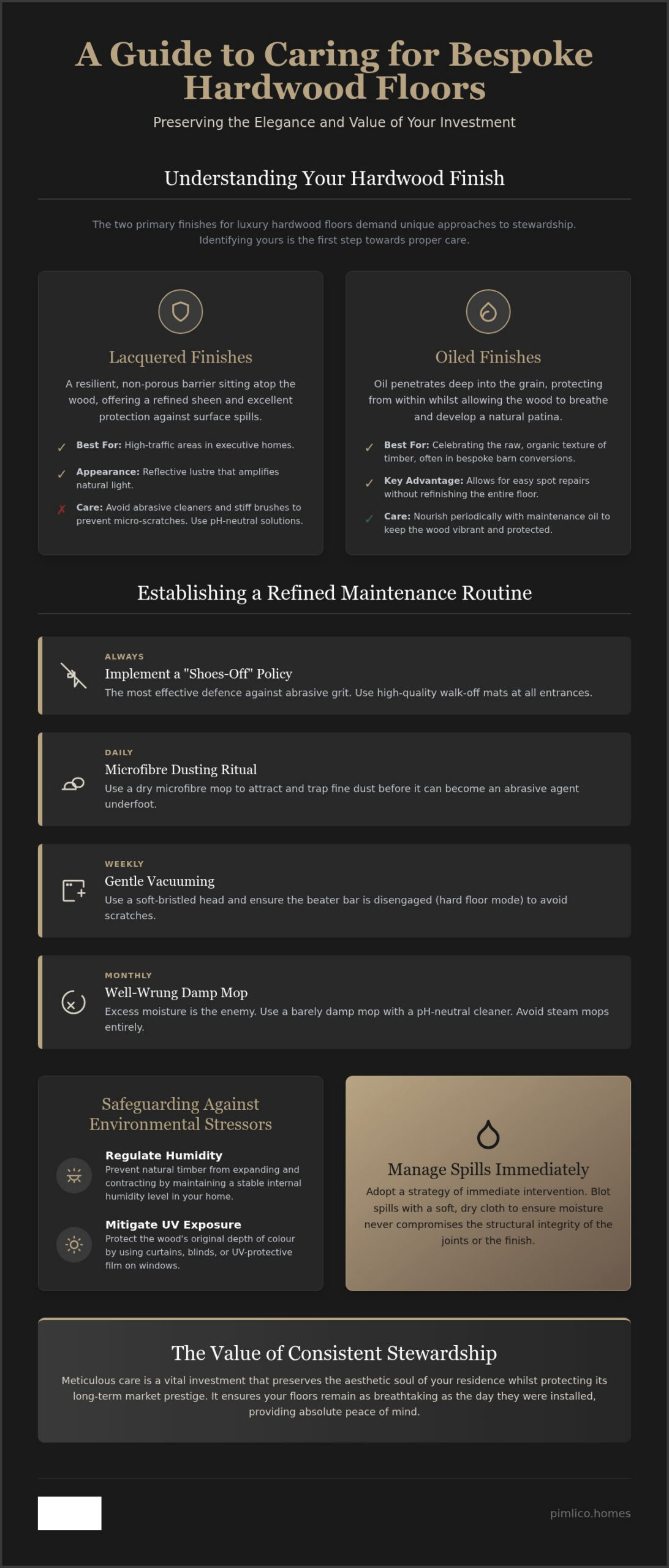
Hardwood flooring is the foundation of a home’s aesthetic soul. In luxury detached homes, these surfaces represent more than just a floor; they are a deliberate choice of artistry and permanence. Before you can master how to care for new hardwood floors, you must first identify the DNA of your specific installation. Most high-specification properties utilise either a natural oil or a protective lacquer, and each demands a unique stewardship approach. Understanding the different types of wood flooring and their specific finishes is the first step in ensuring your investment matures gracefully.
New build homes undergo a subtle settling-in period where the timber adjusts to the internal climate of its new environment. This isn’t a flaw. It’s a natural behaviour of organic material. During these first few months, the wood interacts with ambient humidity and temperature, making the choice of finish even more critical to its long-term stability. The character of your home is often defined by this choice, whether it’s the contemporary crispness of a new build or the heritage feel of bespoke barn conversions.
Lacquered Finishes: The Protective Shield
Lacquer acts as a resilient, non-porous barrier, making it an ideal choice for the high-traffic areas of executive courtyard homes. It provides a refined, reflective sheen that amplifies natural light across a room. Because the lacquer sits on top of the wood, it offers excellent protection against surface spills. However, this clarity requires a gentle touch. You must avoid abrasive cleaners or stiff brushes that cause micro-scratches, as these tiny imperfections can dull the finish over time. Maintaining that uniform lustre involves using pH-neutral solutions that preserve the integrity of the protective layer without leaving a cloudy residue.
Oiled Finishes: The Natural Choice
Bespoke barn conversions often feature oiled finishes to celebrate the raw, organic texture of the timber. Unlike lacquer, oil penetrates deep into the grain. It provides internal protection whilst allowing the wood to breathe and age naturally. This finish offers a tactile warmth that feels grounded and traditional. One of the most significant advantages for the discerning homeowner is the ability to perform spot repairs. If a small area becomes scuffed, you can often treat that specific section with a maintenance oil rather than refinishing the entire room. Learning how to care for new hardwood floors with an oiled finish ensures the wood remains nourished and vibrant for decades. It’s a commitment to a lived-in yet impeccably maintained aesthetic.
Establishing a Refined Maintenance Routine
Preservation begins at the threshold. A firm “shoes-off” policy is the most effective way to prevent microscopic grit from acting like sandpaper on your bespoke finish. In luxury detached homes, where every detail is curated, entrance halls serve as the primary line of defence. By using high-quality walk-off mats and encouraging a transition to indoor footwear, you significantly reduce the volume of abrasive debris that enters your living spaces. Mastering hardwood floor maintenance is less about heavy labour and more about the consistency of these small, deliberate actions.
Weekly vacuuming is essential to capture the dust that escapes a standard broom. However, you must ensure your equipment is set to the “hard floor” mode. This setting disengages the rotating beater bar, which is designed for carpets but can be catastrophic for the lustre of a timber surface. Using the wrong tool can leave permanent tracks or micro-abrasions that dull the wood’s natural glow over time. It’s these subtle details that separate a lived-in floor from one that is truly cherished.
The Daily Dusting Ritual
Removing fine particulates daily is the secret to a floor that looks perpetually new. Fine dust might seem harmless, but under the weight of footfall, it becomes a grinding agent. Use a high-quality microfibre dust mop. These tools rely on a static charge to attract and hold particles rather than simply pushing them around. Focus on high-traffic corridors and sunlit areas where dust is most visible. This simple three-minute ritual is a foundational part of how to care for new hardwood floors effectively, ensuring that grit never has the chance to settle into the grain.
Mastering the Damp Mop Technique
Monthly deep cleaning requires a “well-wrung” approach. Excess moisture is the primary enemy of wood stability, as it can seep into joints and cause swelling or warping. Avoid the common mistake of using steam mops or generic supermarket cleaners, which often contain harsh chemicals or waxes that leave a sticky, dulling residue. Instead, select a pH-neutral specialist cleaner formulated for your specific finish. Mop in the direction of the grain to ensure a streak-free, professional result. This level of care is standard in our bespoke luxury homes, where we prioritise long-term material health over quick, superficial fixes.
Safeguarding Against Environmental Stressors
A luxury interior is a delicate ecosystem. Whilst stone and metal remain static, bespoke hardwood is a living component of your home that breathes and reacts to its surroundings. In the context of luxury new build homes, the initial year is a crucial period of acclimatisation. Understanding environmental stressors is a vital part of knowing how to care for new hardwood floors. You aren’t just cleaning a surface; you’re managing a biological response to light, heat, and air. This stewardship ensures the timber settles into its new environment without the stress that leads to structural compromise.
Climate Control and Underfloor Heating
Executive properties frequently feature underfloor heating to provide a seamless, invisible warmth. This system offers unparalleled comfort, but it requires a disciplined approach to protect the wood’s moisture content. Rapid temperature spikes can shock the timber, potentially leading to unseemly gaps or surface checking. We recommend using a hygrometer to monitor your rooms, aiming to maintain a consistent humidity level between 40% and 60%. During seasonal shifts, adjust your thermostat in small, gradual increments over several days. This methodical pace allows the wood to equalise naturally. It’s a deliberate process that mirrors the precision of high-end construction.
Sunlight and Colour Maturation
Natural light is a double-edged sword for organic materials. It showcases the grain’s beauty whilst triggering a slow, inevitable chemical change in the wood’s lignin. Different species react uniquely; oak tends to amber over time, whereas walnut may lighten. This maturation is a mark of authenticity, but it should be uniform across the entire floor. Use window dressings to diffuse direct, intense sunlight during peak afternoon hours. Periodically rotating furniture and rugs prevents the “shadowing” effect where covered areas remain a different shade. Be cautious with rug backings. Avoid cheap rubber or plastic liners that can trap heat or leach chemicals. For comprehensive hardwood flooring care, always opt for breathable, natural-fibre underlays that allow the wood to breathe.
Protection also requires physical intervention. High-quality felt pads are non-negotiable for every piece of furniture, from heavy sideboards to delicate chairs. These should be checked and replaced every six months to ensure they haven’t collected abrasive grit. Similarly, your entrance matting must be substantial and effective at trapping moisture before it reaches the hardwood. These barriers act as the final guardians of your home’s aesthetic integrity, ensuring that the daily movements of life never leave a permanent mark on your investment.
Managing Spills and Minor Imperfections
Accidents are a natural part of a lived-in home. Even in the most meticulously designed executive courtyard homes, a spilled drink or a stray scuff is inevitable. The difference between a permanent blemish and a fleeting moment lies in the speed and precision of your response. Stewardship involves a calm, authoritative approach to these minor imperfections. Knowing how to care for new hardwood floors means being prepared with the right techniques before the crisis occurs, ensuring your investment remains untarnished.
The Immediate Response to Spills
The golden rule of wood preservation is immediacy. Standing water is particularly hazardous for the integrity of new build floors. Whilst the boards are expertly fitted, liquid can still find its way into the joints if left unattended for more than a few minutes. This can cause the timber to swell or the finish to lift, leading to costly repairs. When a spill occurs, reach for a clean, absorbent cloth and blot the liquid gently. You should never use a scrubbing motion. Rubbing the surface can push moisture or pigments from substances like red wine deeper into the grain or the micro-pores of the finish. For more stubborn residues, a microfibre cloth slightly dampened with a specialist, pH-neutral cleaner is your most reliable tool. Avoid vinegar or citrus-based cleaners at all costs. Their acidic nature can eat away at the protective lacquer or oil, leaving the wood vulnerable.
Addressing Scuffs and Scratches
Rubber-soled shoes often leave dark scuff marks on a pristine surface. These aren’t usually permanent scratches, but rather material transfers sitting on top of the finish. A surprising yet effective secret used by master craftsmen is the use of a clean tennis ball or a dry, soft cloth. Gently rubbing the scuff with the texture of the ball often lifts the mark without the need for harsh chemicals. It’s a simple, non-invasive solution that preserves the floor’s uniform lustre. For genuine scratches that have breached the finish, a specialist touch-up kit matched to your specific wood species is essential. These kits allow you to disguise minor surface wear whilst maintaining the aesthetic soul of the room. However, you must recognise when a mark exceeds a simple home repair. Deep gouges that penetrate the protective layer require the steady hand of a professional restorer. They can sand and reseal the specific area to ensure the repair is invisible and the structural integrity is maintained. This level of attention to detail is what defines the experience of living in our bespoke luxury homes, where every material is chosen for its ability to age with grace.
Long-term Stewardship and Property Value
Stewardship is a narrative of longevity. Whilst the daily rituals of dusting and the immediate response to spills provide the foundation of floor health, the long-term perspective treats these surfaces as a permanent capital asset. Meticulous care reflects the uncompromising standards outlined in our buying a luxury new build guide. It signals to any future observer that the residence has been curated with an eye for excellence and a respect for the materials used in its construction. This dedication ensures that the architectural vision remains as potent years later as it was at the moment of handover.
The Investment Perspective
Pristine hardwood floors are a primary driver of the resale value of new build homes north east. They offer a psychological reassurance to potential buyers, suggesting a property that has been loved and expertly maintained. In the context of modern barn conversion interiors, the floor often acts as the unifying element that bridges traditional textures with contemporary living. By preserving this surface, you protect the home’s aesthetic soul and its financial stature. A well-maintained floor avoids the intrusive and costly necessity of total replacement, allowing the timber to develop a rich, authentic patina that only time and careful guardianship can provide.
Professional Maintenance Intervals
Mastering how to care for new hardwood floors involves recognising when to step back and invite professional intervention. We recommend a professional deep clean and assessment every 12 to 24 months to address the subtle build-up of residues that domestic tools might miss. During these intervals, you might consider a “screen and coat” process. This involves lightly abrading the top layer of the finish and applying a fresh protective coat, which restores the original lustre without the need for a full sand and finish. It’s a proactive measure that extends the lifecycle of the wood significantly.
We encourage homeowners to maintain a detailed maintenance log. This record, documenting every specialist treatment and professional visit, becomes a powerful addition to your home’s executive handover pack. It provides tangible proof of quality for the next generation of owners. By consulting with your developer for recommended specialist contractors, you ensure that only those who understand the high specifications of your build are permitted to touch the surface. This methodical approach ensures the legacy of your investment is preserved in every grain.
Securing the Legacy of Your Living Space
A home’s beauty lies in the preservation of its finest details. By embracing a refined maintenance routine and shielding your interiors from environmental stressors, you transform a simple surface into an enduring asset. These meticulous habits protect the tactile warmth and visual depth of your flooring, ensuring it matures with the same grace as the rest of your residence. Understanding how to care for new hardwood floors is the final step in truly inhabiting a space designed for longevity. It’s a commitment to the artistry that defines a high-specification home.
With 25 years of heritage in luxury residential property development, we understand that excellence is found in the interplay between grand design and intimate care. Our meticulously crafted detached and executive courtyard homes are built to provide a lifetime of satisfaction, featuring premium materials that reward consistent stewardship. We invite you to explore the exquisite craftsmanship of our latest luxury developments and discover the uncompromising quality that is standard in every Pimlico home. Your journey towards a life of refined luxury begins with a vision for the future.
Frequently Asked Questions
Can I use a steam mop on my new hardwood floors?
No, you should never use a steam mop on bespoke timber. The high temperature vapour forces moisture deep into the grain and through the joints. This leads to irreversible swelling, cupping, or peeling of the protective finish. Instead, rely on a well-wrung microfibre mop and a pH-neutral cleaner. This gentle approach ensures you understand how to care for new hardwood floors without compromising their structural integrity or aesthetic brilliance.
How often should I deep clean my hardwood flooring?
A domestic deep clean using a specialist, pH-neutral solution is recommended once a month. This removes the microscopic residues that daily dusting might leave behind. For professional stewardship, we advise a specialist “buff and coat” or deep extraction every 12 to 24 months. This schedule prevents the build-up of dulling films whilst maintaining the floor’s original lustre and protecting your home’s long-term resale value and prestige.
Is it safe to use vinegar and water to clean bespoke wood floors?
You should avoid vinegar and water solutions entirely. Whilst often cited as a traditional remedy, the acidity of vinegar can slowly break down the chemical bonds of a modern lacquer or oil finish. Over time, this results in a dull, etched appearance that lacks the original depth of colour. Stick to professional-grade cleaners specifically formulated for high-specification hardwood to ensure the protective barrier remains intact, nourished, and vibrant.
What is the best way to prevent furniture from scratching the wood?
The most effective method is the application of high-quality, heavy-duty felt pads to the base of every furniture leg. You should check these pads every six months, as they can collect abrasive grit over time. Always lift furniture when repositioning pieces rather than dragging them across the surface. These simple physical barriers are essential for anyone learning how to care for new hardwood floors in a luxury executive home.
How does underfloor heating affect hardwood floor care?
Underfloor heating requires a disciplined approach to temperature management. You must avoid rapid fluctuations in heat, as sudden changes can cause the wood to contract or expand too quickly. We recommend adjusting the thermostat by no more than two degrees Celsius per day during seasonal transitions. This gradual acclimatisation protects the timber’s internal moisture balance and prevents the surface checking that often occurs with aggressive or inconsistent heating cycles.
What should I do if I notice a small gap appearing between the floorboards?
Small gaps are often a natural response to seasonal changes in humidity. Timber is a hygroscopic material that expands in summer and contracts during the dry winter months. If you notice minor gaps, first check your internal humidity levels with a hygrometer. Maintaining a consistent range between 40% and 60% usually resolves these issues. If gaps persist or widen significantly beyond the winter season, it’s best to consult a professional restorer.
How can I tell if my floor has an oiled or lacquered finish?
You can identify the finish through a simple tactile and visual assessment. A lacquered floor typically has a smooth, uniform sheen that sits on top of the wood, feeling somewhat like a thin layer of glass. An oiled finish feels more organic and textured, allowing you to feel the actual grain of the timber. You can also place a tiny drop of water in an inconspicuous corner; it’ll bead on lacquer but slowly soak into an oiled surface.
Are rugs safe to use on new hardwood floors?
Rugs are safe and highly recommended for high-traffic zones, provided you choose the correct backing. You must avoid rugs with rubber, latex, or plastic backings, as these materials can trap heat and moisture or cause chemical discolouration. Instead, opt for natural fibre rugs with breathable backings, such as jute or felt. This allows air to circulate around the wood, preventing the “suffocation” that leads to finish failure or uneven colour maturation.


