
The acquisition of a bespoke home represents far more than a simple change of address. It is the beginning of a long-term commitment to excellence and the preservation of a specific way of life. For the discerning homeowner, joining a residents’ association in a new development is the most effective way to transition from being a resident to becoming a true guardian of the estate. This proactive step ensures that the architectural integrity and aesthetic charm of your surroundings are never left to chance.
It’s understandable to worry that the initial vision of your development might fade without constant, high-level oversight. You deserve the assurance that your surroundings will remain as pristine as the day you received your keys. This guide promises to show you how a unified voice can protect your property value and ensure communal spaces are maintained to an executive standard. We will examine the vital distinction between your residents’ association and the management company, outlining how you can influence the future of your community with confidence and precision. By the end, you’ll understand how to turn collective concern into a powerful instrument for prestige and permanence.
Key Takeaways
- Understand how a residents’ association acts as a formal guardian of your home’s long-term resale value and architectural integrity.
- Discover the strategic advantages of joining a residents’ association in a new development to transition from developer-led management to resident-influenced stewardship.
- Learn to navigate the relationship between the association and the management company, positioning your group as a discerning client that demands excellence.
- Gain a clear roadmap for formalising your community voice, from drafting a robust constitution to identifying motivated leaders within your estate.
- Explore how executive courtyard homes are specifically designed to foster secure, intimate environments that simplify the path to collective community governance.
The Strategic Role of Residents’ Associations in Executive Developments
The transition from purchasing a property to inhabiting a bespoke home is a profound journey. In the context of executive estates, this journey involves a significant shift in responsibility. Joining a residents’ association in a new development isn’t merely a social choice. It’s a strategic decision to protect the legacy of your investment. A residents’ association (RA) functions as the formal, collective voice of the community. It ensures that the high standards established during the construction phase are maintained with meticulous care long after the final scaffolding has been removed.
Executive estates demand a different calibre of organisation than standard residential streets. The architectural vision of luxury detached homes is a delicate asset. Without a dedicated group of stewards, the cohesive aesthetic and prestige of a development can slowly erode over time. The RA acts as the primary guardian of this vision. It bridges the gap between the developer’s initial master plan and the long-term reality of estate life. This transition from developer-led management to resident-influenced stewardship is a critical milestone for any prestigious community. It marks the moment when homeowners take control of their shared environment.
The Purpose of a Modern Residents’ Association
A sophisticated RA serves as a powerful advocate for homeowners. It provides a structured, professional platform for discussions with management companies and local authorities. Instead of individual voices being lost in a sea of admin, the association presents a unified front that carries genuine weight. This collective strength is vital for monitoring the maintenance of communal gardens and shared infrastructure. Beyond logistics, the association plays a key role in fostering exclusivity. By organising curated community events, the RA builds a sense of security and shared pride amongst neighbours. It transforms a collection of high-end houses into a secure, private enclave where every resident is invested in the common good.
Why Early Involvement is Essential
The most successful communities are those where residents engage from the outset. Early involvement allows homeowners to influence the final touches of a development’s landscaping and aesthetic. It’s much easier to refine a vision whilst it’s still being realised on the ground. Establishing a refined estate culture during the formative months ensures that the community’s values are baked into its foundations. This proactive approach facilitates a seamless handover of responsibilities from the developer to the residents. It guarantees that the excellence you bought into remains the standard for decades to come, ensuring your home remains a sanctuary of quality.
Protecting Your Investment: The Benefits of Active Participation
A luxury property is an asset that requires continuous stewardship. Whilst the interior of your home is your private sanctuary, the value of that sanctuary is significantly influenced by everything beyond your front door. Joining a residents’ association in a new development provides the most robust framework for protecting this investment. It ensures that the communal areas, from manicured verges to private access roads, remain in a condition that reflects the executive status of the estate. Professional management doesn’t happen by accident; it’s the result of residents who refuse to settle for mediocrity.
Consistency is the hallmark of prestige. When every garden is tended with care and every architectural detail is preserved, the entire development retains its allure. This collective commitment to “kerb appeal” is vital. It prevents the subtle, slow decline that can affect even the most exclusive enclaves if management standards are allowed to slip. A formal association also provides a professional mechanism for resolving neighbourly disputes. It replaces awkward personal confrontations with refined, structured dialogue, maintaining the harmony essential for a high-end lifestyle.
Sustaining Long-Term Resale Value
The financial benefits of an active association are clear. There’s a direct correlation between the aesthetic health of an estate and the market price of its individual properties. The resale value of new build homes depends heavily on the community’s prestige. By establishing unified standards for exterior modifications and landscaping, the association acts as a quality control board. This prevents unsympathetic changes that might jar with the original design, ensuring the development remains as attractive to future buyers as it was on launch day.
Leveraging Collective Voice for Estate Improvements
Strength in numbers provides significant bargaining power. When negotiating service charge budgets with management firms, an association can demand transparency and value for money that an individual homeowner simply cannot. This collective voice is equally powerful when advocating for estate-wide enhancements. Whether it’s upgrading to advanced security systems or ensuring the installation of the latest high-speed fibre infrastructure, the association ensures the estate evolves with modern requirements. It also serves as a defensive shield, representing the community’s interests in local planning matters to prevent any encroaching developments from devaluing your home. When you invest in our luxury detached homes, you’re not just buying a house; you’re joining a community committed to excellence.
Residents’ Associations vs. Management Companies: Navigating the Hierarchy
Understanding the structural hierarchy of your estate is paramount. Whilst the Management Company (ManCo) handles the day-to-day operations, the residents’ association serves as the strategic heart of the community. In many ways, joining a residents’ association in a new development positions you as part of a collective client body. You aren’t merely a payer of fees; you’re a sophisticated stakeholder with a vested interest in how those funds are deployed. This distinction is vital for maintaining the air of exclusivity that defines a prestige development.
The ManCo is the entity legally bound to maintain the physical fabric of the estate. They handle the insurance, hire the landscape contractors, and manage the technical repairs. However, it’s the residents’ association that acts as the essential watchdog. By achieving the status of a “Qualifying Residents’ Association” under UK law, your group gains formal rights to be consulted on service charge expenditures and major works. This legal framework ensures your voice isn’t just heard, but respected. It allows for a meticulous audit of where your money goes, ensuring every pound contributes to the longevity and artistry of your surroundings.
Who Does What? A Comparison of Roles
Distinguishing between these two entities prevents confusion and ensures estate efficiency. The ManCo focuses on the “how” of estate management, whilst the association focuses on the “what” and “why.”
- Management Company: Responsible for collecting service charges, maintaining health and safety compliance, and managing communal utilities.
- Residents’ Association: Responsible for auditing accounts, reviewing contractor performance, and representing the aesthetic preferences of the homeowners.
A successful estate relies on a collaborative relationship. When the association and the ManCo work in tandem, the result is a seamless experience where the high standards of the original build are meticulously preserved. It transforms a standard service agreement into a partnership focused on excellence.
The Handover Process in New Developments
The transition of power is a delicate phase in the life of any executive development. Initially, the developer often holds the directorship of the management company. Over time, this responsibility shifts to the residents themselves. Joining a residents’ association in a new development early helps prepare the community for this legal handover. It provides a training ground for future directors, ensuring they understand the complexities of estate management before taking the reins. This preparation is vital to maintain the quality craftsmanship that defines your home, ensuring the visionary standards of the developer are upheld for decades.
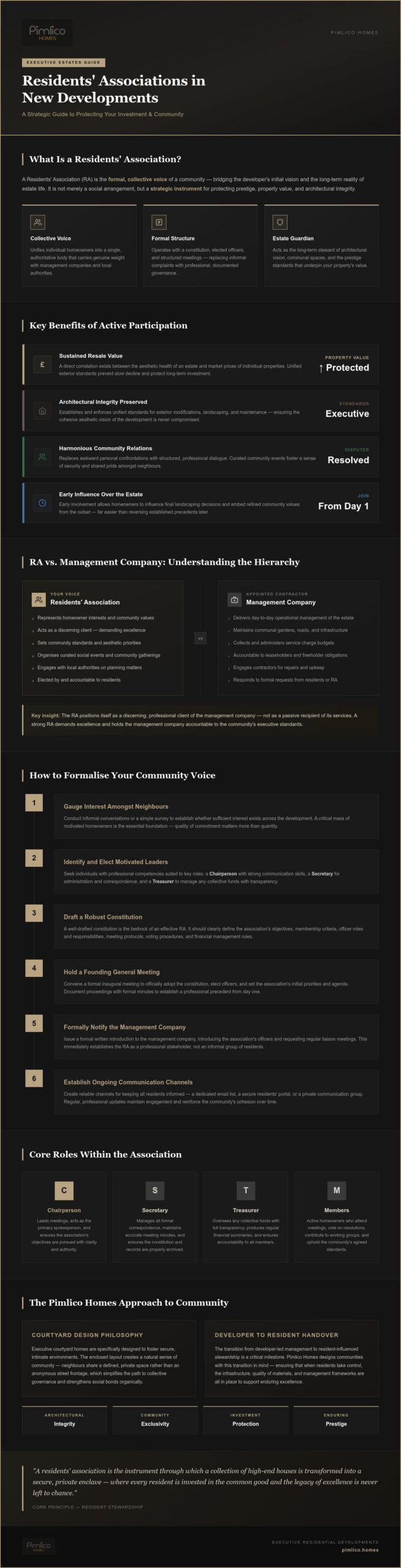
A Step-by-Step Guide to Formalising Your Community Voice
Establishing a formal structure is the definitive step in securing your community’s future. It begins with the identification of a core group of motivated homeowners who share a singular vision for the estate’s longevity. These individuals act as the initial architects of the association’s culture. Once this group is formed, the focus shifts to drafting a constitution that mirrors the high standards of the development itself. This document is your foundational charter. It clearly outlines the association’s purpose and provides a professional basis for requesting formal recognition from the management company or landlord. Recognition is not just a courtesy; it’s a legal milestone that grants your group official standing in all estate matters.
Effective communication is the lifeblood of any prestigious enclave. In an environment where privacy is paramount, traditional public noticeboards are insufficient and often inappropriate. Instead, the association should establish secure digital portals or private forums. These channels allow for the discreet exchange of information, ensuring that every resident remains informed without compromising the development’s exclusive atmosphere. Clear, professional communication builds the trust necessary for collective action. It ensures that every decision made is reflective of the community’s shared desire for excellence. If you are ready to begin your journey in a community that values these standards, explore our latest luxury new build homes to find your perfect sanctuary.
Drafting the Constitution and Code of Conduct
Your constitution should be more than a dry legal requirement. It’s a statement of intent. It provides an opportunity to define membership criteria and voting rights specifically for owners of detached homes, ensuring that those with the largest stake in the development have a clear voice. Setting an aspirational tone for the association’s behaviour ensures that all interactions are conducted with refined professionalism. The document must be legally robust to satisfy the requirements of a “Qualifying Residents’ Association,” yet it should remain an accessible guide for the community it serves. It establishes the rules of engagement for protecting the artistry and permanence of your surroundings.
Hosting Productive Meetings in an Executive Setting
Time is a luxury for the modern homeowner. To accommodate busy executive schedules, the association should utilise high-end digital meeting platforms. This approach ensures maximum participation without requiring physical presence at a community centre or library. Meetings must be driven by impactful agendas, focusing on critical pillars like budget reviews, estate aesthetics, and security enhancements. Annual General Meetings (AGMs) then serve as the ultimate platform for transparency. They provide a formal moment to celebrate the year’s achievements, audit the previous twelve months of service charge expenditure, and refine the vision for the future. Joining a residents’ association in a new development ensures these meetings become the engine of your estate’s continued prestige.
Cultivating Excellence: The Pimlico Homes Approach to Community
At Pimlico Homes, we believe that true excellence is measured by how a development matures over decades. We don’t simply exit a site once the final detached home is complete. Instead, we position ourselves as a partner in the long-term health of the community. Joining a residents’ association in a new development is the most effective way for homeowners to mirror the meticulous care we put into construction. Our role is to provide the architectural foundation and the legal clarity required to help your community thrive. We offer comprehensive documentation to simplify the formation of these associations, ensuring that the transition to resident-led stewardship is handled with the same precision as our masonry.
Our focus remains on the human experience of the end user. We act as the master craftsman who is proud of their output but understands that a house only becomes a home within a vibrant, well-managed community. This commitment to legacy is what separates a standard build from a Pimlico home. We provide the structure; you provide the soul. Together, we ensure that every development we create maintains its position as a benchmark of architectural integrity and social harmony. It’s about creating a sense of permanence that transcends the initial sale.
Architecture that Facilitates Community
The physical layout of an estate dictates the strength of its community. Our executive courtyard homes are specifically designed to foster intimate, secure enclaves where neighbours naturally connect. These shared spaces serve as the aesthetic heart of the development, where high-end interaction occurs organically. Whilst our luxury detached homes provide a grand sense of individual stature, they are integrated into a wider plan that values collective prestige. Meticulously planned landscaping and private woodland walks aren’t just visual assets; they are the backdrop for a shared way of life that prizes security and exclusivity.
Your Journey Beyond Completion
A home is a significant life investment, and its value is tied to the legacy of its creator. Choosing a luxury new build from a developer who prioritises permanence ensures your investment is protected from the start. We remain invested in the initial years of every development, offering the guidance needed to establish a robust residents’ association. This ongoing support ensures that the artistry and craftsmanship of the estate are never diluted by neglect or poor management. We invite you to engage with your community as a guardian of this excellence. By joining a residents’ association in a new development, you ensure that the vision we built together remains a premier sanctuary for generations to come.
Securing the Legacy of Your Estate
The choice to prioritise community stewardship is a hallmark of the discerning homeowner. By joining a residents’ association in a new development, you transition from a resident to a guardian of your property’s enduring prestige. You’ve discovered how a unified voice protects property value, ensures meticulous communal maintenance, and establishes a professional relationship with management entities. This strategic involvement guarantees that the artistry of your surroundings remains as vibrant in a decade as it is today.
Pimlico Homes brings 25 years of specialist luxury development experience to every project we undertake. Our focus on high-specification detached and courtyard homes is built upon a reputation for architectural excellence and heritage craftsmanship. We don’t just create structures; we build the foundations for exclusive lifestyle enclaves that reward your investment every day. Explore our current collection of exclusive new build developments to find your next sanctuary. Your home is a significant life investment, and it deserves the protection of a community committed to excellence.
Frequently Asked Questions
What is the difference between a residents’ association and a management company?
The Management Company is the legal entity responsible for the physical upkeep and contractual obligations of the estate. In contrast, joining a residents’ association in a new development positions you within the collective voice of the homeowners. Whilst the company executes repairs and manages insurance, the association acts as a strategic watchdog. It ensures these services meet the executive standards expected in a prestige development, effectively acting as the discerning client body.
Do I have a legal right to join a residents’ association in my new development?
Homeowners possess a clear legal framework to establish and join a residents’ association in a new development under UK law. The Landlord and Tenant Act 1985 provides for Recognised Tenants’ Associations, which grants formal rights to be consulted on service charges and major works. To achieve this status, your group must represent a significant proportion of the estate. This recognition ensures your community has a robust, legally protected influence over its environment.
Can a residents’ association change the service charge I pay?
A residents’ association doesn’t have the direct power to set or change the service charge, but it can significantly influence the final figure. By auditing the management company’s accounts and reviewing contractor performance, the association can challenge unnecessary expenditures or demand better value for money. This collective bargaining power ensures that every pound of your service charge contributes to the estate’s longevity. It prevents the inflation of costs without quality improvements.
What happens if the management company refuses to recognise our association?
If a management company refuses to recognise your association, you can apply for formal recognition through the First-tier Tribunal. This legal route provides a certificate of recognition if the association meets specific criteria regarding its constitution and membership levels. Once certified, the management company is legally obliged to consult with the group. This ensures the community’s voice remains a powerful force in the stewardship of the estate’s architectural integrity and long-term vision.
Is it mandatory to join the residents’ association when I buy a new home?
Joining a residents’ association is typically voluntary, though the benefits of participation are substantial for any property owner. Whilst you aren’t legally required to be a member, choosing not to join means you forfeit your direct influence over the association’s strategic decisions. Active membership is the most effective way to protect your investment and ensure the communal spaces reflect the high standards of your home. It’s a choice to become a proactive guardian of your community.
How much time do I need to commit to being a member of a residents’ association?
The time required depends entirely on your level of involvement, ranging from attending a single annual general meeting to joining the steering committee. For most members, a few hours per year are sufficient to stay informed and vote on key estate matters. Technology often streamlines this process, with many associations using digital portals for updates and virtual meetings. This approach respects the busy schedules of executives whilst ensuring the development’s standards are meticulously maintained.
Can the association stop a neighbour from making changes to their property?
An association itself doesn’t usually have the power to stop a neighbour’s property changes, but it can uphold the estate’s restrictive covenants. These legal rules, established by the developer, often dictate the aesthetic standards for exterior modifications. The association can alert the management company to potential breaches that might jar with the development’s architectural vision. This collective vigilance ensures the cohesive allure and prestige of the estate remain consistent for all residents over many years.
What are the costs involved in setting up a formal residents’ association?
Setting up a formal association involves minimal financial outlay, primarily covering minor administrative expenses like digital hosting or basic legal advice for the constitution. These costs are usually met through a modest annual membership fee from the participating homeowners. It’s a small price to pay for the significant protection of your property’s resale value and the assurance of executive-level maintenance. The investment in formalising your community voice pays dividends in the long-term prestige of the development.


