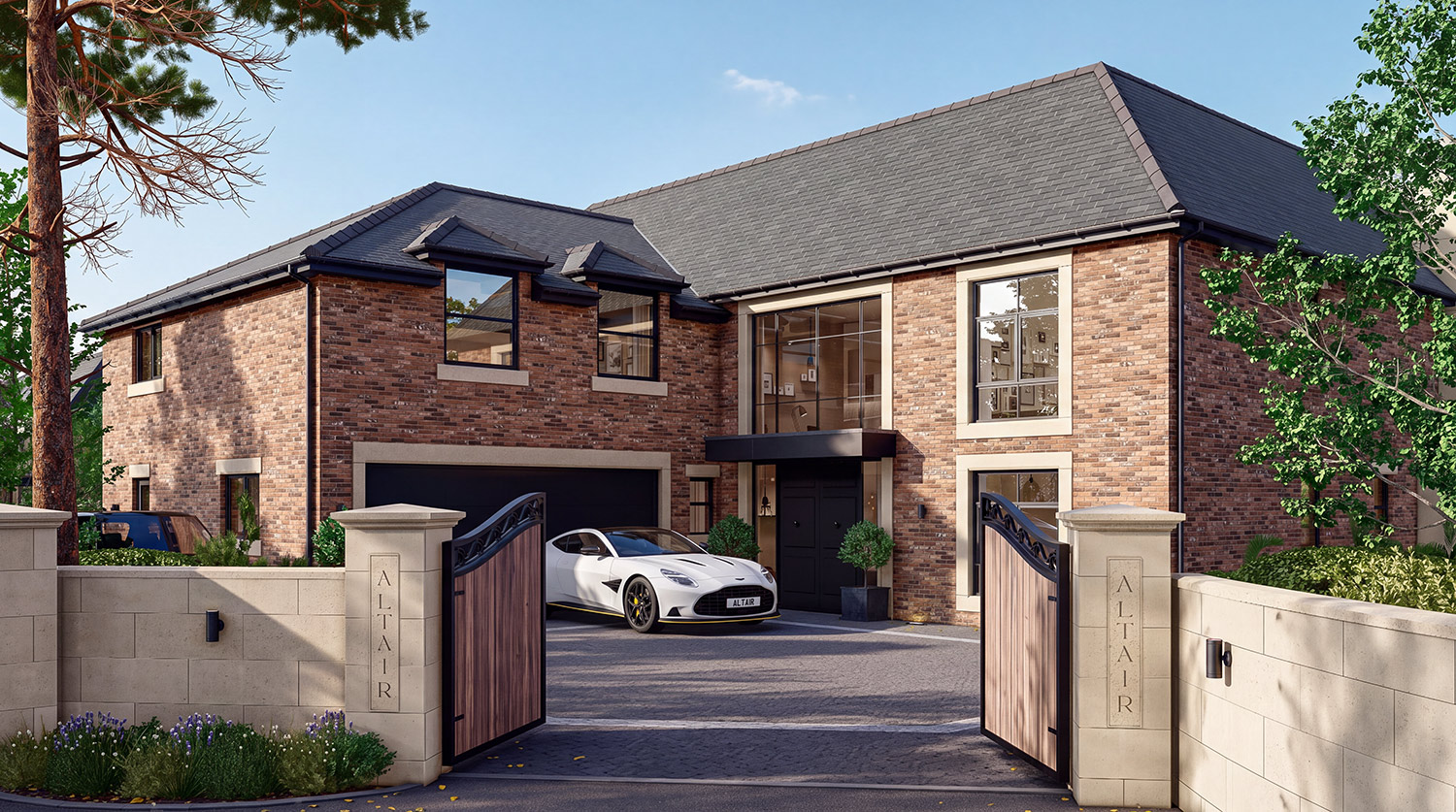
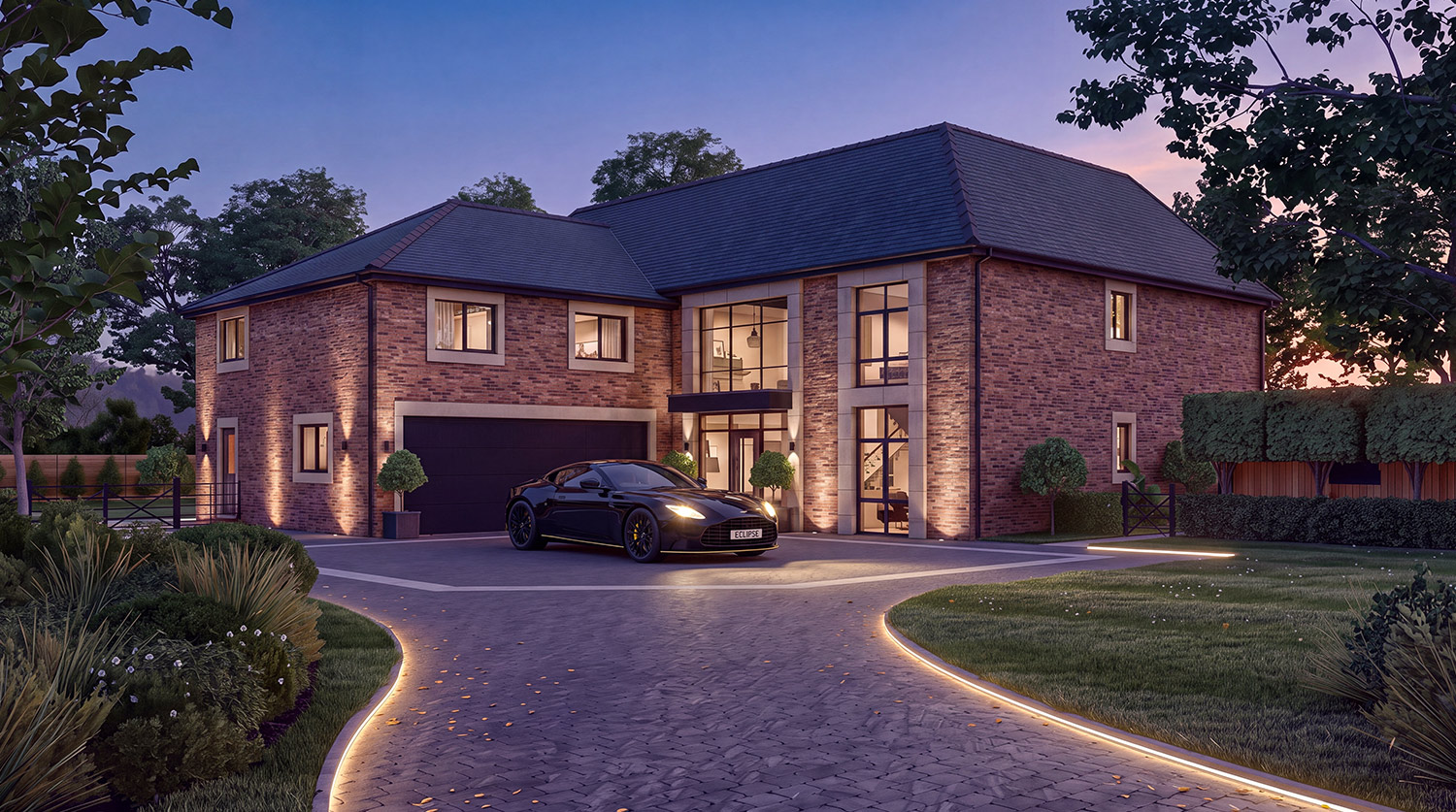
Most new homes in the UK come with a 10-year warranty when the developer is registered with the National House Building Council (NHBC). For buyers considering high end new construction homes, that protection matters, but so do the details it cannot replace: considered design, skilled craftsmanship and a finish that feels right for the way you live.
Buying a new home is a significant investment, so it is natural to want confidence in its lasting quality and everyday comfort. Energy efficiency, the character of the build and the space around the home all shape your experience long after moving in.
This guide explains what to look for in a warranty, how energy-efficient features can influence running costs, and how to assess workmanship. It also covers buyer feedback and plot size, helping you look beyond first impressions and judge the home as a whole.
Key Takeaways
- Look beyond energy labels to understand how a home’s design and features can shape comfort and day-to-day running costs.
- Learn which details of workmanship and finish can help you assess the quality of a newly built home.
- Consider how the buying journey, from key decisions to handover, contributes to confidence in your purchase.
- Assess how a larger plot could support the way you want to use your outdoor space and enjoy your surroundings.
- Understand how stamp duty and other purchase taxes relate to the property’s location and your circumstances.
Sustainable and energy-efficient home features
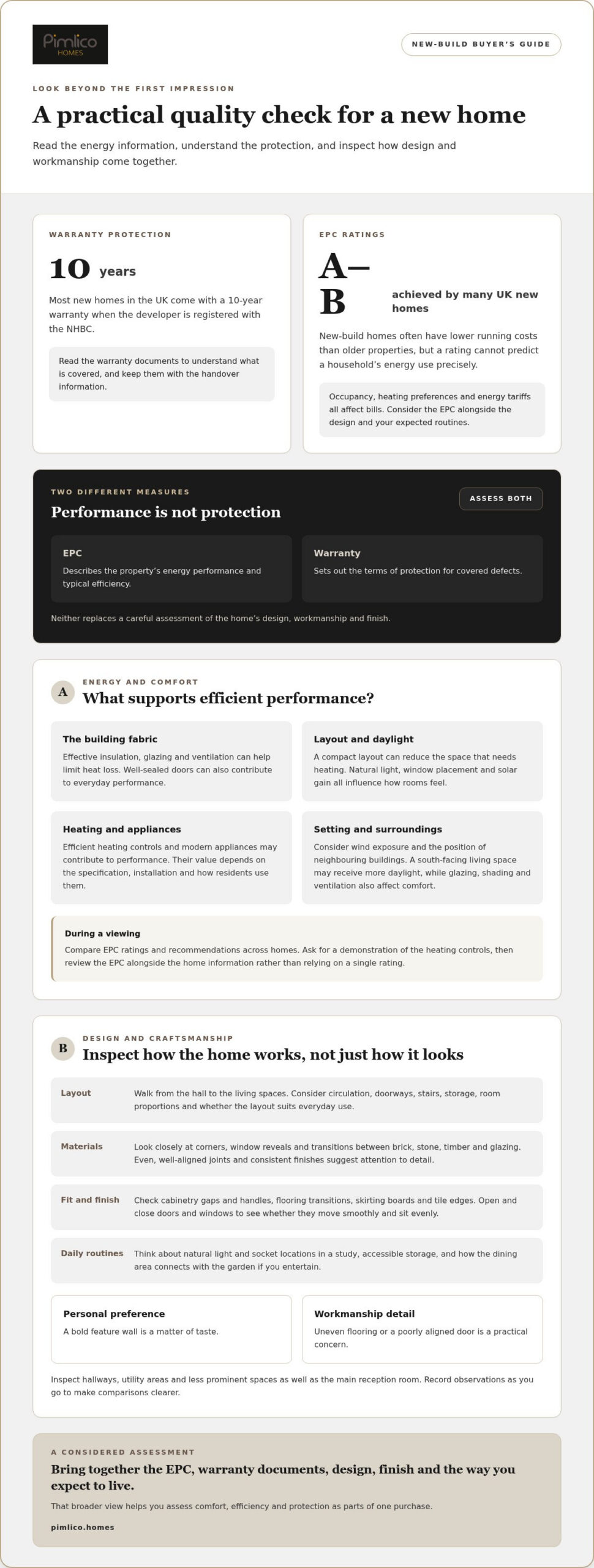
Energy efficiency depends on the home as a whole, from its layout to how well it retains heat. Many UK new homes achieve EPC ratings of A or B, and new-build homes often have lower running costs than older properties. These are useful indicators, but they cannot predict a household’s energy use precisely. Occupancy, heating preferences and energy tariffs all affect bills, so weigh the rating alongside the design and your expected routines.
An Energy Performance Certificate (EPC) provides a standardised view of a property’s energy performance and typical efficiency. Compare the rating and recommendations when viewing homes, then consider which features support that result. Effective insulation, glazing and ventilation can help limit heat loss. Layout matters too: rooms used throughout the day may benefit from natural light, while considered window placement can balance daylight and solar gain.
Ask how the design brings these elements together. A south-facing living space, for example, may receive more daylight, but glazing, shading and ventilation also affect comfort. A compact layout can reduce the space that needs heating. The effect depends on the complete design, not a single feature. In a development, consider how the home sits in its surroundings, including wind exposure and the position of neighbouring buildings.
Efficient heating controls, modern appliances and well-sealed doors can contribute to everyday performance. Their value depends on the specification, installation and how residents use them. During a viewing, note the controls and ask for a demonstration of the heating system. Review the EPC recommendations alongside the home information to understand how the property is designed to use energy, rather than relying on a single rating.
Energy efficiency and warranty protection are related, but they answer different questions. Most new homes in the UK come with a 10-year warranty if the developer is registered with the National House Building Council (NHBC). Read the warranty documents to understand the protection they provide, and keep them with the home’s handover information. The EPC describes energy performance; warranty terms concern covered defects. Neither replaces careful assessment of the home’s design and finish.
Before deciding, use a simple review:
- Compare the EPC rating and recommendations across homes.
- Identify the design and features that support efficient energy use.
- Understand the heating controls and how to operate them.
- Read the warranty documentation alongside the energy information.
This approach helps you assess comfort, efficiency and protection as parts of one considered purchase, rather than treating an EPC rating as the sole measure of a home’s quality.
Design, craftsmanship and quality of finish
Good design is about more than an impressive entrance or striking kitchen. In a new home, proportion, circulation and practical details should work together. Notice whether the route from the hall to the living space feels natural, and whether doorways, stairs and storage suit everyday use. Generous windows can bring daylight into a room, while thoughtful placement can preserve privacy. These details show how the design serves its occupants, not just how it looks in photographs.
Modern architecture can sit comfortably alongside traditional materials and forms. Brick, stone, timber and glazing each create a different character, but how they meet matters. Look closely at corners, window reveals and transitions between materials. Even, well-aligned joints and consistent finishes suggest attention to detail. On a viewing, inspect more than the main reception room: hallways, utility areas and less prominent spaces show whether the same care extends throughout the home.
Craftsmanship is often clearest in the details you use every day. Open and close doors and windows, checking that they move smoothly and sit evenly in their frames. Look at kitchen cabinetry for consistent gaps and secure handles, as well as flooring transitions, skirting boards and tile edges. These checks help you assess the finish beyond decorative choices. A considered colour palette may make an immediate impression, but sound fitting and coherent detailing matter over time.
Consider how the specification supports your routines. A kitchen island, for example, can provide a useful preparation surface, while integrated storage keeps frequently used items accessible. In a study, socket locations and natural light affect how comfortably the room works as a workspace. If you entertain, consider how the dining area connects with the garden. Space for storage, movement and changing needs can make a home feel composed without sacrificing function.
During a viewing, use a consistent checklist:
- Walk through each room and assess the layout and flow.
- Inspect joinery, flooring, tiling and the finish around windows.
- Test doors, cupboards and windows for smooth operation.
- Consider whether lighting, storage and room proportions suit your daily life.
Record observations as you go, distinguishing personal preferences from workmanship details. A bold feature wall is a matter of taste; uneven flooring or a poorly aligned door is a practical concern. This distinction makes comparisons between properties clearer. If you are exploring a home shaped around considered design, discover thoughtfully designed homes as part of your research.
Customer testimonials and buying experience
Buying off-plan means committing to a home before construction is complete. Potential risks include delays, changes to materials or finishes, and a finished property that differs from your expectations of the plans or show-home images. Read the reservation and sale documents carefully, paying particular attention to the specification, completion arrangements and how changes are handled.
A considered buying experience makes each stage clear. Keep a record of the agreed specification, selections and important decisions, then compare these with the information provided as construction progresses. If you choose flooring or kitchen finishes before completion, for example, written details help you remember what was agreed and identify any differences during a later inspection.
Testimonials can offer useful insight, but look beyond the star rating. A detailed account may explain how clearly the buying process was communicated, whether handover met expectations, or how a concern was addressed. Look for specific examples and recurring themes across reviews. Comments about communication, finish and moving in are more informative than praise without detail.
When comparing luxury new-build developers and homes in the UK, consider evidence of build quality, clear property information and consistent buyer feedback. Look for developers who follow the New Homes Quality Code, and assess whether their descriptions explain the home and buying process clearly. A completed property can also help you judge materials, proportions and finishing details in person.
The New Homes Ombudsman Service is an independent service that helps buyers raise new-build problems with a developer and seek to resolve them. Its role is relevant if a concern remains after you have raised it directly. Keep correspondence, photographs and relevant documents together, so the issue and the steps taken are easy to follow.
Use these practical checks when assessing a development:
- Compare the written specification with plans and any show-home details.
- Read buyer feedback for specific, repeated comments about communication and handover.
- Record selections and decisions, including finishes agreed before completion.
- Keep a clear written record if a problem arises, including dates and photographs.
Testimonials are only one part of the picture. Consider them alongside the documents, the visible quality of completed homes and how information is presented. Together, these can give you a more balanced view of the buying experience and help you make an informed decision before committing to a home still under construction.
Larger-than-average plots
A generous plot can offer room for gardens, entertaining and privacy, but acreage alone does not show how usable the land will be. At Pimlico Homes, developments are often set across expansive grounds comprising only a small number of residences. That approach illustrates how a scheme can combine substantial grounds with low-density housing. For an individual property, consider the area immediately surrounding the house as well as the total land included.
Plot size can describe very different opportunities. One location might be a substantial freehold development opportunity, whilst another is a compact acreage property. These examples are not directly comparable: one may be designed for further creation, the other as a finished home. When viewing high end new construction homes, establish which land belongs to the property and how the boundary relates to gardens, access and shared areas.
Walk the site instead of judging it from a plan. Notice the gradient, mature trees, outlook and distance between the home and its neighbours. A sloping garden may create distinct terraces, but it can also affect how you use the outdoor space. Check where the garden gets daylight and whether paths connect practical areas such as parking, the entrance and patio. The right layout depends on how you plan to live there.
Ask how the plot is divided between private and communal land. In a larger development, landscaping or open space may form part of the scheme rather than an individual garden. Use the plans to clarify boundaries, access routes and the position of neighbouring homes. Consider how the purchase documents describe maintenance responsibilities, particularly where hedges, shared drives or planted areas sit close to the property.
A larger plot offers possibilities, but may also mean more ground to maintain. Consider the tasks involved, from mowing open lawns to caring for established planting. A secluded garden may suit quiet outdoor living, while a broad lawn may be more useful for gatherings or play. These practical considerations can matter more than the headline acreage.
Before comparing plots, make a short list of priorities:
- Identify the usable garden area and its boundaries.
- Consider sunlight, slope, privacy and outlook from key rooms.
- Check how access and any shared spaces are arranged.
- Match the landscape to the time and care you want to give it.
Comparing different estates and properties shows why size needs context. When searching for high end new construction homes, the right plot is the one whose layout, setting and upkeep suit your plans, not simply the one with the largest figure.
What stamp duty and other taxes apply when buying a high-end new-build home?
Stamp duty is a purchase cost to consider alongside the deposit, legal work and moving expenses. For a UK home, the calculation depends on its location, the agreed purchase price and the buyer’s circumstances. A new-build remains a property purchase, so its status alone does not determine the tax due. Establish the relevant tax treatment before finalising your overall budget.
Start with the property’s location. Tax arrangements differ across England, Scotland, Wales and Northern Ireland, so do not apply guidance for one nation to another. Then identify the full purchase price and everyone named as a buyer. Whether a buyer owns another property, buys alone or purchases jointly can affect the calculation. These details help determine which rules apply to the transaction.
Ask your conveyancer to set out the expected purchase tax in writing, using the agreed price, location and buyer details. If two people are buying together, for example, give the conveyancer information about both buyers’ ownership circumstances rather than relying on one person’s position. Update the estimate if the price, ownership structure or transaction changes before completion, keeping your funds plan aligned with the purchase.
Separate one-off purchase taxes from ongoing property charges. Council tax is a recurring cost after moving in, and the relevant local authority determines the property band and charge. Include it in your household budget alongside utilities and maintenance. A larger home or generous grounds may also bring different day-to-day costs, so consider the full ownership picture, not just the amount due at completion.
Before exchanging contracts, organise these details:
- Confirm which UK nation the property is in and which purchase-tax rules apply.
- Give your conveyancer the purchase price and accurate details for every buyer.
- Keep the written tax estimate with your completion-funds plan.
- Record the council tax band and local charge as ongoing costs.
These steps help distinguish the purchase tax from the continuing costs of ownership. The amount due depends on the transaction details, so use the final price, property location and buyer circumstances when arranging funds. A considered home purchase brings together the property itself and a clear view of its financial commitments. Explore new-build homes as you consider your next move.
Pimlico Homes: Luxury Detached Homes
Pimlico Homes develops luxury detached homes, executive courtyard homes and bespoke luxury homes. Each offers a different starting point for considering the form, character and setting of your next home. If you are weighing distinctive design against how you want to live, these homes can help you clarify your priorities.
Reflect on the qualities that matter most, from privacy to a layout suited to everyday life. Exploring Pimlico Homes’ developments can help you decide which direction feels right. To discuss your plans, contact Pimlico Homes or visit pimlico.homes. A considered next step begins with a clear picture of the home you hope to find.
Choose a home that feels distinctly yours
Start by defining what matters most in the way you want to live. Consider the atmosphere you want to come home to, how you use your space and what kind of setting feels right. These priorities give your search direction, helping you focus on high end new construction homes that suit your life rather than simply impress at first viewing.
Pimlico Homes develops luxury detached homes, executive courtyard homes and bespoke luxury homes. Each offers a different starting point for imagining a home with lasting character. Explore which form best reflects your preferences and the future you are planning.
A considered choice begins with a clear sense of possibility. Contact Pimlico Homes today to explore the homes and discuss the direction you have in mind. Your next chapter can begin with a home shaped around what matters to you.
Frequently Asked Questions
Are there protections and warranties available when buying a new home?
Yes, a new home may come with a warranty, and buyers can also use complaint routes where applicable. Most UK new homes come with a 10-year warranty if the developer is registered with the National House Building Council (NHBC). Read the warranty documents to understand the cover and claims process. The independent New Homes Ombudsman Service helps buyers raise new-build problems with the developer and seek resolution.
Why buy a new-build home?
A new-build home is newly constructed, rather than a property with a previous owner’s alterations and wear. This can make it easier to assess the layout, finishes and included specification before moving in. Compare the kitchen storage, room proportions and outdoor access with your daily routines, for example. Review the written details of what is included so your expectations match the property’s specification.
Why choose a newly built home?
Choose a newly built home if you value a fresh start and a design created for contemporary living. You can assess its rooms and finishes as presented, rather than first working around a previous owner’s choices. Consider how you would use each space at different times of day. Depending on your priorities, a spare room might serve as a study, guest room or dressing room.
What counts as a high-end new-build home in the UK?
No single feature defines high end new construction homes; assess the property as a whole. Consider the coherence of the design, the quality and consistency of the finish, the practicality of the layout and the setting. A striking exterior alone is not enough. Look for evidence that details such as storage, circulation and the connection between indoor and outdoor spaces have been considered together.
What features and specifications are typical of luxury new-build homes?
Specifications vary, but buyers of high end new construction homes may look for distinctive architecture, carefully chosen materials and considered room layouts. Features could include generous reception areas, well-planned storage, refined joinery or a strong connection between living spaces and the garden. Treat these as points to assess, not guaranteed inclusions. Compare the written specification with the rooms you view, and distinguish standard features from optional choices.
How do new-build warranties and building regulations protect buyers in the UK?
A warranty and building regulations serve different purposes. A warranty sets out the protection and claims process that apply to the home, so read its documents rather than assuming every issue is covered. Building regulations concern construction requirements; they do not replace the warranty. Keep the warranty and completion documents together, and refer to them to understand what each covers.
What should buyers check before reserving an off-plan luxury home?
Before reserving, compare the floor plans, site plan and written specification, then note the details that matter to you. Check how the documents describe finishes, fittings, plot boundaries and shared areas. Read the reservation terms carefully, especially the conditions, deadlines and circumstances that could affect your reservation. Keep copies of plans and selections so you can refer to the agreed details as construction progresses.
How much do luxury new-build homes cost across the UK?
Prices for luxury new-build homes vary considerably depending on the region, plot size and overall specification. Prime locations in London and the Home Counties typically command the highest figures, whilst developments by specialists like Pimlico Homes offer bespoke pricing aligned with the exceptional craftsmanship, premier materials and exclusive finishes integrated into each property.