
The finest smart home is the one you barely notice. Smart home technology in luxury new builds can bring lighting, window treatments and audio together, making everyday settings easier to shape around the way you live. Its success lies not in adding more controls, but in making comfort feel effortless.
It is natural to expect a new home’s technology to work beautifully without competing with its architecture or interiors. Achieving that takes thoughtful planning: controls should feel intuitive, equipment should sit comfortably within the design, and every feature should serve a clear purpose.
This article explores how intelligent lighting can shift a room’s atmosphere, how automated shades can help manage daylight and privacy, and how multi-room audio can support both quiet moments and entertaining. It also covers the decisions that make these elements feel cohesive, helping you understand what to consider when shaping a home that is beautifully appointed and a pleasure to live in.
Key Takeaways
- Plan lighting around the atmosphere and activities you want in each room, and consider controls alongside the fixture scheme.
- Use accessible physical controls so everyday lighting remains straightforward for household members and visitors alike.
- Think about how scheduled window treatments can balance daylight, privacy and comfort throughout the day.
- Map audio zones and entertainment needs to the home’s layout, so sound and screens feel considered rather than dominant.
- Shape technology around your routines and interior design, with intuitive controls that bring separate features together.
1. Intelligent lighting and circadian-style light settings
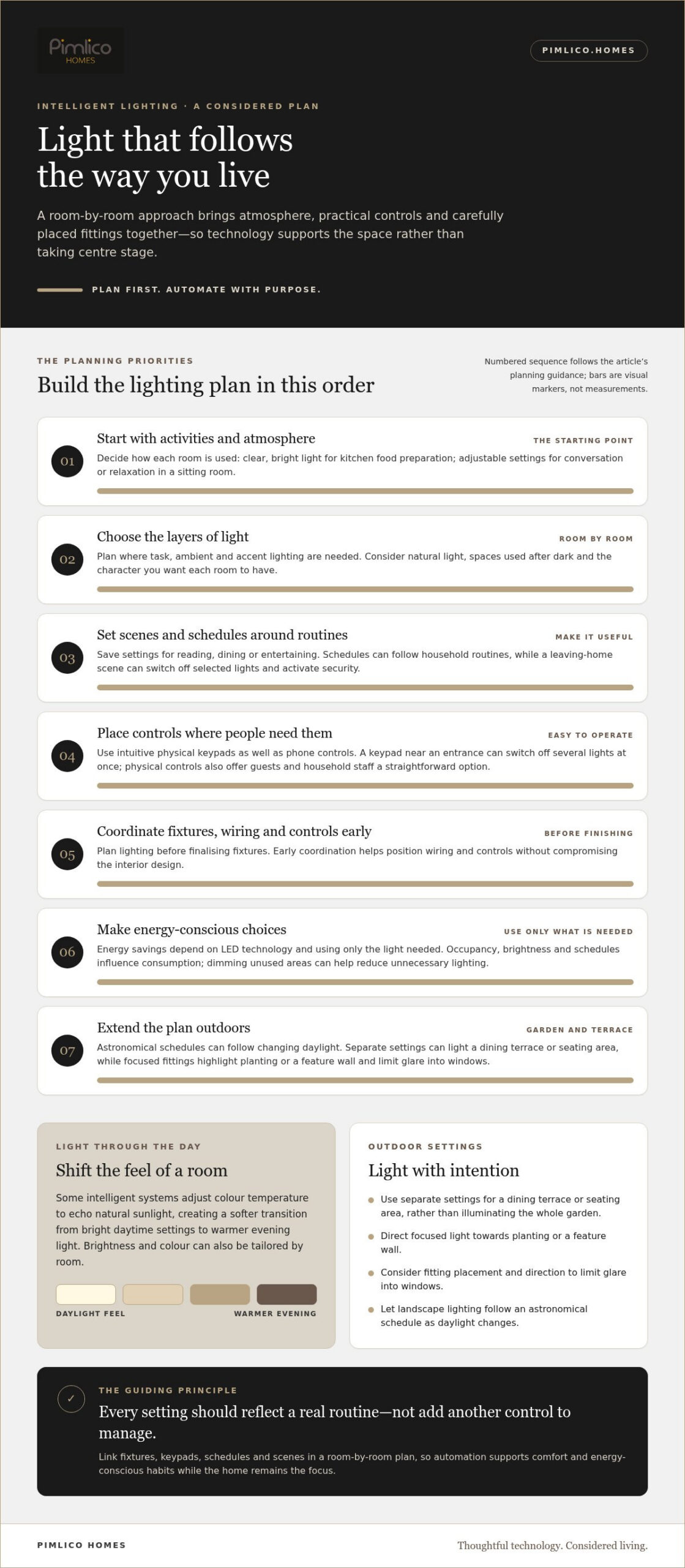
Lighting can change a room’s character as the day unfolds. Some intelligent systems adjust colour temperature to echo natural sunlight, creating a softer transition from bright daytime settings to warmer evening light. You can also tailor brightness and colour by room, then save scenes for reading, dining or entertaining.
Start with the activities that shape each space. A kitchen might need clear, bright task lighting for food preparation, while a sitting room benefits from adjustable settings for conversation or relaxation. Schedules can follow household routines, and phone controls let you adjust lighting remotely. Physical keypads offer a straightforward alternative for guests and household staff.
Energy savings depend on LED technology and using only the light needed. Occupancy, brightness and schedules all influence consumption, so scenes that dim unused areas can help reduce unnecessary lighting.
Lighting can work alongside climate controls and security systems. Smart climate control depends on suitable heating and ventilation design, so it should be planned around the home’s systems. A leaving-home scene can also activate security while switching off selected lights. Each setting should reflect a real routine, rather than add another control to manage.
Plan lighting before finalising fixtures and controls. Decide where you need task, ambient and accent lighting, then place controls to suit how people move through the rooms. For example, a keypad near an entrance can switch off several lights at once. Early coordination also helps position wiring and controls without compromising the interior design.
Outside, automated landscape lighting can follow astronomical schedules, illuminating paths and garden features as daylight changes. Separate settings can light a dining terrace or seating area for outdoor entertaining without illuminating the whole garden. The placement and direction of each fitting matter: focused light can highlight planting or a feature wall while limiting glare into windows.
Smart outdoor systems can also control pool and spa temperatures, lighting and water features remotely. Weather-responsive irrigation can adjust watering to conditions, while landscape lighting follows an astronomical schedule. These controls can support outdoor comfort, whether the garden is set for an evening gathering or a quieter mood.
Start with a room-by-room plan linking fixtures, keypads, schedules and scenes. Consider where natural light falls, which spaces are used after dark, and how outdoor areas support entertaining. This groundwork helps automation serve comfort and energy-conscious habits without making technology the focus.
2. Automated window treatments
Motorised blinds and curtains let homeowners adjust daylight without moving from window to window. A schedule can open shades in the morning, then lower them later to soften glare or increase privacy. In rooms with expansive glazing, automated solar shades can help manage heat gain, ultraviolet exposure and light falling on furniture or artwork. Their position can respond to the time of day or a chosen scene.
Map each window’s orientation, use and relationship to neighbouring rooms. A south-facing sitting room may need different daytime settings from a shaded bedroom. Group treatments by space, then define practical routines: open bedroom curtains in the morning, lower lounge shades for a film, or close several coverings together for privacy. This gives automation a clear purpose while preserving manual control when plans change.
Whole-home automation can bring window treatments together with lighting, climate and security through one intuitive control interface. A “leaving home” routine, for example, could close selected shades while activating security, rather than requiring separate commands across multiple apps. Depending on the system and situation, owners can also use physical controls or an app. The aim is for each element to work seamlessly, without turning a simple adjustment into a sequence of tasks.
Consider accessibility at the planning stage. Motorised treatments can reduce the need to reach high windows or operate heavy curtains by hand. Place controls within easy reach and choose routines household members can understand. A bedside control could close bedroom shades, while a shared keypad offers visitors a simple option. Clear labels and a few useful scenes make everyday operation more intuitive.
Water protection can also be part of a joined-up home system. Sensors near vulnerable plumbing, such as beneath a sink or beside a washing machine, can detect a leak. When connected to an automatic shutoff valve, the system can stop the water supply, helping limit damage while occupants are away. A control platform may also bring sensor status and security cameras into one interface, giving owners a single view of key home systems.
Specify these details alongside the window schedule and room layout, not as finishing touches. Confirm which windows need motorised coverings, where sensors belong, and how routines should respond to daily life. Thoughtful coordination can make shades, leak detection and controls feel like part of the architecture. For readers planning a carefully considered new build, early decisions can help technology sit naturally within the design.
3. Multi-room audio and home entertainment
Music can follow the household from kitchen to terrace, or stay in one carefully chosen room. Whole-home audio divides a property into separate zones, allowing each space to play its own selection independently. One person can listen in the kitchen while another enjoys quiet in the sitting room. Sound then becomes part of everyday comfort, rather than a single system competing throughout the home.
Map where audio will be used and what each room needs. A kitchen may suit background music during the day, while a dining room benefits from a considered sound level for entertaining. A bedroom might call for a more private listening experience. Zone planning matches speakers and controls to each space, giving homeowners convenient command without making every room feel identical.
Multi-zone audio can also support outdoor living. A garden seating area and an indoor kitchen can operate as separate zones or share music when guests move between them. Let the layout guide speaker placement, so sound serves the intended area rather than projecting indiscriminately. Remote control can make it easier to adjust a zone from elsewhere in the home.
A dedicated home theatre brings several elements together. Automated systems can combine a motorised screen, concealed projector and surround sound, with lighting and curtains controlled as part of the viewing experience. Projection, surround sound and automated seating can create a more immersive setting. These choices should reflect how the room will be used, from family film nights to larger gatherings.
Screen placement matters beyond the theatre. An HD television can be visually prominent, so consider alternatives such as a television that displays artwork, a screen that rises from cabinetry, a ceiling-drop projection screen or a MicroLED video wall. In a bright room, direct-view displays may suit better than projection, since afternoon sunlight can overwhelm a projector.
Plan the technical backbone around the room layout. An equipment rack is often placed in a utility room or dedicated space, where Ethernet, speaker and control cables converge. It may house a central controller, media inputs and audio or video distribution equipment. Coordinating connections early can keep visible equipment and cables from distracting from carefully finished interiors.
One intuitive control interface can bring audio and entertainment commands together, rather than scattering them across multiple apps. Decide which functions need quick access, such as choosing a zone or adjusting volume. Sensors may support other home functions, but direct audio controls should remain easy for household members and guests to understand.
Thoughtful zoning can elevate quiet routines and entertaining while tailoring the experience to each room. Start with the spaces, listening habits and display preferences that matter most. Then shape the audio and video plan around those choices, so technology supports the home’s lifestyle without dominating its design.
4. Integrating technology with interior design
Technology feels considered when its controls, equipment and finishes suit the surrounding spaces. Plan the system alongside the interior scheme: decide where keypads belong, where equipment can sit discreetly, and which functions should share one control interface. For example, one intuitive platform can bring lighting, temperature and entertainment together, avoiding a collection of separate apps.
Integrated security systems can connect high-resolution cameras, smart locks, access control and video doorbells. Cameras can provide live video feeds and instant alerts, while a leaving-home routine can activate security when residents depart. Consider sightlines, entrances and daily movement when placing equipment, so surveillance serves the home without becoming a visual focus.
Wired systems provide dedicated connections between equipment, while wireless devices avoid some fixed cabling and can offer flexibility in placement. In a new build, decide which devices need planned cabling and which suit wireless connections, then coordinate routes before walls and finishes are complete. The right balance depends on the home’s layout, system design and the devices being integrated.
For UK projects, consider the requirements that apply to the particular installation, including electrical work, energy use and fire safety. Applicable rules and standards depend on the equipment and how it connects with the building. Assess these interfaces as part of the design, rather than treating every smart device as a separate interior accessory.
Cost depends on the project and is provided following a quote request. Key factors include the number and type of devices, the extent of wiring, the control platform and how many home systems are integrated.
When reviewing a specification, focus on the named features, platform backbone, update history, warranty scope and ongoing support arrangements. These details show what the system is designed to do and how its operation is supported over time.
Connected cameras, locks and controls can create privacy and cybersecurity risks if access is poorly managed. Reduce exposure by limiting account access to intended users, choosing strong, unique passwords, keeping software updated and understanding how camera footage and other personal data are handled.
Which UK luxury new-build developers offer advanced smart home technology? No single specification applies to every development, so compare the stated platform, integrated functions and support arrangements for each home. A clear specification makes it easier to see whether lighting, security and climate controls work together, rather than appearing as unrelated additions.
Security can form a coordinated layer within the home. Some luxury home security systems combine facial recognition with analysis of residents’ movement patterns and vocal nuances. Smart security systems can also use facial recognition, biometric locks and AI-enhanced cameras for real-time monitoring. Consider these capabilities alongside the wider control scheme, rather than as isolated gadgets. A single intuitive control interface can help residents manage a luxury smart home without switching among multiple apps. Automation can activate security when residents leave, while surveillance cameras provide live video feeds and instant alerts to help homeowners respond to security events. Planning these functions together can create a more coherent experience.
5. Luxury interior design and smart technology
In luxury homes, technology should enhance the architecture rather than compete with it. Planning smart home technology in luxury new builds starts with household routines, entertaining habits, room layout and longer-term priorities. A dining room used for formal gatherings may need a different atmosphere from a family kitchen. This helps each feature serve a clear purpose and keeps the design coherent.
Consider how technology looks when it is not in use. A screen that rises from cabinetry, a ceiling-drop projection screen or a television displaying artwork can preserve a composed living room. Discreet equipment placement keeps surfaces and sightlines clear. Coordinate these choices with joinery, wall finishes and room layouts while the interior scheme is taking shape, rather than adding them at the end.
Controls should feel intuitive to everyone in the household. A shared interface can simplify common adjustments, while voice commands may suit moments when hands are occupied. A family could create a welcoming evening setting that brings together selected lighting, music and room temperature. Give each scene a recognisable name and keep its actions relevant to the space.
Comfort also depends on how rooms are used. A study may have different temperature preferences from a bright sitting room, and occupancy-based controls can respond to whether a space is in use. Plan heating controls around each room’s purpose and layout. Furthermore, a whole-home automation platform can provide remote monitoring and control of home systems from anywhere worldwide, while smart thermostats and vents manage temperatures precisely room by room. The aim is a considered experience, rather than a series of unrelated devices to manage.
Choose smart home features to suit specific routines. A connected oven may be useful to someone who prepares meals to a set schedule, while air-quality or humidity monitoring may suit a household’s priorities. Smart home technology in luxury new builds is most useful when its capabilities match daily life, not when more functions are added for their own sake. Select only features with a clear place in the home.
Plan for changing needs, too. Place controls where household members can reach and understand them, and keep everyday actions straightforward for visitors. Familiar switches can sit alongside automated options, giving residents a direct way to manage essential functions. A carefully organised system can remain intuitive as routines evolve, without making every interaction depend on an app or complex menu.
Begin with the people, then shape the technology around the architecture, materials and routines that matter to them. To explore a home aligned with your priorities, discover considered new-build design.
Pimlico Homes: Luxury Detached Homes
Pimlico Homes offers luxury detached homes for buyers seeking a new home shaped around everyday comfort and considered design. Its portfolio also includes executive courtyard homes, bespoke luxury homes and luxury barn conversions, offering distinct settings for different preferences and ways of living.
If you are planning a move and considering how technology, architecture and daily routines should come together, explore the home type that best reflects your priorities. Think about how room layouts, natural light and entertaining spaces could support the smart features you value when choosing a home.
For a closer look at the homes available, contact Pimlico Homes or visit pimlico.homes.
Shape a home around the way you live
The most thoughtful next step is to consider how your home should feel throughout an ordinary day, not only how its technology performs. Which spaces should welcome guests? Where would calm, privacy or flexible lighting matter most? These priorities can guide decisions about layout and the smart home technology you want to incorporate into your plans.
Pimlico Homes offers luxury detached homes, executive courtyard homes and bespoke luxury homes for buyers seeking a home aligned with those priorities. Each provides a distinct setting for considering how architecture, interiors and modern living can come together. Start with the home that reflects your aspirations, with technology considered as part of the wider vision.
Explore the possibilities for your next home and take the next step at Pimlico Homes. A considered vision can become the foundation for a home that feels distinctly yours.
Frequently Asked Questions
What smart home technology is included in luxury new builds in the UK?
Specifications vary between homes, but may include connected lighting, heating, window coverings, entertainment and security. Smart home technology in luxury new builds can also include voice controls, connected kitchen appliances, leak sensors or air-quality monitoring. The useful question is how each feature fits the home’s intended routines. A household that often entertains may prioritise flexible scenes, while someone who travels may value remote access to selected systems.
How can smart home systems integrate lighting, heating, blinds, security and entertainment?
A central control platform can connect compatible systems, allowing selected features to respond together. An arrival routine, for example, might adjust entrance lighting, set a preferred temperature and open chosen blinds. For smart home technology in luxury new builds, define which functions should work together and which need separate control. This avoids unnecessary changes, such as opening bedroom coverings when the household returns in the evening.
How can smart home technology be designed for accessibility and future upgrades?
Place controls within comfortable reach, use clear labels and offer practical alternatives such as voice or phone control. A guest should be able to operate essential lighting without navigating an unfamiliar app. For future changes, plan accessible equipment space and routes for additional cabling before interior finishes are complete. Keep frequently used functions simple, so residents can adapt routines or add compatible features without making everyday controls harder to use.





