A restorative room is defined less by its size than by the calm it creates. Luxury homes with dedicated yoga and meditation rooms support that calm through flexible layouts, secluded positions and considered views. Glass walls can bring in natural light while preserving a sense of retreat. The result is a space designed around daily practice, not simply a room for equipment.
A peaceful setting matters, but so does the freedom to adapt it. A guest room, quiet corner or enclosed outdoor space can support yoga and meditation when its layout, light and privacy suit your needs. This article explores how flexible spaces, thoughtful positioning and views through glass can create a restorative atmosphere, alongside the design details that make a dedicated room feel composed, comfortable and personal.
Key Takeaways
- Adapt an underused room, a quiet corner or an outdoor nook to create a retreat that supports more than one purpose.
- Choose a position away from busy household routes, then consider how privacy and a sense of calm can be preserved.
- Use glass, views and natural light thoughtfully; sheer curtains or frosted panels can soften the balance between openness and privacy.
- Shape the atmosphere with uncluttered layouts, natural materials, gentle lighting and storage that keeps practice essentials close but out of sight.
- For a UK luxury home, price depends on the individual case and is given after a quote request; location, plot, specification and design all shape the cost.
1. Flexible and multi-purpose meditation areas
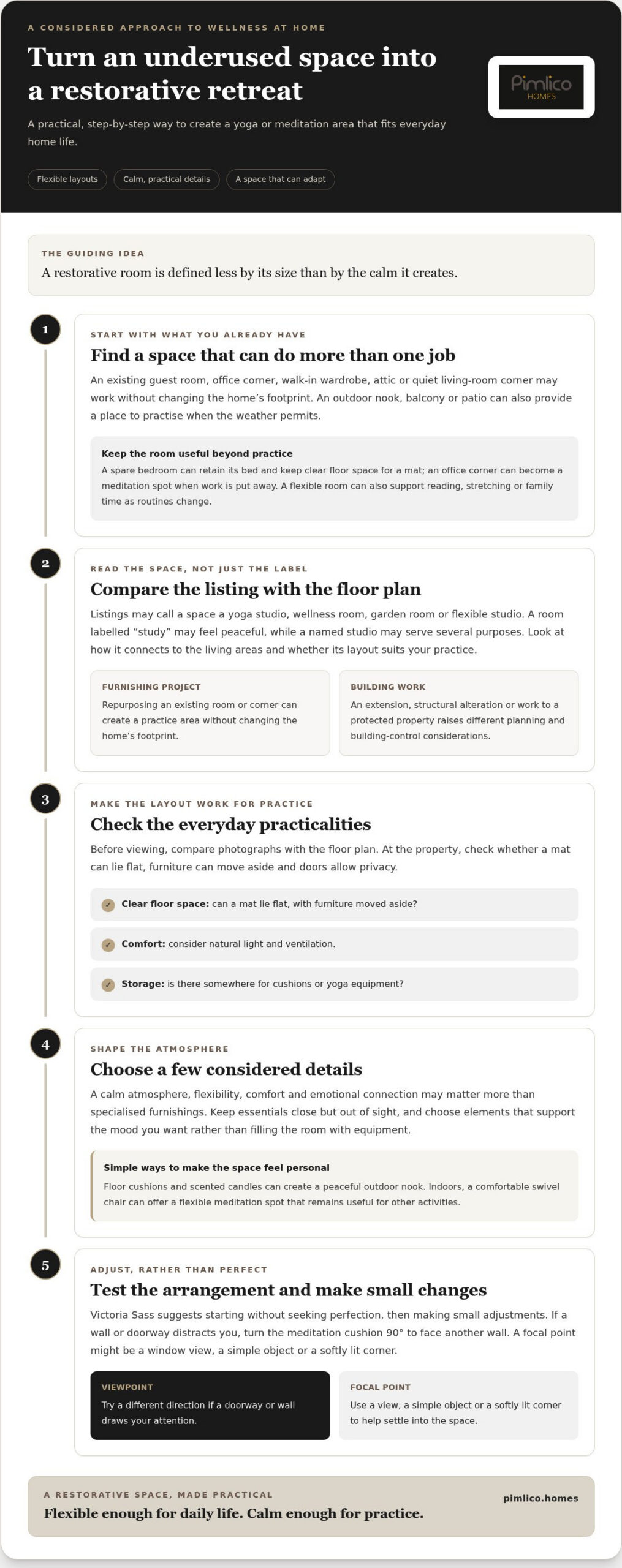
Repurposing an existing guest room, office corner or walk-in wardrobe can create a meditation area without changing the home’s footprint. An extension, structural alteration or work to a protected property raises different planning and building-control considerations. First distinguish a furnishing project from building work.
UK property listings may describe a suitable space as a yoga studio, wellness room, garden room or flexible studio. Read the description alongside the floor plan: a room labelled “study” may offer a peaceful retreat, while a named studio may serve several purposes. Check how it connects to the living areas and whether its layout suits your practice.
Flexibility can make a sanctuary more useful without making it feel less considered. An underused attic could become a tranquil space for morning yoga and quiet reading later. A spare bedroom might retain its bed while keeping clear floor space for a mat. Even an unused part of a home office can support meditation once work is put away.
Small changes help set the atmosphere. Anna Popov suggests using a balcony or patio for practice when the weather permits. Floor cushions and scented candles can create a peaceful outdoor nook; indoors, a comfortable swivel chair offers a flexible meditation spot that remains useful for other activities. Choose elements that support the mood you want, rather than filling the room with equipment.
Begin with one practical arrangement. Victoria Sass suggests starting without seeking perfection, then making small adjustments. If a wall or doorway distracts you, turn the meditation cushion 90 degrees to face another wall. A chosen focal point can also help beginners settle, whether it is a window view, a simple object or a softly lit corner.
Before viewing, compare listing photographs with the floor plan. At the property, check whether a mat can lie flat, furniture can move aside and doors allow privacy. Consider natural light, ventilation and storage for cushions or yoga equipment. These practical details show whether the room can support regular practice or simply carries a wellness label.
In 2026, wellness design is described as a principle shaping how entire homes are experienced, rather than an isolated luxury add-on. That makes adaptable spaces especially relevant: a flexible room can serve meditation, stretching or family time as routines change, while preserving a beautiful, peaceful atmosphere.
A quiet area need not be purpose-built. An underused guest room, attic, converted walk-in closet or outdoor pavilion can each provide a place for meditation, while a living-room corner can work when space is shared. Choose an area that fits naturally into the home and can return to another purpose when needed. This keeps meditation accessible without requiring a room to remain set aside all day.
Let the feeling you want from the space guide its arrangement. Anna Popov’s suggestion of a comfortable swivel chair shows how a meditation spot can remain useful for other purposes, rather than becoming a room filled with equipment. A calm atmosphere, flexibility, comfort and emotional connection may matter more than specialised furnishings. Consider which corner feels welcoming and easy to use. A simple, adaptable arrangement can create a sense of retreat while still belonging to everyday home life.
2. Choosing a quiet, secluded location
A meditation space works best where household activity is least intrusive. In a detached home, a room at the end of a hallway may be further from the kitchen and main living areas. In a courtyard layout, an inward-facing room can feel sheltered from street activity. The best position depends on the home’s daily rhythms, not simply its most impressive view.
Walk the route between the room and the busiest parts of the home. Notice whether footsteps, television, cooking or opening doors carry into the space. A bedroom may offer daytime privacy, but shared walls with a family room could bring evening noise. Conversely, a room near the entrance may feel exposed whenever visitors arrive.
Joshua Smith recommends choosing a meditation space that offers privacy and peace, whether it is a room corner, nook or closet. For buyers, consider sightlines as well as doors. A space tucked behind a stairwell, overlooking a private garden or screened from neighbouring windows can support reflection without feeling disconnected from the home.
Outdoor settings can extend that sense of retreat. A garden room framed by trees, for example, can feel separate from the main house while remaining close enough for regular use. A private patio is another option: position seating away from household doors, then use planting or a screen to create a visual boundary. The layout should make the route to practice feel natural.
During a viewing, assess the location at different times of day if possible. Stand in the room while someone moves through nearby spaces. Listen for traffic, household activity and mechanical sounds, then consider whether you can ventilate the room without sacrificing privacy. These practical details affect whether the space supports quiet sessions.
Natural light and seclusion can coexist. A side-facing window may admit daylight while avoiding direct views into neighbouring homes. Sheer curtains or frosted glass can soften sightlines, while a garden-facing position can strengthen the connection between interior and landscape. Consider seasonal changes too: bare branches may expose a window that feels screened in summer.
For a final assessment, map the home’s quietest route and compare it with likely practice times. A room beside bedrooms may suit early mornings, whilst a garden-facing study may feel more private during the day. If you are considering homes designed for quiet living, notice how the layout places restful spaces in relation to shared rooms and outdoor areas.
Spaces that feel removed from busy household routes. A property set within an extensive estate of woodland and established gardens can offer several possible settings for quiet practice, from a sheltered room with a garden outlook to an outdoor spot screened by planting. The key is to choose a place that remains easy to reach and use, rather than one that feels so remote it is overlooked. Consider how the view, access and changing light affect the sense of privacy, and whether the chosen location still feels calm at the times you are most likely to practise.
3. Meditation rooms with glass walls and views
Across the UK, search property listings using several descriptions, not just “meditation room”. A yoga studio, garden room or wellness room may serve a similar purpose. Read each description alongside its floor plan and photographs. A room’s name alone cannot tell you whether its windows face a private garden, neighbouring homes or a busy kitchen.
Glass can connect a studio with its setting, bringing garden views and natural light into your practice. In a detached home, a glazed wall might frame mature planting; in a courtyard property, it could overlook a sheltered outdoor space. Consider what the view contains throughout the day. A calming outlook can support reflection, while direct sightlines into a living space may make the room feel exposed.
Privacy need not mean closing off the windows. Sheer curtains soften views while allowing daylight through, and frosted glass panels screen sightlines without making the room feel enclosed. These approaches can suit a ground-floor yoga studio facing a path or neighbouring property. In a garden-facing room, adjustable curtains give you control as light and privacy needs change.
At a viewing, stand where you would place a mat and look through each window from that position. Check what is visible from outside and whether doors or paths bring regular movement into view. A studio beside the kitchen may have garden-facing glazing yet still feel connected to household activity. Consider whether the layout supports quiet sessions at the times you prefer.
Glass also changes how a room feels throughout the day. Morning light may make a garden-facing space inviting, while low afternoon sun can create glare on a polished floor. Notice the room’s aspect and the position of trees or nearby buildings. In an outdoor-facing studio, planting can soften the view and create a visual boundary without blocking the connection to nature.
When comparing properties, distinguish between a room described as a yoga studio and a flexible room with attractive windows. Inspect the dimensions, access and flooring, then consider whether furniture can be moved aside for practice. In an expansive living space, an internal glass partition might define a peaceful corner. A separate garden room offers more separation, but its access and setting matter too.
When comparing properties, record the view, privacy and daylight for each option. A note such as “garden outlook, screened from the path” is more useful than “bright room”. This helps you judge whether the glass enhances the retreat or creates a distraction, and whether the space can remain calming as light and household activity change.
4. What features define a dedicated yoga and meditation room in a luxury home?
In luxury homes with dedicated yoga and meditation rooms, thoughtful planning begins with how you will use the space. Daun Curry recommends a room that is open, quiet and filled with natural light. For yoga, leave a clear area for movement and choose natural wood or cork flooring. For seated meditation, consider how the room can accommodate a comfortable chair, zafu cushion or tatami mat.
Materials can establish a grounded atmosphere. Stone, wood and bamboo bring natural texture, while muted greens, soft beige, warm grey and natural white create a restrained palette. Japanese-inspired details, such as bamboo mats, shoji screens and lantern-style lighting, can give a room distinctive character. Keep the scheme cohesive rather than combining every reference.
Restraint matters. Katherine Bedwell and Olivier Montfort recommend keeping only essential items in a yoga or meditation space. A low-profile table can hold a candle or meaningful object, while a bonsai or potted plant introduces greenery. Joshua Smith suggests displaying personal objects on an altar, which could be a small table, chest or windowsill.
Light and sound shape the atmosphere throughout a session. Dimmable LED fixtures allow a softer setting after daylight fades; candles or a salt lamp offer gentler alternatives. Thick drapes, rugs or acoustic panels can soften sound, and Victoria Sass recommends rugs or soft flooring to muffle noise. A small indoor fountain can add a subtle, continuous water sound.
Storage should keep the floor clear without putting everyday essentials out of reach. Built-in cabinets, floating shelves or a concealed compartment can hold yoga mats, blocks and meditation cushions. Anna Popov recommends storage that makes equipment easy to access and put away. This supports a simple transition from practice to another use without leaving the room cluttered.
Consider the room’s light before adding greenery. Noelle Isbell recommends plants and a water feature for a space without ample natural light. A moss wall or carefully placed plant can bring a living element indoors, while a mirror may help reflect available daylight. Avoid arrangements that obstruct movement or compete with the room’s chosen focal point.
Finally, consider how the room can accommodate more than one routine. A clear floor can serve yoga, stretching and breathwork; a chair and small table can support meditation or quiet reading. Smart lighting controls may adjust brightness and colour temperature, while simple storage keeps equipment discreet. These details help luxury homes with dedicated yoga and meditation rooms feel purposeful, adaptable and composed.
5. How much do luxury homes with yoga and meditation rooms cost in the UK?
There is no single UK price for a luxury home featuring a yoga or meditation room. The room forms part of the value of the whole property rather than having a standard separate price. Location, plot, overall size and specification all influence what a buyer pays. A countryside home and a city property can differ substantially in setting and design.
Start by comparing homes with similar locations and property types. A detached house, courtyard home and converted barn each have different layouts and characteristics. The asking price reflects more than the wellness space: consider the home’s condition, land, architecture, materials and other amenities. A beautifully finished studio does not, by itself, establish the value of the entire property.
The room’s design can influence the project brief. Adapting an existing bedroom or study focuses on how that space is planned and finished. Creating a dedicated room within a new home involves decisions about its position, glazing, flooring, storage and relationship to adjoining rooms. A garden-facing studio, for example, may call for a different layout from an interior meditation room.
For a meaningful comparison, note what each listing includes. Record the property type, location, plot, floor plan and the room’s intended use. Then assess its natural light, privacy, access and finish. One listing may describe a yoga studio, while another presents a flexible room. Read descriptions alongside photographs and plans rather than treating a wellness label as a measure of value.
The price depends on the case and is given after a quote request; cost factors include location, plot, home size, design, materials and specification. For a bespoke home, the scope of the overall property matters alongside the room’s layout and finish. A quiet space integrated into the original plan differs from a later alteration in its design requirements.
Set priorities before comparing options. Decide whether you value a separate studio, garden outlook, flexible use or considered storage most. That brief helps you weigh a home’s wider qualities against its wellness features, without treating one room as the only measure of value. To explore a home shaped around your priorities, discuss your bespoke home vision.
Pimlico Homes: Luxury Detached Homes
Pimlico Homes offers Luxury Detached Homes, Executive Courtyard Homes, Bespoke Luxury Homes and Luxury Barn Conversions for buyers seeking a distinctive home in the North East. If a yoga or meditation room is part of your vision, consider it alongside the wider layout, privacy, natural light and connection to outdoor space when planning a bespoke home. These priorities can shape how living spaces work together, rather than leaving a retreat as an afterthought. A dedicated room may suit one household, whilst a flexible, quieter area may better serve another. Explore the homes and possibilities that reflect your priorities, then contact Pimlico Homes or visit pimlico.homes.
Shape a home around the life you want to lead
A restorative room can be more than a place to pause. It can reflect the pace and priorities you want your home to support, offering a considered counterpoint to busy routines. Before choosing a property, picture how the space will fit into everyday living, from quiet mornings to unhurried evenings. That intention can help guide a decision with lasting meaning.
For those considering luxury homes with dedicated yoga and meditation rooms, Pimlico Homes offers luxury detached homes, executive courtyard homes and bespoke luxury homes. Each provides a distinct setting in which to consider how a private retreat might fit within the wider home. Let your priorities guide the conversation, whether you are drawn to openness, privacy or a closer connection with the outdoors.
Contact Pimlico Homes to explore your options and take the next step towards a home that feels thoughtfully your own.
Frequently Asked Questions
How much space and what layout work best for a home yoga and meditation room?
There’s no single ideal size; the right space depends on whether you practise alone, share sessions or use equipment. For solo yoga, arrange the room so a mat lies flat with space to move around it, and keep the door swing clear. A square or gently rectangular layout is often easier to organise than a narrow passage. If the room also serves as a study, choose furniture that can be moved aside without disrupting the practice area.
Which UK property listings currently include a yoga studio or meditation room?
Look for UK listings described as a yoga studio, wellness room, garden room or flexible studio; a room labelled “study” may also work as a peaceful retreat.