A new build defect liability period in the UK is typically two years, although the contract sets its duration and terms. It gives the developer a defined period to address qualifying defects; a common construction-contract arrangement is 12 months from practical completion, while the new-home warranty can last longer.
It’s natural to expect a newly built home to meet a high standard, and to want clarity about what happens if you find a problem after moving in. The key distinction is that the defect liability period and the warranty are separate protections.
This guide explains what the defect period may cover, which issues may fall outside it and how its start date relates to the wider warranty timeline. Understanding these details can help you know what to expect as your new home settles into everyday use.
Key Takeaways
- Read the contract to understand what the defects period covers, how long it lasts and when it begins.
- Separate faults caused by defective building work from appliance issues, accidental damage and problems arising from maintenance or use.
- Compare the developer’s defects period with the warranty timeline; they provide different forms of protection.
- For claims concerning work completed before 28 June 2022, the Building Safety Act 2022 retrospectively extends the limitation period to 30 years, according to the UK Government.
What Is the Defect Liability Period?
A defect liability period is the contractual window for reporting construction faults and seeking repairs from the responsible builder. It is separate from statutory claims, which may remain possible after that window closes.
The contract sets the period’s terms, including what counts as a defect and how notice must be given. Separately, the Limitation Act 1980 sets limitation periods for simple contracts and deeds. According to the UK Government, breach of contract claims are generally time-barred six years from the breach. For qualifying work completed before 28 June 2022, the Building Safety Act 2022 retrospectively extends the limitation period to 30 years. Claims under the Defective Premises Act 1972 for work completed after 28 June 2022 may be brought within 15 years. These legal time limits do not automatically extend a builder’s contractual repair period.
Cosmetic Issues and Defect Claims
Cosmetic issues affect appearance, such as a mark or an imperfect finish, rather than how the home functions. Items first noted after handover cannot be attributed to the developer through the handover snagging process. This distinction matters because a claim depends on the contract, the nature of the issue and when it was recorded. A visible concern documented at handover is different from one raised later.
Reporting Defects and Shared Areas
To report a defect, describe it in writing, identify its location and include clear photographs where useful. Use the builder’s stated reporting channel and keep a dated copy, as the contract may specify how claims must be made. For leasehold flats, coverage of the flat and common areas depends on the relevant contract or warranty and who is responsible for them. Report shared-area defects to the party responsible for managing or maintaining those areas.
After the contractual period, an owner may still pursue damages for breach of contract or negligence, subject to the applicable limitation period and available evidence. A statutory claim is not the same as requiring the builder to carry out repairs under an expired contract. The relevant dates include when the breach occurred, when the work was completed and when the issue was discovered.
Items and appliances excluded from developer repairs
New-build warranties commonly exclude damage caused by misuse, accidental impact, neglect or alterations made after completion. For example, a cracked tile caused by a dropped object differs from one that has failed because of defective installation. Cosmetic wear and routine maintenance are also generally outside repair cover. Appliances may have separate manufacturer warranties, so a faulty oven or washing machine may involve a different claims process from a construction defect. The warranty terms determine the precise exclusions.
For non-urgent defects, acknowledgement within five working days and inspection or repair within 28 days are reasonable benchmarks. General repairs are usually completed within 20 working days, although specialist parts can extend the process. An active leak or electrical failure needs prompt reporting because it may cause further damage or affect safety. Include photographs, the location and a clear description in your written report, then keep the dated record.
If the developer fails to arrange rectification, the available remedy depends on the contract and applicable guidance. The Consumer Code for Home Builders dispute resolution service can award up to £50,000, and awards bind developers signed up to the Code. The Consumer Rights Act 2015 also requires services from a trader to be carried out with reasonable care and skill. Keep repair correspondence and evidence of the failure together if seeking compensation.
Leaving a defect unresolved can make later work more extensive. These are repair-cost examples, not warranty limits. For readers considering a new build home, understanding the distinction between workmanship defects, appliance faults and routine upkeep helps clarify what each warranty is intended to address.
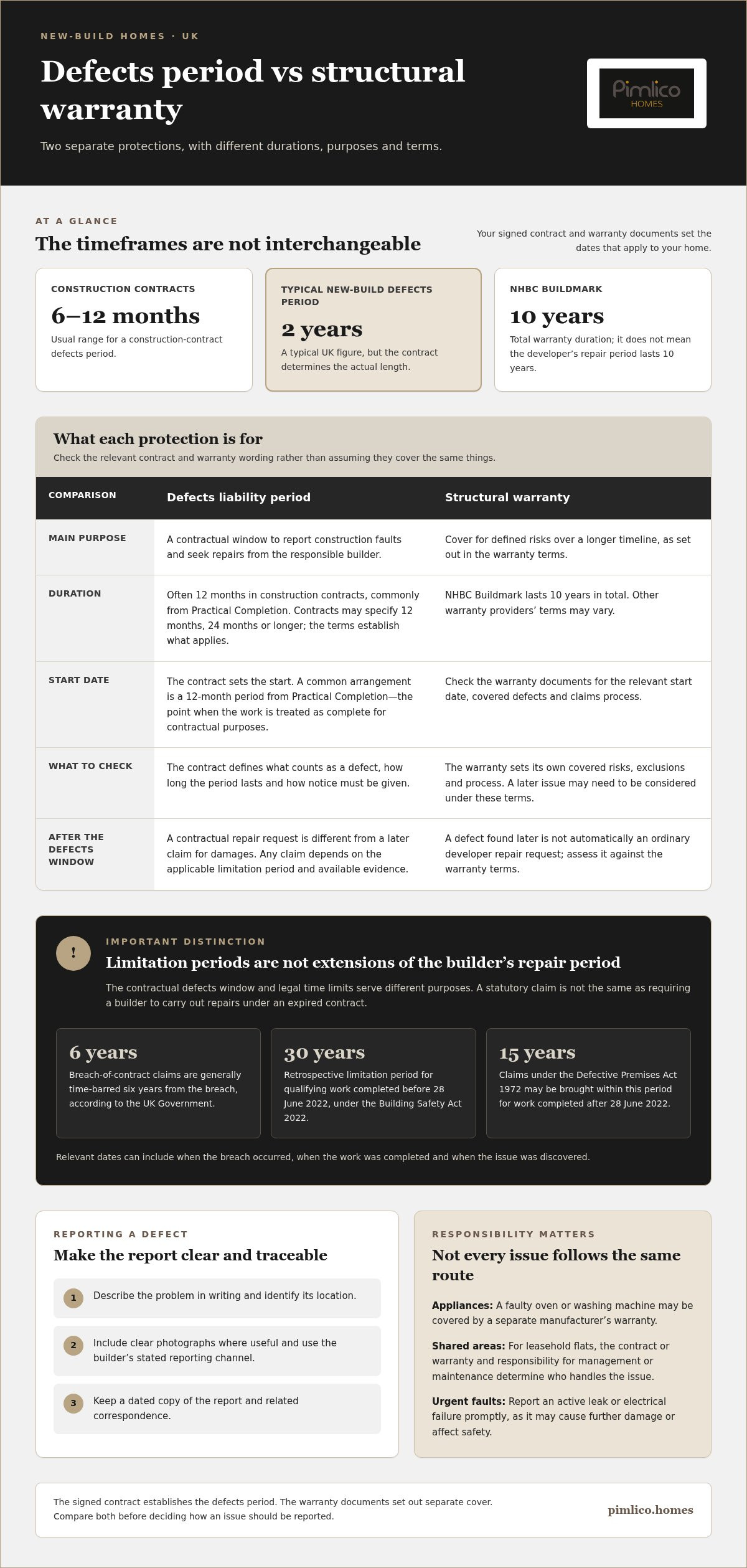
Typical defect liability period and warranty timeline
A new-build defect period and a structural warranty offer separate protections, with different durations and purposes. The contract and warranty documents set the relevant dates.
Typical Duration and Start of the Defects Period
For a UK new-build home, the defect liability period is typically two years, but the contract determines its exact length. In construction contracts, six to twelve months is usual, and a 12-month period commonly runs from Practical Completion. This is the point when the work is treated as complete for contractual purposes. Check the relevant completion date and defect-period wording, because an incorrect start date can affect whether a repair request falls within the period.
Contracts may set a 12-month period, 24 months or longer. The new build defect liability period therefore varies between developers and warranty arrangements; the signed terms establish what applies to that home.
Defects Period and Structural Warranty Timeline
The defects period concerns reporting and rectifying qualifying faults, while structural warranty cover addresses defined risks over a longer timeline. NHBC Buildmark cover lasts 10 years in total, but that does not mean the developer’s repair period lasts 10 years. The warranty and contract describe distinct responsibilities. A defect discovered after the initial period may need to be considered under the warranty’s terms rather than treated as an ordinary repair request.
For a new-build home, the typical defect period is two years, although individual contracts can differ. Warranty providers’ terms also vary, so compare the stated start date, covered defects and claims process rather than assuming every policy works in the same way.
NHBC Buildmark Defects Period
NHBC Buildmark’s total warranty timeline is 10 years. The typical new-home defects period is two years, but the warranty’s full duration should not be mistaken for the developer’s defects window. The relevant documents distinguish the initial repair arrangements from later warranty cover. Read the policy schedule alongside the sale and construction documents to identify the applicable dates.
The defects period usually starts on the date stated in the contract, commonly Practical Completion in construction arrangements, and ends when its specified term expires. Record the start date and use it to organise inspections and repair reports. Missing the contractual window may affect the route for pursuing repairs or a breach-of-contract claim.
Defects liability period purpose and start date
The defects liability period gives the builder a contractual opportunity to inspect reported workmanship issues and arrange rectification. It also gives the homeowner a defined window to identify problems after moving in. For example, record a door that will not close properly, including its location and the date you noticed the issue. The contract sets out which defects are covered and how notice must be given.
The start date matters as much as the duration. In UK construction contracts, a common arrangement is 12 months from Practical Completion, although contracts may set 24 months or longer. Practical Completion marks the contractual milestone for the completed work, not necessarily the day furniture arrives. Read the contract’s definition and confirm the recorded date, as that determines the period’s end.
Use the period to document faults methodically. Photograph each issue, note when it appeared and describe its effect on the home. For example, dated photographs and details of the affected room can help clarify a window that admits water during rain. Keep copies of reports and responses. This record supports the builder’s inspection and helps distinguish a workmanship failure from damage that occurred after occupation.
Some defects become visible as a new home dries and settles. Moisture levels can take around 12-18 months to balance, and cracks generally wider than 2mm are a defect category typically covered during the period. Smaller hairline cracks may arise through shrinkage, so record changes rather than relying on a single observation. An extended contractual period can give more time to report issues, but it does not automatically change the warranty’s separate terms. To consider how design and workmanship shape a new home, explore a carefully considered new-build home.
Pimlico Homes: Luxury Detached Homes
Pimlico Homes offers Luxury Detached Homes for buyers seeking a considered new-build purchase. Understanding the defects period before committing can help you approach the contract, completion details and warranty documents with greater clarity. The same preparation applies when considering Executive Courtyard Homes, Bespoke Luxury Homes or Luxury Barn Conversions.
Reviewing the contractual repair period alongside the warranty helps set clear expectations about reporting faults after handover. It also gives you a more informed basis for discussing the home, its design and the documents that accompany the purchase. To explore a home that reflects your priorities, visit pimlico.homes.
Move forward with confidence
Understanding the new-build defect liability period in the UK can shape more than your response to a repair issue. It can also help you approach your next home purchase with sharper questions about workmanship, documentation and the care expected after handover. That clarity is valuable when choosing a home designed with attention to detail.
Pimlico Homes offers Luxury Detached Homes, Executive Courtyard Homes and Bespoke Luxury Homes, each providing a distinct setting for the life you intend to build. If you are beginning to explore your options, take the next step at a pace that feels right for you.
Contact Pimlico Homes today to discuss the homes available and find a direction that feels right for your future.
Frequently Asked Questions
What happens if the contractor fails to make good defects?
If the contractor does not rectify notified defects within a reasonable time after being given the opportunity, remedial work can be arranged by others. In construction contracts, the cost may be deducted from the contractor’s retention. Keep the defect notice, inspection notes and responses together, so the record shows what was reported, what access was offered and how the contractor responded.
When will defects be fixed?
Repair timing depends on the defect’s urgency, the inspection findings and whether specialist parts are needed. Necessary repairs following the end-of-defects visit are expected to be completed within three months of that visit. Work requiring bespoke components can take longer than straightforward repairs, so keep the agreed scope and any revised schedule in writing. This helps distinguish a delay from an outstanding repair.
What is covered during the builder’s defects liability period?
The period covers defects that the contract makes the builder responsible for rectifying, generally issues attributable to construction or workmanship rather than ordinary use. The building element involved, the cause of failure and the contract wording all matter. For example, describe a fault affecting how a fitted component operates, including its location and effect, then assess it against the contractual repair obligations and any separate warranty terms.
What should I do if the builder fails to fix defects within the period?
Send a written follow-up identifying the original report, the unresolved fault and the remedy requested. Keep dated photographs, inspection records and correspondence, and provide a reasonable opportunity for the contractor to carry out the work. If rectification still does not happen, the contract and evidence will shape the next remedy. In construction arrangements, others can be engaged and costs may be deducted from retention.
What are my legal rights for new-build defects after the liability period ends?
After the contractual repair period, a claim for damages may still be available for breach of contract or negligence, subject to the applicable limitation period. According to the UK Government, breach-of-contract claims are generally time-barred six years from the breach. The Building Safety Act 2022 extends the limitation period to 30 years for claims concerning work completed before 28 June 2022. The claim type and relevant dates determine the route.