
Privacy needn’t mean enclosing the garden. The right approach to privacy landscaping for luxury new builds depends on how much of the garden needs screening and the atmosphere you want to create.
An overlooked garden can feel exposed, but a solid barrier may block light and make an elegant outdoor space feel confined. This guide explains how planters, raised beds and layered planting can create privacy with a lighter touch, and what affects the overall cost. You’ll also see how focused screening compares with a more comprehensive redesign, so you can decide where to invest.
Key Takeaways
- Use planters and raised beds to create private garden zones while preserving an open feel.
- Match the screening approach to the sightline: overhead views may call for a different solution than views across a boundary.
- Layer trees, shrubs and ground cover to build a more natural screen with varied height, texture and seasonal interest.
- Compare the cost of individual features with a full redesign, factoring in planting, installation and the condition of the garden.
1. Garden zoning with planters and raised beds
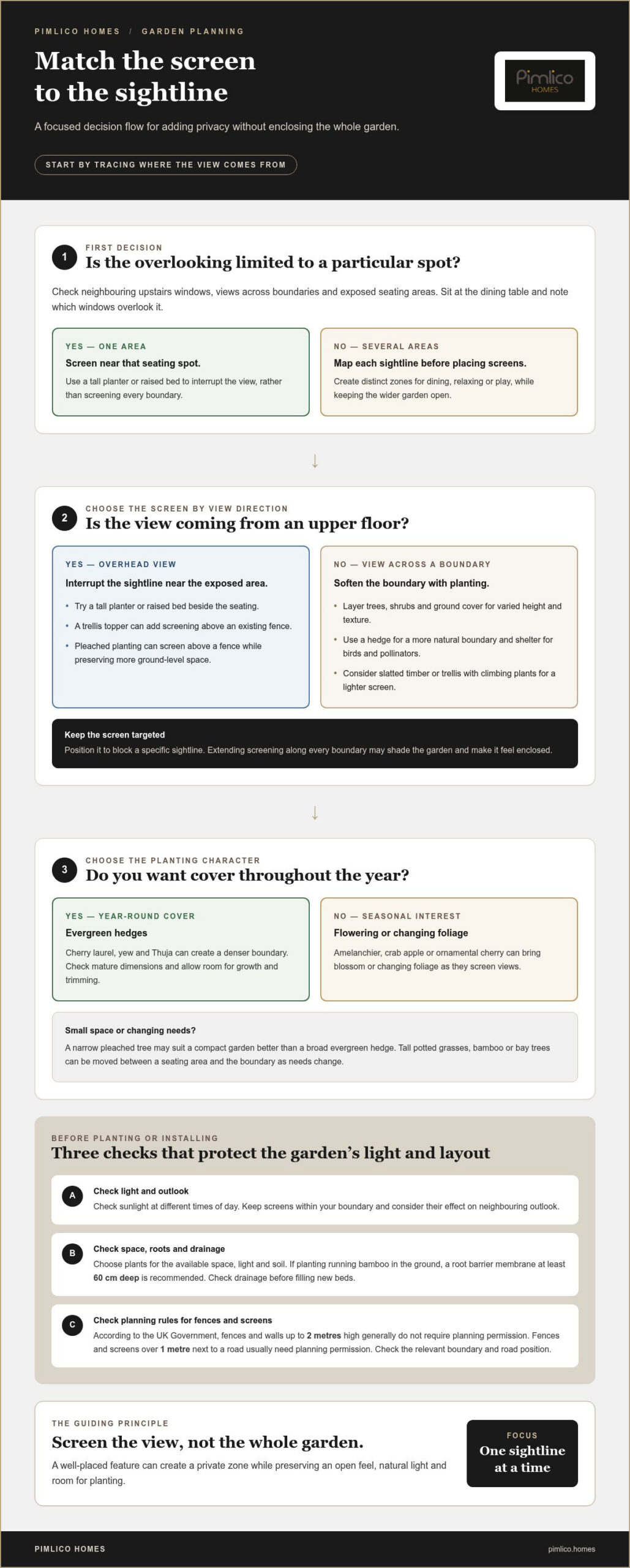
Start by mapping where overlooking occurs: note neighbouring upstairs windows, views across boundaries and exposed seating areas. Then place tall planters or raised beds near the spots that need privacy, rather than enclosing the whole garden. Bamboo screens can add height, while movable pots keep the space adaptable. This approach creates distinct zones for dining, relaxing or play without making the garden feel boxed in.
Screening can reduce overlooking, but poorly placed or oversized features may block light, cause neighbour disputes or damage nearby paving as roots grow. Keep screens within your boundary, consider how their height affects neighbouring outlook, and choose planting suited to the available space. Running bamboo can spread; a root barrier membrane at least 60cm deep is recommended when planting it in the ground.
Check sightlines from the house and garden before adding panels or plants. Sit at the dining table and note which windows overlook the seating area. Place screening near that spot to interrupt views from upper floors without shading the entire lawn. Check sunlight at different times of day: a screen that protects a south-facing terrace may also shade a smaller planting bed.
Boxy new-build gardens benefit from softer outlines. Set curved raised beds against straight fences, or stagger planters to create a gentle route towards a seating area. Slatted timber panels offer a lighter screen than a solid barrier, while trellis can support climbing jasmine, clematis or sweet peas. Repeat a plant or material across different zones to bring the design together.
Make space for wildlife in the design. Hedges shelter birds and pollinators, while layered planting beside a raised bed can provide cover and flowers. A hedge also softens a boundary more naturally than a bare screen. Choose plants suited to the garden’s light and soil, rather than relying on dense evergreen cover everywhere.
Check drainage before filling new beds. Dig a test hole and fill it with water; reasonably free-draining soil should clear within a few hours. If water remains for days, improve drainage or choose plants that tolerate wet conditions. This simple check helps planters and screening establish successfully in a newly built garden.
2. How much does it cost to get privacy in an overlooked garden?
Cost depends on the view being screened and the planting you choose. These options vary in scale, maturity and the space they occupy.
For seasonal interest, consider Amelanchier, crab apple or ornamental cherry. Changing foliage or blossom adds character as these trees screen neighbouring views. For year-round cover, evergreen hedges such as cherry laurel, yew and Thuja create a denser boundary. Pleached hornbeam, photinia or lime can screen above a fence while preserving more ground-level space. Their open canopies can also let in light.
Planting distance depends on the tree’s mature spread, root behaviour, nearby buildings and access for maintenance. Set trees and hedges far enough from boundaries and structures to accommodate growth and trimming. Check the mature dimensions before choosing a variety; a compact garden may suit a narrow pleached tree better than a broad evergreen hedge.
Planning rules also shape the design. According to the UK Government, fences and walls up to 2 metres high generally do not require planning permission. According to the UK Government, fences and screens over 1 m next to a road usually need planning permission. Check the relevant boundary and road position before deciding on fencing height.
Instant screening can provide privacy sooner, while smaller trees take time to establish. A trellis topper can add screening above an existing fence without making the garden feel enclosed. Position it to block a specific sightline rather than extending it along every boundary. This helps preserve light and keep the space visually open.
In a new build, consider neighbouring sightlines and planting positions during the garden design. Matching tree choice to the available space, seasonal interest and desired level of screening helps create a considered outdoor setting.
3. Layered planting with trees, shrubs and ground cover
Layered planting screens views without creating one solid barrier. Place taller evergreen trees or shrubs behind mid-level shrubs and perennials, then add ground cover or ornamental grasses at the front. This graduated structure gives a narrow garden visual depth. Beech and hornbeam can retain rusty-coloured leaves through winter, adding texture after other plants have shed theirs. Effective privacy landscaping for luxury new builds considers how each layer frames views from the house.
For seasonal interest, combine small trees with flowering shrubs and perennials. Hydrangeas, hebes and lavender bring colour and fragrance around crab apple or ornamental cherry. In tighter spaces, Parrotia persica ‘Vanessa’ has a narrow, upright form. Choose plants for their mature shape and growing conditions, so foliage does not overwhelm paths or windows as it develops.
Mobile planting offers flexibility while permanent beds establish. Tall potted grasses, bamboo or bay trees can move between a seating area and the boundary as needs change. Position pots to interrupt a particular sightline instead of lining every edge. Fargesia bamboo suits a large pot, offering leafy screening without planting running bamboo directly in the ground.
A pergola can support climbers and add a softer vertical feature to an outdoor space. Train wisteria across its structure, or use a trellis for climbing plants. Pair overhead foliage with shrubs below, while keeping routes around the seating area clear. This layered approach to privacy landscaping for luxury new builds balances screening with openness.
Plan maintenance alongside planting. Garden hedges typically need trimming twice a year, in late spring and late summer. Apply mulch around plants annually to suppress weeds and retain moisture. Grouping plants with similar needs simplifies care, and leaving access for pruning helps prevent dense shrubs from becoming difficult to manage.
4. Privacy landscaping costs
Privacy landscaping costs vary with the area screened, planting maturity and installation work. These smaller additions can suit a single seating area or section of boundary, rather than a complete garden redesign.
The difference reflects the structure and installation involved. A pergola can support climbing foliage and define an outdoor seating area, while a trellis provides a simpler framework for climbers.
A broader scheme may combine planting, structures and changes to the layout. Cost depends on the area involved, ground preparation, access, chosen materials and plant maturity. A difficult site or extensive groundwork adds complexity.
To plan your investment, start with the overlooked sightline. Measure the boundary area that needs cover, then decide whether a trellis, shrubs or pergola will address it. If a focused feature provides enough screening, a full redesign may not be necessary. Where several views overlap, a coordinated scheme can bring planting height, foliage and structures together across the garden.
Plant choice also shapes future maintenance. Bare-root hedging planted in winter is a more budget-friendly option than instant hedging panels, but takes time to establish. Weigh the initial cost against the desired speed of cover and ongoing care. Tall grasses or shrubs can soften a screen, while a pergola creates a defined architectural feature.
The clearest takeaway: price the solution against the precise view, not the whole boundary by default. For a new home design that gives privacy planting a considered place, discuss your new-build vision.
Pimlico Homes: Luxury Detached Homes
Pimlico Homes creates luxury detached homes for buyers considering how their home and garden will work together. If privacy is central to your plans, think early about views from neighbouring windows, where outdoor seating will sit and how planting could shape the space over time. These considerations can help you decide whether a detached home, executive courtyard home or bespoke luxury home best suits your priorities.
For a home with distinctive character, a luxury barn conversion offers another setting to consider. Each option gives you a different context for your plans, from a more open garden to a sheltered courtyard. The landscaping ideas in this guide can help clarify what matters most as you explore your next home.
To discuss your home plans, contact Pimlico Homes or visit pimlico.homes.
Shape a home and garden that belong together
A rewarding next step is to consider the garden alongside how you want to live in your home. Privacy landscaping for luxury new builds works best when sightlines, outdoor routines and the character of the architecture inform one another from the outset. Think about where you’ll sit with guests, which rooms look onto the garden and how planting may mature around those views.
That broader perspective can guide decisions beyond screening. A sheltered courtyard may call for a different sense of enclosure from a more expansive garden, while paths and terraces can influence how private each space feels. Treat the garden as part of the home’s design, not an afterthought, and your choices can feel more coherent over time.
For a home shaped around your priorities, discuss your garden with Pimlico Homes. A clear vision is a fine place to begin.
Frequently Asked Questions
How much does it cost to get privacy in an overlooked garden?
There is no single total: costs depend on how much of the garden needs screening and the scope of the design. A focused feature differs from a scheme involving mature planting, structures and ground preparation. Before setting a budget, map exposed views and note access for materials, existing paving, soil condition and how quickly you need cover. These details help identify where investment will have the greatest effect.
Why does privacy matter in new build gardens?
Privacy makes outdoor areas more comfortable for dining, relaxing or spending time with family. In a new build, neighbouring windows and open boundaries can leave a terrace feeling exposed. Consider how rooms look onto the garden, too: a carefully placed screen can create a more intimate outlook indoors as well as out. Privacy should support everyday use without sacrificing daylight or the garden’s sense of openness.
What are the best privacy landscaping ideas for luxury new builds in the UK?
The most effective choice responds to the specific view. For an overlooked dining terrace, combine a screen or trellis with climbers; for a broader boundary, use layered planting or a hedge. A pergola can define a seating area, while movable pots provide adaptable screening. Choose a solution suited to the garden’s exposure, soil and desired style, rather than screening every edge uniformly.
How can trees, hedges and screening plants provide year-round privacy?
Evergreen foliage provides cover through winter, while deciduous trees add seasonal change and can let in more light after their leaves fall. Combine both types at different heights instead of relying on a single line of planting. Holly, yew and Thuja are evergreen examples; beech and hornbeam can retain some leaves through winter. Consider how each plant’s form and maintenance needs will work together as the garden develops.
Which fast-growing evergreen trees and hedges suit UK gardens, and how tall do they grow?
Cherry laurel, yew and Thuja are evergreen screening options, as is holly. Growth rate and mature height depend on the variety, growing conditions and pruning, so choose based on stated mature dimensions rather than the plant’s size at purchase. Pleached trees can screen above a fence where ground-level space is limited, without forming a continuous solid canopy.
What are the UK rules on garden fences, walls, hedges and permitted heights?
According to the UK Government, fences and walls up to 2 metres high generally do not require planning permission; fences and screens over 1 m next to a road usually need it. A high-hedge complaint can concern a hedge over 2 metres tall, formed from two or more trees or shrubs. These are distinct considerations: fence rules concern structures, while the high-hedge process concerns qualifying hedges.





