
A period home can carry higher ongoing maintenance costs than a luxury new build. That difference can shape the cost of ownership long after purchase.
Character, craftsmanship and a sense of permanence make older homes compelling. Lower early maintenance needs and potentially more efficient heating can make a new build easier to budget for. The right choice depends on more than the asking price. This comparison looks at repairs, energy use, running costs and potential resale value, helping you weigh the numbers against the home you want to live in.
Key Takeaways
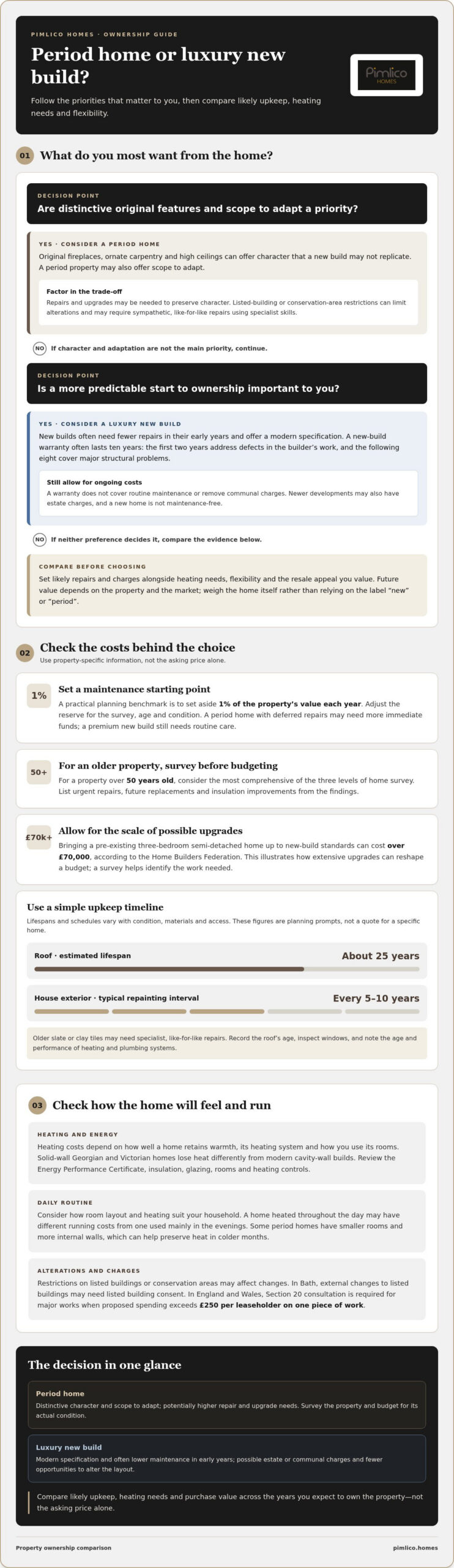
- Compare the likely upkeep, heating needs and purchase value across the years you expect to own the property, rather than relying on the asking price alone.
- Use a survey to identify a period home’s repair priorities, then factor those works into your budget and offer.
- Assess how insulation, glazing and heating affect comfort and energy use, while considering the character you want to preserve.
- Choose a period property for its distinctive features and scope to adapt, or a luxury new build for a more predictable start to ownership.
Is a period home or new-build better value?
New builds may need fewer repairs in their early years, while older properties can require investment to preserve their character. Compare purchase costs, upkeep and potential resale value together.
Listed-building status and conservation-area restrictions can limit alterations and require sympathetic, like-for-like repairs, which may involve specialist skills. In Bath, external changes to listed buildings may need listed building consent. For major works in England and Wales, according to UK Legislation, Section 20 of the Landlord and Tenant Act 1985 requires leaseholder consultation when proposed spending exceeds £250 per leaseholder on one piece of work.
Period-home costs and upgrades
A Victorian or Georgian period home may need repairs that a newer property avoids in its early years, from updating services to improving insulation. According to the Home Builders Federation, bringing a pre-existing three-bedroom semi-detached home up to new-build standards can cost over £70,000. That figure illustrates how extensive upgrades can reshape the budget; a survey helps buyers identify works and factor them into an offer.
Character, resale appeal and appreciation
Original fireplaces, ornate carpentry and high ceilings give older properties a distinct appeal that a new build may not replicate. Well-preserved character can attract buyers, particularly in desirable locations, although future value depends on the property and market. New builds may offer fewer opportunities to extend or alter the layout, so weigh flexibility against the convenience of a modern home.
New-build warranties often cover ten years, with the first two years addressing defects in the builder’s work and the following eight covering major structural problems. This can help with defined defects, but it does not cover routine maintenance or remove communal charges.
| Option | Upkeep | Character and value |
|---|---|---|
| Period home | Potentially higher repair and upgrade needs | Distinctive features and scope to adapt |
| Luxury new build | Often lower maintenance in early years, with possible estate charges | Modern specification, with fewer alteration opportunities |
Choose by comparing likely repairs and charges with the character, flexibility and resale appeal you value most.
Luxury New Build vs Period Property: Which is Right For You?
Buying well means budgeting beyond the purchase price. A survey and a planned maintenance reserve can help you understand how each property may affect ongoing costs.
Ongoing maintenance budgeting
A practical starting point is to set aside 1% of the property’s value each year for maintenance. Treat this as a planning benchmark, then adjust the reserve to reflect the survey, age and condition of the home. A period property with deferred repairs may need more immediate funds, while a premium new build may still require routine care and upkeep.
For a property over 50 years old, consider the most comprehensive of the three levels of home survey. Before buying, use the findings to list urgent repairs, future replacements and insulation improvements. This makes the budget specific to the building, rather than relying on a single figure for every older property.
Roof, window and system upkeep
There is no single maintenance cost for a UK roof, windows, heating system or plumbing. The bill depends on condition, materials, access and whether a repair or replacement is needed. A roof’s estimated lifespan is about 25 years; a house exterior typically needs painting every 5 to 10 years. Older slate or clay tiles may also need specialist, like-for-like repairs.
Build a property-specific schedule: record the roof’s age, inspect the windows, and note the age and performance of the heating and plumbing systems. In period homes, sash-window cords, glazing and draught-proofing can all affect upkeep. In newer developments, separate routine maintenance from work covered by a warranty.
Separate predictable tasks from larger potential repairs, then review the reserve each year. Buyers considering a new home can explore thoughtful new-home design alongside the maintenance implications of an older property.
Heating costs in older homes
Heating costs depend on how well a home retains warmth, its heating system and how you use its rooms. Some period properties have smaller rooms and more internal walls, which can help preserve heat in colder months. A Victorian terrace may also have a downstairs bathroom, affecting the layout and how the home is heated. Consider the maintenance costs of period homes vs luxury new builds alongside these everyday differences.
Solid-wall Georgian and Victorian homes lose heat differently from modern cavity-wall builds, so heating demand can vary even between homes of similar size. Review the Energy Performance Certificate and consider how the rooms, windows and heating controls suit your household’s routine. A home heated throughout the day may have different running costs from one used mainly in the evenings.
Luxury new builds generally need less maintenance in their early years, but no home is maintenance-free. Snags in finishes or fittings may need attention after you move in. Record each issue clearly, note where it occurs and report it promptly through the appropriate process. A written record helps track follow-up and can prevent a small fault becoming a more disruptive repair.
There is no single annual maintenance figure for every luxury new build. Costs depend on the home’s condition, materials, routine care and whether it has shared areas with related charges. For a period property, age and the condition of individual components shape the likely repair workload. Compare these factors rather than relying on the label “new” or “period”.
The maintenance costs of period homes vs luxury new builds are easier to compare when you assess likely upkeep alongside heating needs. Review the survey, energy information and the features you will use every day. This gives you a clearer basis for weighing ongoing ownership demands against your priorities.
Maintenance costs of period homes
These totals show the scale of long-term upkeep, while annual spending depends on condition, materials and which repairs fall due.
External elements account for almost two-thirds of period-home maintenance costs. Roofs, masonry and windows deserve close attention: sash windows may need reglazing, replacement cords and draught-proofing, while older slate or clay tiles can require specialist repairs.
Inside, older homes may need rewiring, re-plumbing, boiler replacement or kitchen work. The urgency and scope vary, so use a survey to distinguish immediate structural concerns from planned improvements. Solid walls need to breathe, and incorrectly applied modern damp-proofing can cause more harm than good.
Energy efficiency adds another layer to the budget. Secondary glazing, loft insulation and draught-proofing can make rooms warmer, but the right approach depends on the building’s fabric and any restrictions. Include installation and future upkeep when comparing energy improvements with routine repairs. Heating costs also depend on how effectively the home retains warmth.
Before making an offer, use the survey to identify defects, likely repairs and the condition of original features. Prioritise work that protects the structure, such as fixing a leak, before cosmetic restoration. This gives you a clearer view of costs alongside mortgage payments, rather than treating character features as maintenance-free.
For a distinctive home, careful stewardship is part of preserving its appeal. Explore a considered approach to home design as you weigh period details against the upkeep they may require.
Pimlico Homes: Luxury Detached Homes
Pimlico Homes develops luxury detached homes for buyers who value contemporary design and a considered approach to homeownership. Its executive courtyard homes and bespoke luxury homes offer further options for those weighing the individuality of a period property against the practical appeal of a new build.
These homes may suit buyers who prioritise modern living and want to focus on layout, design and the character of the development, rather than taking on an older property’s inherited repair needs. Luxury barn conversions offer a different balance, bringing distinctive architectural character into the choice. The right fit depends on your priorities for style, upkeep and the atmosphere you want at home.
To explore the homes available for your next move, visit pimlico.homes.
Choose the home that fits your next chapter
Choosing between period homes and luxury new builds is also a choice about the home you want to shape your daily life. Consider which compromises feel worthwhile: preserving historic character and taking on its upkeep, or choosing contemporary design and a different pattern of ownership costs. The right balance is personal, shaped by how you plan to live and what you want your investment to mean over time.
Pimlico Homes develops luxury detached homes, executive courtyard homes and bespoke luxury homes for buyers drawn to refined design and a considered new-build setting. If that aligns with your priorities, discuss your options with Pimlico Homes.
Contact Pimlico Homes to discuss your options, and move towards a home that feels right for the life you want to create.
Frequently Asked Questions
Are Period Properties More Expensive to Maintain?
Yes, period properties generally involve higher maintenance spending than newer homes, particularly when several repairs coincide. The age and condition of individual elements matter more than the architectural label: a well-kept older house may need less immediate work than one with neglected services. Before buying, use a survey to separate essential repairs from optional improvements, then plan for each.
How do repair and maintenance costs compare by property age and size in the UK?
Repair costs reflect a home’s condition, age, size and materials, rather than age alone. A larger property can involve more roof area, windows and plumbing to maintain, while an older house may have ageing systems or specialist finishes. Compare survey findings room by room and record which elements need attention first. This creates a more useful budget than applying one general figure to every home.
What are the most common costly repairs in period homes, and what do they cost?
Roof repairs, rewiring, re-plumbing, boiler replacement and restoration of original features can all become substantial projects. Costs depend on the scope of work, access, materials and specialist skills required. For example, repairing traditional slate tiles or restoring cornicing involves different trades and processes from replacing a standard fitting. Ask the survey to identify the defect, its urgency and the work needed to address it.
How do energy efficiency and heating costs compare between period homes and luxury new builds?
Period homes often need more attention to heat retention, while newer homes are generally built to current energy performance standards. To compare actual running costs, review each property’s Energy Performance Certificate and ask for recent energy-use information where available. Room size, occupancy and heating habits also influence bills, so consider how the home will be used, not only its construction age.
What surveys and inspections help estimate maintenance costs when buying a period home or new build?
For a period home, an independent survey can highlight defects, repair priorities and features needing specialist care. For a new build, a snagging inspection can identify workmanship issues such as sticking doors, uneven finishes or faulty fittings. Keep the findings in writing and group them by urgency, likely trade, and whether they concern the structure, services or finishes. This makes follow-up and budgeting more organised.
How much does it cost to maintain a roof, windows, heating system and plumbing in a UK home?
There is no single cost: it depends on condition, materials, access, and whether repairs or replacement are needed. A general maintenance-planning benchmark is 1% of the property’s value each year; a roof’s estimated lifespan is about 25 years.





