
Permanence and prestige. The most expensive mistake you can make in a luxury home isn’t choosing the wrong marble; it’s inadvertently choosing the wrong decade. It’s understandable to feel a sense of exhaustion amongst the relentless cycle of digital trends that demand your attention. You likely crave a residence that feels established and soulful. However, the fear that a modern structure lacks the inherent character of a heritage estate is a common concern. We believe that achieving a timeless look in a new property shouldn’t be an impossible task or a compromise on modern comfort.
Artistry and architectural integrity. This guide explores how to transcend the ephemeral to create a home that retains its appeal for generations. We will examine the art of selecting high-specification materials and the vital importance of honouring symmetry. Meticulous craftsmanship provides the ultimate canvas for a life well-lived. You’ll gain the confidence to choose finishes that don’t just look beautiful today, but promise a legacy of excellence. Discover how to cultivate an environment of enduring sophistication that reflects your personal success and ensures your investment remains relevant for decades to come.
Key Takeaways
- Master the foundational principles of symmetry and proportion to establish a sense of grandeur and permanence from the very first blueprint.
- Recognise why natural stone, timber, and brass form the essential hierarchy of materials for those seeking longevity over fleeting fads.
- Apply the strategic 80/20 rule for interior palettes to ensure your home feels sophisticated and personal without succumbing to clinical minimalism.
- Understand that achieving a timeless look in a new property begins with the choice of developer, as architectural integrity is engineered into the structure.
- Identify common trend traps to avoid expensive mistakes in hard finishes that can rapidly date a luxury residence.
Understanding Timeless Design: Beyond the Trend Cycle
True timelessness isn’t the absence of style. It’s the presence of an aesthetic that remains relevant and attractive regardless of the passing era. In an age of digital acceleration, achieving a timeless look in a new property requires a deliberate step back from the noise of social media feeds. These platforms often champion micro-trends that lead to rapid aesthetic obsolescence. What feels avant-garde today can look remarkably dated in just thirty-six months, leaving homeowners with the emotional and financial burden of a space that no longer resonates with the present.
There is a deep-seated psychology to permanence. Surroundings that feel grounded and enduring foster a sense of security and prestige. This emotional weight is a significant part of any significant life investment. For the discerning owner, a home should be a sanctuary that reflects personal success through stability rather than fleeting fashion. Luxury new builds, particularly bespoke luxury homes, provide the ultimate blank canvas for this vision. They allow for the integration of high-specification hard finishes from the initial blueprint, ensuring the soul of the building is built-in rather than bolted on later.
The Difference Between Classic and Dated
Analysing why certain 20th-century designs remain modern whilst others feel archaic reveals a simple truth. The answer lies in functionality. If a design works perfectly and feels natural to the human hand, it rarely goes out of style. Identifying a passing fad involves looking for features that prioritise visual shock over tactile quality. A future classic in interior hardware, like a solid brass lever handle or a well-proportioned timber frame, relies on the quiet confidence of its utility. It doesn’t scream for attention; it simply performs its role with grace.
The Value of Aesthetic Longevity
Choosing enduring design is a sophisticated financial strategy. There’s a direct correlation between aesthetic longevity and the long-term resale value of a property. By avoiding the cycle of trend-driven renovations, you significantly reduce the cost of ownership over decades. A home that avoids the dated trap remains a liquid asset and a source of constant pride for its inhabitants. When considering your investment, remember that achieving a timeless look in a new property is as much about financial wisdom as it is about artistry. Timeless design is a deliberate balance of proportion, light, and authentic materials.
The Architectural Foundation: Symmetry and Proportion
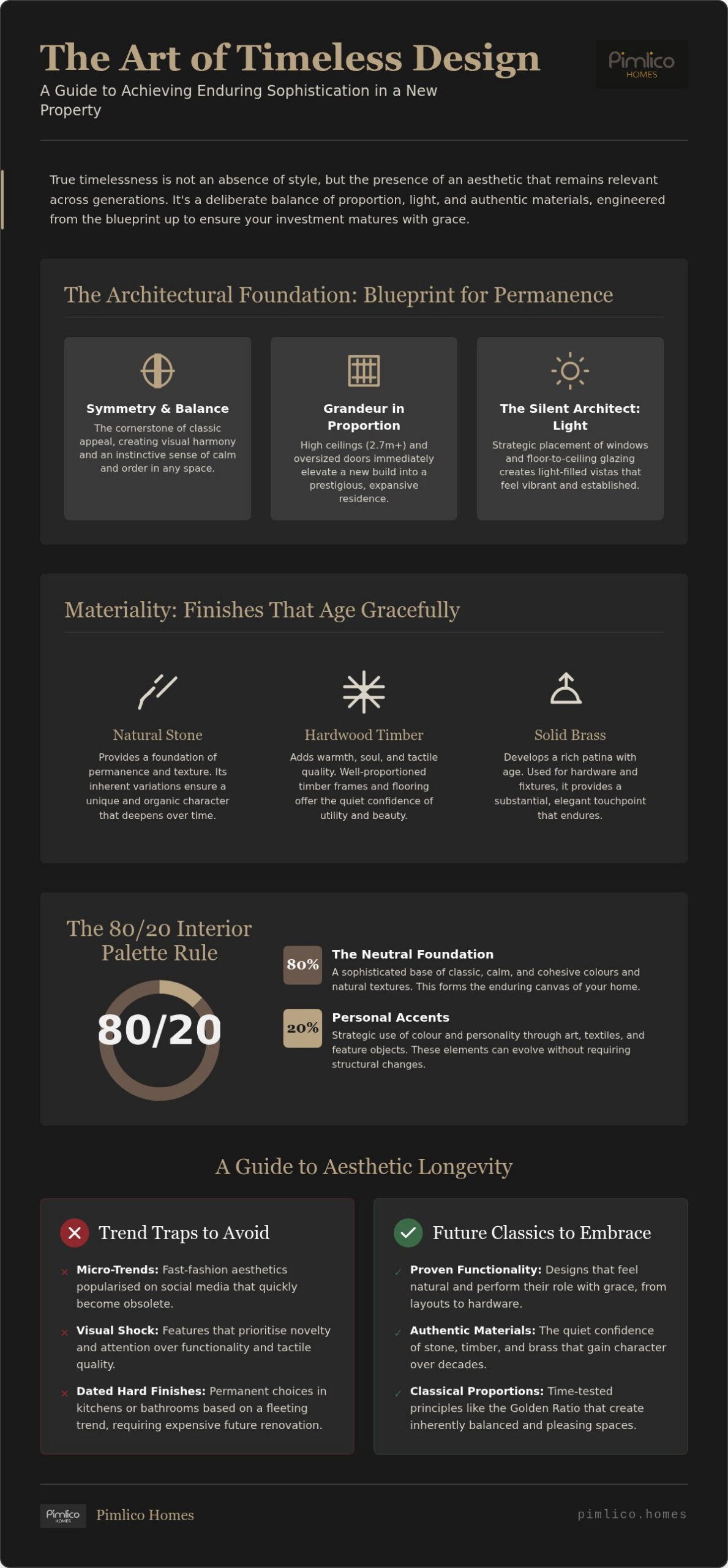
Architecture forms the skeletal integrity of a residence. Whilst paint and fabrics can be swapped with the seasons, the physical dimensions of a room are permanent. Symmetry stands as the cornerstone of classic appeal in luxury detached homes. It creates a visual balance that the human eye instinctively recognises as harmonious. This isn’t merely about matching windows on a facade; it’s about the internal alignment of doorways, fireplaces, and light sources to create a sense of calm and order.
Grandeur is often found in the vertical plane. High ceiling heights, typically 2.7 metres or more, paired with oversized door proportions, immediately elevate a new build from a standard dwelling to a prestigious estate. Integrating features like deep skirting and ornate cornicing in a modern way provides the “soul” that new properties often lack. These aren’t just decorative flourishes. They’re architectural markers of quality that define the space and provide a sense of history from the moment you move in.
Natural light acts as a silent architect. The strategic placement of windows influences the enduring feel of a room more than any artificial source. To ensure your property remains timeless, consider the following light-driven principles:
- Prioritise symmetrical window placement to maintain external and internal balance.
- Utilise floor-to-ceiling glazing in transitional spaces to blur the line between interior and garden.
- Align apertures with internal doorways to create long, light-filled vistas through the home.
This approach is particularly vital in bespoke luxury homes where the orientation of the building can be tailored to capture the shifting path of the sun, ensuring every room feels vibrant and established.
Proportion and the Golden Ratio
Classical principles like the Golden Ratio remain as relevant today as they were in the Renaissance. When applied to executive courtyard homes, these ratios ensure that even smaller spaces feel expansive and balanced. A common mistake is using undersized, clinical features to save space. In reality, over-scaled elements like wide architraves and generous foyer widths age far better. They suggest a level of permanence and deliberate design that outlasts any minimalist trend.
Permanent Fixtures with Pedigree
Certain elements of a home act as “architectural furniture.” The staircase, for instance, is the most significant structural statement in a luxury new build. It should be treated as a sculptural centrepiece rather than a mere utility. Similarly, selecting fireplaces and mantels that reflect the building’s heritage ensures the interior feels grounded. Bespoke joinery and built-in cabinetry offer a level of tailored refinement that freestanding units can’t match. Achieving a timeless look in a new property relies on these high-specification hard finishes being integrated from the very start, creating a home that feels complete before the first piece of furniture arrives.
Materiality: Choosing Finishes That Age Gracefully
Authenticity in every touch. The materials you select for your home’s hard finishes are the most significant indicators of its enduring quality. In the pursuit of achieving a timeless look in a new property, we often speak of the “holy trinity” of longevity: natural stone, timber, and brass. These elements don’t merely sit in a space; they interact with it, absorbing light and warmth in a way that synthetic imitations simply cannot replicate. Faux materials, whilst often marketed for their durability, almost always date a property within a decade because they lack the depth and nuance of the real thing.
Materiality is also about the passage of time. We encourage the embrace of “patina”, the beautiful way natural materials age through use. A kitchen island of honed marble or a solid brass door handle will develop a unique character over years of touch. This isn’t wear and tear; it’s the signature of a life well-lived within the walls. By balancing modern high-specification technology with these traditional, tactile finishes, you create a residence that feels both cutting-edge and deeply established.
Stone and Masonry
Classical elegance underfoot. For entrance halls and high-traffic boot rooms, natural stone flooring remains the gold standard. Selecting limestone, marble, or granite ensures the space won’t feel like a relic of the 2020s. In the luxury market, neutral, honed finishes are increasingly preferred over high-gloss, polished surfaces. Honing provides a soft, matte texture that feels contemporary yet ancient, hiding minor scratches whilst offering a sophisticated, understated glow that complements any architectural style.
Timber and Metalwork
Resilient beauty. Hardwood flooring is a cornerstone of achieving a timeless look in a new property, with mid-toned oaks offering the most resilience against shifting interior trends. These tones provide a warm, neutral base that complements both period-inspired and modern furnishings. The inherent variation of natural wood grain adds a soul and warmth that clinical new builds often lack. In metalwork, we see a resurgence of unlacquered brass and blackened steel in bespoke luxury homes. These materials aren’t static; they evolve. A blackened steel balustrade or a brass tap will subtly change its hue, ensuring the home’s aesthetic remains dynamic and authentic for generations.
Curating the Interior Palette: Colour and Light
Visual serenity. A disciplined approach to achieving a timeless look in a new property often relies on the 80/20 rule. This principle dictates that eighty per cent of the home should remain neutral, providing a calm and sophisticated backdrop for the twenty per cent that expresses your personal flair. Avoid the sterile trap of clinical white. Instead, favour complex neutrals with warm, earthy undertones. These shades possess a depth that shifts with the natural light throughout the day, preventing a large room from feeling cold or uninviting.
Heritage colours play a vital role in grounding a contemporary structure. Deep, muted tones like sage green or navy blue can bridge the gap between modern architecture and the surrounding landscape. This is particularly effective in bespoke luxury homes where the interior should feel as though it belongs to the site. By layering these traditional hues into the permanent fabric of the building, you create a residence that feels established from the day the keys are handed over.
Developing a Cohesive Colour Story
Creating a sense of flow amongst expansive open-plan spaces requires a methodical plan. Follow these steps to ensure your palette remains harmonious:
- Step 1: Identify your anchor material. This is usually a permanent hard finish like limestone flooring or handcrafted kitchen cabinetry.
- Step 2: Select a primary neutral that complements the subtle undertones of your anchor.
- Step 3: Introduce transition colours. These are slightly darker or lighter variations of your primary neutral used to define different zones.
- Step 4: Use deep, saturated tones for intimate spaces. Snugs, studies, and powder rooms are the perfect places to experiment with bold character.
The Art of Architectural Lighting
Lighting is the final layer of architectural integrity. Whilst recessed spotlights are necessary for utility, they should be used sparingly. Over-reliance on “grid” lighting can make a luxury property feel like a commercial space. Instead, prioritise decorative pendants and wall sconces. These fixtures add texture and warmth, acting as jewellery for the room. Wall sconces, in particular, are an enduring choice for large detached homes, as they provide a soft, eye-level glow that enhances the tactile quality of the walls.
Effective lighting should also highlight the unique features of your build. Use discreet uplighting to draw the eye towards vaulted ceilings or the intricate texture of bespoke masonry. If you are ready to begin your journey with a developer who understands these nuances, explore our luxury new build homes today. A well-lit home doesn’t just show off the design; it creates an emotional atmosphere that remains inviting for decades.
The Pimlico Perspective: Investing in Architectural Integrity
The journey toward a permanent aesthetic begins long before the first stone is laid. It starts with the vision of the creator. Whilst interior designers can polish a surface, achieving a timeless look in a new property is fundamentally a structural endeavour. It requires a developer who views a house not as a temporary commodity, but as a permanent addition to the landscape. At Pimlico Homes, we engineer longevity into every blueprint. This ensures the proportions, light, and materiality discussed in this guide are physically woven into the residence.
Our philosophy is rooted in the belief that modern executive requirements should never compromise traditional values. We blend high-specification technology with the tactile warmth of master craftsmanship. This creates a home that functions with 21st-century precision whilst retaining the emotional weight of a heritage estate. It’s this balance that defines a residence as truly timeless.
Bespoke Craftsmanship as a Standard
There’s a profound distinction between mass-market new builds and high-specification executive developments. In a Pimlico home, every detail’s a deliberate choice made with a focus on artistry and care. Our bespoke luxury homes are designed to serve as the perfect canvas for your life. This approach is particularly evident in our luxury barn conversions. These structures naturally lend themselves to a refined rustic look that defies the trend cycle. For those exploring rural aesthetics, Modern Barn Conversion Interiors: A Masterclass in Refined Rural Luxury offers deeper insight into this unique architectural form.
A Legacy of Excellence
Security comes from experience. With a 25-year heritage in creating some of the country’s finest residences, we provide a level of reassurance that’s rare in the industry. A Pimlico home is built to be a future heritage property. It’s an investment in a legacy that will retain its value and appeal for decades. Understanding the broader market is essential for any discerning buyer, as detailed in The Ultimate Guide to Buying a Luxury New Build Home in 2026.
Final advice. Maintaining your home’s timelessness requires thoughtful curation over time. Resist the urge to fill every corner immediately. Allow your collection of art and furniture to grow organically, ensuring each piece carries a story. By prioritising architectural integrity from the outset, you ensure that achieving a timeless look in a new property remains an effortless reality for generations to come.
Cultivating Your Architectural Legacy
Artistry and permanence. True sophistication isn’t found in the latest digital trend or a fleeting seasonal palette. It’s built into the very fabric of a residence through disciplined symmetry and the selection of authentic materials that age with grace. By prioritising the “holy trinity” of stone, timber, and brass, you ensure your home remains a sanctuary of quiet confidence. Achieving a timeless look in a new property is a deliberate act of choosing quality over novelty; it’s about creating a space that feels established from the moment you cross the threshold.
Pimlico Homes brings over 25 years of industry experience to every project. We’re specialists in bespoke new builds and premium barn conversions, recognised for an award-winning attention to architectural detail and craftsmanship. We invite you to explore our collection of bespoke luxury homes and executive developments to see how we translate these principles into reality. Your journey toward a residence that reflects your personal success begins with a single, visionary decision. We’re ready to help you build a future that honours the best of tradition.
Frequently Asked Questions
How do I stop my new build from looking too clinical?
To prevent a clinical appearance, you must introduce organic textures and varied materiality. Avoid uniform, stark white surfaces in favour of complex neutrals and natural finishes like timber or stone. Layering your lighting with wall sconces and lamps rather than relying solely on recessed spotlights also adds a soft, inviting glow. These elements break up the clean lines of a new property, providing the warmth and depth often found in heritage homes.
What are the best “timeless” colours for a luxury property?
Timeless palettes favour complex neutrals with warm, earthy undertones and muted heritage shades. Colours like sage green, deep navy, and stone-based greys provide a sophisticated backdrop that remains relevant through changing fashions. These hues possess a depth that interacts beautifully with natural light. Avoid overly bright or neon colours, as these tend to be tied to specific trends and can rapidly date a high-end interior.
Is open-plan living a passing trend or a timeless feature?
Open-plan living has evolved into a permanent fixture of modern luxury, provided it’s executed with architectural zoning. The key to longevity is “broken-plan” design, where different areas are defined by subtle changes in flooring, cabinetry, or lighting. This approach maintains the sense of space and light that modern homeowners crave whilst ensuring the property remains functional and private. It bridges the gap between traditional room structures and contemporary lifestyles.
Should I choose modern or traditional furniture for a new build?
A curated mix of both modern and traditional furniture creates the most enduring aesthetic. Placing an antique sideboard or a classic oil painting within a contemporary structure grounds the property and provides instant soul. Conversely, modern silhouettes offer the comfort and utility required for executive living. This blend ensures your home feels like a personal collection rather than a showroom, preventing the interior from being tethered to a single era.
Which hard finishes add the most value to a new property?
High-specification hard finishes such as natural stone worktops and solid timber flooring provide the greatest long-term value. These materials are highly sought after in the executive market because they’re durable and age gracefully. Unlike synthetic imitations, real marble or oak develops a patina that enhances its beauty over time. Investing in these permanent fixtures during the initial build ensures the property retains its prestige and resale appeal for decades to come.
How can I add “character” to a property that has no history?
Adding character involves integrating architectural markers like deep skirting, ornate cornicing, and bespoke joinery. Achieving a timeless look in a new property relies on these permanent features to provide a sense of history that paint alone cannot replicate. By focusing on the “bones” of the building during the construction phase, you establish a soulful atmosphere that feels established rather than manufactured. These details provide the structural integrity required for a classic aesthetic.
Are smart home features considered timeless or will they date quickly?
Smart home technology remains timeless when it’s integrated into the building’s infrastructure rather than displayed through visible gadgets. Focus on high-quality cabling and invisible systems for climate, security, and lighting control. These foundational elements can be updated as technology evolves without requiring structural changes. Visible hardware and screens date quickly; however, the convenience of a well-integrated, “silent” smart home is a permanent luxury that will always be in demand.
What is the most enduring flooring choice for an executive home?
Mid-toned hardwood oak and natural limestone represent the most enduring flooring choices for executive residences. These materials provide a resilient, neutral foundation that complements shifting interior styles over decades. When achieving a timeless look in a new property, selecting flooring that develops a beautiful patina ensures the home’s aesthetic value increases as the building matures. These choices avoid the clinical feel of porcelain whilst offering a level of permanence that carpets cannot match.


