
What if a design review can shape the character of a luxury development, yet still cannot grant planning permission? That distinction matters when assessing architectural design standards for luxury new builds. Buyers may value a coherent vision for a development while wondering whether a review board could limit individuality or personal preference.
Those concerns are reasonable. A review board’s remit depends on how it is established, and its design assessment is separate from statutory planning decisions and building regulations. Approval by a review board is not a substitute for either. Understanding the limits of its role helps you assess design quality without mistaking it for legal compliance or assurance about construction.
This article explains what review boards may assess, how their role differs from formal approvals, and what their decisions could mean for a development. It also sets out practical questions to ask about design principles, materials, the wider setting and the scope for architectural character. The aim is to help you judge whether a development’s design is coherent and suited to your priorities.
Key Takeaways
- Learn why review boards assess proposals against stated design principles, and why their authority depends on how the review is governed.
- See how architectural design standards for luxury new builds can shape layouts, material choices and the character of shared spaces.
- Distinguish design assessment from planning permission and building control by comparing their purposes, decision-makers and evidence.
- Use a practical checklist to identify who reviews a development, what criteria they use and whether decisions are advisory or binding.
- Weigh the value of design coherence against limits on personal choice, without treating review as a promise of resale performance.
What architectural review boards do in luxury new-builds
An architectural review body assesses design proposals against stated principles or criteria. In a luxury development, that scrutiny can help individual homes, shared spaces and landscaping work together as a coherent whole. The term “review board” does not describe one standard UK institution. Its membership, remit and authority depend on who established it and the documents that govern the development.
A useful review encourages considered choices rather than uniformity for its own sake. A consistent approach to scale, materials and shared spaces can help a development feel composed, while leaving room for distinctive architecture. The design review process broadly describes assessing a design against defined requirements. The precise criteria for a development, however, come from its own brief or governing framework.
What does an architectural review board assess?
Depending on its remit, a board may consider massing and scale, proportions, external materials, landscape design and the relationship between a proposal and its surroundings. It might look at whether a home’s form fits the wider composition, or whether the material palette and detailing support the development’s intended character.
These are possible areas of scrutiny, not universal legal requirements. The reviewer’s authority and criteria depend on the body, its brief and any development-specific design code. Ask to see the relevant documents rather than assuming that every scheme is assessed against the same rules.
Architectural design standards for luxury new builds can support coherence across a development, but their value depends on how clearly they are explained and applied. They are not, on their own, a measure of construction quality.
Are design review boards mandatory for luxury developments?
No single review-board model applies to every UK development. A developer may choose to use design review as part of its own design process. Separately, a planning authority may have design policies or requirements relevant to a proposal. Whether a particular review is required, and what weight it carries, depends on the circumstances and applicable planning framework.
Private estate controls may operate differently. Their effect depends on the arrangements and documents that apply to the development, so establish who administers them and what they cover. Terminology and requirements also vary across the UK nations. Check current guidance for the relevant nation and planning authority.
Most importantly, a design review is not, by itself, planning permission, building-control approval or a workmanship guarantee. Planning and building-control processes have separate purposes and decision-makers. A favourable design assessment does not prove that statutory approvals are in place or that the finished home will meet a particular construction standard.
How architectural design standards shape a luxury new build
A clear design brief turns an initial vision into decisions that can be explained, developed and reviewed. It can guide a project from concept design through later stages, helping the architect, developer and reviewers understand how each home contributes to the wider composition. The brief might set out the intended character, spatial principles, material preferences and the relationship between buildings, landscape and shared spaces.
A design code is a documented set of development-specific design principles that guides how buildings and spaces should be shaped. It can establish a shared framework without requiring every home to look identical. Contemporary forms and traditional references can both sit comfortably within a scheme when their scale, detailing and materials follow a coherent rationale. The aim is considered variety, not repetition for its own sake.
From design principles to a reviewable proposal
Reviewers may use drawings, material schedules and landscape proposals to understand how a design is intended to work. Plans and elevations can show layouts and proportions. Material schedules can clarify the proposed palette, while landscape plans can show how gardens and shared spaces relate to the homes. The documents and review stages vary, so check which apply to the development you are considering.
Architectural design standards for luxury new builds are most useful when expectations are clear enough to guide decisions without erasing individuality. Ask whether the design brief or code is available, how it informs later revisions, and whether it describes guiding principles or fixed requirements.
Which design qualities matter beyond appearance?
Visual appeal is only one part of a home’s design. Consider whether proportions feel balanced, rooms receive useful daylight, and windows and outdoor areas support privacy. Circulation matters too: the route between the entrance, living spaces and bedrooms should feel natural. The connection between indoor and outdoor spaces can also affect how well a home suits everyday life and entertaining.
Give material choices practical scrutiny. Ask how finishes are expected to weather, what maintenance they may require and whether the specification is clear. Durable materials can support a sense of permanence, but appearance alone cannot guarantee longevity or low upkeep.
Keep design review separate from technical assurance. A coherent aesthetic does not establish energy performance or confirm compliance with building requirements. Planning permission and building control have separate purposes and processes. Buyers considering craftsmanship and design principles can also look at Pimlico Homes’ new build homes for context.
Architectural review boards, planning permission and building control: the differences
These processes can consider different aspects of the same proposal, but they are not interchangeable. Design review concerns design quality, whereas statutory processes address separate legal requirements. Architectural design standards for luxury new builds may guide a scheme’s character, but a review panel’s status depends on its governance, remit and terms.
| Process | Purpose | Who is involved? | Typical scope and evidence |
|---|---|---|---|
| Architectural design review | Assess design against stated principles or criteria | A review panel or body named by the process | May consider drawings, materials, layout and landscape proposals; influence depends on its remit |
| Planning permission | Determine whether a development can proceed under the applicable planning framework | The relevant planning authority | Considers the application and supporting plans and documents; requirements vary by proposal and UK nation |
| Building control | Assess applicable technical and regulatory requirements | The relevant building-control body | Considers technical information and evidence required for the building work; the process varies by nation |
What is the difference between design review and planning permission?
A design review may help refine a proposal or inform discussions, but it should not be presented as permission to build. Formal planning decisions are made by the relevant planning authority, not automatically by a design-review panel. A panel’s influence may be advisory, part of a developer’s private process, or connected to a particular planning framework. Check its terms and the planning authority’s decision records for the specific development.
Look for evidence of each process rather than relying on a broad claim that a scheme has been “approved”. Ask who made the decision, what was assessed and whether the record relates to design review or a formal planning decision.
How does building control fit into the process?
Building control addresses applicable technical and regulatory requirements for building work. It is distinct from design review, which may focus on qualities such as form, materials and how a proposal relates to its setting. A favourable design assessment does not certify safety, construction quality or regulatory compliance.
Building regulations and procedures are not identical across the UK nations. For a particular home, check the relevant nation’s current requirements and ask what building-control evidence is available. Keep the questions separate: who assessed the design, who determined the planning application, and what confirms that the applicable building-control process has been followed?
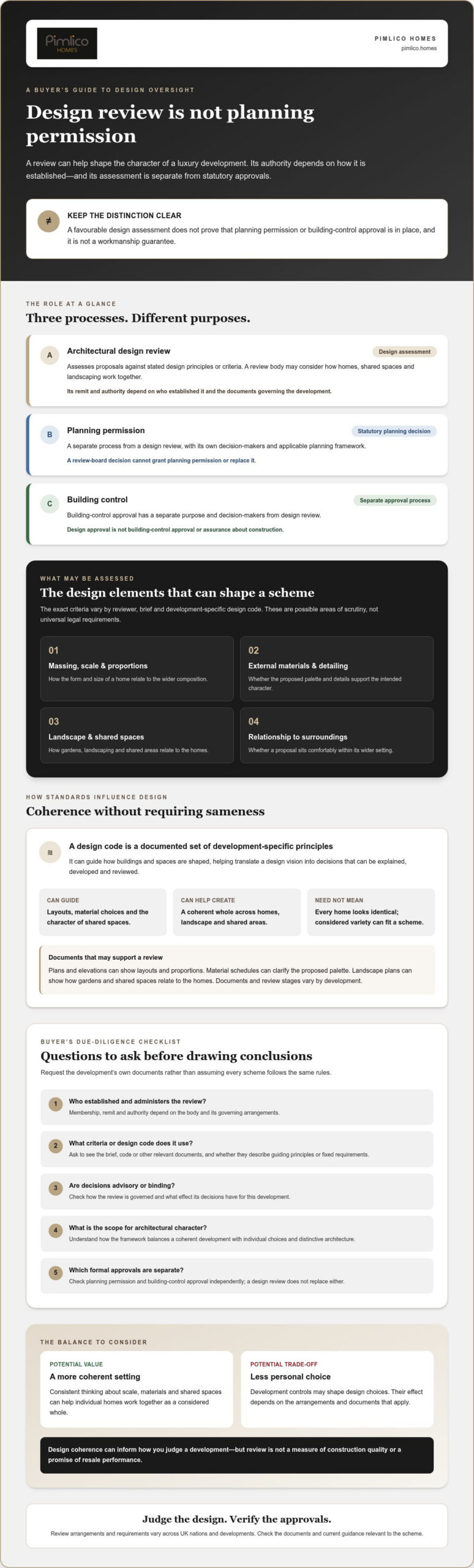
How buyers can assess design oversight in a luxury new development
A polished presentation can convey a development’s design intent, but buyers should also establish how that intent is documented and overseen. A few focused questions can reveal whether design review is a defined process or simply a general description of the scheme’s aspirations.
Use this checklist to understand the arrangements:
- 1. Identify the reviewer. Ask who assesses proposals, who appointed them and what authority or remit they have.
- 2. Request the design brief. Find out which principles or code guide the development, and where you can read them.
- 3. Clarify the review stages. Ask when assessment takes place, which proposals are reviewed and whether later changes are considered.
- 4. Ask for decision records. Check whether recommendations, decisions and responses are documented, and whether buyers can see relevant records.
- 5. Establish the process’s status. Is review advisory, contractual, connected to planning, or privately administered? Ask what that means in practice.
Questions to ask a developer or sales team
Ask how the design principles shape the homes and shared areas, and whether they apply equally to every plot. If a design code is mentioned, request the document and ask how it accommodates variations between homes. Find out how proposed alterations are handled, including who considers them and which documents set out any limits. Arrangements differ between developments, so ask for specific answers rather than assuming a familiar term has a standard meaning.
Where access and evidence allow, compare the approved design intentions with completed work. Plans, specifications or other project records may help explain differences in layout, materials or landscaping. If a discrepancy matters to your purchase, ask for clarification and include the relevant documents in your wider enquiries.
What should buyers avoid assuming?
Design approval is not proof of build quality, defect-free construction or future resale value. Nor does a design code guarantee that every home will be identical or that every element will meet the same standard. Review records can provide useful context about design intent, but they complement rather than replace conveyancing checks, warranty information and independent professional advice.
For a broader due-diligence perspective, read this luxury new-build purchasing guide. You can also view Pimlico Homes’ luxury new-build homes as you consider these questions.
Design governance and the lasting character of a luxury new build
A considered review framework can help a development hold together as a whole. Shared principles may guide the relationship between homes, materials, landscaping and communal spaces, giving the setting a coherent architectural character without requiring every property to be identical. For buyers, that composition can contribute to a distinctive and thoughtfully made environment.
There is a balance to strike. Detailed controls may help protect a design vision, but they can also limit choices about external finishes or later alterations. Before purchase, understand what the framework covers, who administers it and whether its requirements continue to apply after homes are occupied. The practical effect depends on the documents, governance and how consistently the principles are followed.
When can a review framework add value for residents?
Where a development includes shared landscape or public-realm spaces, coordinated decisions about planting, paths, lighting and materials may help those areas feel connected to the architecture. These choices can contribute to a welcoming setting if the plans are delivered and the spaces are maintained over time. Review may encourage accountability to the stated design intent, but it cannot ensure that every detail will be implemented or cared for as intended.
That distinction matters. Architectural design standards for luxury new builds can support a clear identity, yet they cannot promise future resale performance or guarantee that all residents will value the same aesthetic. A review decision is one part of understanding a development, not a forecast of its financial prospects or a substitute for examining the home itself.
Craftsmanship remains a separate consideration. A coherent scheme may look assured on paper, while the quality of a particular home depends on its construction and finishes. Consider available specifications and evidence of workmanship alongside design documents, and use appropriate independent advice where needed. Review should inform your judgement, not replace it.
Explore homes designed with care and lasting character
Pimlico Homes develops and sells luxury detached homes, executive courtyard homes and bespoke new builds, with a stated focus on high-quality craftsmanship. These types of homes offer a starting point for considering how thoughtful design and build quality contribute to a home’s character. Do not assume a particular review-board process or design code applies. Ask about the documents and arrangements for the development you are considering.
As part of your research, you can view Pimlico Homes and its residential developments.
Choose a home with clarity and confidence
The value of architectural design standards for luxury new builds lies in the clarity they bring to a development’s design intent. Review can support coherence and considered shared spaces, but its authority depends on its terms. It is not a substitute for planning permission, building-control processes or checks on workmanship.
Before committing, ask who reviews the design, what principles guide decisions and what records are available. Consider the home itself and its materials and layout, alongside the relevant purchase documents and independent advice. A thoughtful design framework can contribute to lasting character, but it cannot guarantee future value or the condition of a finished property.
Pimlico Homes’ portfolio includes luxury detached homes, executive courtyard homes, bespoke luxury homes and premium barn conversions. Compare the qualities of these residential developments with the features that matter most to you.
Explore Pimlico Homes’ luxury new-build homes and take the next step towards finding a home that suits your priorities.
Frequently Asked Questions
What is an architectural review board in a new development?
An architectural review board is a body that assesses design proposals against a defined brief, code or set of principles. It may consider elements such as a home’s proportions, materials or relationship to shared spaces. Its purpose and authority depend on how it is established: some reviews are advisory, while others form part of private development governance. It is not automatically a planning authority or building-control body, and its approval does not guarantee construction quality.
Are architectural review boards legally required for luxury new builds?
No single rule requires an architectural review board for every luxury development across the UK. A review may be voluntary, part of a private development’s governance or connected to a particular planning process. Ask who appointed the reviewers, what authority they hold and where their role is documented. Requirements and terminology can differ between the UK nations, so check the arrangements for the relevant development rather than relying on a general description.
What is the difference between a design review board and a planning committee?
A design review body assesses proposals against design principles or a stated brief. Its role may be advisory or privately governed. A planning committee forms part of a local planning authority’s decision-making process, although not every application is decided by committee. The authority’s formal planning procedures apply. The two roles are not interchangeable: check the relevant authority’s records for the planning decision and the review body’s terms for its advice or decisions.
Can an architectural review board reject a new-build design?
That depends on the board’s remit and the rules governing the development. An advisory panel may offer recommendations without having power to make a binding decision. A private design code or contractual arrangement may carry different consequences. Ask for the written terms, how decisions are made and whether there is a route to revise or challenge a proposal. Do not assume that every board has statutory powers or can determine whether planning permission is granted.
Do architectural review boards guarantee the quality of a luxury home?
No. A review may assess design features such as layout, proportions, materials or the relationship between buildings and shared spaces, but it does not certify workmanship, guarantee regulatory compliance or prevent defects. Treat design records as one part of your enquiries. Consider relevant planning and building-control information, warranty documents and the purchase contract separately, and seek independent professional advice where appropriate. A favourable design assessment is not a substitute for examining the home and its documentation.
What should I ask about a development’s architectural design standards?
Ask to see the design brief or code, who reviews proposals, which stages are covered and whether decisions are advisory or binding. Clarify how proposed alterations are handled and what records are available to buyers. Then consider the answers alongside construction specifications, warranty information and legal checks. These questions help you understand what the standards actually govern. No review process alone provides a complete picture of a home’s design, construction or purchase risks.





