
A branded residence may offer a distinctive, brand-led experience, but a recognised name alone can’t make a home feel truly your own. The benefits of buying a bespoke luxury home begin with a more practical question: does the design suit the way your household wants to live, now and in the years ahead?
It’s natural to weigh individuality against the reassurance of an established brand, particularly when buying a completed property. Yet “bespoke” can mean different things in practice. Its value lies not in assuming every detail can be changed, but in understanding what has been tailored, how the home was delivered and whether its design supports your plans.
This guide looks at where bespoke ownership can offer lasting personal value, how it compares with branded residence living and what to consider before committing. From room layout and workmanship to future flexibility, you’ll find a practical framework for deciding which benefits matter to you. Pimlico Homes develops bespoke luxury homes, executive courtyard homes and high-end barn conversions, with a focus on craftsmanship and considered residential design.
Key Takeaways
- Discover which benefits of buying a bespoke luxury home can create lasting value for your household, beyond decorative finishes or a premium label.
- Consider how room layout, storage and natural light can support the rhythms of everyday life.
- Compare bespoke design with branded residence living across personalisation, shared services, communal setting and ongoing commitments.
- Use a practical review of your lifestyle brief, property fit, specification and ownership priorities before making a decision.
- Learn how Pimlico Homes’ bespoke and executive courtyard homes, alongside high-end barn conversions, reflect a focus on craftsmanship.
What are the benefits of buying a bespoke luxury home?
A bespoke luxury home is shaped around a considered brief and an intended way of living, rather than relying on a standard layout with personal touches added at the end. The word “bespoke” suggests something made for a particular person, but in property the label alone doesn’t tell you how much has been tailored. The meaningful question is whether the home’s design choices respond to real needs.
Personalisation can affect how rooms connect, where belongings are stored and how the home works throughout the day. A study set away from busy family areas, for example, may offer a quieter place to work. A generous entrance with practical storage can make it easier to put away coats, shoes and bags as you come in. These choices help create a home that feels considered as a whole, rather than a collection of attractive but unrelated finishes.
The benefits of buying a bespoke luxury home are less about having the most unusual features and more about how thoughtfully the residence works. Consider whether the design:
- Supports your household’s routines and priorities.
- Uses space in a way that feels practical as well as elegant.
- Brings materials, light and architectural details together with intention.
- Creates a sense of connection to the home through considered choices.
These are potential advantages, not guarantees of a perfect fit or future resale value. A home’s suitability depends on the people who live in it, the property itself and the commitments set out in the purchase documents.
What does bespoke mean when buying a completed or developing home?
The scope for personalisation depends on the home and the stage of purchase. In a completed residence, bespoke design may be reflected in choices already made about its layout, materials and detailing. During development, some decisions may still be possible while others are fixed. Design intent describes the thinking behind a home; it doesn’t automatically mean a buyer can alter every element.
Review the property, plans and written specification together. This helps distinguish the home’s established design from any choices available to you, and gives you a clearer picture of what is included in the purchase.
Which buyers may value a bespoke luxury home most?
A tailored approach may appeal to households with distinctive routines or spatial priorities. Several generations might share the home, one resident might need a dedicated creative workspace, or entertaining might be central to family life. The value lies in how well the design accommodates those needs, rather than in personalisation for its own sake.
Buyers who prefer a familiar, standardised layout and a straightforward set of choices may value that predictability instead. Neither preference is inherently better. The right choice reflects your priorities, daily habits and plans for using the property over time.
How can bespoke design make a luxury home work better day to day?
A considered design can make everyday routines feel more natural. The position of the kitchen in relation to dining and outdoor areas, for instance, affects how easily people move between cooking, sharing meals and welcoming guests. Circulation matters too. Clear routes through the home can help busy mornings run smoothly, while storage near entrances keeps frequently used items close at hand.
Good planning brings room relationships, storage, circulation, natural light and materials together around a household’s routines. This is where the benefits of buying a bespoke luxury home can extend beyond appearance: thoughtful design can support how you use the property, although it cannot guarantee that every need will be met.
Consider the practical questions behind the visual impression:
- Do the rooms connect in ways that suit your daily routines and entertaining?
- Is storage placed where belongings are used, rather than treated as an afterthought?
- Can quieter areas offer separation from shared spaces when needed?
- Do the materials and finishes suit your preferences for care and upkeep?
- Are entrances, circulation and key rooms comfortable for household members with different mobility needs?
Accessibility deserves attention alongside elegance. Step-free routes, usable circulation space and the relationship between essential rooms may matter now or become more important as household needs change. Consider how the property works in practice, rather than assuming an attractive plan will suit every resident.
Can a tailored layout support changing needs?
Some spaces can serve more than one purpose over time. A room used as a study might later become a guest room, for example, if its position, access and storage make that practical. This doesn’t mean every layout can be altered. Think about how you use the home for work, privacy and entertaining, and which decisions are likely to remain useful, such as practical storage, rather than being tied to a passing design preference.
How do craftsmanship and material choices shape the experience?
Workmanship shows in the details: how finishes meet, how a door feels in use and whether architectural elements work together as a whole. Materials also shape the character of a room, from how they respond to natural light to the care they may require. Examine the home and its specification, noting visible finish quality and the maintenance associated with the selected surfaces.
In a developing property, compare the design description with the plans and written specification. In a completed home, observe the finishes in person and imagine an ordinary day there, not just a formal viewing. Your priorities may lead you towards quiet, practical spaces or rooms designed for gathering. Neither approach suits everyone; the strongest design is one whose choices make sense for the people who will live with them.
Pimlico Homes’ bespoke luxury homes offer a point of reference for considering how craftsmanship and intended ways of living can come together in residential design.
Bespoke home or branded residence: which ownership experience suits you?
These ownership models answer different priorities. A bespoke home centres on a residence’s design and how its spaces suit the owner’s preferences. A branded residence is associated with a recognised brand and may offer shared services or a managed environment. The specific experience depends on the property, so neither label alone tells you what daily ownership will involve.
Compare the arrangements that matter to you, rather than relying on the appeal of a name or a design concept.
| Consideration | Bespoke home | Branded residence |
|---|---|---|
| Personalisation | Design may reflect a considered brief and intended lifestyle; choices depend on the home and purchase stage. | The residence has its own design identity, associated with a brand; the scope for individual choices varies. |
| Shared services | Services are not inherent to the bespoke label; focus on the specific ownership arrangements. | Shared services may be part of the offer, but their scope and terms vary by property. |
| Communal setting | The setting depends on the property and its layout, rather than the bespoke description alone. | Shared spaces or a managed communal environment may feature; check the details for the residence. |
| Ongoing commitments | Consider the commitments set out in the purchase and property documents. | Review documented charges, rules and management arrangements alongside any services. |
What may a branded residence offer that a bespoke home does not?
Brand association can appeal to buyers who value a recognisable identity and a residence organised around shared services. Depending on the property, managed facilities or communal areas may be available, but these are not universal features. Read the residence’s documents to understand what is provided, what charges apply, which rules shape the use of shared spaces and how management is arranged.
Where can a bespoke home offer a closer personal fit?
A bespoke home may suit buyers who place greater emphasis on design choices that reflect their routines and priorities. A personal design identity may matter more to some buyers than a brand-associated environment; others may prefer the shared setting and potential services of a branded residence. The benefits of buying a bespoke luxury home are most relevant when personal fit matters more to you than a branded experience.
Neither model is inherently superior. Weigh individual design, shared arrangements, communal life and documented commitments against your priorities. For buyers drawn to a home shaped around considered living, bespoke luxury homes are one way to explore a more personal ownership experience.
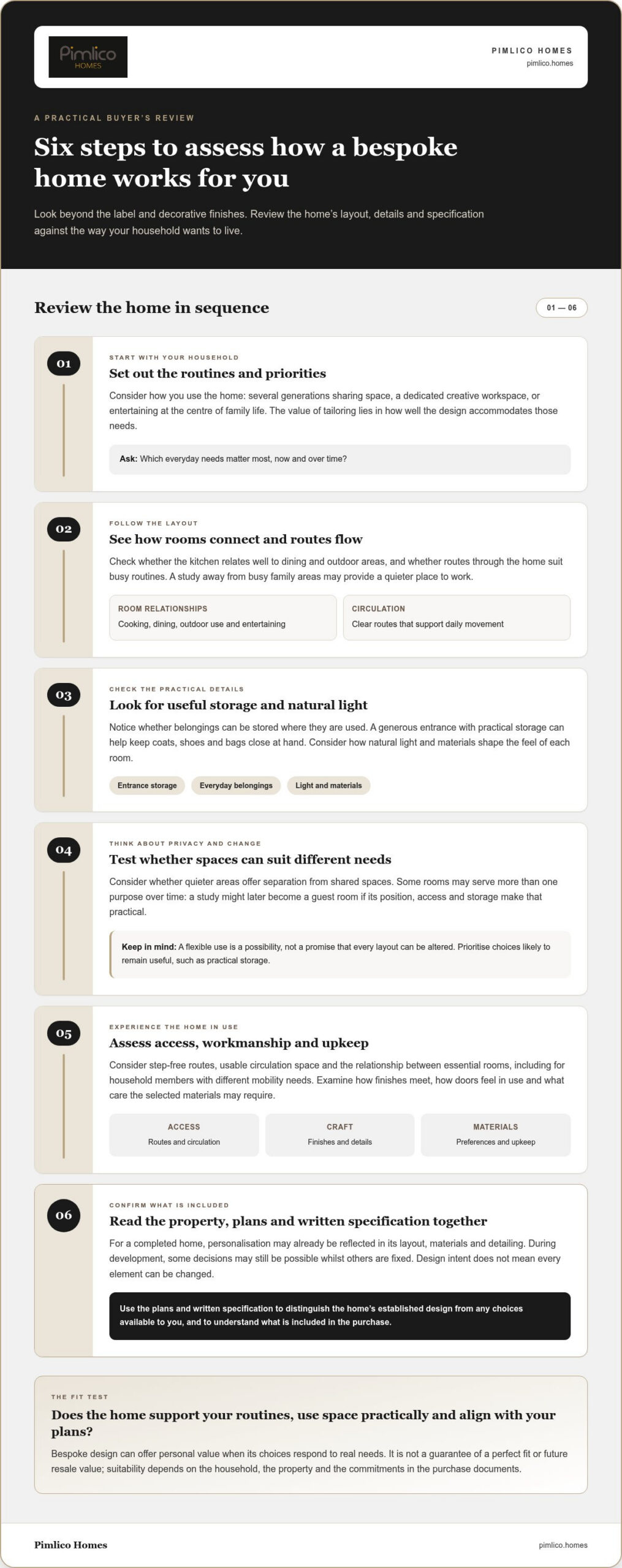
What should you assess before buying a bespoke luxury home?
A structured review helps you distinguish the home’s design from what is formally included in the purchase. Work through these priorities, comparing the property and its plans with the written purchase information. This gives you a clearer basis for deciding whether the home suits your household and whether its ownership commitments fit your plans.
- Your lifestyle brief. Note the routines, spaces and practical priorities that matter most, from working at home to hosting guests. Use this list to assess the property against how you expect to live, rather than judging it on visual appeal alone.
- Property fit. Walk through the home, where possible, and consider how the rooms relate to one another. Check whether circulation, privacy and access to shared spaces feel appropriate for your household, including anyone whose needs may change over time.
- Specification. Compare the described finishes, fittings and stated options with the plans and the proposed or completed home. Separate features you can see from details set out in writing, and note any differences that need explanation.
- Documented commitments. Review written terms, completion arrangements and responsibilities alongside any ongoing charges, management arrangements or shared facilities. These details are specific to the property and can shape ownership as much as the design does.
- Ownership priorities. Decide which qualities matter most over the long term, such as practical layouts, distinctive architectural character or a particular communal setting. This helps you weigh the benefits of buying a bespoke luxury home against the commitments and compromises of the individual property.
Which documents and details deserve close attention?
Bring the plans, specification, details of included finishes and any stated options together so you can compare them with the home. Marketing descriptions can convey design intent, but they are not a substitute for written purchase terms or technical details. Keep each in its proper place as you review what is shown, what is specified and what is formally included. For a broader view of the process, the luxury new build purchasing guide offers related buyer guidance.
How should you weigh personal taste against future flexibility?
Give lasting function and coherent design more weight than highly individual decorative choices. Consider whether rooms could serve different routines or occupants, without assuming the layout can be altered. A finish chosen for personal appeal may be meaningful, but a well-planned arrangement of spaces can remain useful as circumstances change. For another perspective, consider these long-term resale value considerations. No design decision can promise a particular future outcome.
A careful assessment should leave you with a clear view of both the home’s character and its documented terms. If considered design and craftsmanship align with your priorities, explore bespoke luxury homes from Pimlico Homes.
Why consider a Pimlico Homes bespoke luxury home?
Pimlico Homes is a specialist residential developer whose work includes bespoke luxury homes and executive courtyard homes. Its portfolio also encompasses luxury detached homes, bespoke new builds and high-end barn conversions. These offer different expressions of residential design, underpinned by the company’s focus on high-quality craftsmanship.
For a buyer, the relevance is not simply the word “bespoke”. It is whether a home’s character, layout and documented details reflect what matters to your household. The benefits of buying a bespoke luxury home can be meaningful when considered design and quality of workmanship align with your priorities, rather than standing out as attractive features in isolation.
A considered approach to luxury residential development
Luxury detached homes, executive courtyard homes and bespoke new builds each offer a different kind of residential setting. High-end barn conversions provide another expression of the company’s work. Across these types, craftsmanship is a useful lens for assessing a home: look closely at the visible finish, the coherence of the design and the specification describing what is included. Consider each property on its own characteristics, not on a broad label alone.
That distinction matters. “Bespoke” describes an approach to a home’s design; it does not assure that every feature can be changed or tailored without limit. The property and its purchase documents are central to understanding its particular qualities. Consider how the home is presented, what the written specification says and whether those details support the way you want to live.
Deciding whether bespoke ownership is the right next step
Bring the decision back to three points: your priorities, the home’s practical function and the clarity of its purchase documents. Does the property suit the routines and needs that matter to you? Do its spaces and character feel appropriate, rather than merely impressive? Can you understand what is included and the commitments associated with ownership from the written information?
Compare the home’s actual characteristics with your requirements. A beautiful finish may catch your eye, but the right choice also depends on how you expect to use the property and what the documents set out. Bespoke ownership may suit you if individuality and considered design matter; another home may better reflect different priorities. Take the time you need to make the decision.
Explore Pimlico Homes to consider its residential developments in the context of your own plans.
Choose a home that reflects what matters next
A property decision reaches beyond the moment of purchase. Consider which qualities you want to live with every day and which details are likely to remain relevant as routines and priorities evolve. The benefits of buying a bespoke luxury home are most persuasive when individuality serves a lasting purpose, rather than simply creating a striking first impression. Your decision should be guided by the home itself and the commitments recorded in its documents.
Pimlico Homes develops bespoke luxury and executive courtyard homes, alongside high-end barn conversions. Each offers a different architectural context in which to consider how design and personal priorities come together. Choose a property when it aligns with both your aspirations and practical requirements, not because a label alone appears compelling.
To explore whether this approach suits your plans, explore Pimlico Homes’ bespoke luxury homes. Start with what matters to you, then consider how a home’s design and documented details support those priorities.
Frequently Asked Questions
Is buying a bespoke luxury home worth it?
It can be worthwhile if the home’s design supports priorities that matter in your everyday life. The benefits of buying a bespoke luxury home may be clearest in details you’ll use regularly, such as a room that accommodates focused work and occasional guests. Picture an ordinary week in the property, not just a special occasion. Weigh the personal value against the specific purchase terms, without treating it as a guaranteed financial return.
Does bespoke mean you can customise every part of a luxury home?
No, bespoke doesn’t automatically mean unlimited choice. A buyer viewing a completed home may be considering design decisions that have already been made, while a property at an earlier stage may have particular options set out in its specification. Avoid relying on an informal impression of what might be possible. Identify the choices documented in writing and base your expectations on those details and the home’s plans.
Are bespoke luxury homes more expensive than branded residences?
There’s no standard price relationship between the two. The financial commitment depends on the individual property, what its purchase price includes and, for a residence with shared arrangements, any documented charges or obligations. Compare like with like: note the specification, services, management terms and responsibilities attached to each home. A prestigious name or bespoke description alone doesn’t establish which represents better value for your household.
Can a bespoke luxury home be a good long-term purchase?
It may be a good choice for someone whose priorities are reflected in the home, but neither personal satisfaction nor future resale value is assured. Consider whether a room’s purpose could change if your work or household arrangements shift, and whether the home’s distinctive features remain useful beyond your current circumstances. Assess personal enjoyment separately from financial assumptions, and base any view of future demand on your own property research.
What is the difference between a bespoke home and a branded residence?
A bespoke home is associated with a particular design approach or a brief shaped around its occupants. A branded residence is connected to a brand, but that connection alone doesn’t establish what services, facilities or management arrangements apply. For a practical comparison, consider which ownership experience you prefer: a stronger sense of personal design identity or a setting organised around a brand association. The documents for each property explain the actual arrangements.
What should I check before committing to a bespoke luxury home?
Start by comparing the plans and written specification with the property you intend to buy. Pay close attention to named finishes, fittings and stated options, then review completion arrangements and responsibilities in the purchase terms. If shared spaces or management arrangements apply, consider how they affect your intended use of the home. A written comparison can help distinguish features expressly included from assumptions based on a description or viewing.





