
When researching bespoke luxury home specifications, it helps to look beyond striking finishes. At Pimlico Homes, we know the right specification should support your routines, priorities and plans for the future, as well as create the look you want. Consider how each choice works in the home, not only how it appears.
Descriptions such as “premium” and “bespoke” can make comparisons difficult when they do not explain what is actually included. A clear specification connects design choices with practical priorities, helping you understand what has been defined and how the home may suit your household.
This guide explains which details deserve closer attention, how to compare specifications and how to prepare before agreeing your choices. Use it to assess materials, craftsmanship, layout and everyday use with a clearer framework.
Key Takeaways
- Understand what a home specification records and why bespoke design means a considered, tailored approach rather than unlimited choice.
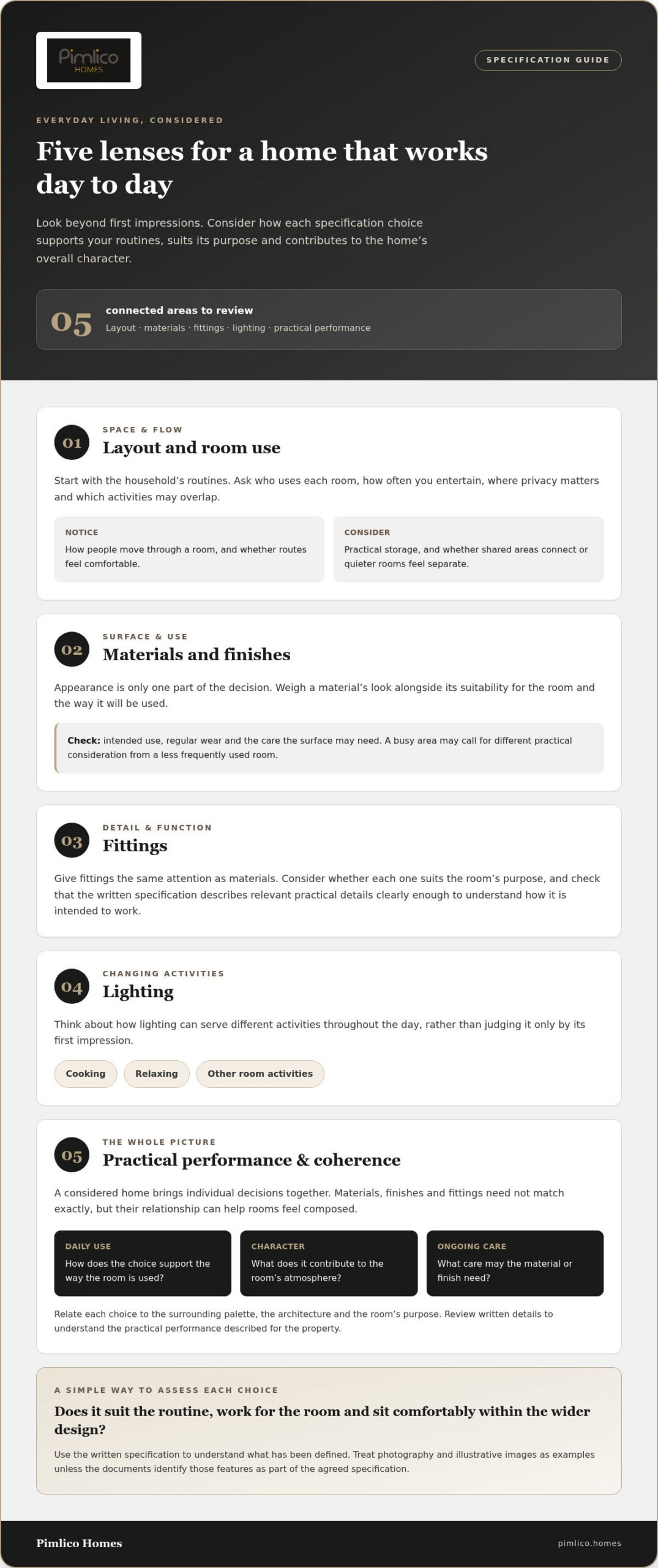
- Assess how layout, materials, fittings, lighting and practical performance may shape daily routines and the atmosphere of a home.
- Compare luxury home specifications side by side, focusing on clear descriptions and relevant details rather than labels such as “premium”.
- Clarify your priorities, read written details carefully and keep a record of agreed decisions.
- Explore how Pimlico Homes’ bespoke homes, detached homes, executive courtyard homes and barn conversions bring together design and different ways of living.
What does a bespoke luxury home specification actually define?
A home specification records the design, materials and features agreed for a particular property. For a buyer considering a bespoke luxury home, it is a practical reference: it helps explain what has been defined and how the details fit together.
“A defined specification describes agreed choices; a design aspiration expresses the qualities a home hopes to convey.” Words such as “elegant”, “premium” or “inspired by heritage” can communicate an aesthetic, but they do not identify a particular material, fitting or finish. Nor does “bespoke” automatically mean unlimited choice. It describes a tailored approach, shaped around relevant priorities and the home’s design.
What should a buyer expect a specification to explain?
A useful specification describes details clearly. Depending on the information provided, it may identify materials, fittings, finishes and relevant performance details. Look for specific descriptions: the named material or finish tells you more than a broad phrase such as “high-quality flooring”.
Keep written details separate from visual guidance. Photography, show-home styling and illustrative images can suggest colour, atmosphere or design direction, but do not necessarily show the agreed features of the property. Check whether the written information identifies a detail as part of the specification, and treat images as examples unless the documents say otherwise.
The language around luxury also has a long history. For general context on the term, see What defines a mansion? A property’s label, however, does not explain its individual specification. The written details do.
How does bespoke differ from a standardised specification?
A standardised specification sets out a consistent set of choices. A bespoke approach makes room for design decisions to reflect a buyer’s priorities within the project’s design and delivery process. Its value lies in how well choices fit together: they should feel coherent with the architecture and the way the household intends to use the home.
For example, one buyer might prioritise a kitchen layout that connects preparation and dining areas, while another may value lighting that creates distinct settings for cooking and relaxing. Start a design discussion with your daily routines, then consider which details support them.
The home’s structure and stage of development can affect which decisions remain practical. Bespoke means considered personalisation, not a promise that every element can be changed at any point. A clear specification connects the design intent with the details agreed for the property.
Which bespoke home specification choices shape everyday living?
A home is experienced through its routines, not just its appearance. Layout, materials, fittings, lighting and practical performance all influence how rooms feel and function. The most considered choices reflect the household’s priorities while giving the home a coherent character.
A home specification is most successful when its choices support the routines the home is designed to hold. Think beyond a room’s first impression: how people move through it, what needs to be stored nearby, how it is used at different times of day and how much care its surfaces may need.
How should layout and room use influence your specification?
Start with your household’s routines. Consider who uses each room, how often you entertain, where privacy matters and which activities may overlap. These questions help you judge whether the relationship between rooms works for your life, rather than simply looking attractive on a plan.
Pay attention to circulation and storage. Routes through a room should feel comfortable, and everyday items need practical places to go. A household that often hosts guests, for example, may value an easy connection between the kitchen and dining area. Another may prefer more separation between shared spaces and quieter rooms. Use these examples to identify your own priorities, rather than assuming a particular layout or feature.
How do materials and finishes contribute to lasting quality?
Appearance is only one consideration when choosing a material. Think about its intended use, how it may respond to regular wear and what care it is likely to need. A finish in a busy area may call for different practical consideration from one in a less frequently used room. Weigh appearance alongside suitability instead of treating them as competing concerns.
Give lighting and fittings the same attention. Consider how lighting can serve different activities and whether fittings suit the room’s purpose. Check whether the specification explains relevant practical details clearly enough for you to understand how a choice is intended to work. The National Association of Home Builders’ Custom home features and green building techniques offers a broader perspective on design considerations. Distinguish this general guidance from details specific to the property you are considering.
Coherence brings individual decisions together. Materials, finishes and fittings do not need to match exactly, but a considered relationship between them can help rooms feel composed. Think about how each finish relates to the surrounding palette, the architecture and the room’s purpose. This is useful when considering bespoke luxury homes, where personal priorities should sit comfortably within the wider design.
When reviewing bespoke luxury home specifications north east, group each choice by purpose: how it supports daily use, what it contributes to the room’s character and what it may mean for ongoing care. This makes it easier to distinguish an attractive detail from one that genuinely suits your household.
How can you compare bespoke luxury home specifications fairly?
Fair comparison starts with clear descriptions, not a ranking of adjectives. “Premium” and “luxury” may sound compelling, but neither tells you exactly what is included or how a detail will serve its intended space. For bespoke luxury home specifications north east, compare like with like: similar elements described at a similar level of detail.
Create a simple side-by-side comparison using the same fields for each property or option:
- Description: What exactly is specified in writing?
- Material or finish: Does the documentation name a material or finish?
- Intended use: Which room or purpose is the detail intended to serve?
- Relevant performance detail: What information is provided about use, care or durability?
- Status: Is the detail recorded as included, optional or not stated?
This framework keeps different kinds of information separate. An image may convey a design direction, while the written specification describes recorded details. Do not treat an optional choice as included, or assume that an unstated detail is included. Base your comparison on the written information for each property, rather than filling gaps with interpretation.
Which questions reveal meaningful differences between specifications?
Check what each description actually identifies. Does it name a material or fitting, say where it will be used and explain a relevant practical consideration? Consider whether the detail suits the intended space and household use. If the wording is broad, such as “high-quality finish”, note the specific point you need clarified in the purchase documentation. This keeps stated information separate from assumptions.
How should you weigh design preference against practical performance?
Sort your priorities into non-negotiables, preferences and areas where you can compromise. Then weigh visual coherence alongside comfort, usability and expected care. A finish that appeals in a photograph may not suit your household’s routines; practical performance, however, need not come at the expense of thoughtful design. The right balance depends on how you live.
Use your comparison to identify meaningful differences, not to choose the home with the most attractive descriptions. One detail may matter greatly if it affects everyday use, while several decorative distinctions may have little bearing on your priorities. Record what is specific, what is optional and what leaves room for interpretation. Then weigh each point against your ranked needs instead of treating every difference as equally important.
What should you review before agreeing a bespoke specification?
Make the review deliberate. Start with what matters to your household, work through the written details, note questions and keep a clear record of agreed choices. This gives you a useful reference as you consider the property and helps prevent important decisions being left to memory or assumption.
A personal checklist turns broad preferences into practical questions. It also helps separate a genuine priority from a detail that caught your eye in an image. If you are researching bespoke luxury home specifications north east, use the checklist to focus on what the written information says about the home.
How can you prepare a personal specification checklist?
Before reviewing the documents, note your routines, design preferences and practical requirements. Consider how your household uses shared and private spaces, what you value in the feel of a home and which everyday needs should guide your decisions. Mark each point as essential, preferred or open to discussion. This is your framework, not a list of assumed inclusions.
Next, work through the written specification and connect each question to a stated detail. If an image suggests a feature that the text does not describe, note the difference rather than treating the image as part of the agreed design. Keep questions specific: which detail is described, where does it apply, and is it recorded as included or optional? Specific questions make it easier to focus on what the documents actually say.
Why should agreed details be recorded clearly?
Written records provide a shared point of reference. They distinguish a documented choice from an informal conversation, an illustrative image or a general design impression. If an agreed detail changes, keep a clear record of the updated information alongside the earlier version so the sequence of decisions remains easy to follow.
Review the specification alongside the relevant purchase documents, rather than treating it as a standalone description. The documents may serve different purposes, and reading them together helps you understand how the property and its details are presented. For questions about the meaning or effect of your conveyancing documents, refer to your own conveyancing advice. This is a practical reading step, not a substitute for legal guidance.
- Establish priorities: List household routines, design preferences and practical requirements; mark each essential, preferred or open to discussion.
- Review written details: Read the specification alongside relevant purchase documents and distinguish explicit descriptions from visual examples.
- Note questions: Record unclear wording against the item it relates to, rather than relying on assumptions.
- Retain agreed records: Keep the specification and documented changes together so the decisions remain easy to follow.
With your priorities and paperwork in view, you can explore a home’s design with greater confidence. Pimlico Homes develops bespoke homes, detached homes, executive courtyard homes and barn conversions for private buyers. Explore Pimlico Homes’ bespoke homes and consider what an individual home could mean for your household.
How does Pimlico Homes bring a bespoke luxury home into focus?
A specification is most valuable when it helps you picture how a home may serve your life, not simply how it is described. The framework in this guide helps you compare design decisions with your priorities, distinguish written details from broad impressions and identify what matters to your household. Pimlico Homes develops luxury residential properties, including bespoke homes and new builds for private buyers.
There is no single form of luxury living. A detached residence, a courtyard home and a barn conversion each offer a distinct starting point. The choice is personal, shaped by your preferences, how you intend to use your home and the character of property that appeals to you.
Which Pimlico Homes offerings may suit different aspirations?
A luxury detached home may appeal if you are seeking a standalone residence. Executive courtyard homes offer a different residential option, while a luxury barn conversion may suit buyers drawn to the character of a converted building. These are broad distinctions, not assumptions about particular layouts or included details. Consider which type of home reflects your aspirations, then use the written information for each property to assess its individual specification.
Whichever form you are considering, return to the same questions: what matters to your household, which details are clearly described and how do they relate to your intended use? This keeps your priorities in view without mistaking a general design impression for an agreed feature. It also helps you consider the home as a whole, rather than judging it by one striking detail.
What is a confident next step for a prospective buyer?
Begin by clarifying your priorities. Note what you value in a home’s character, how you expect to use its spaces and which practical considerations deserve attention. Then explore Pimlico Homes’ properties with those priorities in mind, reviewing the information for each home instead of assuming one specification or style will suit every buyer.
Your priorities can guide what you look for, while a careful reading of each home’s written details helps you form a grounded view of its design. Take time to consider how the property, its specification and your household’s needs come together. A confident decision begins with that alignment.
Explore Pimlico Homes’ homes and developments to discover luxury detached homes, executive courtyard homes, bespoke new builds and luxury barn conversions.
Choose a home with your future in mind
Consider what you want your home to make possible, not only what you admire at first glance. Your priorities may evolve, so think about how the property could suit your household over time. Keep those priorities in view as you explore your options. They can help you distinguish a beautiful design from one that feels right for your life.
For buyers considering bespoke luxury home specifications north east, Pimlico Homes develops luxury residential properties including bespoke homes, detached residences, courtyard homes and barn conversions. Each offers a different starting point for imagining what could suit you.
Let your priorities guide your search. Explore Pimlico Homes’ bespoke luxury homes and take the next step towards a home that feels considered, personal and enduring.
Frequently Asked Questions
Is a bespoke luxury home specification the same as a fully custom-built home?
Not necessarily. “Bespoke” indicates a tailored design approach, but the label alone does not establish how much choice is available. For a particular property, read its written specification and purchase terms to understand which decisions are defined. Consider each detail on its own merits rather than assuming bespoke means every feature can be changed or every design possibility is available.
Can you change a home specification after agreeing to buy?
Possibly, but changes may depend on the purchase stage, construction programme and terms applying to the property. Before relying on a proposed revision, check whether it is recorded and whether the updated specification is clear. Keep the earlier and revised documents together, noting what has changed. This creates a useful record without assuming a particular change can be accommodated.
How do you compare two luxury home specifications?
Compare equivalent items side by side, such as fittings intended for similar rooms, and note where a description is missing or differs in detail. If one document names a finish and another simply says “premium”, do not assume the descriptions mean the same thing. Consider how each stated detail suits your household’s use and preferences. This keeps the comparison grounded in the information rather than presentation alone.
What should a bespoke home specification include?
It should describe the design and relevant materials, fittings and finishes clearly enough to help you understand the property being purchased. The precise contents vary by property and its documentation. As you read, note whether a detail identifies a particular room or purpose, and list any wording that leaves you uncertain. Keep those questions with your purchase paperwork so you can refer to the relevant details in context.
Are luxury home specifications the same as show-home finishes?
Not always. A show home may include furnishings, styling or visual details chosen to present a design, while the specification describes details recorded for the property being purchased. If a room’s appearance shapes your expectations, distinguish furniture and styling from features described in writing. This is useful when a photograph suggests a complete interior that the documents do not describe.
Do bespoke specifications affect a home’s maintenance needs?
They can, because different materials and finishes may need different care. Consider how a surface will be used and whether the property information explains its upkeep. Your household’s approach to cleaning and everyday wear may affect which finish feels practical as well as attractive. Do not assume an elegant appearance means a detail is maintenance-free; consider care as part of its suitability.





