
A barn’s most striking feature may also be the detail that deserves the closest scrutiny. Exposed beams, generous volumes and a sense of history can be compelling, but character alone doesn’t make a home sound or suitable for the years ahead. If you’re buying a luxury barn conversion, look beyond the first impression to understand how its structure, design and setting will support everyday life.
The appeal is easy to understand. A carefully converted barn can bring heritage and contemporary living together in a distinctive way. Yet photographs rarely show how practical the layout is, what condition the building fabric is in or what responsibilities come with the property. Each of these deserves attention before you decide.
This guide from Pimlico Homes sets out what to look for during a viewing, which records to review and how to weigh comfort, room use and long-term practicality against your needs. A clear process helps you appreciate a conversion’s craftsmanship and character while judging whether the whole home feels right for you.
Key Takeaways
- Assess a barn conversion as a home shaped by both its original character and its residential adaptation, rather than judging it by period features alone.
- During a viewing, note visible details that may warrant closer attention, including the building’s structure, moisture management, insulation and ventilation. Treat each property on its own evidence.
- For buying a luxury barn conversion north east, compare character, layout, maintenance and adaptability against your priorities. Historic features alone don’t prove either quality or risk.
- Follow a clear sequence: define essential needs, shortlist homes, view carefully, record questions, review available evidence and then decide.
- Consider how thoughtful design and craftsmanship can bring a distinctive barn’s character together with everyday liveability.
Buying a luxury barn conversion: look beyond the first impression
Historic character, generous proportions and distinctive architectural details give a barn conversion its appeal. A former agricultural building may retain exposed structural elements or a striking sense of volume, but these features aren’t guaranteed. Nor do they tell you whether the home is comfortable, well adapted or suited to your routines. The first impression is a starting point, not a verdict.
A luxury conversion brings a building’s original character together with the practical requirements of residential life. The aim is not simply to preserve the past or create a polished interior, but to make the old and new feel coherent. A successful barn conversion balances heritage character with contemporary liveability, so its history enriches the home rather than dictating how it must be used. The broader Barn conversion overview on Wikipedia offers historical context, but each property needs to be understood on its own terms.
Begin with five lenses. They help you look beyond photogenic details and create useful questions for a viewing and document review:
- Character: Which original qualities give the home its identity?
- Layout: Do the rooms and routes through the house suit everyday use?
- Fabric: What can you observe about the building’s visible condition?
- Documentation: What records explain the conversion and its scope?
- Future use: Could the home adapt to changing needs over time?
What gives a barn conversion its distinctive appeal?
A barn conversion’s identity often comes from the contrast between its agricultural origins and its new domestic purpose. Retained structural elements can add texture and scale, while generous proportions can make rooms feel open and expressive. These qualities may create a strong emotional connection, but no single feature establishes the home’s construction quality or condition. Take in the atmosphere, then consider how each feature works as part of the whole. Design choices that bring old and new into balance are explored in Pimlico Homes’ guide to modern barn conversion interiors.
What should you check when buying a luxury barn conversion north east?
Separate what you admire from what you still need to understand. A dramatic room may appeal straight away, but its proportions, privacy and connection to the kitchen or outdoor space can matter more in daily life. During a viewing, note what appears original, what has been altered and which records could clarify the work. Photographs and period details cannot answer those questions. Make a note of them so you can appreciate the home while keeping your judgement grounded.
Character is neither proof of risk nor proof of quality. Consider it alongside how the home functions, what its visible fabric suggests and what the documentation establishes. The aim is not to diminish the appeal of a barn conversion, but to understand whether it has a practical foundation.
Inspecting a luxury barn conversion: fabric, adaptation and documentation
A beautiful finish can make a home feel complete, but it cannot show what lies beneath the surface. Condition varies from property to property. Age, polished interiors and descriptions such as “fully converted” are not substitutes for evidence about the building or the work carried out. Treat a viewing as a chance to observe and form questions, not as a technical assessment.
Look at the conversion as a whole. The way the original structure has been adapted, how moisture is managed and how the home is heated and ventilated all affect everyday comfort. A written record of what you see will help make later conversations and document reviews more precise.
Which physical details deserve a closer look?
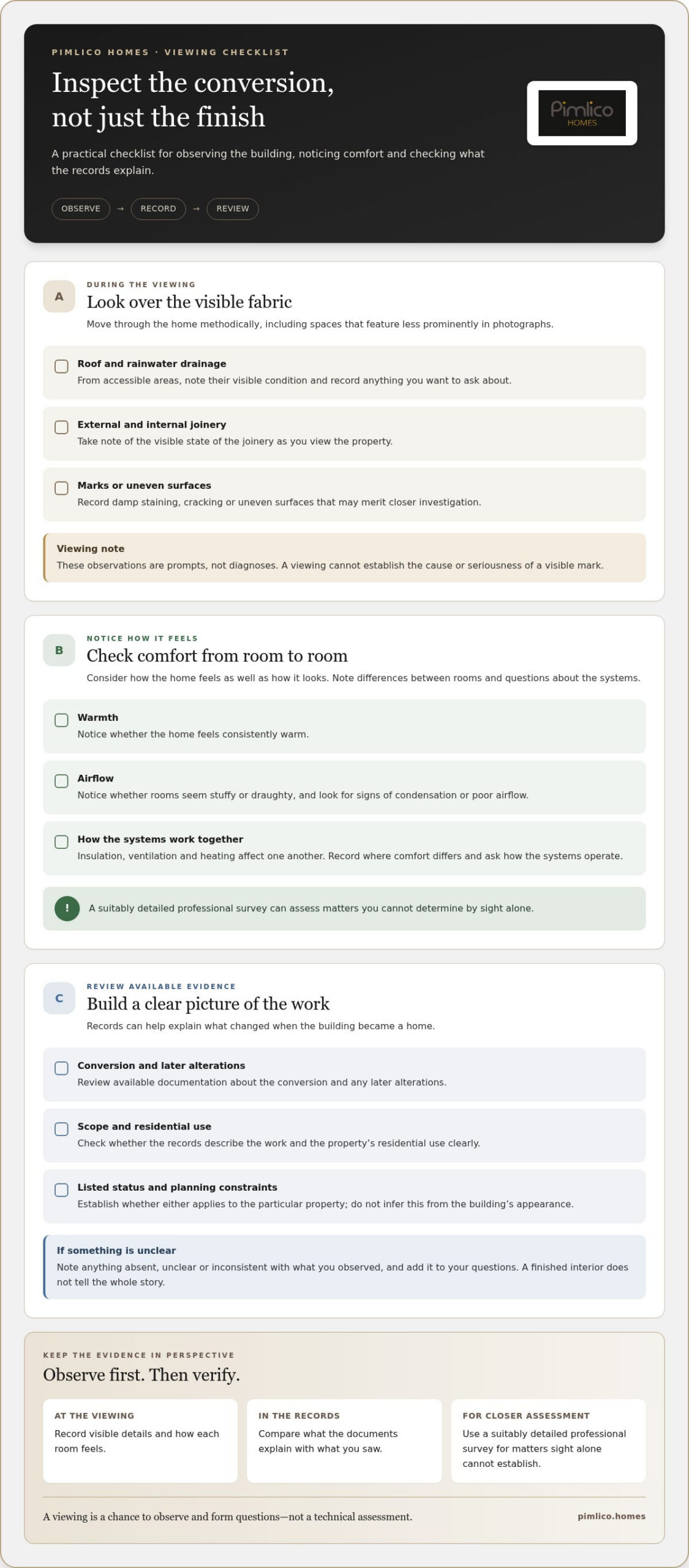
Move through the property methodically, including spaces that feature less prominently in photographs. From accessible areas, note the visible condition of the roof and rainwater drainage, the state of external and internal joinery, and any signs that could merit further investigation, such as damp staining, cracking or uneven surfaces. These observations are prompts, not diagnoses. A viewing cannot establish the cause or seriousness of a visible mark.
Consider comfort as well as appearance. Notice whether the home feels consistently warm, whether rooms seem stuffy or draughty, and whether there are signs of condensation or poor airflow. Insulation, ventilation and heating work together, so changing one aspect without understanding the others can affect comfort. Record where you notice differences between rooms and any questions about how the systems operate. A suitably detailed professional survey can assess matters that you cannot determine by sight alone.
How should buyers approach records and conversion history?
Available records can help explain what changed when the building became a home. Review documentation about the conversion and later alterations, and note whether it describes the work and the property’s residential use clearly. If a point is absent, unclear or inconsistent with what you observed, add it to your questions. The aim is to build a coherent account, rather than assume that a finished interior tells the whole story.
Establish whether listed status or planning constraints apply to the particular property. Don’t infer this from the building’s appearance or from the history of another conversion. Permissions, standards and continuing obligations depend on the circumstances of the individual home. Seek up-to-date, property-specific information before relying on it in your decision.
Keep your notes practical: record what you observed, where you saw it and what evidence or explanation would help resolve your question. This separates visible details from unanswered points and gives your review a clear direction. Pimlico Homes develops bespoke luxury homes and premium barn conversions, with an emphasis on high-quality craftsmanship. Explore Pimlico Homes’ luxury homes to see how considered design can shape character-led living.
Character or convenience? Compare a barn conversion with your priorities
A barn conversion and a contemporary home can each offer a distinctive way to live. Neither is automatically the better choice. Historic character does not prove risk, just as a sleek finish does not prove quality. Compare the evidence for each individual home with the way you want to live.
Use the framework below to connect a property’s qualities with your priorities. Consider how important each point is to your household, then note what you need to see or understand before deciding.
Character
A conversion may retain distinctive historic details. Consider whether those features give the home a sense of identity and whether you value them enough to shape your choice.
Layout
Look at room proportions, circulation and privacy. Prioritise the arrangement that supports your routines, from time together to quiet work or rest.
Maintenance
Consider the care a particular home may require in light of its materials, condition and available information. Don’t assume all conversions have the same upkeep needs, or that a contemporary home is maintenance-free.
Adaptability
Think about whether the rooms and access could continue to suit you if your household or daily needs change. Focus on practical flexibility rather than predictions about future resale performance.
How do original features affect everyday living?
Architectural details can shape a room’s atmosphere, but the room still needs to work. Picture your usual routines: where furniture would go, whether there is enough storage and how easily people can move between spaces. Consider privacy between bedrooms and living areas, as well as any accessibility needs. Conversions vary, so judge the actual layout rather than relying on assumptions about barn homes.
When might a contemporary home be a closer fit?
A contemporary home may suit buyers who value a familiar layout, straightforward room use or less visible historic fabric. A conversion may appeal more if original character is central to what makes a home feel special. Neither preference is inherently more discerning. For broader context on weighing features and priorities in a new-build purchase, explore the luxury new build buying guide.
When buying a luxury barn conversion north east, the decision becomes clearer when you set your preferences beside the property’s individual evidence. List what you need, what you would welcome and what you could compromise on. Then consider how each home supports your present routines and could accommodate plausible changes ahead.
The right choice is the home whose evidence aligns with your needs, not the one whose style makes the strongest first impression. That leaves room for character and convenience alike, while keeping the decision grounded in how you intend to live.
A practical due-diligence sequence for buying a converted barn
A structured process helps you compare homes consistently and keep the decision grounded in what matters to you. Before buying, separate essential requirements from features you would simply love to have. A workable number of bedrooms, suitable access or space to work from home may be essential; exposed beams or a particular sense of scale may be desirable. Your priorities are personal, but writing them down makes viewings more purposeful.
Use this sequence to move from first interest to a considered decision:
- Define your needs. List non-negotiable requirements for household size, daily routines, access and location. Then identify character features you would value but could compromise on.
- Shortlist thoughtfully. Compare each property with your list. Note what the particulars establish, what they leave unanswered and which homes merit an in-person visit.
- View with a consistent checklist. Consider layout, natural light, visible condition and practical use at each property. Don’t focus only on the features that made one home memorable.
- Record observations and questions. Write down what you saw, then list assumptions or points needing clarification separately. This helps prevent a polished finish or description from being mistaken for evidence.
- Review available evidence. Organise unanswered questions under condition, documentation, comfort and future use. Consider records alongside your viewing notes and identify any points that need property-specific assessment.
- Decide against your priorities. Weigh confirmed strengths against unresolved matters and your essential requirements. If important questions remain, understand what they mean for this particular home before deciding.
How can buyers make viewings more purposeful?
Use the same checklist at every viewing. Note whether the layout supports your routines, where daylight falls, how rooms connect and whether furniture, storage and privacy seem workable. Record visible observations plainly, such as a room feeling draughty, without turning that impression into a conclusion about insulation. After each visit, revisit your priorities before ranking the shortlist. Taking a little time to reflect can help distinguish genuine suitability from the pull of a striking detail.
How should buyers weigh findings before proceeding?
Sort your notes into three groups: confirmed strengths, unresolved questions and matters requiring further assessment. Then consider whether the home’s layout and likely maintenance profile still fit your needs over time. Avoid filling gaps with assumptions about costs, permissions, performance or future value. Requirements can vary by property and location, so verify current, property-specific legal or regulatory details rather than treating a general guide as definitive.
This framework supports informed consideration, but it cannot replace advice tailored to the property and your circumstances. For a considered next step, explore Pimlico Homes’ luxury homes.
Finding a luxury barn conversion that feels considered, not compromised
A barn conversion is at its most compelling when its character, condition and adaptation work together, and the home supports the way you want to live. This guide’s buying framework helps you look beyond visual appeal, weigh each property against your priorities and distinguish established details from unanswered questions. That is the heart of a considered purchase: value the heritage without letting it obscure practical judgement.
A considered choice need not mean finding a home without compromise. It means understanding which trade-offs you are comfortable with. A room’s proportions might bring atmosphere but call for a different furniture arrangement; a less dramatic feature might matter less than a layout that serves your household well. What counts is the fit between the property’s individual qualities and your needs.
What does a considered approach to a luxury conversion look like?
Look for a thoughtful relationship between architectural character and daily experience. Original details can contribute to a home’s identity, while its adaptation shapes how rooms connect and how they can be used. Consider craftsmanship alongside the overall design and the available evidence about the particular property. No single finish or feature can stand in for a broader assessment.
Return to your requirements as you compare homes. A striking interior may draw you in, but comfort, privacy, storage and the home’s capacity to suit changing routines can carry equal weight. Let the character move you, then test whether the whole property feels coherent for the life you intend to lead.
What is a natural next step for interested buyers?
Once you understand your priorities, explore homes through that lens rather than browsing on appearance alone. Pimlico Homes develops and sells bespoke luxury homes and premium barn conversions, with high-quality craftsmanship across its residential projects. Its work brings a relevant perspective to the relationship between heritage character, considered design and everyday liveability.
Keep property-specific details in view as you explore any development. Design, materials, condition and permissions relate to individual homes, so don’t assume that one property’s qualities apply to another. Use your notes and questions as a guide, and seek current information where a detail matters to your decision.
A luxury barn conversion should feel distinctive without asking you to set aside the practicalities of home. When character, adaptation and everyday use align, heritage becomes part of a considered living experience rather than a compromise. If Pimlico Homes’ approach to bespoke and luxury residential design reflects what you are looking for, explore Pimlico Homes’ residential developments.
Choose a home that feels right for the life ahead
The most rewarding purchase is not simply the one that makes the strongest impression. It is the one you can imagine living in, with its character enhancing rather than competing with the routines and comforts that matter to you. Let that sense of fit guide your next steps. A considered approach to buying a luxury barn conversion north east leaves room for the emotional pull of a distinctive home and the clarity needed for a sound decision.
Pimlico Homes develops and sells bespoke luxury homes and premium barn conversions, with a focus on high-quality craftsmanship across its residential projects. Its approach speaks to the details discerning buyers value: considered design, character and a home shaped around its individual qualities.
Explore the residential offering at your own pace and consider which direction reflects your aspirations. Explore Pimlico Homes’ luxury homes and bespoke developments. Your next home should feel distinctive, practical and unmistakably yours.
Frequently Asked Questions
What should I check before buying a barn conversion?
First establish whether the home’s layout and setting suit your routine, then investigate uncertainties about its condition. A useful next step is to arrange an appropriate property survey and compare its findings with your viewing notes. Consider practical matters such as access, parking, storage and mobile or broadband connectivity, as these can affect day-to-day convenience.
Are barn conversions more difficult to maintain than other homes?
Not necessarily. Maintenance depends on the individual building, its materials, condition and adaptation. A home with older fabric may need different care from a contemporary property, but age alone doesn’t establish how demanding that care will be. Consider the routine upkeep the property requires and whether you’re comfortable managing it. Available records and survey findings can help clarify likely responsibilities without relying on assumptions about all barn conversions.
Can a barn conversion be comfortable to live in all year?
A converted barn can be comfortable throughout the year, but that depends on the particular home and its heating, insulation and ventilation. During a viewing, notice whether rooms feel consistently warm or whether some areas seem draughty or stuffy. Ask how the heating is controlled and review available information about energy performance. A brief visit cannot show how the home feels in every season, so treat your impressions as questions to investigate.
What documents should I review when buying a converted barn?
Review the records available for the conversion, later alterations and the home’s residential use. Depending on the property, relevant paperwork may include planning decisions, building work records, listed-building consents, guarantees and title information. These records can help you understand the home’s history and any conditions or limitations associated with it. The documents that matter vary, so have property-specific legal and regulatory details checked against current requirements before relying on them.
Is a barn conversion a good choice for a long-term home?
It can be, if the home’s location, layout and ongoing care suit your household over time. Think beyond your current routines: would the rooms still work if you needed a home office, more storage or easier access? Consider whether the property offers flexibility without requiring changes you haven’t assessed. A long-term choice is less about the building type and more about whether its particular qualities remain compatible with your needs and preferences.
How do I compare a barn conversion with a modern home?
Compare specific homes against the same personal criteria rather than treating either category as automatically superior. You might assess how each supports your routines, how much you value distinctive historic character and what you know about its upkeep. Then identify which differences are genuine priorities and which are simply preferences. This makes the comparison more useful than judging from photographs, marketing descriptions or broad assumptions about conversions and contemporary homes.
Does a barn conversion’s original character guarantee good condition?
No. Original features can contribute to a home’s identity, but they don’t demonstrate the condition of its structure or the quality of its adaptation. Equally, historic character doesn’t mean a property is necessarily problematic. Review the available evidence, note anything that warrants further investigation and rely on an appropriate professional assessment for matters that cannot be established during a viewing. Judge each conversion on its own merits.





