
What if the most compelling luxury purchase isn’t a restored period home, but a bespoke new build designed around privacy and modern living? The choice between heritage character and contemporary specification deserves more than a passing glance. The right decision depends on how each property meets your expectations for quality, comfort and lasting value.
It’s understandable to want clarity before making such a significant investment. New-build standards can be difficult to assess, whilst period homes may bring their own complexities. For non-domiciled buyers, mortgage criteria and tax considerations can add another layer. Residence status and domicile are distinct, so seek appropriate advice before assessing your position.
This guide will help you assess bespoke specifications, weigh new-build and period options, and approach specialist lending with greater confidence. We’ll also explore how executive courtyard designs can offer a more private form of luxury living. With more than 25 years of experience in luxury home development, Pimlico Homes creates bespoke new builds, detached homes, executive courtyard homes and barn conversions.
Key Takeaways
- Compare established neighbourhoods with private executive developments to identify the setting that best suits your priorities.
- Look beyond the “luxury” label: examine the design and specification, including features such as underfloor heating and smart-home integration.
- Prepare to discuss overseas income and global assets with lenders, and confirm how your residency status affects the purchase.
- Understand each stage of a new-build acquisition, from early design choices and approvals through construction milestones to handover.
- Explore how executive courtyard homes can create a more private living environment, and consider the qualities that may support lasting appeal.
The Landscape of Luxury: Comparing Property Settings
Luxury property is not a single market. Buyers may be choosing between an established home close to a town or city centre and a private development with more space and separation. The best fit depends on the life you want the property to support: a central setting may make everyday destinations easier to reach, whilst a quieter enclave can offer a different sense of retreat. Treat location as part of the home’s long-term usefulness, not merely a marker of status.
In 2026, careful comparison matters more than broad claims about prestige or growth. Ask how a property’s setting, design and scarcity may influence its appeal to future buyers, while recognising that no feature guarantees capital growth. A limited number of homes can make a development distinctive, but lasting value also depends on the quality of the individual property and whether it continues to meet buyers’ expectations.
Emerging Enclaves of Prestige
Private and courtyard-style developments appeal to buyers who place a premium on a more sheltered setting. Compare that experience with the convenience of an established neighbourhood: consider daily travel, access to amenities, surrounding land use and the character of nearby properties. Check infrastructure claims against your own requirements rather than assuming a planned or recent improvement will make a location more convenient for every household.
For an executive courtyard, study the site layout, entrances and relationship between homes. The arrangement should make sense for the way you value shared surroundings and personal space. Visit the area at different times, and look beyond presentation to understand what the setting feels like in ordinary day-to-day use.
Investment Potential
Assess future resale potential with evidence, not assurances. Consider how a home’s setting, architectural character, specification and plot may distinguish it from comparable properties. Bespoke developments can be scarce, but scarcity alone is not a sound investment case; weigh it alongside the home’s lasting practicality and likely appeal to a range of future buyers. For further considerations, read this guide to the resale value of new build homes.
For buyers comparing established character with a purpose-designed development, the central question is how well each option serves both present needs and future adaptability. A considered search looks beyond the immediate impression to the setting, design and enduring qualities that make a home distinctive.
Defining High-Specification: What to Demand in a New Build
“Luxury” is easy to print in a brochure. A home’s quality is better judged through its design, materials, performance and the care taken to make those elements work together. Bespoke architecture can respond to a particular plot and way of living; volume-built homes may offer fewer opportunities to tailor layouts or details. Ask to see clear specifications and drawings, and check what is included rather than relying on a label.
Make the technical detail part of your viewing. Underfloor heating, smart-home systems and high-performance glazing can contribute to comfort and convenience, but their value depends on how they are specified and integrated. Ask how systems operate, what controls are provided and what information will be available at handover. Natural stone and slate can bring texture and permanence; inspect how materials are used across the exterior and interior, not just in a staged show home.
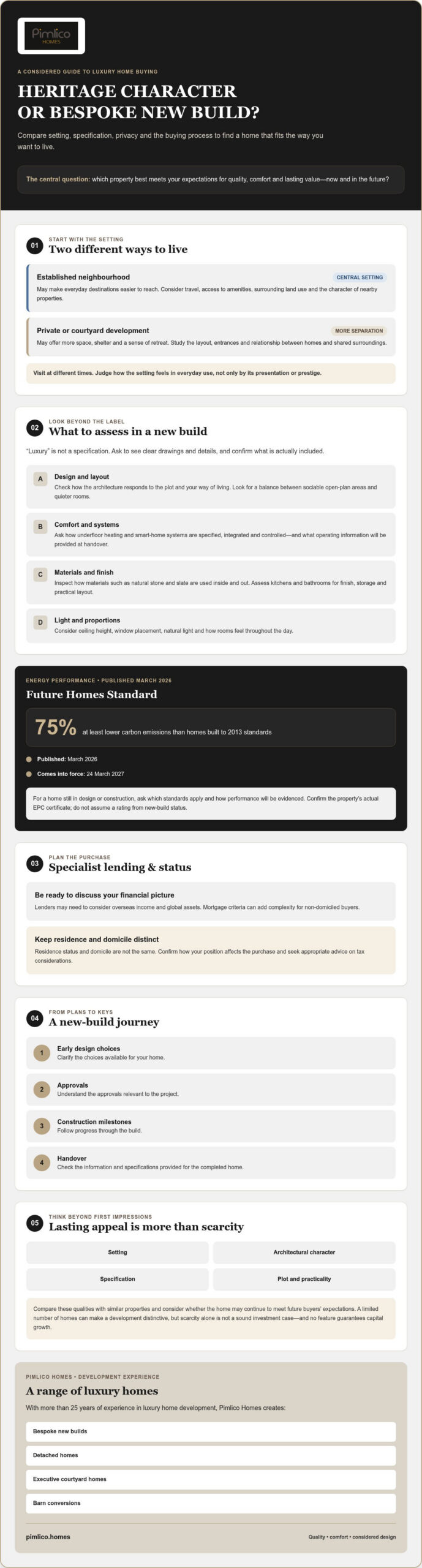
Energy performance is another measure of considered design. An EPC A rating may be an attractive benchmark, but confirm the property’s actual certificate rather than assuming it from new-build status. The Future Homes Standard was published in March 2026 and comes into force on 24 March 2027, with new homes required to produce at least 75% lower carbon emissions than homes built to 2013 standards. For a purchase spanning design and construction, ask which standards apply and how performance will be evidenced.
Internal Architectural Planning
A well-planned home balances sociable open-plan areas with quieter rooms that can serve as private retreats. Consider how kitchen, dining and living spaces connect, then look for separation where work, rest or guests call for it. In kitchens and bathrooms, assess the finish, storage and practical layout. Ceiling height and natural light also matter: consider how window placement and room proportions shape the feel of the home throughout the day.
Exterior Design and Privacy
Look beyond the façade. Compare the home’s footprint with the size and arrangement of its plot, including outdoor space, neighbouring sightlines and the approach to the entrance. A detached home can offer greater separation, although privacy still depends on orientation, landscaping and layout. The arrival experience matters too: paths, planting and the relationship between entrance and street set the tone before you step inside.
Before committing, review the specification, relevant certificates and purchase documentation with your professional advisers. The official UK government guide to buying a home provides a useful overview of the purchase process. To explore the design principles behind Pimlico Homes’ executive courtyard homes, consider how privacy, architecture and day-to-day comfort come together in a carefully planned home.
Mortgages for Non-Domiciled UK Residents: Financing Your Acquisition
International income and assets can make a luxury purchase possible, but they may also make the mortgage assessment more involved. A non-domiciled mortgage is a specialist financial product for UK residents whose permanent home is abroad. In practice, this label does not describe one standard mortgage category: lenders set their own criteria, and they may focus on residence, income, source of funds and the property itself as well as domicile.
For buyers buying a luxury home in Newcastle, a lender may need to understand earnings in another currency, income from overseas businesses and assets held in different jurisdictions. Offshore assets may strengthen an application, but don’t assume they can automatically be used as security. Ask the lender or a suitably qualified mortgage adviser how assets will be assessed, what evidence is needed and whether currency movements could affect affordability.
Eligibility and Documentation
Prepare a clear record of your circumstances before making an offer. Depending on the lender, this may include passport and visa information, UK residence history, overseas tax and income documents, bank statements, and evidence showing how your deposit and wider assets were built. Consistent, traceable documentation can help clarify complex finances. Criteria vary, so confirm requirements directly rather than relying on a general online calculator.
Specialist private banks and international mortgage teams may be more accustomed to assessing complex income and global assets than a standard high-street application. That does not mean a private bank will always be the better fit; compare eligibility, lending structure and terms. For example, HSBC UK offers residential mortgages to non-UK residents with a maximum loan-to-value of 75% and a minimum income requirement of £75,000. Treat this as lender-specific, not a market-wide rule. A bespoke builder may be able to point buyers towards specialist brokers, but verify any recommendation and the adviser’s scope independently.
Check SDLT separately from mortgage eligibility. A 2% surcharge applies to non-UK residents on top of other applicable residential property rates, with a further 5% surcharge for additional properties. Non-domiciled status alone should not be treated as proof of non-UK residence for SDLT purposes. Confirm your position and the applicable calculation with a conveyancer or tax adviser before committing.
Structuring the Loan
Capital repayment reduces the outstanding loan over the mortgage term, while interest-only borrowing leaves the capital to be repaid through a separate, credible plan. The right structure depends on income, assets, time horizon and lender criteria. If your earnings are in a foreign currency but payments are in sterling, exchange-rate changes can affect affordability. Model that risk with your adviser, and establish how any overseas assets would be documented, valued and considered by the lender.
The Acquisition Process: From Bespoke Design to Handover
A bespoke new-build purchase unfolds in stages, from choosing a plot and agreeing the specification to legal completion and handover. The sequence and timing depend on the development, construction progress and contract. This guide to buying a luxury new build home in 2026 offers a broader overview; for your own purchase, have your solicitor or conveyancer explain the reservation and sale contracts before you commit.
Early involvement matters. Confirm which choices are available, when decisions must be made and how any agreed changes will be documented. A bespoke specification can shape the home around your preferences, but never assume a requested alteration is included or can be made at a later stage. Keep a written record of agreed finishes, fittings and variations.
Securing the Plot
An off-plan reservation may let you secure a particular plot before construction is complete, and can provide an opportunity to discuss specification choices early. It also means assessing a home from plans and documents rather than a finished property. Ask what the reservation commits you to, which terms apply and what happens if circumstances change. Review the developer’s completed projects, visit them where possible, and ask how the proposed home compares with the plans and specification.
Negotiation need not centre only on price. Depending on the development and contract, it may be more useful to clarify specification details, permitted choices and deadlines. Ensure any agreed changes are recorded formally and reviewed by your conveyancer.
Warranties, Snagging and Handover
Before exchange, establish whether the home has an NHBC warranty or another structural warranty, who provides it, what it covers and when cover begins. Check the actual documents, including exclusions, claim procedures and any requirements placed on you. Coverage and terms can differ, so do not rely on a general description or assume every new build has the same protection.
Arrange a thorough inspection before completion where access permits. A snagging review can identify incomplete work or defects, from sticking doors to issues with finishes. Record each item clearly, agree how it will be addressed and keep copies of correspondence. Snagging is not a substitute for understanding the contract or warranty, and it does not itself establish a developer’s liability.
At the formal demonstration, ask how heating, appliances, alarms and any installed home systems operate. Collect manuals, warranty documents and contact details for reporting issues. Clarify what post-completion support is available, how requests should be made and which responsibilities are set out in the contract and warranty. Plan your move around confirmed completion and access arrangements, especially if deliveries or household services need coordinating.
For a considered introduction to Pimlico Homes’ bespoke new-build homes, explore the homes and development approach available from the developer.
Buying a luxury home in Newcastle: choosing a developer
A developer’s credentials matter as much as the finish of a home. Pimlico Homes has more than 25 years of experience in luxury residential development, specialising in bespoke luxury new builds, detached homes and executive courtyard homes. When comparing a one-off design with a volume-built property, look for a clear design rationale, a specification you can review and completed projects you can assess for yourself.
For discerning buyers looking for an exceptional residence, privacy is not simply a feature to add later. An executive courtyard design makes it part of the home’s arrangement, shaping the relationship between living spaces and outdoor areas. The appeal is considered rather than universal: assess the layout, sightlines and setting against your own expectations. Ask what aspects of a bespoke specification can be tailored, at what stage choices need to be made and how any agreed details will be documented. Clear answers help you understand the purchase without assuming every preference can be accommodated.
Bespoke Barn Conversions and Detached Homes
Pimlico Homes’ portfolio includes luxury barn conversions as well as detached and bespoke new-build homes. Each offers a different architectural starting point. A barn conversion can retain the character of an existing structure, while a new build allows the design to be conceived around contemporary living from the outset. Ask how original features are balanced with practical requirements, and request the specification and relevant documentation to understand the work proposed. In either case, quality is best judged through the details, not the description alone.
Rather than assuming that smaller developments are automatically more exclusive, examine the homes, layout and setting of each scheme. Consider how the design responds to its surroundings, how much privacy the plot affords and whether the specification is consistent with the home’s intended character. These are more meaningful measures than a broad claim about prestige.
Your Next Step
Begin by reviewing the homes and developments presented by the developer, then confirm directly which properties are currently available and whether any future schemes have been announced. If bespoke choices are important, ask how the enquiry and specification process works, what decisions are possible and what is fixed by the build stage. A developer-led purchase may allow you to discuss the home with the company creating it, but establish who your point of contact will be and what they can confirm.
Explore Pimlico Homes’ luxury developments to see the homes and approach for yourself. A considered choice begins with evidence: the design, the documented specification and a clear understanding of what is being offered.
Choose a Home That Reflects Your Priorities
Buying a luxury home in Newcastle calls for more than an impressive address. Look closely at the design, build specification and privacy the property offers, then make sure the purchase process and financing suit your circumstances. A considered decision brings these elements together, balancing the character of the home with the confidence that comes from understanding what you are buying.
Pimlico Homes brings more than 25 years of luxury development experience, with specialist knowledge of bespoke executive homes. Its executive courtyard approach places privacy at the heart of the design, whilst bespoke new builds offer a contemporary alternative to taking on the complexities of a period property. Long-term appeal begins with choices that feel right for your life as well as your investment.
Explore the homes and developments available from Pimlico Homes, and take the next step at your own pace. Explore our luxury new build homes and contact Pimlico Homes to discuss the available properties. With careful research and the right guidance, you can choose a home that offers lasting comfort, distinction and a genuine sense of belonging.
Frequently Asked Questions
Can non-domiciled residents get a mortgage for a luxury home?
Yes, some lenders consider applications from non-UK residents, but approval depends on individual circumstances and lender criteria. They may assess income, residency, source of deposit and overseas assets, and require clear supporting documents. HSBC UK offers residential mortgages to non-UK residents, subject to a maximum 75% loan-to-value and a minimum income requirement of £75,000. These are lender-specific criteria, not a guarantee of eligibility.
What is the difference between a bespoke home and a standard new build?
A bespoke home is designed with greater attention to a particular brief, plot or set of preferences, whilst a standard new build is generally delivered to a more established design and specification. The degree of customisation varies, so ask which layout, material and finish choices are available and when decisions must be made. Review the written specification carefully; the term “bespoke” alone does not confirm the quality or extent of personalisation.
What should I look for in a prestigious area for a luxury home?
Look for a setting that suits your daily life, not just a prestigious reputation. Consider privacy, access to amenities and transport, the character of neighbouring homes, and whether the plot offers the space you expect. Visit at different times of day if possible, and check planning information for nearby development proposals. For a luxury purchase, the surrounding environment and practical convenience should complement the home’s design and specification.
How does the snagging process work for high-specification properties?
Snagging is an inspection intended to identify incomplete work, defects or finish issues before or shortly after handover. Record each concern clearly, with its location and supporting photographs, then send the list to the developer and agree how items will be addressed. Check your contract and any warranty documents for relevant procedures and time limits. A snagging inspection is useful, but it does not replace legal advice or warranty protections.
Are luxury barn conversions a good long-term investment?
They can be appealing, but no property type guarantees capital growth. Assess the conversion’s workmanship, retained character, quality of contemporary services, setting and likely appeal to future buyers. Ask for relevant planning, building and warranty documentation, and have the property independently inspected. Compare its strengths with other homes you are considering, including how much maintenance may be required. A sound decision rests on the individual property and your investment horizon.
What warranties should I expect when buying a luxury new build in 2026?
There is no single warranty package that applies to every new build. Ask whether an NHBC warranty or another structural warranty is provided, who underwrites it, when cover begins, what it includes and which exclusions or conditions apply. Read the actual policy and completion documents rather than relying on a verbal summary. Confirm how to report defects and whether any separate appliance or system warranties will be transferred to you at handover.
How long does the purchase of a bespoke luxury home typically take?
There is no reliable single timeframe: the purchase may depend on whether the home is complete or off-plan, construction progress, the contract, mortgage arrangements and conveyancing. Bespoke specification choices can also affect the sequence of decisions. Before reserving, ask for the developer’s current programme and clarify which dates are estimates or contractual milestones. Your solicitor or conveyancer can explain the legal stages and what may cause delays in your circumstances.
What defines an executive courtyard development?
An executive courtyard development is a group of homes arranged around or alongside a courtyard, with the layout intended to create a more sheltered and private setting. The design can shape how residents experience outdoor space and the relationship between neighbouring homes. Features vary between developments, so examine the site plan, entrances, sightlines and boundaries in person or through detailed plans. “Executive” is a description, not a substitute for checking the specification.





