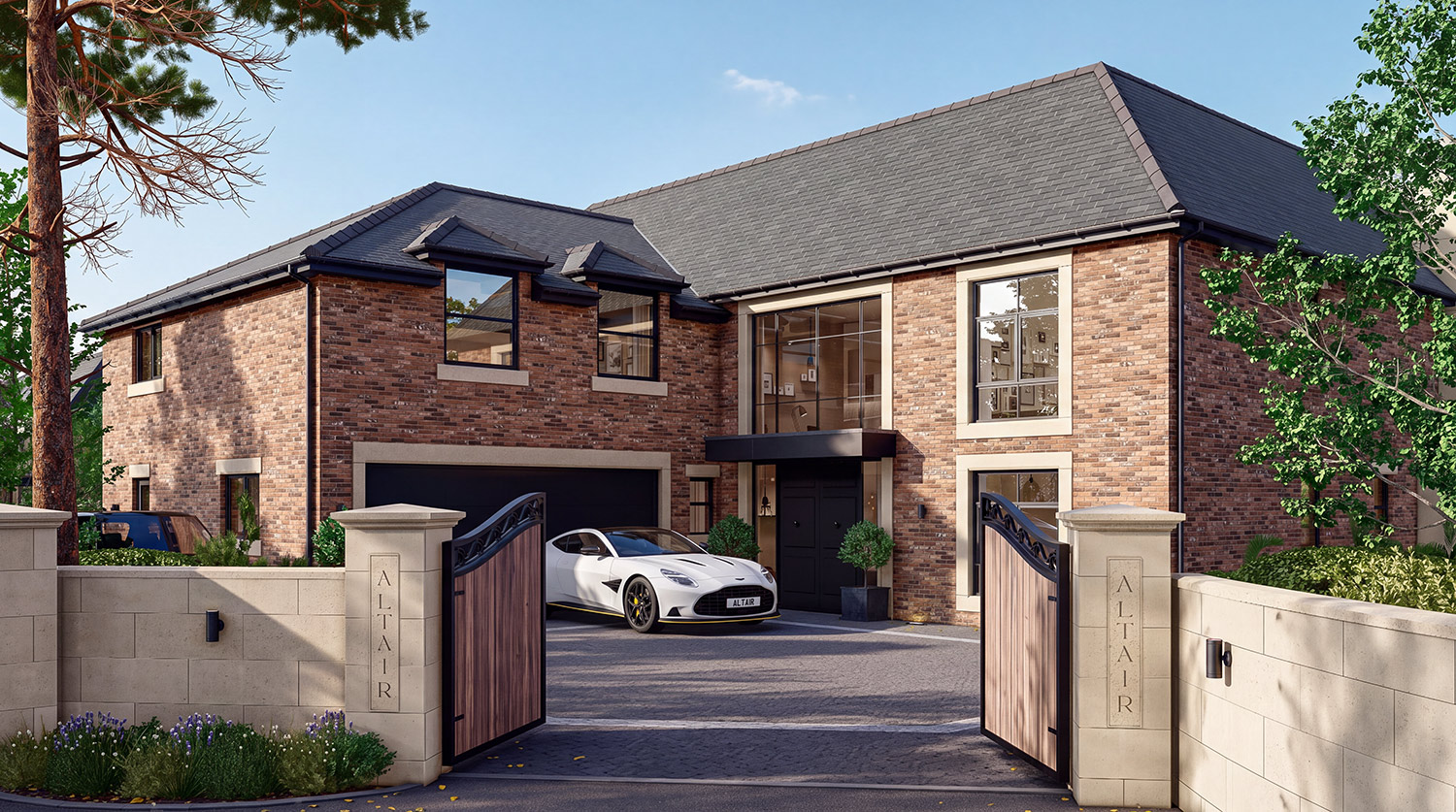
A prime off-plan home is shaped long before its first key is turned. Buying a luxury new build off plan can give you an early choice of plot and the opportunity to influence some architectural details. But the decision calls for more than confidence in an attractive visualisation. Construction delays, changes to finishes and exchange deadlines all deserve careful scrutiny.
Those concerns are well founded. A significant property commitment should rest on clear information about the specification, structural warranty and contract, not on promises alone. Take a considered approach, supported by independent legal advice and specific questions at every stage.
This guide explains how to assess a developer’s credentials, compare marketing material with written specifications, and understand the protections available if a build is delayed or details change. It also covers bespoke adaptations, early plot selection and the possibility of capital growth between exchange and completion, without treating appreciation as a certainty. Pimlico Homes develops luxury detached homes, executive courtyard homes, bespoke new builds and high-end barn conversions. These are the kinds of properties where careful consideration of design, specification and craftsmanship matters from the outset.
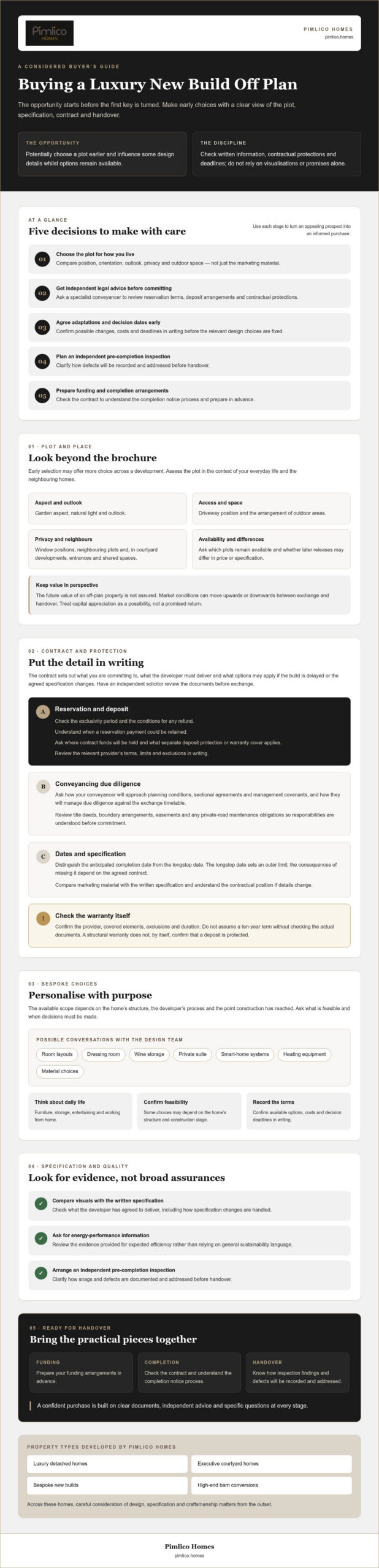
Key Takeaways
- When buying a luxury new build off plan, compare plot position and orientation with how you want to live, not just the appeal of the marketing materials.
- Have a specialist conveyancer review reservation terms, deposit arrangements and contractual protections before committing to an exchange deadline.
- Confirm customisation options and decision dates early, particularly for layouts, services and material choices.
- Plan an independent pre-completion inspection and clarify how defects will be recorded and addressed before handover.
- Prepare your funding and completion arrangements in advance, and check the contract to understand the completion notice process.
Buying a Luxury New Build Off Plan: Why the Opportunity Appeals
Buying a luxury new build off plan is about more than choosing a home before it is finished. It can give you a chance to select a plot and influence certain design decisions while options are still available. The opportunity is appealing, but each benefit depends on the development, the contract and the choices the developer is prepared to accommodate.
An off-plan property is purchased before construction is complete. Its future value is not assured: market conditions can move upwards or downwards between exchange and handover. Treat capital appreciation as a possibility, not a promised return, and assess the purchase on its suitability as a home as well as its investment prospects.
The Advantage of Early Plot Allocation
Early selection can offer more choice across a development. Compare garden aspect, natural light, outlook, driveway position and the relationship between the home and its neighbours. In courtyard developments, consider how entrances and shared spaces affect privacy. For a detached home, look at the position of windows and outdoor areas in relation to surrounding plots. Ask which plots are currently available and whether later releases may differ in price or specification.
Bespoke Architectural Influence from Ground Level
Ask early which adaptations are possible and when decisions must be made. If the design allows, you might discuss changes to room layouts, such as a dressing room, wine storage or a private suite. Raise requirements for smart-home systems and heating equipment with the developer’s design team, so any necessary routes or provisions can be considered before construction reaches the relevant stage. Confirm available options, costs and deadlines in writing.
Personalisation is most valuable when it supports everyday life, rather than simply adding features. Think through furniture, storage, entertaining and working from home to identify which changes matter before the design is fixed. The scope for bespoke choices depends on the home’s structure and the developer’s process, so establish what is feasible before making plans around it.
New construction also gives you the opportunity to review the building fabric and available energy-performance information before purchase. Ask what evidence will be provided for expected efficiency, and avoid relying on broad sustainability language alone. Confirm the details of any structural warranty, including its provider, covered elements, exclusions and duration. Do not assume a ten-year term without checking the actual documents. Pimlico Homes develops luxury new builds and barn conversions, where the specification and quality of craftsmanship are important considerations for buyers.
Navigating the Legal Landscape: Contracts, Deposits, and Protective Clauses
When buying a luxury new build off plan, the contract is more than a formality. It defines what you are committing to, what the developer must deliver and what options may be available if the build is delayed or the agreed specification changes. Have an independent solicitor review the documents before exchange, even if a reservation deadline feels tight.
Appointing a Specialist Prime Residential Conveyancer
Choose a conveyancer with experience in high-value off-plan purchases. Ask how they approach planning conditions, sectional agreements and management covenants, and how they organise due diligence when a developer sets an exchange timetable. Their review should consider title deeds, boundary arrangements, easements and any private-road maintenance obligations, so you understand the responsibilities before committing.
Start with the reservation agreement. Check the exclusivity period, the conditions for any refund and the circumstances in which the reservation payment could be retained. Do not assume a deposit is protected simply because a structural warranty is offered. Ask your solicitor to establish where contract funds will be held, whether the relevant client account arrangements are appropriate, and what separate deposit protection or warranty cover applies. Review the provider’s terms, limits and exclusions in writing.
Essential Contractual Protections: Longstop Dates and Specification Schedules
The contract should distinguish an anticipated completion date from a longstop date. The longstop date sets an outer limit, but the consequences of missing it depend on the agreed wording. Ask your solicitor to clarify what counts as a delay, whether extensions are permitted, what notice is required and whether you can rescind the contract and recover funds in the circumstances specified.
Marketing imagery is not a substitute for a binding specification. Check that the contract documents identify the agreed materials, finishes, appliances and bespoke modifications, and explain how substitutions will be approved. If a particular stone, cabinetry detail or layout matters, have it recorded precisely rather than leaving it open to interpretation. The contract should also explain how changes are communicated and how disputes about the delivered specification are handled.
Agree how pre-completion defects will be recorded and addressed, and how inspection relates to the contractual completion timetable. A clear snagging procedure can help distinguish finishing items from more substantial concerns. Snagging construction works offers useful background on the process. For a broader overview of purchase considerations, see our buying a luxury new build guide. Reviewing the approach taken by developers of luxury new build homes can also help you understand the importance of clear specifications and considered craftsmanship.
The Bespoke Customisation Journey: Tailoring Your Living Environment
Thoughtful customisation is not simply a choice of finishes. It brings architecture, services and interior details together to suit how you intend to live. When buying a luxury new build off plan, the opportunity to make changes depends on the construction stage, the design and the developer’s process. Start discussions early, and confirm what is feasible, when decisions are due and how approved changes will be recorded.
Structural Timelines and Engineering Cut-Off Dates
Ask the developer for a schedule showing when structural, first-fix and finishing decisions must be finalised. Moving a partition, adding ceiling detailing or specifying pocket doors can affect other elements of the design, so raise requests before the relevant work begins. The same applies to wet-room layouts, larger stone surfaces and underfloor heating, where floor build-ups and service routes need to be considered together.
Plan technology alongside the layout. If you are considering smart-home automation, architectural lighting scenes or separate acoustic zones for working, entertaining and rest, discuss the requirements with the developer’s design and engineering teams. Agree where controls and equipment will sit, and ask whether audio-visual cabling routes can be planned before walls are closed and plastered. Early coordination can help avoid compromises later, but each proposal needs to be checked against the building design.
Curating Premium Finishes and Material Specifications
Develop a coherent palette rather than selecting each surface in isolation. Cabinetry, natural stone, hardwood herringbone flooring, ironmongery and lighting should work together in tone, texture and proportion. For bespoke joinery or a dressing room suite, clarify dimensions, internal storage, finish samples and any implications for electrical points or lighting. Confirm the precise specification in writing, including how substitutions will be handled if a selected material cannot be supplied.
Kitchen and climate-control choices also deserve practical scrutiny. Record the agreed appliance make and model where confirmed, along with relevant control interfaces and cabinetry requirements. Consider a statement island or distinctive stone slab in relation to circulation, maintenance and the surrounding finishes, not only its appearance. Ask which choices are included in the agreed specification, which are optional and whether a change could affect the programme.
Keep a single, dated record of decisions, drawings, samples and approvals. It gives you and the project team a shared reference as the home takes shape and makes it easier to see which choices remain open. Pimlico Homes develops bespoke luxury homes as well as detached and courtyard homes. For any off-plan purchase, keep the agreed specification and approved changes documented so you can check them against the finished property.
Construction Oversight, Snagging, and Executive Quality Assurance
Marketing imagery can suggest the finished impression; a careful inspection tests the home itself. When buying a luxury new build off plan, arrange for an independent chartered building surveyor to inspect the property before legal completion, allowing time to understand the findings and follow the process set out in your contract. An inspection does not automatically change the completion timetable, so ask your conveyancer how to raise issues formally and what remedies may apply.
The Executive Pre-Completion Inspection Protocol
A thorough snagging inspection should look beyond scuffed paint. Ask the surveyor to assess the quality of finishes and, where appropriate, recommend further specialist checks. Bespoke joinery alignment, stone joints and sealant, glazing installation, doors and visible services all merit attention. Cosmetic items can be recorded separately from concerns that may affect building performance, safe operation or structural integrity. Your surveyor can advise on the significance of individual findings.
For a more detailed review, discuss whether additional testing is suitable for the property and circumstances. Thermal imaging may help identify temperature variations in the building fabric, while air-tightness results should be considered alongside available test documentation and the specification. Neither should be treated as a standalone verdict. If the home includes automated systems, lighting controls or heating and ventilation equipment, request a demonstration and check that the agreed functions operate as described.
Keep a dated snagging schedule, with each item clearly located and described. Share it through the formal channel specified by the developer, and retain written responses and records of completed work. This creates a practical audit trail and helps distinguish minor finishing corrections from matters requiring further investigation.
Managing Warranties and Defect Rectification Periods
Check the actual warranty documents rather than relying on a general description of cover. Confirm the provider, start date, covered elements, exclusions and claims process. If the paperwork refers to an initial developer period or a longer structural policy, verify the precise duration and scope. Do not assume that every defect, finish or system is covered in the same way.
Before completion, ask for the written procedure for reporting defects, arranging contractor access and confirming that remedial work is complete. Review the contract for any defect liability provisions, response process and relationship between reported items and completion. Request a handover dossier containing available testing records, certificates, product warranties and operating guidance, and check that it corresponds with the installed systems and agreed specification.
For a luxury residence, quality is evident in both the finish and the information supporting it. Explore Pimlico Homes’ luxury new build homes and consider how a clear specification and considered craftsmanship can help you assess a property from construction through handover.
Achieving Legal Completion: Smooth Transition to Handover and Ownership
Completion brings the purchase, construction and preparation together. For anyone buying a luxury new build off plan, the final stage calls for careful coordination: confirm the contractual notice process, ensure funds are ready in good time and check that the home and its paperwork reflect what was agreed. Building control sign-off may form part of the process, but do not assume it alone triggers completion. Ask your conveyancer to explain the contract’s specific requirements.
Managing Notice to Complete and Capital Release
Check the contract for the event that starts the notice period, how notice must be served and how many working days you have to complete. Do not rely on a presumed standard period, including ten working days, unless your solicitor confirms that it applies to your agreement. Contact your conveyancer and private wealth manager early to coordinate mortgage drawdown or transfers of liquid assets, allowing time for funds to clear into the correct account.
Review the completion statement line by line before authorising payment. Reconcile the reservation deposit and any stage payments against the balance due, then check that agreed bespoke upgrades and variations are accurately reflected. Raise discrepancies with your conveyancer promptly. A clear written reconciliation can prevent an overlooked adjustment from becoming a last-minute complication.
The Master Handover and Induction Experience
Arrange a final walkthrough in accordance with the contract and handover process. Compare visible finishes and agreed bespoke details with the written specification, and record concerns through the formal procedure established with the developer. Confirm what will be provided at handover, including keys, any digital access details and documentation for installed systems.
Use the handover to understand how the home operates. Ask for an explanation of heating and ventilation controls, security features and any smart automation, and note where to find operating instructions. Collect available appliance details, warranty documents, testing records and maintenance guidance, keeping them together for future reference. Check that access codes are transferred securely and that you know how to update them where appropriate.
Organise the documents and follow-up items before settling in. The result should be more than a transfer of keys: it is the considered transition into a home whose design and finish reflect your requirements. Explore Pimlico Homes’ luxury residences to learn more about its focus on craftsmanship, architectural quality and bespoke homes.
Make Your Off-Plan Purchase with Confidence
Buying a luxury new build off plan is a significant commitment, and confidence comes from clarity at every stage. Choose a plot for how it will serve your lifestyle, establish contractual protections before exchange, and confirm bespoke choices in writing while the relevant design decisions remain open. Before completion, check the home against its agreed specification and understand the warranty documents, inspection findings and handover information.
The right development brings these considerations together with thoughtful architecture and skilled craftsmanship. Pimlico Homes develops luxury detached homes, executive courtyard homes, bespoke new builds and high-end barn conversions. When considering any off-plan property, review the precise contract and warranty terms with your independent legal adviser, since protections depend on the documents in place.
Explore Pimlico Homes’ luxury new builds and executive homes to learn more about its residential developments.
Frequently Asked Questions
What happens if the developer experiences delays and misses the estimated completion date?
Missing an estimated completion date does not automatically mean you can cancel or recover your deposit. Check the contract for permitted extensions, how the developer must notify you and the longstop date, if one is included. Ask your conveyancer to explain your options and any notice requirements before taking action. If you are buying a luxury new build off plan, treat the anticipated date as a planning estimate unless the contract makes it binding.
Can I modify interior floor plans and specifications when buying a luxury home off plan?
Some changes may be possible, but availability depends on the design, construction stage and developer’s process. Structural alterations and first-fix changes usually need consideration earlier than finish selections, as they can affect other work. Ask for decision deadlines and any associated terms, and get approved changes confirmed in writing. Ensure the final contract documents or agreed variation records specify the layout, materials and finishes clearly, rather than relying on verbal assurances or marketing visuals.
How is my initial deposit protected between contract exchange and physical completion?
Deposit protection depends on the contract and the arrangements applying to the development. Ask your conveyancer to confirm where the funds will be held, what protections apply if the developer becomes insolvent, and whether a warranty or separate deposit protection covers your circumstances. Do not assume a structural warranty protects the deposit. Review the relevant documents, including limits and exclusions, before paying, and keep written confirmation of the arrangements.
Is it possible to secure a high-value mortgage on an off-plan luxury property?
It may be possible, subject to a lender’s criteria, the property valuation and your financial circumstances. Because completion may be some time after exchange, ask the lender or a suitably qualified mortgage adviser how long an offer remains valid and whether reassessment may be needed. Coordinate funding plans with your conveyancer well before you expect to receive a completion notice. Buying a luxury new build off plan with a mortgage requires careful timing, since the eventual valuation or lending terms may differ.
What is the purpose of an off-plan contract longstop date?
A longstop date sets an agreed outer limit for completion, subject to the contract’s definitions and any permitted extensions. It may give the buyer a contractual route to rescind if the home has not reached the required stage by that deadline. The date does not itself guarantee compensation or an automatic refund. Ask your conveyancer to explain the trigger, notice process, extensions and consequences, including how any deposit would be treated if you exercise a right to rescind.
When should an independent snagging survey be conducted on a luxury new build?
Arrange an independent inspection before legal completion, with enough time to review the findings and follow the contractual process for reporting defects. The surveyor can record cosmetic issues, such as damaged finishes, and flag concerns that may need further investigation. Bespoke joinery, glazing, stonework and installed systems may warrant close attention. Confirm access arrangements with the developer and ask your conveyancer how reported items relate to completion, as an inspection does not automatically delay it.
How do structural warranties function for bespoke off-plan residential developments?
A structural warranty is governed by its policy documents, so check the provider, start date, duration, covered elements, exclusions and claims procedure. Coverage may differ between structural defects and cosmetic or workmanship issues, which could instead fall under separate developer arrangements. Do not assume a particular duration or scope applies to every home. Ask your conveyancer to review the documents before exchange, and retain the policy and any supporting certificates with your handover records.