
What if the right UK base is less about a prestigious address and more about how well it supports the way you work and travel? Buying a UK base as an international executive means weighing practicalities beyond the property itself, from coordinating an overseas purchase to understanding how ownership relates to residency. Owning a home in the UK does not, by itself, grant you a visa or residency rights.
Before committing to a significant, long-term purchase, it helps to be clear about what you need the home to do. It should feel straightforward to arrive at, work well when you are away and suit the way you plan to spend time in the UK. A luxury detached home, executive courtyard home, bespoke new build or barn conversion may each suit a different routine.
This 2026 guide sets out a practical approach, from defining your requirements to understanding the purchase stages, funding, tax considerations and due diligence. It also highlights where rules differ across the UK, helping you make informed decisions about the home, the process and the life you want it to support.
Key Takeaways
- Define how often you will use your UK home and what it needs to support, from work commitments to family life or a possible future relocation.
- Make buying a UK base as an international executive more manageable by planning your budget, funding route, source-of-funds records and professional reviews in sequence.
- Compare detached homes, courtyard homes, bespoke new builds and barn conversions against your priorities for privacy, character, personalisation and upkeep.
- Use remote research to refine your shortlist, then view the strongest options in person before progressing with checks and completion.
- Explore how Pimlico Homes’ focus on craftsmanship and considered residential design can help you compare different home types as a long-term UK base.
Buying a UK base as an international executive: define your brief
A UK home might be a practical base for regular work commitments, a place to spend time with family, the first step towards a future relocation, or a combination of these. Before comparing properties, decide how often you expect to stay and what the home needs to make possible. This is the foundation of buying a UK base as an international executive: a clear brief keeps the decision focused on your actual needs, rather than assumptions about future value.
Set the brief around work, travel and household needs
Map out a typical year, not just your next visit. Note how often you expect to stay, what your working day involves, who may use the home with you and whether your household or role could change. A base for short, frequent visits may need an easy arrival routine and comfortable space to work. A home for longer family stays may need to accommodate a wider range of routines. Treat these as prompts, then let your own pattern guide the decision.
Separate essentials from preferences. Rank practical requirements first, then list the design details you would like to have. For example:
- Essential: a layout that works for your household, enough privacy and a manageable arrival routine.
- Important to assess: how the home can be cared for while you are abroad and whether its spaces suit both work and rest.
- Desirable: particular architectural character, finishes or design details that would make the home feel distinctly yours.
This distinction helps stop an appealing feature from overshadowing an everyday requirement. It also gives you a consistent framework for comparing property types and assessing individual homes.
Decide what a UK base needs to deliver
A home for frequent stays, an occasional base and a possible future relocation each call for different priorities. If you expect to visit regularly, consider how easily you can settle in and whether the home supports your usual working routine. If relocation is a possibility rather than a firm plan, think about the needs it could bring while keeping your current requirements in view. The Housing in the United Kingdom overview provides context on the variety of housing and ownership arrangements, but your brief should reflect your own circumstances.
Set an ownership horizon that fits your plans, but treat future resale value as uncertain. A home can be a considered long-term choice without being framed as a guaranteed investment. Focus first on the life it needs to support and the responsibilities of ownership, including the periods when you are out of the country.
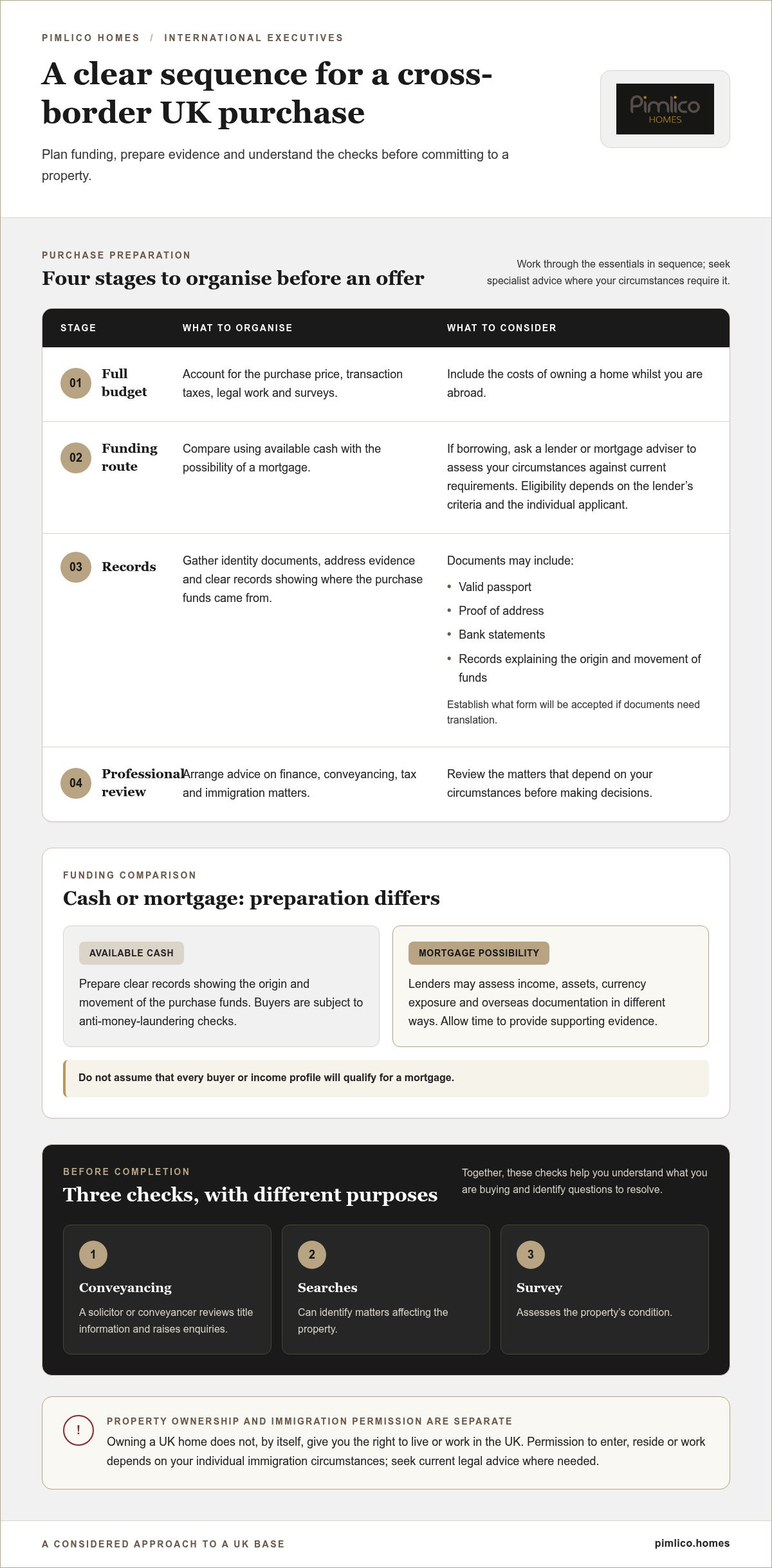
Property ownership and immigration permission are separate: owning a UK home does not, by itself, give you the right to live or work in the UK. Your permission to enter, reside or work depends on your individual immigration circumstances. Consider that question separately from the property decision and seek current legal advice where needed.
Cross-border purchase essentials: funding, status and due diligence
An overseas purchase can feel complex, but it is easier to manage when you handle its moving parts in sequence. When buying a UK base as an international executive, establish your budget and funding route first. Then prepare your records and arrange legal and financial review before committing to a property. This helps you understand what is achievable and where specialist advice will be useful.
- Set the full budget. Include the purchase price, transaction taxes, legal work, surveys and the costs of owning a home while you are abroad.
- Choose a funding route. Compare using available cash with the possibility of a mortgage. Do not assume that every buyer or income profile will qualify.
- Organise your records. Gather identity documents, address evidence and clear records showing where the purchase funds came from.
- Arrange professional review. Get advice on finance, conveyancing, tax and immigration matters before making decisions that depend on your circumstances.
Prepare funding and documentation before making an offer
Cash purchases and mortgages both require preparation. If you are considering borrowing, lenders may assess income, assets, currency exposure and overseas documentation in different ways. Mortgage eligibility depends on the lender’s criteria and the individual applicant, so do not assume you will qualify. Ask a lender or mortgage adviser to assess your circumstances against current requirements, and allow time to provide supporting evidence.
Start assembling a consistent document pack early. It may include a valid passport, proof of address, bank statements and records explaining the origin and movement of your funds. Buyers are subject to anti-money-laundering checks, so clear, well-organised evidence can help the transaction proceed. If documents need translation, establish during your preparations what form will be accepted.
Understand the checks that protect the purchase
Conveyancing is the legal process of transferring ownership. A solicitor or conveyancer reviews title information and raises enquiries. Searches can identify matters affecting the property, while a survey assesses its condition. These checks have different purposes. Together, they help you understand what you are buying and identify questions to resolve before completion.
Tax and transaction rules are time-sensitive and can differ across the UK. The amount payable may also depend on factors such as your residency status, whether you own another property and how you will use the home. Confirm the rules that apply to your circumstances with a suitably qualified adviser before calculating your final budget.
Keep three questions distinct: owning a property, being tax-resident and having permission to live or work in the UK are not the same thing. Immigration eligibility depends on the individual and the route involved. GOV.UK outlines certain settlement routes in its guidance on Indefinite Leave to Remain for Business, Investor, or Talent Visa Holders. Use official guidance for orientation and obtain advice relevant to your own position.
Once your funding and due-diligence plans are taking shape, compare the home types that could suit your requirements. Pimlico Homes’ luxury residential homes include detached, courtyard, bespoke and barn-conversion options to consider as part of your UK-base brief.
Choose the right UK home: compare executive property types
The right home is the one that supports your routine; no property type is best for everyone. When buying a UK base as an international executive, compare what each type may offer: privacy, character, scope for distinctive design and the practical care it may require. Use these points to guide viewings, not as guarantees of a particular layout or specification.
| Home type | Privacy and setting | Character and personalisation | Practical upkeep to consider |
|---|---|---|---|
| Detached home | May appeal if separation and a private home setting are priorities. | Consider whether the architecture and interior suit your tastes. | Assess the property and any areas you will be responsible for maintaining. |
| Courtyard home | Could suit buyers seeking a composed residential environment. | Consider how the home’s design relates to its setting. | Understand what care the specific home and its surroundings require. |
| Bespoke new build | Privacy depends on the individual design and setting. | Worth exploring if distinctive design matters to you. | Review the finished specification and your responsibilities as an owner. |
| Barn conversion | The level of privacy depends on the property and its setting. | May combine heritage character with contemporary residential comfort. | Look closely at the individual building, its condition and ongoing care. |
Detached and courtyard homes for privacy and arrival
A detached home may suit you if you value separation and a private setting. Picture arriving after a long journey: does the approach feel calm, and do the rooms support the way you work and unwind? A courtyard home offers a different character and may appeal if you prefer a more composed residential setting. Details vary, so assess the actual layout and responsibilities rather than relying on the property type alone.
Bespoke homes and barn conversions for individual character
A bespoke new build is worth exploring if you have distinctive design priorities and want to consider how a home’s form and details could reflect them. The scope for personalisation depends on the project and its stage, so discuss the design rather than assuming every element can be changed. Craftsmanship matters alongside everyday practicality: consider how the home will feel and function, not just how it looks.
A barn conversion may appeal if you are drawn to heritage character alongside residential comfort. Each building is different, making an in-person assessment of its spaces and condition especially valuable. For ideas on combining historic fabric with contemporary design, explore modern barn conversion interiors.
Before shortlisting, rank your priorities for privacy, character, personalisation and upkeep. Apply the same criteria at each viewing. A home that looks compelling in photographs should also suit the arrivals, stays and time away you expect from your UK base.
From shortlist to completion: a practical buying sequence
A well-organised purchase gives each decision room for proper consideration. When buying a UK base as an international executive, remote research can help you build an initial shortlist, but it cannot replace the experience of being inside a home and understanding its setting. Treat the process as a sequence of stages, with clear records and decisions at each point.
Shortlist and arrange a focused property visit
Start with a written brief based on your ranked requirements, intended use and ownership horizon. Use property details and virtual viewings to rule out homes that clearly do not fit, then plan an in-person visit around the strongest candidates. This makes travel more purposeful and helps you compare properties against the same criteria instead of relying on memory or first impressions.
During each visit, consider the whole arrival and living experience. Notice how the entrance, rooms and working areas connect, whether the level of privacy suits you and how the residential setting feels at the times you are likely to be there. Record your observations and questions in the same format for each property. Notes on room flow, working arrangements, unanswered questions and your overall impression will make comparisons more precise.
Move from offer to completion with clear stages
After selecting a property, the purchase generally progresses through an offer, legal conveyancing and due diligence, contract exchange, then completion. An offer starts negotiations; it is not the same as completing the legal transfer. During conveyancing, your solicitor or conveyancer reviews the legal title, raises enquiries and coordinates the required steps. Searches and survey work help you understand relevant information about the property before you proceed.
Exchange and completion are separate milestones. At exchange, the parties become legally committed under the agreed contract. Completion finalises the purchase and transfers ownership. The precise process can vary across UK jurisdictions and depending on the property and transaction, so follow guidance from the conveyancing professional handling your purchase.
There is no single reliable timetable for every purchase. Timing depends on the property, the parties involved, due-diligence findings and how promptly questions are resolved. Keep funding records accessible, plan travel flexibly and make sure everyone involved in decisions can review documents and respond within agreed timeframes. If you are purchasing jointly, agree in advance how decisions will be made so that approvals do not become a source of delay.
A broader luxury new-build purchasing guide can provide more context on the stages involved. Use this sequence as a practical framework: shortlist against your brief, assess the home in person, make an informed offer, complete the checks and follow the legal process through to completion. To explore homes that could suit your UK-base priorities, discover Pimlico Homes’ luxury properties.
Find a considered UK base with Pimlico Homes
Buying a UK base as an international executive is a significant decision shaped by how you intend to use the home and the qualities you want to live with over time. Pimlico Homes is a specialist residential developer focused on premium homes and high-quality craftsmanship. Its range includes different residential settings to compare for privacy, architectural character and design, without assuming one home type suits every executive or household.
A considered choice of residential settings
Luxury detached homes may appeal if a private setting and a sense of separation are high on your list. Executive courtyard homes offer a different residential character, which may suit buyers drawn to a more composed setting. The right choice depends on the individual property and how its spaces fit your working and personal routines.
If you have distinctive design preferences, bespoke new builds are another option to explore. High-end barn conversions may appeal if you value heritage character alongside considered residential design. In each case, craftsmanship and design contribute to the everyday experience: how the rooms feel, how the home supports your routines and whether its character continues to suit you over time. These qualities deserve close attention, but they cannot guarantee a particular future outcome.
As you compare options, return to the brief you developed earlier. A home for regular work stays may lead you to prioritise different qualities from one intended for longer family visits or a possible future relocation. Consider:
- Privacy: whether the setting feels comfortable for work and time away.
- Character: whether you prefer a detached or courtyard home, a bespoke design or a conversion with heritage appeal.
- Personalisation: how closely the home’s design aligns with your preferences.
- Practical ownership: what maintaining and caring for the property may involve while you are abroad.
Use these points to compare properties, not as promises about particular specifications. Assess each home on its own merits and consider how well it meets your priorities as well as its visual appeal.
Take the next step towards a UK base
Before exploring properties, refine your brief. Separate essential requirements from preferred design details, and be clear about how often you expect to use the home. That preparation can help you focus on residential options that fit your work, travel and household needs.
A long-term home deserves time and considered attention. Explore Pimlico Homes’ residential developments with your priorities in mind, then take the next step at a pace that suits your plans. Explore Pimlico Homes.
Shape your next move with confidence
Turn your intentions into a clear point of reference. Write down what you want your UK base to make possible, which qualities matter most and what would make a home feel right over time. A considered brief gives your search direction and helps you approach this significant decision with purpose rather than pressure.
For international executives, buying a UK base is ultimately about finding a home that fits naturally into a wider life. Your choice should reflect your priorities today while leaving room for plans that may evolve. Take time to explore thoughtfully and let each property earn its place on your shortlist.
When you are ready to consider homes shaped by careful design and craftsmanship, Explore Pimlico Homes.
Frequently Asked Questions
Can an international executive buy a UK home without being UK-resident?
Yes. Foreign nationals can generally buy property in the UK without being UK-resident or a UK citizen. However, your residence status may affect other parts of the transaction, including mortgage eligibility and tax treatment. Be prepared to provide identity and source-of-funds evidence, and allow time to prepare overseas documents. When buying a UK base as an international executive, treat eligibility to purchase and your personal immigration or tax position as separate questions.
Does buying a UK property give me the right to live or work in the UK?
No. Owning a UK property does not, by itself, give you permission to live or work in the country. Those rights depend on your immigration status and any applicable visa route, not on the home you own. If your property plans are linked to a move, check your immigration position independently using current official guidance and seek advice suited to your circumstances before making plans around a relocation date.
Can I buy a UK home before relocating?
Yes, you can purchase a home before relocating, provided you can meet the transaction requirements and arrange suitable funding. Buying ahead of a move can give you time to choose a property, but ownership does not establish a right to reside or work in the UK. Consider how the home will be used between purchase and relocation, who will manage practical matters and whether your intended move depends on immigration approval.
How can I arrange useful property viewings when I am based overseas?
Use online listings and virtual viewings to narrow your options, then plan an in-person visit around the strongest candidates. Gather the same details for each property, such as room dimensions, layout and information about the surroundings. During a live or recorded viewing, note what the camera cannot fully convey, including noise, natural light and how it feels to move through the rooms. Keep a written comparison for each home.
What documents might an international buyer need for a UK property purchase?
Expect to provide identity documents, proof of address and evidence showing the source of your funds. A valid passport, a recent utility bill and relevant bank statements are examples, although exact requirements can depend on the professionals involved and your circumstances. Mortgage applications may also require evidence of income, such as payslips or employment details. Documents not in English may need certified translation, so organise your records early.
Do property purchase rules differ across the UK?
Yes. Some transaction rules and taxes differ between England, Northern Ireland, Scotland and Wales, so do not assume guidance for one part of the UK applies everywhere. Property transaction taxes, for example, have different names and frameworks across the nations. The appropriate process can also depend on the property and your circumstances. Confirm current requirements for the nation where you are buying with your conveyancing and tax advisers.
Is a luxury new build a practical choice for a frequently travelling executive?
It can be, if the individual home suits your travel pattern and intended use. A new build may appeal if you value contemporary design, but the specific layout, setting and ownership responsibilities still need careful consideration. Do not assume that new means maintenance-free or that every property has the same specification. Review the home’s details, understand what care it may need while you are away and assess whether it suits your regular stays.





