
The plot with the most impressive outlook may not be the one you’ll be happiest to come home to. Choosing the best plot in a new estate means looking beyond the house to the setting that will shape daily life, from daylight and garden privacy to parking and the view from your windows.
Plots can look interchangeable on a sales plan or in a brochure. Before construction is complete, however, it can be hard to judge how neighbouring homes, access routes and future surroundings may affect a particular plot. Small differences can matter now and as your needs change.
This guide gives you a practical way to compare plots. You’ll learn what to check about orientation, privacy, outlook and access, as well as what to ask before reservation and exchange. You’ll also see how to compare plot-specific details with site plans and developer documents, so you can assess the setting as well as the home.
Key Takeaways
- Start with your daily routines, privacy preferences and plans for using the garden, rather than choosing the most prominent plot by default.
- Compare how orientation may affect light in rooms and outdoor spaces. Consider outlook and potential overlooking from nearby homes or shared areas, too.
- Look beyond the house to each plot’s access, position and relationship to surrounding activity. Convenience and quiet can involve different trade-offs.
- When choosing the best plot in a new estate, use a consistent shortlist and check site plans, specifications, boundaries and relevant planning information before reserving.
- Weigh each option against your priorities and the details you can verify. Keep track of unanswered questions and consider how the home and its setting may suit you over time.
Choosing the best plot in a new estate starts with how you want to live
The most prominent plot is not automatically the most suitable. A corner position or open outlook may catch your attention, but the right choice depends on how the home and its setting support your daily life. Consider your routines, preference for privacy, plans for outdoor space and how much time you expect to spend at home.
A strong plot choice brings the home, its setting and the way you want to live together. Plot position and house design are separate considerations, but neither should be judged in isolation. A home’s layout may work differently depending on its boundaries, neighbouring properties and access. A plan is a useful starting point, not a complete picture.
Which plot characteristics matter most to different buyers?
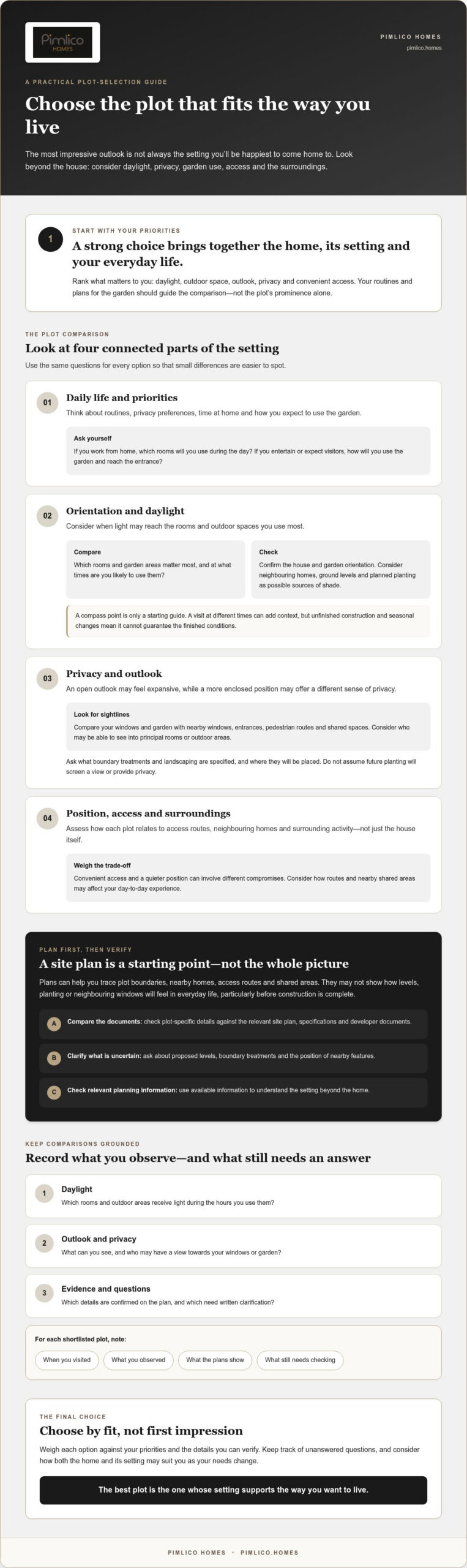
Rank daylight, outdoor space, outlook, privacy and convenient access, then test that order against your routines. If you work from home, consider which rooms you’ll use during the day and what you’ll see from their windows. If you entertain or expect frequent visitors, think about garden use and the route to the entrance. Priorities differ, so no orientation or position is best for everyone.
What can a plot plan reveal, and what can’t it show?
A plan can help you trace boundaries, nearby homes, access routes and shared areas. It also shows how a defined plot of land sits within a wider development. But a drawing may not convey how levels, planting or neighbouring windows will feel in everyday life, particularly before construction is complete.
Use the plan to identify what needs checking, rather than treating it as a complete preview. Ask the developer to clarify uncertain details, such as proposed levels, boundary treatments and the position of nearby features. Check plot-specific information against the relevant site plan and developer documents before reserving. This helps you compare the setting as well as the home, without relying on assumptions.
Assess orientation, outlook and privacy before choosing a new-estate plot
A plot’s orientation affects how daylight may reach its rooms and outdoor spaces, but it doesn’t guarantee a particular amount of sun. Nearby buildings, ground levels and planting can all affect the light reaching a window or garden. When choosing the best plot in a new estate, consider how the setting may feel at the times you’re most likely to use it, rather than relying on a compass point alone.
How should buyers compare daylight and garden orientation?
Start with the rooms and outdoor areas that matter most. You may value afternoon light in a living space more than morning light in a bedroom. Another household may prioritise a sunny place to sit outside after work. Use a compass or site plan as an initial guide, then ask the developer to confirm the orientation of the house and garden.
Look for potential sources of shade, including neighbouring homes, changes in ground level and proposed trees or other landscaping. If practical, visit the site at different times of day. This can provide useful context, but incomplete construction and seasonal changes mean a visit cannot show the finished conditions with certainty. Check planned details against current site documents.
How can you judge privacy and outlook before completion?
Study the positions of windows in your home and nearby properties, then consider likely sightlines into principal rooms and garden areas. Check whether the plot is close to an entrance, pedestrian route or shared space, where movement may be more noticeable. An open outlook can feel expansive, but may offer less privacy than a more enclosed position.
Ask which boundary treatments and landscaping are specified for the plot, and where they’ll be placed. Don’t assume future planting will screen a view or provide privacy. Confirm what is documented. If drawings leave questions about levels or boundaries, ask for clarification before deciding.
Keep comparisons grounded by making a simple record for each shortlisted plot. Note when you visited, what you observed, what the plans show and what still needs checking. For example:
- Daylight: Which rooms and outdoor areas receive light during the hours you use them?
- Outlook and privacy: What can you see, and who may have a view towards your windows or garden?
- Evidence and questions: Which details are confirmed on the plan, and which need written clarification?
This approach helps you distinguish a suitable setting from one that simply looks appealing at first glance. It can also help you assess how a carefully designed home meets its surroundings. For a sense of this approach, explore Pimlico Homes’ luxury new-build homes.
Compare plot positions, access and surroundings, not just the house
Two plots with the same house design can offer quite different experiences. Compare each position within the estate, considering its approach, nearby activity, boundaries and relationship to shared areas. A quieter edge may feel more sheltered, while a plot closer to an entrance could make arrivals and departures more convenient. Neither is automatically better. The balance depends on your routines and preferences.
Separate what you can see from what you’re assuming about the finished surroundings. An area shown as vacant on a plan may be intended for another phase or a shared feature, so the outlook could change as the estate develops. Ask what is planned for adjoining land and check relevant site and planning information. When choosing the best plot in a new estate, verified context matters as much as first impressions.
Are corner, end or central plots better choices?
Each position brings potential benefits and compromises. A corner plot may have more exposed boundaries or passing activity. An end plot could offer a different garden shape or outlook. A central position may sit closer to neighbours or shared routes. Compare access, boundary details and how you could use the outdoor space. Judge these features against your priorities rather than relying on the plot label.
What should buyers check about access and shared spaces?
Walk through the likely route from parking to the front door, and consider vehicle access and arrangements for visitors. Check the estate information for shared paths, play areas or communal features nearby. Ask who is responsible for maintaining shared spaces and what arrangements or responsibilities apply. Request the relevant documents and have any unclear points explained before making a commitment.
For each option, record practical observations alongside questions still to resolve. Your comparison can include:
- Position: Is it a corner, end or central plot, and what boundaries or neighbouring uses affect it?
- Access: How straightforward are everyday arrivals, deliveries and visits?
- Surroundings: What shared areas or future phases are shown in the documents?
- Outstanding checks: Which details need confirmation from the developer or an adviser?
This helps distinguish confirmed details from possibilities, and weigh convenience against activity or quiet against distance from shared facilities. The best position is the one that works with the house and your daily life, not simply the one that looks most private or prominent on a plan.
Use a plot-viewing and due-diligence checklist before reserving
A consistent process makes it easier to compare plots without relying on memory or the appeal of one feature. Shortlist options that suit your priorities, inspect the site where practical, ask questions and verify answers against documents. Then compare what is confirmed with what remains uncertain. Clear evidence is more useful than a reassuring impression alone when choosing the best plot in a new estate.
What questions should you ask the developer about a plot?
Ask which details are fixed and which may still change. These might include the plot specification, boundary treatments, landscaping and intended use of neighbouring land. Request information about shared facilities, access arrangements and any ongoing responsibilities. If an answer affects your decision, ask for it in writing and check it against the relevant plans and documents.
Review the site plan, plot specification and boundary details together. Note any differences between them or details that are not clearly shown. Raise these points before reservation so you can understand what the documents say and what still needs confirmation.
Which records and professional checks may help?
Depending on the plot and your questions, useful checks may include title information and planning records. A conveyancer or other suitable adviser can help interpret legal terms, easements or title details. Seek relevant professional advice on drainage and ground conditions rather than assuming the sales material resolves these questions. Confirm current information with the appropriate sources and advisers.
For environmental context, consult the government’s flood-risk information, which draws on Environment Agency data, and check current records relevant to the site. This is one part of due diligence, not a substitute for advice on the specific property. Ask what drainage information is available and whether easements or other constraints affect the plot.
- Shortlist: Record why each plot meets your priorities.
- Inspect: Visit where practical and note what you can observe directly.
- Question: Ask what is confirmed, provisional or not yet documented.
- Verify: Check answers against plans and relevant records, with professional support where needed.
- Compare: Weigh confirmed details against unresolved questions before deciding.
For wider context on the purchase process, read the luxury new-build purchasing guide. If you’re considering a thoughtfully designed new-build home, explore Pimlico Homes’ luxury new-build homes as one option in your search.
Make a confident final choice, and assess the developer’s wider approach
Once you’ve gathered the information, compare your shortlisted plots side by side. Choosing the best plot in a new estate is not about finding a flawless option. It is about understanding which setting best supports your priorities, what evidence backs that judgement and whether unanswered questions could change your view.
How can you reach a balanced decision between two plots?
Give each priority the same rating for every plot. You could use a simple scale from 1 to 5 for factors such as privacy, access, outlook and garden use, then note the evidence behind each score. Keep confirmed details separate from personal preferences, assumptions and questions awaiting an answer. If new information arrives, update the comparison rather than relying on your first impression.
Consider the home and its setting as one decision. A preferred aspect may matter less if the garden shape doesn’t suit how you plan to use it. Convenient access may be valuable if visitors are frequent. Revisit your notes after a viewing or document review. If you feel rushed, identify what still needs checking before proceeding.
What makes a considered development worth exploring?
A well-designed home should be considered in relation to the space around it. The way its rooms, boundaries and outdoor areas meet the plot can shape the everyday experience, while craftsmanship influences how the home feels and functions over time. When comparing developers, look beyond presentation. Consider the design approach, the quality evident in the homes and how each property sits within its wider setting.
Pimlico Homes develops luxury detached homes, executive courtyard homes and bespoke new builds, with a focus on craftsmanship and considered residential development. These qualities are worth exploring alongside your plot priorities, but they do not replace checking the details of a specific home and its setting.
Your final choice should be grounded in evidence and personal fit. Weigh what matters most to your household, confirm plot-specific details and give unresolved questions proper attention. To explore the homes and development approach, view Pimlico Homes’ new-build homes.
Choose a setting that feels right for the life ahead
The strongest choice is not necessarily the plot with the most striking outlook or prominent position. It is the one where the home, its surroundings and your everyday priorities come together. Choosing the best plot in a new estate means weighing practicalities such as access and privacy alongside daylight, garden use and the character of the setting.
Before deciding, compare shortlisted plots against your priorities and separate confirmed details from assumptions or unanswered questions. Review the plans and specifications, and seek appropriate advice where title, drainage, ground conditions or legal terms need interpretation. A considered decision gives you a clearer sense of how the home may suit you over time.
Pimlico Homes develops luxury residential properties, including detached homes, executive courtyard homes and bespoke new builds, with an emphasis on high-quality craftsmanship. Explore Pimlico Homes’ new-build homes to see how thoughtful design can relate to its setting. Compare your options carefully, then contact Pimlico Homes to explore its homes and development approach.
Frequently Asked Questions
How do I choose the best plot in a new estate?
Choose the plot that best fits your routines, priorities and plans for the future, rather than focusing on one standout feature. Rank what matters to you, such as daylight, privacy, outdoor space and access, then compare shortlisted plots against the site plan and specification. Visit where practical, record observations and questions, and verify important details with the developer or an appropriate adviser before reserving.
Which plot position is best in a new-build development?
No position is universally best. A plot near an entrance may offer convenient access but experience more passing activity, while a quieter edge may sit further from shared facilities. Consider the relationship to neighbouring homes, paths, communal areas and any proposed future phases. Check the available plans, then weigh the confirmed details against how you expect to use the home and its surroundings.
Is an east-facing or west-facing garden better?
It depends on when you’d most like to use the garden and which rooms matter during daylight hours. An east-facing space may suit people who value morning light, while a west-facing garden may appeal if afternoon or evening use is more important. Orientation alone can’t guarantee sunlight, as buildings, levels and planting affect conditions. Use the site plan as a guide and ask the developer about planned landscaping and nearby structures.
What should I check before reserving a plot on a new estate?
Review the site plan, plot specification, boundaries, access arrangements and information about shared areas. Ask which details are confirmed and which may change, and seek written clarification on anything central to your decision. Check relevant planning and title information, and ask a conveyancer or other suitable adviser to interpret legal terms, drainage, ground conditions or easements where needed. Verify plot-specific details against the developer’s documents.
Can a plot’s outlook or privacy change after I reserve it?
It can, depending on what is built nearby and which landscaping or boundary treatments are specified. An unfinished site may not show the eventual relationship between homes, paths and shared spaces. Before reserving, ask about future phases, neighbouring uses, proposed levels, boundary details and planting. Check what the plans and documents confirm, and ask your conveyancer to explain how changes or specifications are addressed in your contract.
Are corner plots better than plots in the middle of an estate?
Not necessarily. A corner plot may have additional boundary exposure, a different garden shape or more passing activity. A central plot may sit closer to neighbouring homes or shared routes, but could offer more convenient access to estate facilities. Compare each plot’s boundaries, outlook, access and surroundings rather than assuming its position makes it superior. The better fit depends on your privacy preferences and daily routines.
What questions should I ask a developer about a new-build plot?
Ask which elements of the plot specification, boundary treatments and landscaping are confirmed, and whether neighbouring land has a planned use or remains subject to change. Clarify access arrangements, shared facilities and any ongoing responsibilities described in the documents. Request written answers on details that matter to your choice, then check them against the site plan and specification. If terms or records are unclear, seek advice from a suitable independent professional.





