
A luxury home is never truly finished until its interiors speak with the same architectural authority as its foundations. You’ve likely felt the quiet frustration of viewing exquisite properties only to find they’re filled with predictable, mass-produced pieces that lack soul. Commissioning bespoke furniture for a new home is the definitive way to ensure your space isn’t just another high-spec building, but a curated legacy estate.
It’s natural to feel a sense of trepidation regarding the investment required or the fear that long lead times might delay your move-in date. We believe that true quality shouldn’t be a source of anxiety. This guide will help you master the sophisticated journey of artisan collaboration, from judging craftsmanship to ensuring every piece honours your property’s unique flow. We’ll examine how to navigate the 6 to 16-week lead times typical of British makers and how to identify the markers of genuine heirloom quality that retains value for generations.
Key Takeaways
- Distinguish between mass-produced furniture and true bespoke artistry to ensure your pieces reflect the grand scale of an executive courtyard home.
- Learn how to communicate a vision that balances functional necessity with the unique architectural soul of your new residence.
- Identify the professional benchmarks for selecting a master craftsman, from evaluating material knowledge to conducting essential workshop visits.
- Master the logistics of commissioning bespoke furniture for a new home by aligning your design timeline with the critical construction phases.
- Optimise your interior layout by coordinating technical details like floor-socket placement and lighting circuits whilst the property is still in development.
The Art of the Individual: Why Commissioning Bespoke Furniture Transcends the High Street
True luxury is found in the absence of compromise. Whilst the high street offers many ‘made-to-order’ options that permit a simple change of fabric or leg finish, this process remains tethered to a factory line. The traditional definition of bespoke implies something far more profound: a piece conceived from a blank page to meet the exact requirements of a specific individual. When you’re commissioning bespoke furniture for a new home, you’re not merely buying a product. You’re participating in a creative lineage that values the hand of the maker over the speed of the machine.
In the expansive volumes of executive courtyard homes, standard furniture often feels adrift. A dining table designed for a typical suburban house will inevitably fail to command the space of a grand, triple-aspect room. Commissioned pieces solve this scale problem by harmonising with the internal proportions. They act as anchors for the eye, ensuring that your home feels intentional rather than under-furnished. This creates a sense of refined pride that only a perfectly scaled interior can provide.
The Investment Value of Curated Craftsmanship
A commissioned piece is a tangible asset. Unlike mass-market furniture, which begins to depreciate the moment it enters a showroom, fine joinery often retains or increases its value amongst discerning collectors. These pieces are built with traditional techniques like dovetail joints and mortise-and-tenon construction, ensuring they outlast several generations of factory-made alternatives. This commitment to quality significantly enhances the resale value of new build homes. Potential buyers recognise that a property furnished with site-specific craftsmanship represents a higher tier of prestige and permanence. It’s about creating a legacy that outlives the fleeting trends of the high street.
Solving the Architectural Puzzle
Modern luxury architecture often presents unique challenges. The soaring rafters and non-standard alcoves found in modern barn conversion interiors require a specialist touch. Commissioning bespoke furniture for a new home allows you to utilise every inch of these distinctive spaces. Whether it’s a library wall that follows the pitch of a vaulted ceiling or a kitchen island that mimics the curve of a stone wall, bespoke work creates a seamless flow. It defines specific zones within open-plan layouts, providing structure without the need for intrusive partitions. This methodical approach ensures the furniture becomes part of the building’s DNA.
Defining the Vision: How to Brief a Master Craftsman for Your New Residence
A successful commission begins with a conversation that bridges the gap between abstract desire and technical reality. When commissioning bespoke furniture for a new home, your brief should act as a compass for the artisan. It must address both the function and the soul of the piece. The function defines its utility, such as the number of guests a table must seat or the specific storage needs of a media wall. The soul, however, is the emotional response the object evokes. It’s the difference between a simple cabinet and a focal point that defines a room’s character.
Your maker needs to understand the architectural envelope of your property. Lighting plays a critical role here. The expansive glazing typical of luxury detached homes changes how wood grain and finishes appear throughout the day. Providing details on floor finishes prevents clashing undertones, whilst precise ceiling heights ensure vertical proportions feel balanced. It’s helpful to prepare a technical list of must-have features, such as integrated cable management, alongside your aesthetic wish-list of textures and tones.
The Material Palette: Texture, Colour, and Durability
Selecting materials requires a balance of beauty and longevity. For upholstered commissions in high-traffic areas, we recommend fabrics with a Martindale rub test score of 30,000 or higher to ensure they withstand daily use. Sustainable British hardwoods like oak, walnut, or ash offer a connection to the local landscape that mass-produced alternatives lack. This meticulous approach to material selection aligns with the standards of the Bespoke Guild Mark for British furniture, which recognises the highest tier of craftsmanship and design excellence.
Contextual Harmony within the Estate
Furniture must respect the volume of its surroundings. In the grand proportions of executive courtyard homes, pieces require sufficient visual weight to anchor the space without feeling lost. In contrast, for barn conversions, the challenge lies in balancing modern minimalist aesthetics with raw, heritage textures. Use bespoke joinery to define zones in open-plan layouts, ensuring the floor plan remains airy and uncluttered. If you’re currently envisioning how these pieces might sit within a new property, reviewing the layouts of our bespoke luxury homes can help clarify your spatial requirements.
Selecting Your Artisan: Navigating the Landscape of British Furniture Makers
The success of commissioning bespoke furniture for a new home rests entirely upon the synergy between your vision and the artisan’s hand. Every maker possesses a unique signature style, a specific way of treating timber or resolving a joint that becomes the silent language of the piece. Finding this creative fit requires more than a cursory glance at a digital portfolio. It demands a methodical evaluation of their material knowledge and their ability to translate architectural intent into a functional heirloom.
We recommend visiting the workshop whenever possible. There’s a reassuring transparency in seeing the raw materials, the precision of the machinery, and the focused atmosphere of a master at work. A workshop visit allows you to discuss the nuances of British craftsmanship face-to-face. You can feel the weight of different wood species and observe how a maker handles the challenges of complex joinery. This local approach doesn’t just guarantee a higher standard of quality; it also significantly reduces the carbon footprint of your interior scheme by avoiding international shipping.
You’ll often choose between a solo craftsman and a larger-scale bespoke workshop. A solo maker offers an intimate, one-to-one creative journey where every shaving is removed by the same set of hands. Conversely, a larger workshop provides greater capacity and a broader range of specialised skills, which is often essential for whole-house commissions. Both paths lead to excellence, provided the maker’s aesthetic values align with the prestige of your residence.
Questions to Ask During the Selection Process
Technical proficiency is non-negotiable. Ask potential makers how they handle the integration of modern technology; hidden charging ports or ventilated AV storage require foresight during the design phase. Given that luxury properties often feature underfloor heating, it’s vital to ask how they manage timber movement. High-quality makers will use timber dried to the correct moisture content to ensure stability. Finally, request a detailed timeline. With current lead times for premium British artisans ranging from 6 to 16 weeks, your maker must be able to align their production schedule with your move-in date.
The Role of the Interior Architect
A professional interior architect often acts as a vital bridge during this process. They possess the technical vocabulary to communicate complex requirements to the artisan, ensuring that multiple commissions maintain a cohesive aesthetic amongst the various rooms of your estate. This collaborative approach is particularly beneficial during the luxury new build purchasing guide phase. By involving an expert early, you can ensure that the furniture layout informs the structural decisions of the build, creating a home where every element feels intentional.
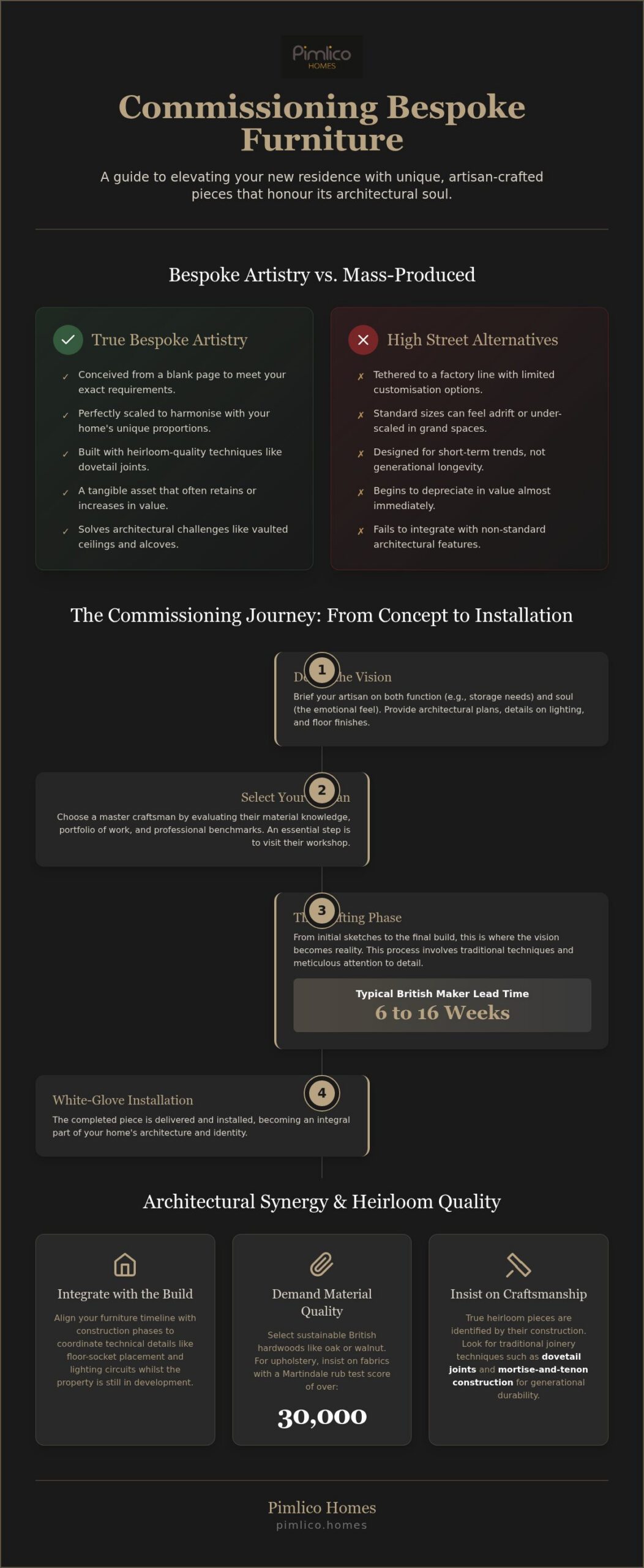
The Commissioning Journey: From Initial Sketch to White-Glove Installation
The path from a conceptual vision to a physical heirloom is a deliberate progression. It begins with an initial consultation where the artisan evaluates the feasibility of your vision against the structural realities of the property. This is a creative exchange. It establishes the creative direction for the entire project, ensuring that the proposed aesthetics align with the functional requirements of your daily life. It’s a moment of discovery where the potential of the materials first meets the constraints of the room.
During the design phase, the maker produces detailed technical drawings and 3D renders. These visualisations allow you to see how the piece will interact with the light and volume of your space. You’ll review material samples, feeling the weight of the timber and the subtle texture of the finishes. Once the design is finalised, the production cycle begins. Many connoisseurs find immense value in a mid-build visit to the workshop. Seeing the internal framework of a piece provides a deep appreciation for the hidden joinery and structural integrity that ensures its longevity.
Installation is the final act of precision. In large-scale executive homes, this stage requires logistical mastery. The team must manage the weight of solid timber whilst protecting the high-specification finishes of your new residence. It’s a methodical process that ensures the piece sits perfectly within its intended architectural context. This white-glove delivery is designed to be seamless, leaving no trace other than the masterpiece itself.
Managing Timelines and Expectations
True craftsmanship is a process that cannot be hurried. Whilst smaller items may be ready sooner, most premium commissions for the home require a lead time of between 6 and 16 weeks. Sourcing rare timber species or applying specialist hand-rubbed finishes can occasionally extend this window. It’s essential to coordinate this timeline with the final stages of your construction. Ideally, delivery should occur once the dusty trades have departed, ensuring your commission remains pristine during the move-in process.
Budgeting for Excellence
A transparent financial structure is the foundation of a professional commission. Most artisans require a deposit of 30 to 50 percent of the total price to secure materials and a slot in the production schedule. The remaining balance is typically due upon successful installation. Whilst the initial cost is higher than high-end retail, the value is found in the absence of planned obsolescence. These are pieces that don’t require replacement, making them a sound investment for our luxury new build homes. You’re paying for time, expertise, and a level of durability that mass-produced items simply cannot replicate.
Architectural Synergy: Ensuring Your Bespoke Pieces Complement Your Pimlico Home
The journey of commissioning bespoke furniture for a new home reaches its zenith when the piece is finally placed within its intended architectural frame. To achieve this level of synergy, planning must begin long before the final coat of paint is applied. We encourage our residents to consider their primary furniture commissions whilst the property is still in the “first fix” stage. This is the critical window when the internal skeleton of the home is being formed, allowing for the seamless integration of services that factory-made furniture simply cannot accommodate.
Strategic planning during construction ensures that floor-socket placement and lighting circuits are positioned with millimetre precision. A bespoke executive desk, for instance, should never be hampered by trailing cables; instead, it should sit over a floor box designed specifically for its dimensions. Similarly, a commissioned dining table deserves a lighting scheme that is perfectly centred to its surface. In the expansive volumes of executive courtyard homes, these technical details ensure that the furniture enhances the property’s stature rather than cluttering its flow. It allows for the creation of intimate pockets of privacy within grand, open-plan spaces, guiding the eye and the movement of the inhabitants with quiet authority.
Future-Proofing Your Interiors
Luxury is defined by its ability to age with grace. When you’re commissioning bespoke furniture for a new home, you’re creating a legacy that should adapt to your family’s changing needs over many decades. This philosophy of longevity is a core component of high specification new build homes, where every material is selected for its durability and timeless appeal. By choosing sustainable British hardwoods and traditional joinery techniques, you ensure that your interiors retain their “new home” feel whilst developing a rich patina that only comes with time. These pieces aren’t mere decorations; they’re structural investments that grow alongside the estate.
The Pimlico Standard of Living
The final handover of a Pimlico Homes property is a milestone of visionary achievement. However, it’s the hand-crafted details that truly complete the resident’s journey. There’s a profound relationship between the architectural grandeur of a luxury development and the intimate, tactile experience of a hand-turned walnut cabinet or a perfectly fitted library wall. These details reflect a standard of living where excellence is the baseline. We invite you to explore your vision further by engaging with our recommended network of artisans, ensuring your home becomes a unique sanctuary of curated artistry.
Crafting Your Legacy Estate
A residence of distinction is defined by the harmony between its structural grandeur and the intimate objects within. By integrating your creative vision with the architectural planning of your property, you ensure that every room feels both intentional and personal. We’ve explored how selecting the right British artisan and managing the collaborative journey can transform a high-specification building into a curated sanctuary. Commissioning bespoke furniture for a new home is the final, essential layer in this process; it’s an investment in artistry that transcends the fleeting nature of the high street.
Pimlico Homes brings 25 years of heritage to premium residential development, specialising in the detached and executive courtyard homes that serve as the perfect canvas for such excellence. Our commitment to quality ensures that your property reflects a visionary spirit. The next chapter of your life deserves a setting that exists nowhere else. Explore our portfolio of bespoke luxury homes and begin your journey to a life lived amongst true distinction. We look forward to supporting your vision.
Frequently Asked Questions
How much does it typically cost to commission a bespoke piece of furniture in 2026?
Costs vary by complexity and material. A bespoke wardrobe typically ranges from £2,500 to over £15,000 for walk-in designs. Media walls with integrated cabinetry often cost between £5,000 and £8,000. These figures represent the investment required for artisan quality. When commissioning bespoke furniture for a new home, it’s essential to budget for both the raw materials and the master craftsman’s time. Quality remains paramount.
How do I ensure a bespoke dining table will fit through the doors of my new build?
Professional makers always conduct a site survey or review architectural plans before production. Most bespoke pieces are designed for on-site assembly or are constructed in modular sections that pass through standard door frames. For grand items like a 3-metre dining table, the top and base are often separate. This methodical approach ensures that even the most substantial pieces enter your residence without compromising the building’s fabric.
What is the difference between bespoke and custom-made furniture?
The difference lies in the level of creative freedom. Custom-made furniture typically involves modifying an existing design, such as choosing a different wood or fabric for a standard chair. Bespoke craftsmanship starts with a blank page. It’s a unique creation designed solely for your space and requirements. Whilst customisation offers a degree of personalisation, true bespoke work provides an entirely unique heirloom. It exists nowhere else in the world.
Can I commission furniture that incorporates smart home technology?
Integrating technology is a hallmark of modern commissions. Master craftsmen can incorporate hidden induction charging points, motorised TV lifts, or ventilated AV cabinets directly into the furniture’s structure. This prevents unsightly cables from disrupting the aesthetic of your property. By planning these features during the design phase, you ensure that your one-of-a-kind pieces are as functional as they are beautiful. They seamlessly support the high-specification nature of your new residence.
How do I care for bespoke timber furniture in a home with underfloor heating?
Timber is a natural material that reacts to temperature changes. To prevent warping or splitting, artisans use timber dried to a specific moisture content, usually between 8% and 10%. You should also ensure your furniture has small feet or shadow gaps to allow air circulation beneath the piece. This prevents heat from becoming trapped. Using stable hardwoods like oak or walnut helps maintain the piece’s integrity in a modern, climate-controlled environment.
Is it better to hire an interior designer or work directly with a furniture maker?
Working with an interior designer provides a cohesive vision across multiple rooms. They act as a bridge, translating your aesthetic desires into technical briefs for the maker. It adds clarity. Working directly with a furniture maker offers a more intimate, hands-on experience. If you have a singular vision for a specific piece, the direct route is often rewarding. For whole-house schemes, a designer’s oversight ensures that every commission harmonises with the property’s architectural flow.
What happens if the final piece doesn’t match the initial design sketches?
A professional commissioning process includes multiple review stages to prevent such discrepancies. You’ll sign off on technical drawings, 3D renders, and physical material samples before any timber is cut. Most reputable British makers provide a contract that outlines the agreed specifications. If a final piece deviates significantly from these signed documents, the maker is typically obligated to rectify the issue. This structured approach provides security. It ensures the exclusivity expected in high-end projects.
How early should I start the commissioning process for a new home?
You should ideally begin the process during the first fix stage of your build. This allows you to coordinate electrical points and structural reinforcement with the furniture’s requirements. With lead times for premium British artisans currently ranging from 6 to 16 weeks, starting early is vital. Commissioning bespoke furniture for a new home at the planning stage ensures your pieces are ready for a white-glove installation. Your home is finished on time.


