
Architectural integrity. The true value of a luxury property lies in its absolute precision. When you move into a bespoke residence, you aren’t just buying bricks and mortar; you’re securing a lifestyle defined by excellence. It’s deeply unsettling when that vision is clouded by persistent defects that don’t match the calibre of your home. Escalating snagging issues if unresolved can feel like a daunting departure from the serenity you expected. We understand the weight of this investment. You deserve a partner who respects the integrity of your home as much as you do.
Professional leverage. In this guide, we’ll master the sophisticated process of ensuring your property reaches its intended state of perfection. You’ll learn how to navigate the formal escalation process with confidence, moving beyond standard service desk delays. We’ll examine the role of the New Homes Ombudsman and the specific steps required to protect your asset’s long-term value. From understanding the Defects Liability Period to engaging expert surveyors, this article provides the clarity needed to transform frustration into a definitive resolution. Your journey to a defect-free home begins with a structured, authoritative approach to quality control.
Key Takeaways
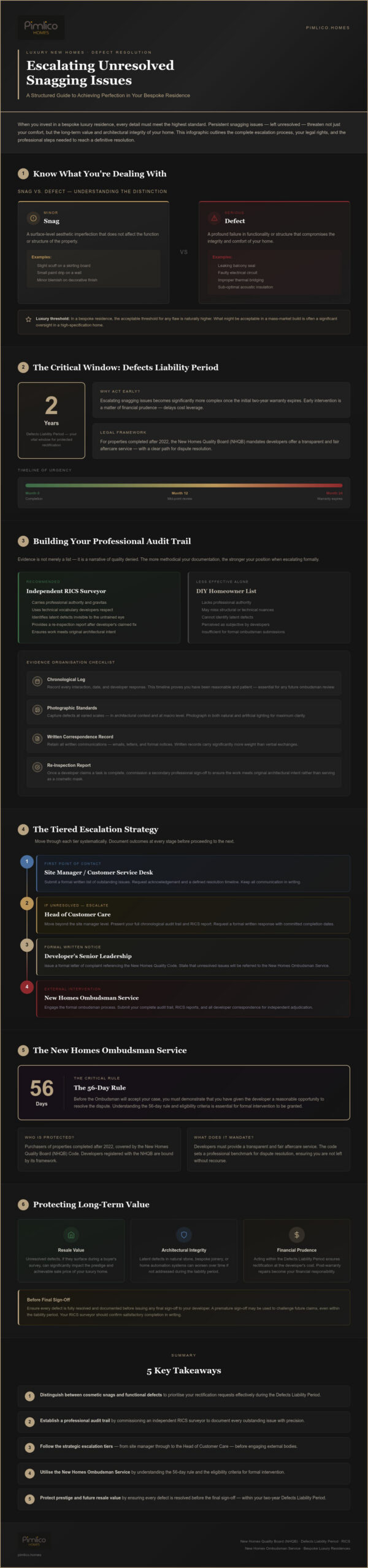
- Distinguish between cosmetic snags and functional defects to prioritise your rectification requests effectively during the Defects Liability Period.
- Establish a professional audit trail by commissioning an independent RICS surveyor to document every outstanding issue with precision.
- Discover the strategic steps for escalating snagging issues if unresolved, including the transition from site managers to the Head of Customer Care.
- Utilise the New Homes Ombudsman Service by understanding the 56-day rule and the eligibility criteria for formal intervention.
- Protect the prestige and future resale value of your luxury home by ensuring every defect is resolved before the final sign-off.
Understanding the Snagging Period in Luxury Residences
The initial two years of residency represent more than just a settling-in phase. This period, known as the Defects Liability Period, is a vital window for ensuring your property meets the exacting standards promised at the point of sale. Whilst most developers strive for perfection, the complexity of high-specification builds means minor adjustments are often necessary. Proactive communication is the cornerstone of this process. You’ll find that escalating snagging issues if unresolved becomes significantly more complex once this initial two-year warranty expires, making early intervention a matter of financial prudence.
A clear distinction exists between a snag and a defect. A snag might be a minor aesthetic blemish, perhaps a slight scuff on a skirting board or a small paint drip. These are surface-level imperfections. A defect, however, is a more profound failure in functionality or structure, such as a leaking balcony seal or a faulty electrical circuit. In a luxury context, the threshold for what constitutes a flaw is naturally higher. What might be acceptable in a mass-market build is often a significant oversight in a bespoke residence.
This phase requires a psychological shift. Your home is a masterpiece, but it’s also a managed asset that requires technical vigilance. Viewing the snagging process as a collaborative audit rather than a series of complaints ensures the property’s legacy remains untarnished. It’s about protecting the artistry of the build.
The Standard of Excellence in High-End Construction
Bespoke finishes demand a level of expertise that goes beyond general building knowledge. Natural stone flooring, specialist timber joinery, and intricate home automation systems require specific snagging protocols to identify subtle failures in installation or calibration. Architectural integrity is the priority here. The luxury standard is an uncompromising alignment between design intent and physical execution.
Your Rights Under the New Homes Quality Code
For properties completed after 2022, the New Homes Quality Board (NHQB) provides a robust framework of protection. This code mandates that developers offer a transparent and fair aftercare service, ensuring you aren’t left in a vacuum of silence. It sets a professional benchmark for dispute resolution, providing a clear path for escalating snagging issues if unresolved through standard channels. This legal backing ensures that the prestige of your home is matched by the accountability of its creator.
Building the Audit Trail: Documenting Unresolved Issues
Precision is the hallmark of a luxury residence. When that precision is compromised, the path to rectification requires a methodical assembly of evidence. Evidence is not merely a list; it is a narrative of quality denied. Commissioning a professional snagging report from an independent RICS surveyor is the first non-negotiable step in this journey. These experts possess the technical vocabulary to identify failures that remain invisible to the untrained eye, providing the objective weight needed when escalating snagging issues if unresolved through standard customer service channels.
Professional Surveying vs DIY Documentation
Independent surveys carry a certain gravitas that a simple homeowner list cannot replicate. In an executive courtyard development, for instance, a surveyor might detect latent defects such as improper thermal bridging or sub-optimal acoustic insulation. These are structural nuances that affect the longevity and comfort of your investment. A re-inspection report is equally vital. Once a developer claims a task is complete, a secondary professional sign-off ensures the work meets the original architectural intent rather than serving as a mere cosmetic mask. A developer who values their heritage, much like those who craft bespoke luxury homes, will view your methodical documentation as a helpful blueprint for achieving the perfection your investment deserves.
Organising Your Evidence for Maximum Leverage
Structure your evidence with the same care used to design your home. Create a chronological log that details every interaction, date, and developer response. This timeline proves you’ve been reasonable and patient, which is essential for any future legal or ombudsman review. This structured approach is particularly effective when escalating snagging issues if unresolved, as it transforms emotional frustration into indisputable fact.
- Photographic standards: Use varied scales. Capture the defect in its architectural context, then move to a macro level to show the specific flaw. Lighting is crucial; photograph defects in both natural daylight and under interior spotlights to reveal shadows or uneven finishes.
- Impact statements: Don’t just list the flaw. Describe how it diminishes your experience. If a bespoke window seal fails, the impact isn’t just the draft; it’s the compromise of your home’s thermal sanctuary.
- Digital categorisation: Use digital folders to categorise issues by room or severity. This allows for a swift, professional presentation during meetings with senior management.
A well-organised audit trail is the most powerful tool in a homeowner’s arsenal. It moves the conversation away from subjective opinion and towards a shared commitment to quality. By presenting a refined, data-driven case, you position yourself as a discerning guardian of your property’s value.
A Tiered Strategy for Formal Communication
Moving beyond the daily interactions with site staff requires a shift in perspective. Whilst on-site teams are often diligent, they may lack the budgetary authority or logistical oversight to resolve persistent problems. Transitioning your focus toward the Head of Customer Care signals that you’re moving from a casual dialogue to a formalised audit. This is the first critical step in escalating snagging issues if unresolved; it establishes your intent to hold the developer to the high standards of their corporate promise. By engaging with management, you ensure your concerns are logged within the company’s formal quality assurance framework.
A formal “Letter Before Action” serves as a definitive marker in your timeline. This document shouldn’t be aggressive. Instead, it should be a precise, technical summary of outstanding works, underpinned by a “Time is of the Essence” clause. This legal phrasing indicates that the timeframe for completion is a condition of the contract. It creates a sense of urgency that standard emails often fail to ignite, particularly when you highlight how the delay impacts the property’s prestige. It’s a professional way to demonstrate that your patience has reached a structured limit.
The Art of the Executive Complaint
Effective communication in the luxury market relies on technical precision rather than emotional appeals. Use the vocabulary of the surveyor. Reference specific building regulations or architectural drawings to describe the failure. This approach demonstrates that you’re a discerning owner who understands the inherent value of their investment. If you’re still in the early stages of your property journey, reviewing The Ultimate Guide to Buying a Luxury New Build Home in 2026 can provide further context on the standards you should expect. Reputation is a developer’s most valuable currency. Reminding them of your commitment to a defect-free home often prompts a swifter response to protect their brand equity.
When to Request a Senior Management Review
There comes a point where standard channels reach a natural impasse. This “deadlock” usually occurs when the developer’s customer service team stops offering new solutions or ignores the professional evidence you’ve provided. At this stage, you must request a formal final response letter from the Director’s Office. This document is essential. It serves as the key that unlocks external escalation routes, such as the New Homes Ombudsman. Escalating snagging issues if unresolved to this senior level forces a top-down review of your case, often bypassing the bureaucratic hurdles that slow down site-level repairs. It moves your home from a ticket in a system to a priority on a director’s desk.
External Escalation: The New Homes Ombudsman Service
The New Homes Ombudsman Service (NHOS) represents the final tier of professional accountability within the UK property market. It’s a sanctuary for homeowners who have exhausted internal dialogues without achieving the architectural perfection they were promised. This service acts as an impartial arbiter, possessing the authority to review your developer’s conduct against the New Homes Quality Code. Escalating snagging issues if unresolved to this level ensures that a neutral expert evaluates the technical merits of your case, providing a resolution that carries significant weight.
Timing is a critical component of this process. You must observe the 56-day rule, which dictates that a developer has eight weeks to resolve a formal complaint before the Ombudsman will intervene. This mandatory period allows the creator of your home one final opportunity to rectify the defects. If this window closes without a satisfactory outcome, the NHOS can step in to award specific performance, effectively ordering the developer to complete the repairs. In some instances, they may also award financial compensation up to £75,000 for service failures or distress. For more profound structural failures, you should simultaneously engage your warranty provider, such as the NHBC, to ensure your investment remains protected under its ten-year policy.
Navigating the Ombudsman Application
Success at this stage relies heavily on the quality of the audit trail you’ve painstakingly built. When presenting your case to the NHOS, you must clearly distinguish between a breach of the New Homes Quality Code and a breach of contract. The Ombudsman focuses on the former, examining whether the developer’s aftercare service met the required professional standards. Whilst an external investigation can take several months to conclude, a well-documented application often leads to a swifter determination. It’s about providing a clear, evidence-based narrative that leaves no room for ambiguity.
Alternative Dispute Resolution (ADR) and Legal Paths
Mediation offers a faster, often more collaborative alternative to a formal Ombudsman ruling. This form of Alternative Dispute Resolution acts as a sophisticated bridge between informal complaints and costly litigation, allowing both parties to find a mutually agreeable path forward. In high-value disputes involving complex bespoke finishes, a specialist property solicitor can provide the legal leverage necessary to prompt a settlement. If you are seeking a developer that prioritises quality from the outset, exploring luxury new build homes built with a commitment to excellence can prevent these frustrations before they begin. Legal action should always be the final resort, yet having a robust legal strategy ensures your property’s legacy is never compromised by substandard workmanship.
Preserving the Legacy and Value of Your Luxury Home
A home is more than a residence; it’s a legacy. For owners of bespoke luxury homes or executive courtyard homes, the property represents a significant financial and emotional commitment. Protecting this asset requires a long-term perspective that extends far beyond the initial handover. Unresolved defects aren’t merely inconveniences. They are liabilities that can erode the prestige and the market value of your property over time. By escalating snagging issues if unresolved, you aren’t just fixing a tap or a tile. You’re safeguarding the structural and aesthetic integrity that defines high-end real estate.
Future RICS valuations depend heavily on the property’s condition. A surveyor’s keen eye will inevitably identify persistent flaws that have been ignored. These documented issues can lead to down-valuations, complicating future sales or refinancing efforts. Achieving a clean bill of health is particularly vital for luxury barn conversions where original features and modern interventions must coexist in perfect harmony. Every resolved snag is a testament to the property’s quality. It ensures the home remains a blue-chip investment in any market cycle.
The Link Between Aftercare and Asset Appreciation
Meticulous snagging resolution is a sophisticated form of future-proofing. When every technical detail is addressed during the warranty period, you create a comprehensive record of care. This documentation is invaluable during a resale. It provides prospective buyers with the confidence that the home has been maintained to the highest possible standard. For a deeper understanding of market dynamics, you may wish to consult our Luxury Investment Guide for New Build Resale Value. Ensuring all warranties are fully signed off and archived creates a seamless transition of value for the next custodian of your home.
Selecting Developers Committed to Excellence
The calibre of your developer is your primary investment strategy. A premier builder doesn’t view a property as a finished transaction but as a living reflection of their brand’s heritage. At Pimlico Homes, our philosophy is rooted in architectural perfection and enduring support. We believe that a reputable developer should welcome a professional snagging process. It’s an opportunity to refine a masterpiece. When you choose a partner with 25 years of industry experience, you’re securing a guardian of quality who understands that perfection is a deliberate process. Escalating snagging issues if unresolved should be a last resort, but knowing how to navigate that path ensures your home remains the sanctuary of excellence you were promised. Perfection is a journey we take together.
Securing Your Property’s Architectural Legacy
Securing your property’s architectural legacy requires a blend of technical vigilance and structured advocacy. You’ve learned that a robust audit trail and a tiered communication strategy are the most effective tools for protecting your investment. By escalating snagging issues if unresolved through formal channels, you move beyond simple requests. You’re asserting the right to the excellence you were promised. Perfection isn’t an accident; it’s the result of a shared commitment to quality between a homeowner and a developer who respects the weight of your investment.
True luxury is found in the details that endure. At Pimlico Homes, we bring over 25 years of specialist expertise to every development, focusing on high-specification, executive-level finishes that meet the most discerning standards. Our commitment to architectural integrity ensures that your home remains a blue-chip asset for years to come. We believe a developer should be a reliable guardian of quality, standing as a dedicated partner in your pursuit of a flawless living experience. Your home should be a sanctuary of excellence, untarnished by neglect.
Explore our collection of meticulously crafted luxury homes and discover a standard of living that honours your investment and your vision for the future.
Frequently Asked Questions
What is the “56-day rule” when escalating a snagging complaint?
The 56-day rule is the mandatory period a developer has to resolve a formal complaint before you can escalate to the New Homes Ombudsman. It begins the day you submit your written grievance. This timeframe allows the developer a final window to rectify defects. If the issue remains outstanding after 56 days, you’re entitled to seek an independent determination. This structure ensures that escalating snagging issues if unresolved follows a fair and transparent timeline for both parties.
Can I withhold payment or a portion of the purchase price for unresolved snags?
You cannot typically withhold a portion of the purchase price once the sale has completed; however, your solicitor might arrange a retention during the conveyancing process. This involves holding back a specific sum until major snags are rectified. Once you’ve moved in, withholding mortgage payments or other fees is risky and could lead to legal complications. It’s better to rely on the formal dispute resolution processes provided by the New Homes Quality Board to secure the necessary repairs.
Is the New Homes Ombudsman service free for homeowners to use?
The New Homes Ombudsman Service is entirely free for homeowners to use. The service is funded by developer levies, ensuring that residents have access to impartial justice without the burden of legal fees. It provides a sophisticated alternative to the courts, offering a resolution that is binding on the developer. This accessibility is a cornerstone of the New Homes Quality Code, designed to protect the significant investment you’ve made in your luxury property.
What happens if my developer goes out of business before fixing my snags?
If a developer ceases trading, your primary protection lies with your structural warranty provider, such as the NHBC or Premier Guarantee. These policies usually cover the cost of rectifying major structural defects if the builder is unable to do so. For minor cosmetic snags, the situation is more complex as warranty providers often only step in for significant failures. You should contact the warranty provider immediately to register your claim and assess your coverage under these circumstances.
How do I know if a snag is “out of tolerance” according to industry standards?
A snag is out of tolerance when it fails to meet the specific technical benchmarks set by the NHBC Standards or the RICS Professional Statement. These standards define acceptable deviations in surfaces, levels, and finishes. For example, a wall might be considered out of tolerance if its verticality deviates by more than a specific number of millimetres over a set height. A professional surveyor uses calibrated tools to measure these deviations, providing the technical evidence required for a claim.
Can I fix the snags myself and charge the developer for the costs?
You shouldn’t undertake repairs yourself and expect the developer to reimburse the costs without their prior written agreement. Doing so can void your warranty for that specific element of the build. If you choose to hire your own contractors, you’ll likely bear the financial responsibility. The formal process of escalating snagging issues if unresolved is designed to force the developer to fulfil their contractual obligations using their own approved specialist trades.
Does the New Homes Quality Code apply to barn conversions and bespoke builds?
The New Homes Quality Code applies to all new build homes registered by developers who have signed up to the New Homes Quality Board, including bespoke luxury homes and executive courtyard developments. Whilst barn conversions involve existing structures, the new elements of the build are typically covered if the developer is a registered member. Always verify that your developer is a participant in the scheme at the point of reservation to ensure you have access to the Ombudsman.
Will escalating a complaint affect my relationship with the developer for future warranty claims?
Escalating a complaint is a professional act of asset management and shouldn’t negatively impact your relationship with a reputable developer. Premier builders view the snagging process as a collaborative route to perfection. They value their reputation for excellence and understand that a meticulous audit ensures the long-term satisfaction of their clients. A structured escalation demonstrates that you’re a discerning owner who respects the architectural integrity of the property.





