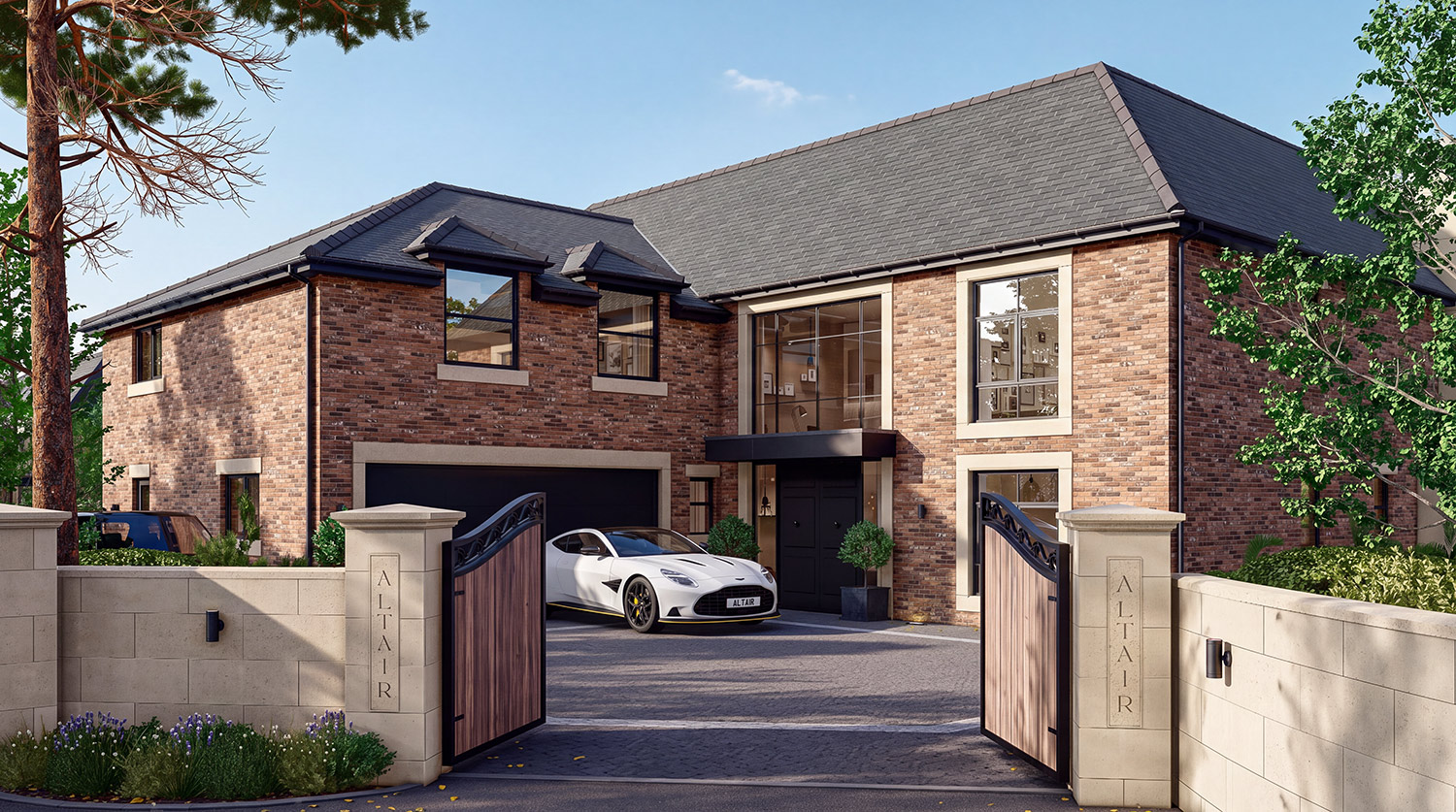
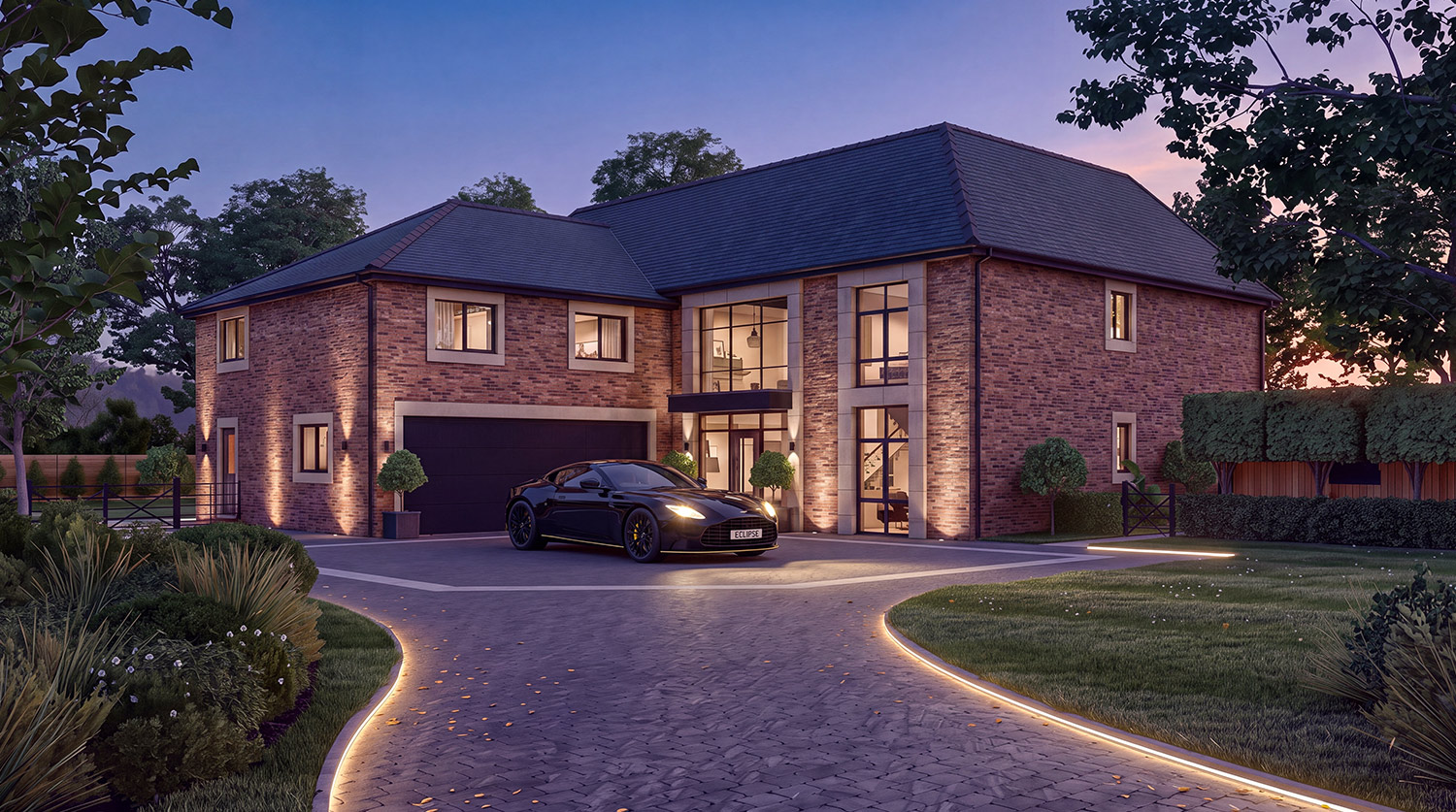
What makes a development feel exclusive: a gated entrance, or a home designed with care? For buyers exploring exclusive property developments UK, a prestigious label alone says little about whether a home’s character, privacy and layout will suit the way they want to live.
Look instead at how the development’s architecture, setting and different home styles work together. The right fit is personal: a detached home, an executive courtyard home, a bespoke new build and a barn conversion each offer a different expression of privacy, character and design.
This guide explains what to look for, how to compare home formats and which practical details to consider before making a decision. Pimlico Homes develops luxury detached homes, executive courtyard homes, bespoke new builds and premium barn conversions, with craftsmanship central to its new-build projects. Use the guidance below to look beyond the word “exclusive” and focus on what will make a home feel right for you.
Key Takeaways
- Assess exclusive property developments UK by looking beyond promotional language to the relationship between design, planning and craftsmanship.
- Compare detached, courtyard, bespoke new-build and barn conversion homes by the character and privacy each format may offer.
- Look closely at how materials and details are finished to judge whether the architecture feels considered and coherent.
- Rank your essential needs against features that would be appealing but optional before choosing a home.
- Explore how Pimlico Homes’ detached homes, courtyard homes, bespoke new builds and barn conversions express different approaches to residential design.
What makes exclusive property developments distinctive?
An exclusive residential development is not defined by a grand entrance or a premium label. Its character comes from the relationship between its homes, architecture and setting. For buyers exploring exclusive property developments UK, that distinction matters: marketing language may suggest prestige, but the experience of living there depends on the design decisions behind the homes and their surroundings.
“An exclusive residential development is a carefully composed place where architecture, craftsmanship and the needs of everyday living are considered together.” This is a more useful measure than status alone. A well-resolved design can feel distinctive without being ostentatious, and an impressive entrance cannot, by itself, tell you about the quality of the homes beyond it.
Residential development brings together stages such as planning, construction and marketing, as outlined in Real estate development. For a buyer, the result matters most: do the design choices form a coherent whole, or do they feel like a collection of attractive but unrelated features?
Exclusivity beyond the marketing language
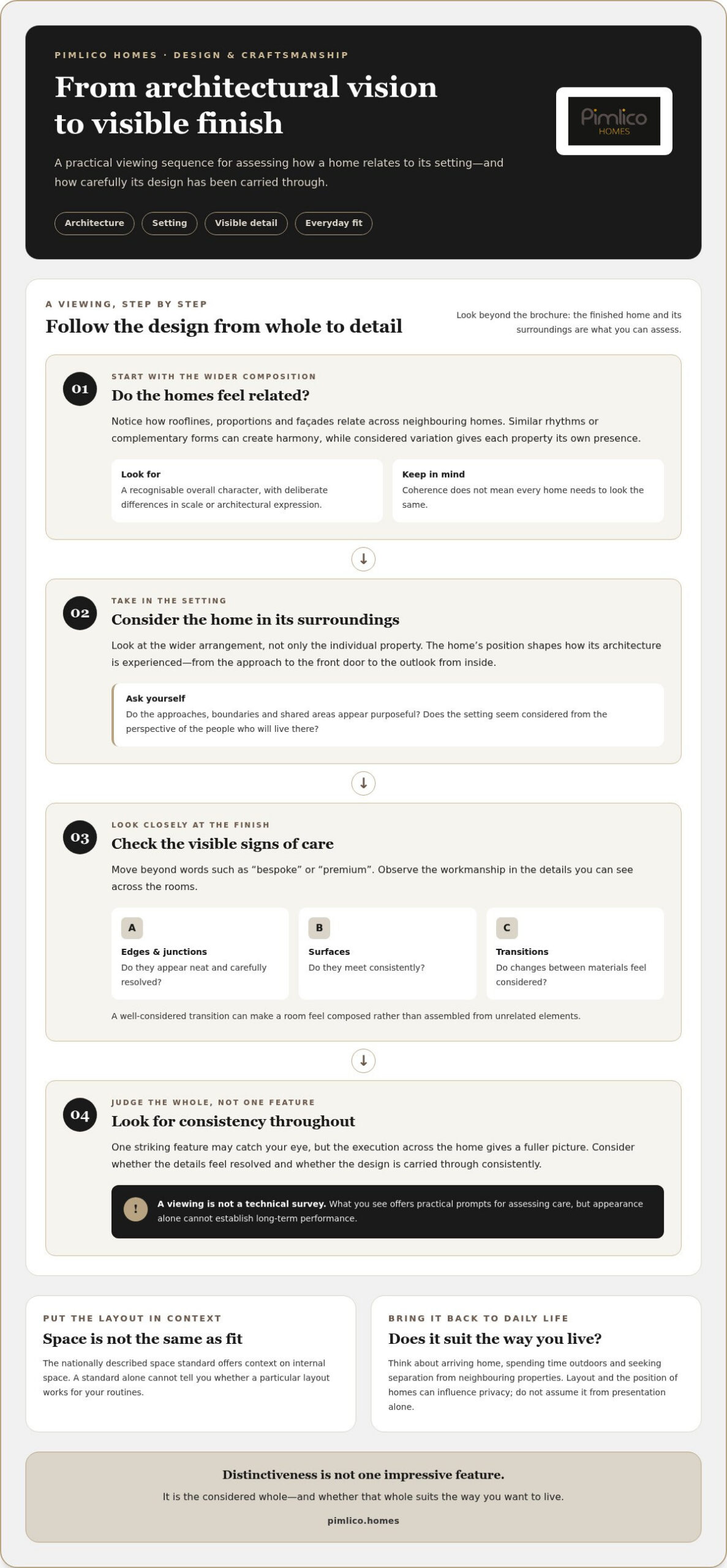
Look at how the buildings relate to one another. Do their proportions, materials and architectural details work together? Are approaches, boundaries and shared areas arranged with purpose? These visible details offer practical clues to a development’s character. They can show whether each home is part of a broader design vision while retaining its own identity.
Assess craftsmanship through what you can see, rather than relying on adjectives. Notice how finishes meet, whether details appear carefully resolved and whether the design is carried through consistently. You do not need specialist knowledge to make these observations; simply look beyond brochure images and descriptions such as “luxury”.
Exclusivity is not a synonym for a high price, a substantial entrance or restricted access. A gated perimeter may suit some buyers, but it is neither a universal marker of design quality nor proof that a home will meet your needs. No single feature guarantees that a development will feel distinctive or suitable. Consider several aspects together.
A development as a setting for everyday life
A development has a shared character, but each home remains a private domestic space. Think about how its layout and architecture could shape daily routines: arriving home, spending time outdoors or seeking separation from neighbouring properties. Privacy can be influenced by the position and arrangement of homes, but should not be assumed from a development’s presentation. A shared identity may encourage a sense of belonging, but design cannot promise a particular community experience or level of security.
Visual consistency need not mean identical homes. Related forms, materials or details can give a development a recognisable identity while allowing variation in scale, arrangement or architectural expression. Look at whether those differences feel deliberate and harmonious, and whether the overall setting seems considered from the perspective of the people who will live there.
Distinction is not one impressive feature. It is the considered whole, and whether that whole suits the way you want to live.
How design and craftsmanship shape an exclusive development
Architecture establishes the first impression; craftsmanship shows how well that vision has been carried through. In exclusive property developments UK, coherent design means more than repeated façades or fashionable finishes. It is the relationship between a home’s proportions, details and surrounding setting.
Design coherence is the sense that every home belongs to its setting, without every home needing to look the same. This helps buyers look beyond polished descriptions and consider how a development has been composed, from its overall form to the finish of individual details.
Architectural character and a coherent setting
Notice how rooflines, proportions and façades relate across neighbouring homes. Similar rhythms or complementary forms can create harmony, while considered variation gives each property its own presence. Coherence does not require identical architecture: homes can differ in scale or expression and still feel part of a unified composition.
Setting matters, too. The position of a home within its surroundings affects how its architecture is experienced, from the approach to the front door to the outlook from inside. During a viewing, take in the wider arrangement as well as the individual property. The nationally described space standard offers context on internal space, but a standard alone cannot tell you whether a particular layout works for your routines.
Craftsmanship buyers can assess
Look closely at visible finishes rather than relying on words such as “bespoke” or “premium”. At a viewing, check whether edges and junctions appear neat, surfaces meet consistently and details feel resolved across the rooms you see. These observations are not a technical survey; they are practical prompts for assessing the care evident in the finished home.
Details contribute to the overall impression of a home. A well-considered transition between materials, for example, can make a room feel composed rather than assembled from unrelated elements. Consistency matters: one striking feature may catch your eye, but the execution across the home gives a fuller picture. Appearance and a viewing alone cannot establish long-term performance, so treat what you see as one part of your wider assessment.
Craftsmanship is central to Pimlico Homes’ new-build projects. Its homes include luxury detached homes, executive courtyard homes, bespoke new builds and premium barn conversions, each offering a different residential form through which design and making can be expressed. For wider purchase considerations, read the guide to buying a luxury new-build home. To explore its residential developments, visit Pimlico Homes.
Detached, courtyard and barn conversion homes compared
Home type shapes more than a development’s appearance. It can influence how you experience privacy, character and the relationship between your home and its surroundings. Use the comparison below as a starting point, not a promise of particular features: layouts, architectural choices and settings vary between homes.
The National design guide sets out principles for creating well-designed places. A similar whole-place perspective can help buyers: consider a home’s character alongside its arrangement and context, rather than judging a format by its name alone.
| Home type | Character and architectural feel | Privacy and buyer considerations |
|---|---|---|
| Detached | A standalone home with its own architectural presence. | May appeal if separation from adjoining homes matters. Consider the actual layout and relationship with nearby properties. |
| Courtyard | Homes shaped around a courtyard arrangement, with a more connected composition. | Consider how the home relates to the courtyard and neighbouring properties; the format alone does not guarantee seclusion. |
| Bespoke new build | A purpose-designed new home, with its character shaped by its design. | Consider whether the layout and architectural approach fit your priorities and daily routines. |
| Barn conversion | A home created from an existing building, where the structure can inform its character. | Consider how the existing building’s form relates to the home you want; conversions vary in design and features. |
Detached and courtyard homes: different expressions of privacy
Detached describes a home’s position, not a guarantee of a particular plot size, garden, outlook or internal arrangement. The experience depends on the home and how it sits in its surroundings. During a viewing, consider sightlines, entrances and how you would use the spaces. Do not assume the label tells the whole story.
Courtyard living offers a different arrangement. A courtyard can create a shared point of orientation or shape the relationship between homes, but it does not automatically make a property secluded. Look at which way each home faces and how movement through the setting may feel. Explore executive courtyard home design to learn more about this format.
Bespoke new builds and barn conversions
A bespoke new build is designed as a new residence; a barn conversion adapts an existing building for residential use. A new build may offer a contemporary architectural starting point, while a conversion may draw character from the structure being adapted. Neither approach is inherently superior. A barn’s age or former use does not guarantee specific heritage details, and new builds vary widely in style.
Consider which qualities matter most: a purpose-designed home or the distinct character an existing structure may bring. Then assess the individual layout, setting and execution. Across exclusive property developments UK, these formats are best compared as different expressions of design, each requiring a close look at the home itself.
How to assess whether an exclusive development suits you
Start with your priorities, not the most striking feature in a brochure. To compare exclusive property developments UK, decide what matters, assess the home format, examine the individual property and understand its ownership context. This sequence keeps attractive design details in perspective and helps you judge whether a home suits your everyday needs.
Match the home format to your priorities
Before viewing, write down the qualities you value most and rank them. Privacy, architectural character and layout mean different things to different buyers; a detached home, courtyard home, bespoke new build or barn conversion may suit those priorities in different ways.
Use this checklist during a viewing. Mark each point as essential, desirable or not important, then record what you observe in the particular home:
- Privacy: consider the home’s position and how its rooms relate to nearby properties.
- Character: note which architectural details appeal to you and whether the overall style feels right.
- Layout: consider how the rooms connect and whether their arrangement supports your routines.
- Home format: decide whether you are drawn to a detached, courtyard, bespoke new-build or converted home.
- Setting: take in the immediate surroundings as well as the property itself.
Compare actual homes, not just descriptions of the development. A general description may convey a design intention, but the plan, position and details of an individual property give you a more useful basis for comparison. If a feature is beautiful but does not support a priority you have ranked highly, treat it as a welcome extra rather than a deciding factor.
Review the home and its ownership context
Once a home’s format appeals, review the information for that specific property. Read the floor plan alongside the written description, then compare both with what you see at a viewing. Look at the finishes and note any details that affect your assessment. Keep observations distinct from assumptions: an image or sample may not show every aspect of the home being offered.
Ownership is part of suitability, too. Charges, responsibilities and legal arrangements depend on the individual property and its terms, so take time to understand the relevant information as part of your purchase decision. Do not assume that arrangements are identical across developments or even between homes in the same setting.
For a wider view of the purchase journey, read Pimlico Homes’ luxury new-build purchasing guide. If the homes Pimlico Homes develops align with your priorities, explore its residential developments and compare the formats that interest you.
Discover Pimlico Homes’ approach to exclusive residential development
A home is a significant personal choice, shaped by more than appearance. Pimlico Homes develops luxury homes across several residential formats, with a considered approach to design and a focus on craftsmanship. For buyers exploring exclusive property developments UK, this range offers different ways to consider architectural character and the kind of home that fits their priorities.
Rather than treating one format as the measure of quality, consider what each offers in terms of style and experience. A home’s character comes from its particular design and setting; the category is a starting point, not a complete description of the property.
A residential portfolio with distinct forms
Pimlico Homes’ residential portfolio includes luxury detached homes, executive courtyard homes, bespoke new builds and premium barn conversions. Each category has a different architectural starting point. A detached home may appeal if you are drawn to a standalone form; a courtyard home offers a distinct arrangement of residences; a bespoke new build begins with the design of a new home; and a barn conversion takes its starting point from an existing building.
These differences can help you focus your search. If individual architectural expression appeals, consider what you want from a bespoke home. If you are drawn to the character of an existing structure, explore a barn conversion. Buyers considering detached or courtyard homes can compare how each property is arranged and how its design relates to its setting. No category alone determines privacy, layout or suitability, so assess the particular home against your priorities.
Craftsmanship is central to Pimlico Homes’ new-build projects. Consider how the design has been carried through in each home and how its details contribute to the overall impression. The value lies not in an adjective, but in whether the finished design feels thoughtfully resolved and suited to the life you have in mind. The right balance of character and practicality will differ from one buyer to another.
A considered next step
Keep your essential requirements in view as you explore. You may be drawn to the presence of a detached home, the arrangement of courtyard living, the design possibilities of a bespoke new build or the individual character of a barn conversion. Let that preference guide you, then look closely at each home’s design and setting. Comparing the details can turn a broad interest in exclusivity into a clearer sense of what feels right.
Explore Pimlico Homes’ residential developments to compare its home formats and find one that merits a closer look. The aim is not simply to choose a distinctive property, but to find a home whose character feels considered and enduring.
Choose a home that feels right for the years ahead
Let your priorities guide what you explore. A home should appeal in the moment, but its character, design and everyday suitability matter after the first impression fades. As you consider exclusive property developments UK, distinguish lasting appeal from features that simply catch the eye.
Pimlico Homes develops luxury detached and executive courtyard homes, bespoke new builds and premium barn conversions. Each offers a different architectural starting point and a way to explore the style of home that feels most aligned with your preferences.
Explore Pimlico Homes’ residential developments and compare the home formats to find one that suits your priorities. A measured choice begins with curiosity and a clear sense of what matters to you.
Frequently Asked Questions
Are exclusive property developments always gated?
No. “Exclusive” does not automatically mean a development is gated or access-controlled. The term may describe its design, scale, character or choice of homes rather than how people enter the site. Look at the actual entrance, boundaries and arrangements for visitors or deliveries. Treat security and privacy as separate practical questions, not qualities guaranteed by the marketing description.
Do exclusive property developments have service charges?
Some developments may have shared costs, whilst others may not; arrangements depend on the property and its ownership structure. The word “exclusive” does not establish whether a charge applies or what it covers. Review the information for the specific home, paying attention to stated responsibilities, services and payment arrangements. Make sure you understand the terms as part of your purchase review.
Can I reserve a new-build home before it is completed?
Reservation arrangements vary according to the development, the home’s construction stage and the terms offered. Before proceeding, understand what the reservation covers, any deadlines or conditions, and how it connects with the later purchase process. Read the documents carefully, including the payment terms, and make sure the details reflect your understanding. Reserving a home is not a substitute for reviewing the full purchase documentation.
What should I look for when viewing an exclusive property development?
Look beyond the entrance and promotional language. Consider how you would move through the home during an ordinary day, whether the room arrangement supports your needs and how the approach to the property feels in person. Compare the home with its plans and written description, noting any differences. Also review the responsibilities that apply to that particular property, as ownership arrangements can vary.
Are exclusive property developments only made up of new-build homes?
No. The phrase does not specify how every home in a development was created. Some residential offerings include purpose-built homes, whilst others may feature converted buildings. Pimlico Homes’ residential categories include bespoke new builds and premium barn conversions. When comparing these options, consider what appeals about the individual home’s design and setting, then review its condition and purchase details rather than assuming all homes share the same qualities.
How do courtyard homes differ from detached homes?
They describe different residential formats, although the precise design varies between properties. A detached home stands separately from adjoining homes, whilst a courtyard home is arranged in relation to a courtyard setting. Neither label alone tells you how much privacy, space or outlook a particular home offers. Compare the plans and view the property to understand how its rooms, entrances and position relate to the surrounding homes.