
The largest garden isn’t always the most usable. For anyone considering executive homes with private gardens, the key question is whether the space supports the way you live, from a quiet morning outdoors to relaxed entertaining with family and friends. A generous lawn may look impressive in photographs, yet feel exposed, poorly oriented or demanding to maintain in person.
It’s natural to be drawn to mature planting, elegant paving and a sense of seclusion. But a considered choice means looking beyond presentation to the details that shape daily use. This guide explains how to assess layout, privacy, sunlight, drainage and year-round practicality, and what to ask before committing to a purchase. It also considers the trade-offs between established landscaping and a simpler space, and how to judge whether the upkeep suits your routine. When exploring luxury new homes, treat the garden as part of the home itself: its value lies in how thoughtfully it serves you, not simply in its size.
Key Takeaways
- Distinguish a private garden from shared grounds, then consider how the space could support your household’s routines.
- Assess the garden’s shape, levels and changing light against the activities you want to enjoy there.
- Compare lawns, patios, planted borders and courtyards to find a balance of function and upkeep that suits you.
- When viewing executive homes with private gardens, compare the garden with the plans and marketing images, then confirm what is included.
- Choose with future needs in mind, including accessibility, changing routines and the time you can give to garden care.
Why private gardens matter in executive homes
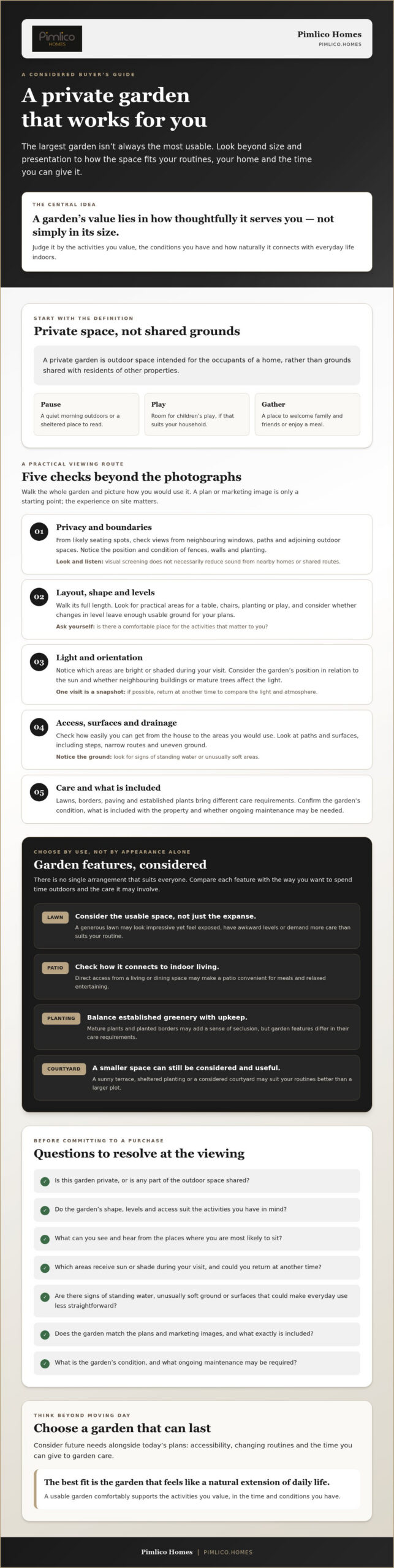
A private garden is outdoor space intended for the occupants of a home, rather than grounds shared with residents of other properties. It may offer room to pause outdoors, give children space to play, tend plants or welcome guests. The arrangement matters as much as the greenery itself: a garden should relate naturally to the home and the routines of the people who live there.
For buyers considering executive homes with private gardens, acreage alone is a poor measure of usefulness. A generous plot may have awkward levels or little space for seating, while a more compact garden could make excellent use of a sunny terrace and sheltered planting. Start with what is a garden in broad terms, then judge the individual space by how it works for you.
There is also a practical dimension. Lawns, borders, paving and established plants each bring different care requirements, and garden features vary from one home to another. Check the individual property details to confirm what is included, the garden’s condition and any ongoing maintenance it may require.
What makes a garden feel genuinely private?
Look beyond the boundary line. From the seating area, consider sightlines from neighbouring windows, paths and adjoining outdoor spaces. Fences, walls and planting can soften views or create a sense of enclosure, while the garden’s orientation and position may affect how exposed it feels at different times of day.
Visual seclusion and acoustic privacy are not the same. A screened terrace may feel sheltered from view but still be close to neighbouring activity or a shared route. During a viewing, pause where you are most likely to sit and notice both what you can see and what you can hear. A garden can offer a welcome sense of retreat without promising complete isolation.
How a private garden can complement executive living
Consider how easily indoor and outdoor routines connect. Direct access from a living or dining space may make a patio convenient for meals, while a quieter corner could suit reading or gardening. Families may value space for play; other buyers may prefer a considered courtyard or low-maintenance seating area. No single arrangement suits everyone.
A usable garden is outdoor space that comfortably supports the activities you value, in the time and conditions you have. That definition brings layout, access and upkeep into focus alongside appearance. For executive homes with private gardens, the best fit is not necessarily the grandest plot, but the one that feels like a natural extension of daily life.
How to assess the layout, light and privacy of a private garden
A garden can feel quite different from the way it appears in a floor plan or photograph. During a viewing, assess the space as a sequence of areas, not simply as one plot. Walk its full length, note changes in level and consider whether the usable ground suits your plans. A level area for a table, a sheltered corner for reading or a clear space for play may matter more than the overall dimensions.
Light changes with the time of day and season. Where practical, visit at different times, or ask how the garden is positioned in relation to the sun. During the viewing, notice which areas are bright or shaded and whether neighbouring buildings or mature trees affect the light. The Royal Horticultural Society’s guidance on garden design principles can help you consider how orientation and layout shape the experience of a space.
A viewing checklist for garden orientation and usable space
Walk the garden rather than judging it from the doorway. Identify possible spots for seating, planting or play, then check how easily you can reach them from the house. Notice whether steps, narrow paths or uneven surfaces might make everyday use less straightforward.
- Identify where a table, chairs or other intended features could sit comfortably.
- Observe which parts receive sun or shade during your visit.
- Check the condition of paths and surfaces, and look for signs of standing water or unusually soft ground.
- Consider whether the shape and levels leave a practical area for the activities that matter to you.
A single visit offers only a snapshot. If you can return, compare the light and atmosphere at another time, particularly if a sunny seating area or afternoon shade matters to your routine.
Privacy, boundaries and the view from indoors
Privacy is best judged from the places you will actually use. Look out from key rooms towards neighbouring windows, paths and adjoining outdoor areas, then repeat the check from likely seating spots. Fences, walls and hedges may screen views, but their height, condition and position all affect how enclosed the garden feels. Visual screening also won’t necessarily reduce sound from nearby homes or shared routes.
Inspect boundary transitions and access points, but don’t assume who owns or maintains a fence, wall or hedge. Ask which boundaries and screening features are included in the property specification, and check the individual details for any stated maintenance responsibilities. For executive homes with private gardens, clear answers help you understand both the setting and the work it may involve.
Drainage deserves a question too. Ask whether any issues are known and what maintenance the garden and its surfaces require. As you explore luxury new homes, use each property’s specification to verify garden features rather than relying on images or assumptions.
Private garden options compared: lawn, patio, planting and courtyard
Garden surfaces shape more than appearance. They influence how you use the space, how easily you move through it and the care it asks of you. For buyers comparing executive homes with private gardens, the right balance depends on household routines, not a universal ideal. A broad lawn might suit active family life, while a paved terrace could better support regular outdoor dining.
Which garden layout suits your routine?
Start with the activities you genuinely expect to enjoy. Open grass offers flexible, clear ground for play or informal gatherings, though it needs regular mowing and can become less practical in wet weather. A patio or terrace creates a defined place for seating and meals, with less reliance on lawn care, but paving still needs attention to keep it clean and in good condition.
Planted borders bring colour, texture and seasonal interest. Their upkeep varies with the plants and the finish you prefer, so consider how much time you want to spend pruning, weeding and tending them. Combining planting with a modest lawn or seating area can create variety without allowing any one feature to dominate.
| Garden option | May suit | Consider |
|---|---|---|
| Lawn | Play, flexible use and open space | Mowing, seasonal condition and ground levels |
| Patio or terrace | Outdoor dining and defined seating | Surface condition, access and ongoing cleaning |
| Planted borders | Colour, texture and interest through the seasons | Plant care, growth and the time available for upkeep |
| Courtyard | A more contained setting for seating and planting | Circulation, light and how much can fit comfortably |
Courtyard gardens and more enclosed outdoor spaces
A courtyard can feel like a distinct outdoor room, with boundaries helping define the space. In a compact footprint, the arrangement of seating, pots or borders and clear walking routes matters particularly; too many elements can make movement awkward. Consider whether there is room for the way you would actually use it, rather than judging by its finish alone.
For a closer look at this type of home, explore Pimlico Homes’ article on executive courtyard homes. As you compare properties, check each garden’s specification and condition. A balanced mix of lawn, hard landscaping and planting can offer flexibility, but its suitability comes down to your priorities and the care you are prepared to give it.
How to inspect an overlooked new-build garden before buying
At a new-build viewing, attention naturally goes to the interior and the garden can become an afterthought. Yet the outdoor space may look different from its marketing images, particularly if landscaping is incomplete or the property is viewed at an earlier stage. For buyers considering executive homes with private gardens, a short, methodical check can reveal what is included and what still needs clarification.
Work through the garden in sequence and compare what you see with the documents supplied for that particular home:
- Review the specification. Look for garden plans and descriptions of landscaping, surfaces, boundaries and any elements shown in marketing materials.
- View the space as presented. Walk the garden and compare its current layout with the plans and images. Note differences in planting, levels, access and unfinished areas.
- Inspect practical details. Check the condition of paths and surfaces, look for standing water or uneven ground, and consider whether access is straightforward for furniture, equipment and routine care.
- Ask focused questions. Request clarification on any discrepancy, missing feature or responsibility that is not clear from the property information.
Questions to ask about landscaping and handover
Be specific. Ask whether turf, planting, paving, fencing and other external finishes are included, and whether any parts of the garden will remain unfinished at handover. Check how the property documents describe the boundaries and who is responsible for ongoing maintenance. A feature shown in a brochure or image should not be assumed to form part of the home’s specification; seek confirmation in writing.
Spotting practical issues during a viewing
Look closely at low points where water may collect, and note uneven surfaces or areas that appear difficult to reach. These observations aren’t proof of a defect, but they give you precise questions to raise. Consider whether garden furniture and equipment can be brought through the available access, and whether routine upkeep would be manageable. Keep a written list of anything unresolved and request property-specific clarification before proceeding.
For wider considerations when assessing a newly built home, read the luxury new-build buying guide. Taking time to verify the garden’s specification is part of understanding the home as a whole, rather than relying on presentation alone. Explore Pimlico Homes’ luxury new homes as you consider what matters in your next property.
Choosing an executive home with a private garden that lasts
A garden that suits you now should also feel workable as your routines evolve. Choosing among executive homes with private gardens means weighing several qualities together: privacy, useful space, ease of access, connection to the rooms you use most and the care the garden will need. A secluded setting may be a priority, but not if the layout leaves little room for the outdoor activities you value.
Consider how your needs could change. A lawn that is useful for play today may become less important later; a step-free route to a terrace may become increasingly valuable over time. Be realistic about the time you want to devote to mowing, pruning or maintaining paved areas. No garden is entirely maintenance-free, and the right choice is one whose upkeep feels proportionate to the pleasure and function it offers.
A simple decision framework for buyers
Before comparing properties, write down your priorities. Separate essentials, such as a private seating area or straightforward access, from preferences, such as a larger lawn or established planting. Then use the same criteria at each viewing, so an attractive finish does not distract from practical compromises.
- Rank your intended uses: decide whether dining, gardening, play or a peaceful outdoor retreat matters most.
- Identify non-negotiables: distinguish requirements such as privacy or accessible routes from features you would simply enjoy.
- Compare like with like: record each garden’s usable layout, condition, connection to the home and apparent upkeep needs.
- Verify the details: check the individual property information for included features, landscaping and maintenance responsibilities.
These notes can help clarify trade-offs. For example, a smaller, well-connected space may suit regular outdoor dining better than a larger garden with less convenient access. Planted areas can offer character, too, but only if the level of care fits your lifestyle.
From garden considerations to the right home
The garden is one part of a larger purchase. Consider how it relates to the interior layout, where doors open, how rooms are used and whether the overall specification meets your expectations. Check garden condition and inclusions against the details for that particular home; don’t assume every property has the same landscaping or boundary arrangements.
Pimlico Homes develops luxury detached homes and executive courtyard homes. Check the relevant property details to confirm the features of each home. A thoughtful choice brings the home and outdoor space into balance, supporting the way you want to live without asking more of the garden than you can give.
To explore Pimlico Homes’ residential developments, Explore Pimlico Homes.
Choose outdoor space that feels right for the years ahead
The most rewarding garden is not necessarily the largest. It is the one that offers the privacy, layout and connection to the home you value, with upkeep that fits your life. As you compare executive homes with private gardens, consider how you will use the space now and whether it can adapt as routines change.
Look beyond presentation. Check the garden’s condition, access and practical layout during a viewing, then confirm which features and maintenance responsibilities apply to that individual property. A well-considered choice brings the home and its outdoor space together, supporting everyday comfort as well as special occasions.
Pimlico Homes specialises in luxury detached homes, executive courtyard homes, bespoke new builds and barn conversions. Explore Pimlico Homes’ approach to executive living as you consider your next move. Explore the developments and find a home with outdoor space that fits the way you want to live.
Frequently Asked Questions
What should I look for in a private garden when buying a new-build home?
Look for a garden that suits your intended use and is straightforward to access from the home. Check the usable layout, levels, sunlight, sightlines and condition of surfaces, then consider how much care the planting or lawn may need. For executive homes with private gardens, compare the space as it stands with the property specification and plans. Confirm which landscaping and boundary features are included rather than assuming photographs show the finished provision.
How can I tell whether a new-build garden is private?
Check the property plans and specification, and ask how the garden is designated for the home. During a viewing, look for access points, boundaries and any paths or grounds that appear shared. Consider sightlines from neighbouring windows and outdoor areas, too. A fence or hedge may provide visual screening, but it doesn’t by itself confirm ownership or maintenance responsibility. Ask for those details to be clarified in the property documents.
Does a larger private garden always add more value to an executive home?
No. Size alone doesn’t determine how useful or appealing a garden will be to a buyer. A well-laid-out space with convenient access, suitable privacy and manageable upkeep may be more attractive than a larger plot with awkward levels or limited usable areas. Property value depends on the home and its market context, so avoid assuming that additional garden area guarantees a particular premium. Assess the garden alongside the whole property.
What questions should I ask about a new-build garden before buying?
Ask what landscaping is included, including turf, planting, paving, fencing and other external finishes. Check whether any areas will be unfinished at handover, how boundaries are described, and who is responsible for their upkeep. Ask whether known drainage or surface issues need attention. Compare the answers with the plans, specification and garden as viewed, then request written clarification of any discrepancy before proceeding.
Are private courtyard gardens easier to maintain than lawns?
They can require less routine work than a lawn, particularly if the courtyard has limited planting and a simple paved layout. However, maintenance still depends on its materials, planting and condition. Paving needs care, while pots and borders require attention suited to the plants chosen. A lawn involves mowing and seasonal care, but may offer flexible space for play or other activities. Compare the actual garden features with the time you can give them.
How do I assess sunlight in a garden during a house viewing?
During the viewing, note which areas are sunny or shaded and what may cast shade, such as nearby buildings, walls or mature trees. Consider whether the light falls where you would place seating or planting. One visit only shows conditions at that time, so return at another time of day if practical, or ask about the garden’s orientation. Think about seasonal changes too, and avoid assuming a photograph represents typical light throughout the year.





