No single type of brick is automatically best for an exposed wall. Its condition, colour and historical significance matter more than its label. Good exposed interior brickwork maintenance in executive barn conversions starts with revealing a small area and assessing the masonry before exposing more. Where period masonry needs to breathe, lime-based mortar is the recommended choice for repairs.
It’s easy to see why exposed brick appeals. Its natural texture can bring warmth and distinction to a barn interior, but the finish beneath plaster may not be suitable for display, and paint can be difficult to remove once applied.
This guide explains how to assess existing brickwork, clean and maintain it carefully, recognise cracks and mortar that need attention, and choose an appropriate repair approach. It also covers when preserving the original surface is wiser than altering it, helping you make considered decisions that respect the building’s character.
Key Takeaways
- Test a small area before exposing more brick, so you can judge its condition, colour and suitability for display.
- Keep masonry clean and dry, and treat it appropriately to help preserve its surface over time.
- Read cracks and deteriorating mortar as signs to assess before repairing, rather than simply covering them.
- For period masonry that needs to breathe, choose lime-based mortar for repairs.
Assessing the significance of existing finishes
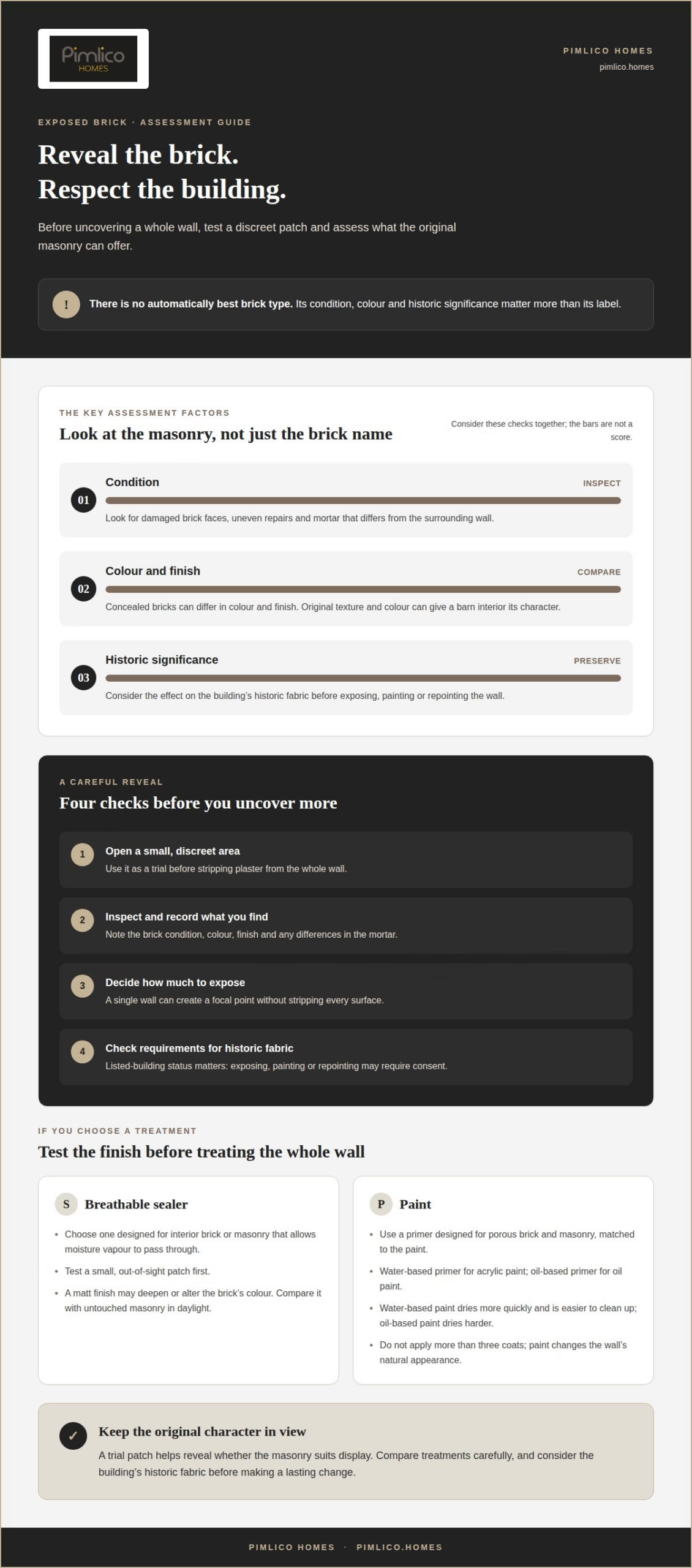
Before exposing a whole wall, remove plaster from a small, discreet area. Bricks concealed behind plaster may vary in condition, colour and finish, so this trial shows whether the original masonry can create the look you want. Look for damaged faces, uneven repairs and mortar that differs from the surrounding wall. Record what you find before deciding how much brickwork to uncover.
Original colour and texture give a barn interior its character. Exposed brick can add contrast and warmth, while a single wall can create a focal point without stripping every surface. Paint changes the natural appearance and can be difficult to remove later. Consider the effect on the building’s historic fabric before committing to a painted finish.
For a breathable sealer, choose one designed for interior brick or masonry that allows moisture vapour to pass through. Test it on a small, out-of-sight patch first. A coat of interior brick sealer and dustproofer can produce a matt finish, but may deepen or alter the brick’s colour. Compare the treated patch with untouched masonry in daylight before applying it across the wall.
If you choose to paint, use a primer designed for porous brick and masonry to support adhesion. Match the primer to the paint: water-based primer for acrylic paint, and oil-based primer for oil paint. Water-based paint dries more quickly and is easier to clean up; oil-based paint dries harder. High-gloss paint resists staining better than other finishes, but changes the wall’s appearance. Avoid applying more than three coats, which can look thick and uneven.
Listed-building status matters before altering historic fabric. Exposing, painting or repointing may require consent, so establish the applicable requirements before work begins. A careful assessment protects the original finish and helps ensure any treatment suits the brick, mortar and architectural character of the barn.
2. Maintenance and cleaning of exposed masonry
Start with a visual check of each brick wall, including corners, joints and concealed edges beside plaster or timber. Look for loose dust, white deposits, flaking brick faces and damp patches. These signs help distinguish routine cleaning from moisture or mortar problems that need separate attention. Effective exposed interior brickwork maintenance in executive barn conversions begins by identifying what has changed since the last inspection.
For light dust, use a soft brush and work from the top down, catching debris as it falls. For general grime, clean a small area first with a suitable masonry cleaner, follow its instructions and let the brick dry fully. Avoid soaking porous brickwork. In kitchens and other humid rooms, trapped moisture can contribute to cracks, splits and efflorescence, so ventilation and the source of damp matter as much as cleaning.
Efflorescence is a powdery white deposit left as moisture moves through masonry. Remove loose deposits carefully with a dry, soft brush, collecting the residue rather than washing it into the wall. If it returns, address the moisture source: repeated wet cleaning alone will not resolve the underlying cause. Avoid harsh treatments that could damage the brick or mortar. A practical principle of exposed interior brickwork maintenance in executive barn conversions is to investigate recurring deposits, not simply scrub them away.
In a kitchen, bathroom or around a fireplace, prevent moisture and soot from building up on exposed surfaces. Ventilate humid spaces, wipe splashes promptly and brush away dry dust before it settles into the texture. Check the joints while cleaning, especially near sinks, showers and cooking areas.
The UK price to clean, repoint and seal interior brickwork depends on wall area, access, mortar condition and the work required; an itemised price follows a quote request. For ongoing care, brush the surface, clean marks with a suitable method and re-treat it when its condition calls for protection. Interior brick and masonry floors need 2-3 coats of sealer and dustproofer. Test any treatment on a discreet patch first, then compare the finish once dry.
3. Repairing cracks and mortar
Before repairing a crack, record its position and direction on the brick wall. Note whether it follows mortar joints, crosses brick faces or appears beside a door or window. A crack confined to a joint may need a different repair from one that cuts through bricks. Photograph the area and compare it over time, including any changes around the ceiling or floors.
Look for related signs, not just the visible line. Loose bricks, gaps around timber, bulging masonry or cracks appearing on both sides of a wall can indicate a wider issue. Repointing alone will not correct movement or moisture entering through the building fabric. Identify and address the cause before choosing a surface repair, so fresh mortar does not conceal a recurring problem.
For localised mortar loss, carefully remove loose material without chipping the brick edges. Clear debris from the joint, then prepare replacement mortar to suit the existing masonry. Press it firmly into the full depth of the cleared joint rather than filling only the surface. A consistent finish helps the repair sit naturally beside the original work.
Match the joint’s profile, colour and texture to the surrounding wall. A flush finish may look out of place beside recessed historic joints, while mismatched mortar can distract from the brick’s character. Test the chosen mix in a small section and assess it after drying: fresh mortar often looks different from the finished surface.
Cracks near a fireplace, at the ceiling line or above a doorway deserve particular attention, as junctions can reveal where movement or water is affecting the masonry. Keep repairs compatible with the brick’s age and condition. For period walls, mortar choice matters: lime-based mortar is recommended where masonry needs to breathe. A well-matched repair preserves the wall’s appearance without disguising the signs that first called for attention.
4. Using lime-based mortar on period masonry
Period brickwork needs repair mortar suited to its original materials. Where masonry needs to breathe, use lime-based mortar: it allows moisture to move through the joints rather than trapping it behind an unsuitable, less permeable repair. This compatibility matters in older barns, where mortar contributes to the wall’s performance as well as its appearance.
Begin by examining the existing joints across the wall. Note their colour, texture, depth and finish, then compare them with intact areas. A hard, dense replacement can look conspicuous beside softer historic brickwork and may change how moisture moves through the masonry. The repair should respect both the bricks and the character of their joints.
Before repointing, carefully remove loose or failing mortar while keeping the brick edges intact. Clear dust from the joint and prepare the lime mortar for its intended use. Work it fully into the open joint rather than applying a thin surface layer. A small test patch helps you assess the colour and finish against the original wall.
Allow the repaired section to settle in conditions appropriate to the mortar and building. Lime-based work needs suitable protection during application and drying, as rapid drying can affect the finished joint. Avoid treating the wall as a sealed surface. Breathable repairs support the movement of moisture that helps an older building remain a living structure.
For a durable result, match the mortar to the masonry, joint profile and exposure of each area. A sheltered interior wall and a section beside a damp-prone floor may need different consideration. If old repairs have cracked or detached, investigate the surrounding wall before replacing them. Correcting the visible joint without addressing moisture or movement can leave the underlying cause untouched.
Pimlico Homes: Executive Courtyard Homes
Pimlico Homes creates executive courtyard homes and luxury barn conversions for people seeking a considered relationship between architecture, materials and daily living. If you’re planning a barn conversion, decisions about original brick, mortar and finishes belong within the wider vision for the home. Exposed masonry can give an interior a strong sense of place, while careful choices help it sit naturally alongside contemporary spaces.
Understanding the condition and character of existing brickwork is a valuable starting point. That knowledge can guide how original features are retained and incorporated into a conversion, rather than treated as an afterthought. For a home shaped by heritage and considered design, explore whether a Pimlico Homes development fits your aspirations.
Contact Pimlico Homes to discuss your plans.
Shape a home that honours its character
Choices about exposed masonry shape how a converted barn feels each day. Thoughtful exposed interior brickwork maintenance in executive barn conversions starts with seeing the brick not as a backdrop, but as part of the building’s identity. Preserving it can inform the wider design, from the balance of original surfaces to the atmosphere of adjoining rooms.
That perspective matters when planning a new home, too. Pimlico Homes offers luxury detached homes, executive courtyard homes and bespoke luxury homes, conceived around considered design and craftsmanship. Whether you are shaping a conversion or considering a home designed around your aspirations, take the next step and discuss the vision and details that matter to you.
Contact Pimlico Homes for advice and take the next step towards a home with enduring character.
Frequently Asked Questions
Do certain types of brick work better than others for exposed walls?
No single brick type is automatically best; soundness, surface condition and appearance matter more. A wall with intact faces and joints is generally a stronger candidate than masonry with widespread spalling or inconsistent repairs. Check a small exposed area first, then view it in daylight and alongside the room’s finishes. The result should suit both the building’s character and the intended interior.
Can the existing finish be historically significant?
Yes. Plaster, paint or later repairs can record how a building has changed, and removing them may erase evidence of earlier use. Look for distinct layers, tool marks, unusual finishes or a clear boundary between older and newer work. Photograph what is uncovered and consider its context before stripping a larger area. The brick beneath a finish is not the only part of the wall with historical value.
Is historic masonry always worth exposing, and how do I find out?
No. Exposing masonry may reveal damaged bricks, patch repairs or a surface that does not suit the room. Begin with a discreet trial area and assess its condition, colour and relationship to nearby features such as timber beams or window openings. If the building is listed, proposed work may require consent. The effect on historic fabric is central to that assessment.
What type of mortar is best?
For period masonry that needs to breathe, lime-based mortar is the recommended repair choice. The mix and joint finish should also sit comfortably beside the existing brickwork. A repair that differs markedly in colour or profile, for example, can distract from an otherwise cohesive wall. Consider the surrounding masonry and joint condition, rather than choosing mortar by appearance alone.
Why do exposed internal brick and masonry walls create dust?
Dust can come from loose particles on brick faces, deteriorating mortar or residue left after plaster is removed. Everyday contact, vibration and dry conditions can make it more noticeable, particularly near a doorway or seating area. Brush the surface gently and check whether dust returns from a particular joint. Recurring deposits in the same place may point to a local surface or mortar issue.
How can I clean exposed interior brickwork without damaging it?
Start with a soft, dry brush and work gently across a small, inconspicuous patch. For marks, use a lightly damp cloth and a mild cleaning solution, taking care not to saturate the brick or joints. Let the test area dry before treating the surrounding wall. Avoid abrasive pads and untested chemicals, which can alter the surface or leave a visible patch against the masonry’s natural variation.