
Neither option is automatically more cost-effective: the choice of extending vs buying a luxury new build depends on the work your existing home needs, the property’s potential and the value you place on a fresh start. An extension adding over 100 square metres of floor space may be liable for a Community Infrastructure Levy charge, according to Planning Portal.
It’s natural to weigh the comfort of staying in a familiar home against the prospect of a new one designed around your needs. The decision involves more than the headline building or purchase cost: consider disruption, future maintenance, space and how well each option supports the way you want to live.
This guide sets out how to compare the costs and practical trade-offs, from the scope of an extension to the considerations involved in buying a new build. Use the framework to decide which option offers the right balance of design freedom, convenience and long-term value.
Key Takeaways
- Compare the full financial picture, including the work your current home needs and the ongoing costs of the property you might buy.
- Consider whether an extension can deliver the layout and space you want, or whether a new home offers a better fit.
- An extension adding over 100 square metres of floor space may be liable for a Community Infrastructure Levy charge, according to Planning Portal.
- Factor in disruption and the practicalities of building around your existing home when weighing up an extension.
- Use your priorities for space, design and lifestyle to decide whether a new home, including a luxury detached home, is the more suitable direction.
Extending vs buying a luxury new build
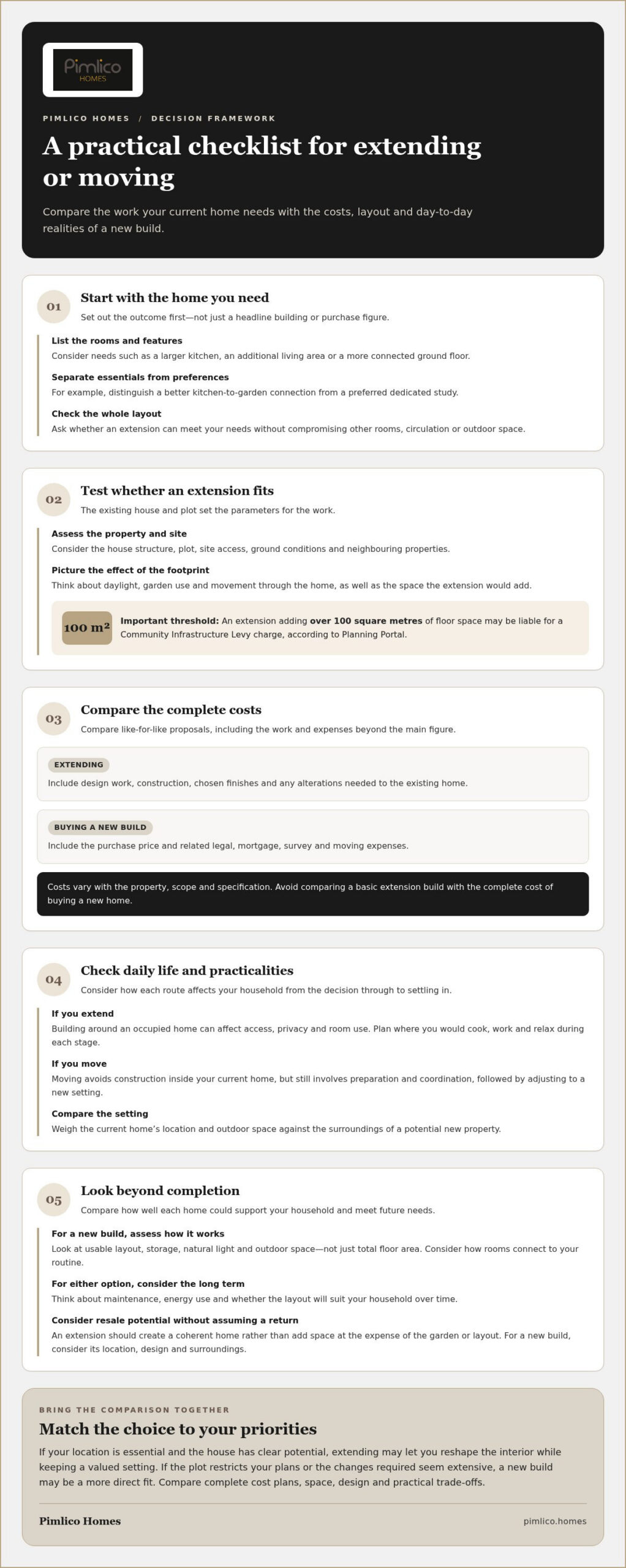
Start with the outcome you need, not a headline construction or purchase figure. Whether extending or buying a luxury new build is right for you depends partly on whether your current plot can accommodate the rooms and layout you want. A larger kitchen, an additional living area or a more connected ground floor may be achievable with an extension. If your plans involve changes across several parts of the property, compare their overall scope with moving to a home designed around your priorities.
List every change needed to make your current home work. Separate essentials, such as a better connection between the kitchen and garden, from preferences, such as a dedicated study. Then assess whether an extension can meet those needs without compromising other rooms, circulation or outdoor space. One new room may solve a specific problem; a wider redesign can become a more complex project.
For an extension, the existing house and its plot set the parameters. Site access, ground conditions, the structure of the house and the position of neighbouring properties can all affect the work involved. Ask how the proposed footprint would change daylight, garden use and movement through the home. An extension adding over 100 square metres of floor space may be liable for a Community Infrastructure Levy charge, according to Planning Portal.
- Define the brief: List the rooms and features you need, then distinguish essentials from design preferences.
- Assess the existing property: Consider its structure, plot, access and how construction could affect daily life.
- Build a complete comparison: Include purchase-related expenses alongside extension work, finishes and any necessary changes to existing rooms.
- Consider the setting: Compare the current home’s location and outdoor space with the surroundings of a potential new property.
- Look beyond completion: Think about maintenance, energy use and whether each layout will suit your household over time.
Buying a new build changes the comparison: instead of adapting an existing house, you assess a completed or planned property against your requirements. Compare the usable layout, storage, natural light and outdoor space, not just the total floor area. A generous room may still be poorly suited to your routine if it is far from the kitchen, lacks storage or has little connection to the garden.
Include the full cost of moving in your comparison. The purchase price is only one part of the decision; legal, mortgage, survey and moving expenses may also affect your budget. For an extension, include design work, construction, chosen finishes and any alterations to the existing home. Costs vary with the property, scope and specification, so compare like-for-like proposals rather than a basic extension build with the complete cost of buying a new home.
Assess time and disruption separately. Extending means building around an occupied home, which can affect access, privacy and the use of rooms. Consider where you would cook, work and relax during each stage. Buying avoids construction inside your current home, but moving still takes preparation and coordination, followed by adjustment to a new setting. Map the steps from deciding to move or extend through to settling in, including any temporary arrangements.
Resale potential also matters, although no improvement guarantees a particular return. Consider whether an extension would create a coherent home for future occupants rather than add space at the expense of the garden or layout. For a new build, assess the location, design and surrounding environment as well as the property itself. In either case, lasting value depends on how well the home meets broader buyer expectations and your needs.
Finally, weigh each option against the life you want your home to support. If your location is essential and the house has clear potential, extending may let you keep a valued setting while reshaping the interior. If the plot restricts your plans or the changes required seem extensive, a new build may be a more direct fit. Write down your essential requirements, compare the complete cost plans and consider the practical trade-offs before deciding.
Pimlico Homes: Luxury Detached Homes
Pimlico Homes develops luxury detached homes for buyers whose priorities point towards moving rather than extending. If your current property cannot accommodate the space, setting or layout you want, exploring a new build can help you find a home that better fits your household.
Pimlico Homes also develops executive courtyard homes, bespoke luxury homes and luxury barn conversions. Each offers a distinct approach, from a courtyard setting to a bespoke design or a conversion shaped around a barn’s existing structure. Your comparison can help clarify which type of home best suits your priorities.
To explore Pimlico Homes’ properties and find a home that aligns with your priorities, contact the team.
Choose a home that fits what comes next
The decision about extending vs buying a luxury new build becomes clearer when you look beyond the immediate project and picture daily life in your next home. Consider which setting, sense of space and architectural character matter most, then use those priorities to guide your next steps. A considered choice should feel right on paper and support the life you are building.
If you are moving towards a new home, Pimlico Homes develops luxury detached homes, executive courtyard homes and bespoke luxury homes. Each offers a different way to find a property whose character and setting align with your aspirations.
When you are ready to explore that possibility, contact Pimlico Homes to discuss your options. Take the next step with a clear sense of what matters to you, and shape a home decision with confidence.





