
The most advanced glazing is not automatically right for every room. Choosing the right type of glazing for a new home often starts with double glazing, while triple glazing may suit spaces where extra insulation or noise reduction is a priority. The glass, frame and room orientation all shape the result.
Warmth and energy efficiency matter, but privacy, daylight, glare and outside noise also affect how a room feels and functions. This guide compares double and triple glazing and explains what low-emissivity, solar-control and obscured glass can offer. It also considers uPVC, aluminium and timber frames, then brings those choices together room by room so you can make informed decisions for a comfortable, considered home throughout the year.
Key Takeaways
- Use double glazing as a starting point, then weigh triple glazing where added insulation or noise reduction matters most.
- Match glass to the room’s needs: safety glass for vulnerable areas, privacy glass where required, and solar control where glare is a concern.
- Choose a frame material as part of the whole window, since its insulation, maintenance and design qualities affect the result.
- Plan glazing room by room, balancing daylight, privacy, comfort and the character of your new home.
Is triple glazing really any better than double glazing?
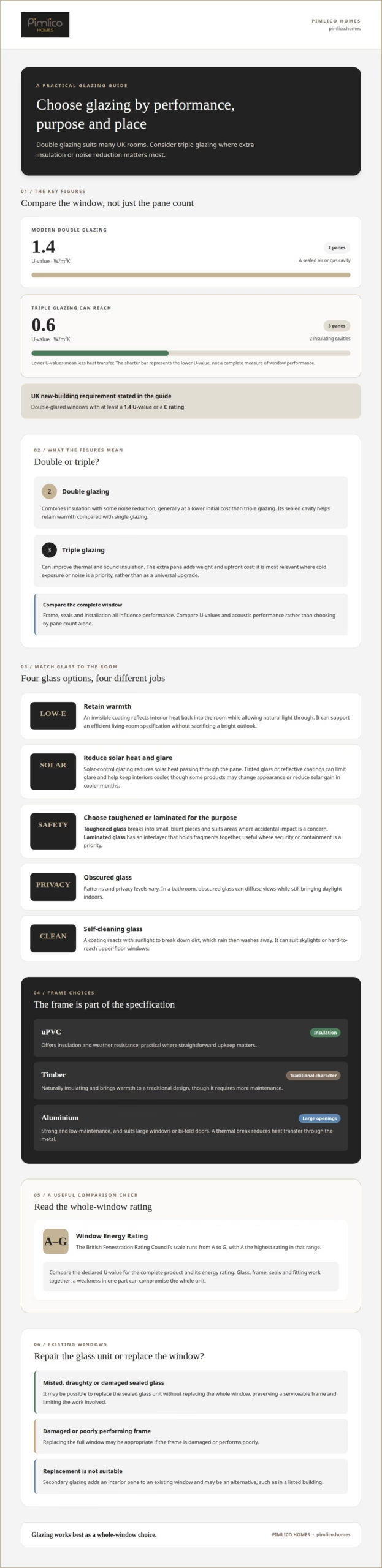
Double glazing has two panes; triple glazing has three panes and two insulating cavities. According to the UK Government, new buildings must install double-glazed windows with at least a 1.4 U-value or a C rating.
Comparing Double and Triple Glazing
Triple glazing can improve thermal and sound insulation, but its extra pane adds weight and upfront cost. A triple-glazed unit can reach a U-value of 0.6 W/m²K, compared with 1.4 W/m²K for modern double glazing. Lower U-values indicate less heat transfer. The difference matters most where cold exposure or noise is a priority, rather than as a universal upgrade.
Double Glazing Benefits
Double glazing combines insulation and some noise reduction, generally with a lower initial cost than triple glazing. Its two panes enclose a sealed air or gas cavity, helping retain warmth compared with single glazing. Standard double glazing can also soften outside noise; laminated glass is another option when sound reduction is a priority. The complete window matters: the frame, seals and installation all influence performance.
Single glazing has one pane and no insulating cavity. It no longer meets energy-efficiency requirements for most homes. Secondary glazing adds an interior pane to an existing window and may be an alternative where replacing the window is not suitable, such as in a listed building.
For a new home, double glazing suits many UK rooms; consider triple glazing where greater insulation or noise reduction matters. Compare U-values and acoustic performance rather than choosing by pane count alone. A lower U-value indicates better thermal insulation, while glass construction and sealing affect sound transmission.
If an existing double-glazed window becomes misted, draughty or damaged, it may be possible to replace the sealed glass unit without replacing the whole window. This can preserve a serviceable frame and limit the work involved. Replacing the full window may be appropriate if the frame is damaged or performs poorly.
Types of Glass: What Are My Options?
Glass affects more than appearance: low-emissivity coatings help retain heat, while safety glass is suited to vulnerable locations. In a bathroom, obscured glass can preserve privacy while admitting natural light.
Toughened and Laminated Safety Glass
Safety glazing uses toughened or laminated glass to reduce injury or improve security if a pane breaks. Toughened glass is heat-treated and breaks into small, blunt pieces, making it suitable for areas where accidental impact is a concern.
Laminated glass contains an interlayer that holds fragments together if the glass shatters. This helps keep the pane more intact after breakage, making it useful where security or containment is a priority. The two types have different properties, so the location and intended purpose matter.
Low-Emissivity Glass and Heat Retention
Low-emissivity glass has an invisible coating that reflects interior heat back into a room while allowing natural light through. In a living room, it can support an efficient glazing specification without sacrificing a bright outlook.
By limiting heat loss through the glass, low-E glazing can help retain warmth in colder weather. Its role differs from that of solar-control glass, which reduces incoming solar heat. The right balance depends on the room’s exposure and whether warmth or summer glare is the greater concern.
Solar-control glazing reduces the amount of solar heat that passes through a pane. Tinted glass or reflective coatings can also limit glare and help keep interiors cooler, although some products may alter the glass’s appearance or reduce solar gain in cooler months.
Obscured glass comes in different patterns and levels of privacy. A bathroom window, for example, can diffuse views while still bringing daylight indoors. Self-cleaning glass uses a coating that reacts with sunlight to break down dirt, which rain then washes away. It can suit skylights or hard-to-reach upper-floor windows.
Compatibility with uPVC, aluminium and wooden frames
For new buildings, the UK Government states that double-glazed windows must have at least a 1.4 U-value or a C rating. A lower U-value means less heat passes through the window, so compare the whole window’s performance, not just its glass.
The frame is part of the overall specification. uPVC offers insulation and weather resistance, making it practical where straightforward upkeep matters. Timber is naturally insulating and brings warmth to a traditional design, though it requires more maintenance. Aluminium is strong and low-maintenance, and suits designs with large windows or bi-fold doors.
Aluminium’s thermal performance depends on its construction. A thermally broken frame has a barrier that reduces heat transfer through the metal. Without this separation, aluminium can be less energy-efficient than uPVC or timber. For a large glazed opening, this distinction helps balance slender sightlines with the home’s thermal performance.
A low-emissivity coating can improve heat retention through the glass, but the frame and installation still matter. A well-specified pane cannot compensate for a poorly made window or gaps around its edges. The glazing, frame, seals and fitting work together; a weakness in one part can compromise the whole unit.
For windows and doors, compare the declared U-value for the complete product and its energy rating. The British Fenestration Rating Council’s Window Energy Rating system runs from A to G, with A the highest rating in that range. Use the rating as a helpful comparison, then consider how the frame suits the design and the property’s maintenance requirements.
In a period-inspired home, timber may complement the architecture, while aluminium can suit broad contemporary openings. uPVC is another option where insulation and weather resistance guide the decision. Matching frame material to glass performance, the intended opening and the home’s appearance creates a more coherent specification than selecting either element alone.
Choosing glazing room by room
A room-by-room plan gives every pane a clear purpose. In a living room, broad glazed areas can preserve natural light and garden views, while thermal performance supports comfort in colder weather. Orientation matters too: direct sun can brighten a space but also increase glare and heat.
When choosing the right type of glazing for a new home, start by considering how each room will be used. Bedrooms may benefit from stronger acoustic performance if they face a busy road. In a bathroom, obscured glass can admit daylight while screening direct views.
Kitchens have their own demands. A window facing afternoon sun may need solar control to reduce glare on work surfaces. In a conservatory or beneath a skylight, self-cleaning glass can help manage dirt on panes that are difficult to reach.
Rather than specifying the highest-performance option everywhere, prioritise the rooms where an upgrade could make the clearest difference. Living areas and bedrooms may warrant enhanced thermal or acoustic performance, while standard glazing can suit less-used spaces. This approach aligns comfort and energy efficiency with how the household uses each room.
Before settling the specification, ask for the complete window’s U-value and details of its acoustic performance. For each room, consider how the proposed glass affects daylight, privacy, glare and summer heat. These answers make choosing the right type of glazing for a new home a considered design decision, not simply a matter of selecting panes.
A room-led specification can bring comfort and architectural character into balance. Explore a home designed around your priorities.
Pimlico Homes
Pimlico Homes creates luxury homes where considered design and lasting quality shape the experience of each space. If you are planning a new home, the glazing principles above can help clarify priorities such as natural light, privacy, thermal comfort and views before design choices take shape.
Pimlico Homes’ Luxury Detached Homes, Executive Courtyard Homes, Bespoke Luxury Homes and Luxury Barn Conversions offer distinct settings for these priorities. Room use, orientation and architectural character all influence how glazing contributes to a home’s atmosphere. Bringing these considerations into the wider vision helps create a cohesive result, rather than treating each window as an isolated feature.
For a considered conversation about your plans, contact Pimlico Homes.
Make glazing part of the vision
Glazing is most effective when it forms part of the architectural vision from the outset, rather than being treated as a finishing choice. As your plans develop, consider how each room should feel at different times of day, and how openness, privacy and comfort support the way you live.
Choosing the right type of glazing for a new home is a design decision as much as a technical one. A clear brief can connect the atmosphere you want with the practical performance each space needs, helping the finished home feel coherent from the first view to the smallest detail.
If you are shaping a new-home project and would like to explore how glazing fits into its wider design, discuss glazing with Pimlico Homes. Thoughtful choices made early can help your home feel distinctly yours.
Frequently Asked Questions
Which Type of Glazing Is Best for Your Windows?
The best glazing meets each room’s needs without compromising the home’s overall design. For example, a street-facing bedroom may call for stronger noise reduction, while a bathroom may need privacy glass. Consider the window’s orientation, size and opening style too. A consistent approach across the elevations can help the finished home feel architecturally composed.
Planning Your Window Project?
Plan window locations alongside the room layout, furniture and views. A desk beside a sun-facing window, for instance, may need glare control, while a large opening should preserve the intended outlook. Record each room’s priorities before settling the specification, including ventilation, privacy and cleaning access. This creates a practical brief that connects glazing choices with how the home will be used.
Why is glazing important?
Glazing influences how daylight, warmth, noise and views shape daily life indoors. It also affects the relationship between a room and its surroundings. In a dining area overlooking a garden, clear glass can maintain a visual connection, while a glazed entrance can bring light into a hallway. Thoughtful specification helps these choices support comfort as well as appearance.
What types of glazing are available for new homes in the UK?
New homes can use double or triple glazing, with glass selected for additional functions. Options include low-E coatings, solar control, obscured patterns, laminated or toughened safety glass, and self-cleaning coatings. These features can be combined to suit particular windows. For example, a rooflight may prioritise daylight and easier cleaning, while a street-level bathroom window may need obscured glass.
How do double, triple and secondary glazing compare for insulation and noise reduction?
Double and triple glazing are sealed units designed for new windows, while secondary glazing adds an internal pane to an existing window. Compare the complete product, including its frame, seals and glass construction. For a new home beside a busy road, consider acoustic performance alongside thermal performance. Secondary glazing is more relevant when an existing window needs to remain.
How much does double or triple glazing cost for a new build in the UK?
There is no single price for double or triple glazing in a new build. The cost depends on window dimensions, frame material, opening design and added specifications such as acoustic or safety glass. The price depends on the project and is given after a quote request. For a meaningful comparison, assess the same window sizes and features across each specification.





