
What if a home’s true quality is decided long before the final finishes are chosen? The best high end property developers shape a coherent vision, from the setting and architecture to the details that influence everyday life. That is what can distinguish lasting quality from a polished description.
Luxury claims can be difficult to compare. Before living in a property, it can be hard to judge whether its design is thoughtful, its craftsmanship considered and its spaces suited to daily life. The development process may also feel opaque when the decisions behind a finished home are out of view.
This article explains the role of a high-end residential developer and how to recognise signs of quality beyond decorative finishes. It looks at how design, materials and craftsmanship contribute to a home’s character, and what to consider when exploring premium new homes. Pimlico Homes develops luxury detached homes, executive courtyard homes, bespoke new builds and barn conversions, with a focus on craftsmanship. Knowing what to look for can help you compare homes with clearer expectations.
Key Takeaways
- Understand how high end property developers shape residential homes, rather than simply market or sell them.
- See how a development’s original vision can influence the finished home’s character, layout and relationship with its setting.
- Look beyond decorative finishes to assess design coherence, craftsmanship, material choices and practical liveability.
- Consider how space, privacy and the needs of your daily life should inform your choice of a premium home.
- Discover how Pimlico Homes’ focus on craftsmanship is expressed across its luxury detached homes, executive courtyard homes, bespoke new builds and barn conversions.
What Do High-End Property Developers Actually Do?
A high-end residential property developer brings homes to market by shaping a project’s wider vision, rather than simply promoting a finished building. Depending on the project, this may involve considering the site, the homes to be created, their design and how the completed development will serve the people who live there. Responsibilities and delivery arrangements vary, but the aim is to make the decisions work together as a coherent whole.
For buyers, this distinction matters. A premium description or asking price cannot, on its own, show how a home was conceived or whether its quality extends beyond what is immediately visible. Look at how the design, workmanship and everyday experience come together, not just at the claims used to market the property.
How is a property developer different from a house builder?
A house builder is generally associated with the physical construction of homes. A developer’s role can cover a wider residential vision, bringing together decisions about what to create and how the homes will work as a whole. Some developers build directly; others work with separate design or construction teams. There is no single structure that applies to every project.
An estate agent has a different focus: marketing property and helping buyers and sellers with a transaction. An agent can present a home, but that is distinct from shaping the residential development behind it. For a buyer, understanding the difference helps separate the sales description from the decisions that give the home its character.
The real estate development process can involve multiple stages and participants. This wider perspective helps explain why a finished home reflects more than construction alone. Its layout, appearance and relationship with its surroundings are connected to choices made before it is ready to view.
What does ‘high-end’ mean beyond a premium label?
High-end residential development is the creation of homes in which considered design, skilled craftsmanship and practical liveability combine to create a coherent experience.
This definition looks beyond a list of impressive-sounding features. A striking entrance or statement finish may catch the eye, but quality is also expressed in how rooms relate to one another, how materials work together and whether the home feels comfortable to use. Craftsmanship is not only about visible detail; it is also about the care with which elements meet and the consistency of the overall finish.
Assess the whole, not the label. As you explore a premium home, consider whether:
- The architecture and interior choices feel considered together, rather than assembled from unrelated gestures.
- Materials and finishes suit the home’s character, with workmanship that stands up to closer inspection.
- The layout supports ordinary routines as well as special occasions, so elegance does not come at the expense of ease.
These questions are useful when comparing homes from high end property developers. They shift attention from prestige alone to the qualities that shape daily life. The sections that follow explain how a development vision informs the finished home and how buyers can assess its quality.
From Development Vision to Home: The Decisions Behind a Cohesive Project
A home’s character is rarely the result of one striking feature. It emerges from connected decisions: what the development is intended to offer, how the homes are designed, how that design is realised and how the finished spaces feel to live in. Understanding this sequence can help buyers see how early intentions become tangible, from the arrangement of rooms to the way a building sits within its setting.
Why does the development vision matter?
A clear vision gives a project direction. It can help align the home’s character, layout and architectural language, while allowing individual homes to feel distinct. A home designed for privacy, for example, may call for a different balance of spaces from one intended to make hosting easier.
The vision also influences whether the result feels considered as a whole, rather than like a set of unrelated choices. High end property developers are distinguished not by a single visual gesture, but by how the ambition for a home is reflected in the spaces people use every day.
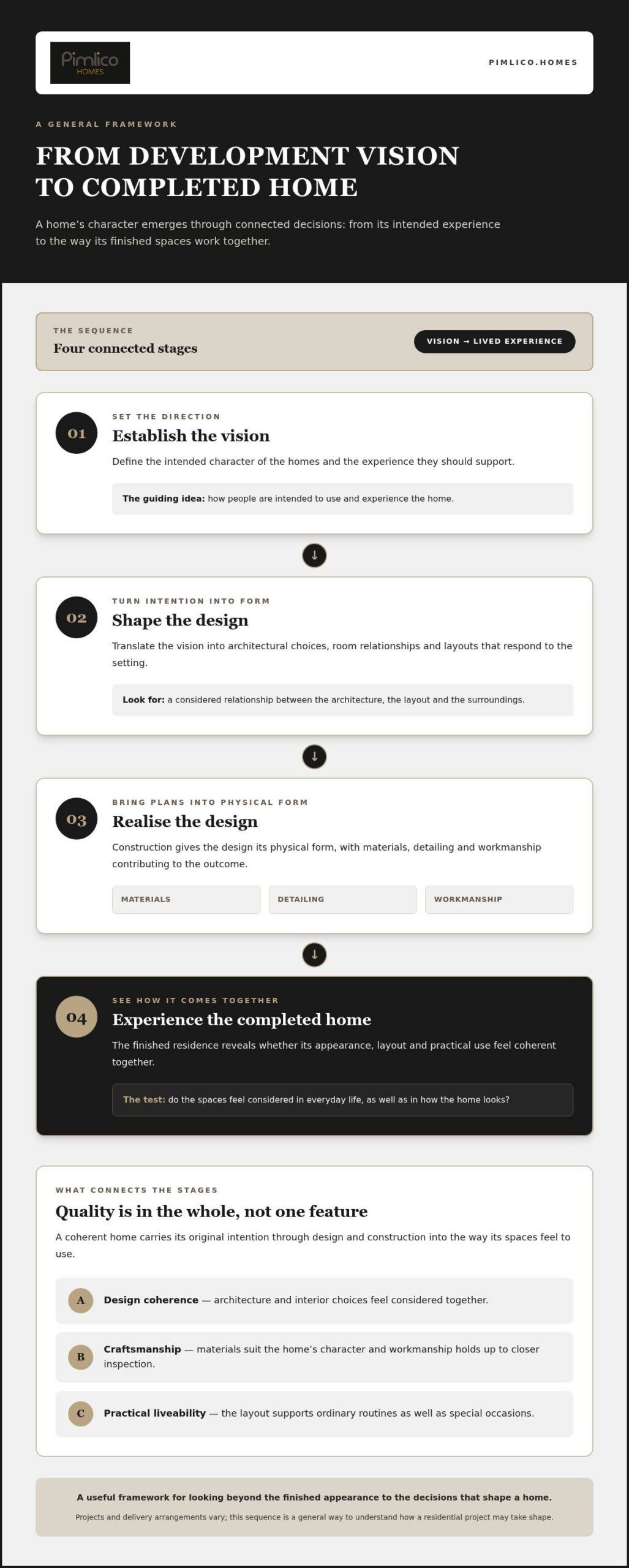
A general framework: from vision to completed home
This sequence offers a useful way to understand how a residential project may take shape:
- Establish the vision. Define the intended character of the homes and the experience they should support.
- Shape the design. Translate that intention into architectural choices, room relationships and layouts that respond to the setting.
- Realise the design. Construction brings the plans into physical form, with materials, detailing and workmanship contributing to the outcome.
- Experience the completed home. The finished residence reveals whether its appearance, layout and practical use feel coherent together.
Each stage informs the next. A decision about how a home relates to its surroundings can affect its orientation or the way its rooms connect; those choices, in turn, shape daily routines. The aim is not uniformity, but a recognisable thread between the original idea and the completed home.
How should design intent carry through construction?
Design intent depends on more than a drawing. The choice and use of materials, the treatment of junctions and the care visible in the finished details all contribute to whether the original idea is carried through. A considered interior, for instance, feels most convincing when its finishes and proportions support the architecture rather than compete with it.
Coordination matters because design decisions and construction choices meet in the details. As a buyer, look for consistency between the home’s overall form and its smaller elements. For wider purchase considerations, consult this luxury new build buying guide. To explore Pimlico Homes’ premium residential homes, consider how each home’s character and craftsmanship suit the way you want to live.
How to Recognise Genuine Quality in a High-End Development
Luxury can be presented through a single finish or striking feature. Genuine quality is harder to sum up, because it emerges from the relationship between a home’s design, workmanship, materials and the way its spaces function. A viewing gives you the chance to look beyond the first impression and consider how these elements work together.
Premium quality is judged by how design, detail and everyday use work together, not by any single feature.
| Consideration | Lasting design substance | Surface-level luxury signal |
|---|---|---|
| Design coherence | Rooms, proportions and details feel connected by a clear architectural idea. | A dramatic feature draws attention but feels unrelated to the rest of the home. |
| Craftsmanship | Finishes and junctions appear carefully and consistently resolved across spaces. | One polished area creates an impression of quality that is not evident elsewhere. |
| Material choices | Materials suit the home’s character and work together in tone, texture and use. | Expensive-looking surfaces are presented as proof of quality on their own. |
| Practical liveability | The layout appears to support movement, privacy and ordinary routines. | Staging or decorative flourishes dominate, with little attention to how rooms function. |
What can thoughtful design reveal?
Look at the connections between spaces, not just at each room in isolation. Do the proportions feel balanced? Is there a natural relationship between shared and private areas? Do details such as openings, finishes and transitions appear to belong to the same design language? These observations can help you judge whether visual appeal and everyday function have been considered together.
A memorable interior need not sacrifice ease of use. A generous-looking room, for instance, is most convincing when its layout also feels practical for the activities it is intended to accommodate. Use these as prompts during a viewing, rather than as proof of how a home will perform over time.
Which signs of craftsmanship deserve attention?
Take time to notice the consistency of visible finishes. Observe how surfaces meet, whether details appear carefully aligned and whether the same level of attention seems to continue from one space to another. No single material, fitting or brand establishes overall quality; context and execution matter just as much as the choice itself.
A viewing can tell you something about appearance and apparent finish, but it cannot reveal every aspect of construction or future performance. Some matters require professional assessment or supporting documentation. Treat what you see as a starting point for informed consideration, not a guarantee of durability, condition or investment returns. When comparing homes presented by high end property developers, this measured approach keeps attention on the whole home rather than its most photogenic details.
Choosing a High-End Home That Fits Your Life
Prestige may draw you to a home, but the fit between its character and your daily life will shape how it feels to live there. Before comparing finishes or deciding which property makes the strongest first impression, picture an ordinary week. Where do you spend time together? Do you need a quiet place to work, room to entertain or a greater sense of privacy? Your answers can clarify what matters most.
Which home characteristics matter most to your household?
Start with the routines and spaces that matter to you, rather than assuming one type of home is inherently right. A detached home, courtyard home, bespoke new build or barn conversion can each offer a distinct character, but suitability depends on the individual design and your priorities. Consider how you use your home now, what you would like to change and which needs may evolve over time.
- Space: Think about how rooms need to function, from shared living to private retreat.
- Privacy: Consider how much separation or connection you prefer between indoor areas and outdoor spaces.
- Entertaining: Reflect on whether you host often and how guests might move through the home.
- Working from home: Decide whether you need a dedicated, quiet area or flexibility to use different spaces.
- Longer-term needs: Consider whether the layout could continue to serve you as your household or routines change.
Keep this list personal. What feels generous to one household may feel unnecessarily expansive to another; what suits a lively social routine may not offer the seclusion someone else values. During a viewing, imagine those routines in the space, rather than simply admiring the home as presented.
How can a home feel distinctive and liveable?
Distinctive architecture can give a home a strong sense of identity, while a thoughtful interior helps that character feel comfortable rather than purely decorative. Look for a natural relationship between the home’s defining features and the way its rooms can be used. The aim is not to choose between individuality and ease, but to find a balance that feels enduring and personal.
For buyers considering a conversion, modern barn conversion interiors can offer further inspiration for thinking about how an interior complements a home’s architectural character. For broader practical considerations as you assess a new-build purchase, explore this luxury new build purchasing guide.
Separate preferences from facts. You can judge whether the layout feels right for you, but matters such as a property’s construction or legal position may require documentation or independent professional assessment. This distinction helps you weigh emotional appeal alongside information that calls for closer scrutiny, without expecting a viewing alone to answer every question.
Explore Pimlico Homes’ residential homes with your priorities in mind, and consider which character, layout and style best reflect the life you want to lead.
Pimlico Homes: Residential Development with Character and Craftsmanship
Pimlico Homes is a residential developer focused on premium homes and high-quality craftsmanship. Its range includes luxury detached homes, executive courtyard homes, bespoke new builds and luxury barn conversions. Each category offers a different starting point for a home’s character, and the right choice depends on the design and how well it suits the way you want to live.
For buyers comparing high end property developers, a defined residential focus makes the decision more tangible. Look at the home itself: how its character is expressed, how its spaces support daily life and whether the workmanship contributes to a coherent whole.
A considered range of luxury residential homes
A detached home may appeal to buyers who value a home that stands independently, whilst an executive courtyard home offers a distinct residential form centred around courtyard living. Neither category guarantees a particular layout or level of privacy; those qualities depend on the individual home.
Bespoke new builds offer a different expression of residential design, while a barn conversion brings an existing building’s character into a home. These broad categories will not suit every household. Consider how each home’s layout, atmosphere and relationship with its surroundings might support your routines, from quiet time to welcoming guests.
At a viewing, bring those priorities into focus. Notice what feels distinctive, then consider whether that character is matched by a practical sense of flow and comfortable use. Pay attention to details you can observe, and separate any questions that need supporting information or professional assessment. This helps you judge the home on more than its first impression.
Explore the Pimlico Homes approach
A premium home should feel considered as a whole, from its architectural character to the details that shape the lived experience. Pimlico Homes focuses on craftsmanship across its residential offering. Consider the qualities of each home on their own merits, including its design, visible workmanship and suitability for your daily life.
As you explore, return to the questions that matter: does the home feel coherent, do its character and spaces suit your priorities, and can you see care in the workmanship? These observations can help you approach an important decision with clearer expectations and a more personal sense of what quality means.
For a closer look at Pimlico Homes’ residential developments and homes, explore Pimlico Homes and consider which expression of its luxury residential range feels right for you.
Take the Next Step Towards a Home That Feels Right
Choosing among high end property developers is ultimately a personal decision. Move beyond broad ideas about prestige and picture the home you want to return to each day. Consider which qualities are essential, which are simply appealing and how you want your home to support the years ahead.
Pimlico Homes offers luxury detached and executive courtyard homes, bespoke new builds and luxury barn conversions, with a focus on high-quality craftsmanship. As you explore, consider how each home’s character aligns with your priorities. A home should offer more than an impressive first impression; it should feel considered in ways that matter to you.
Explore the homes at your own pace and let your priorities guide what you look for next. Explore Pimlico Homes and discover its residential developments. Your next home can be a thoughtful expression of the life you want to lead.
Frequently Asked Questions
What does a high-end property developer do?
A high-end property developer creates residential homes for the premium market, shaping a project from its overall vision through to homes being offered for sale. The developer’s role can bring together decisions about the homes’ design and character, though responsibilities and delivery arrangements vary between projects. For a buyer, understanding who is developing the property helps clarify who is responsible for bringing the residential project to market and where to direct questions about the home.
Can I buy a new home directly from a property developer?
Yes, some developers sell new homes directly to private buyers. Pimlico Homes sells luxury new-build residential properties, including detached homes and executive courtyard homes. Buyers can explore its homes and discuss a purchase with the company. Before proceeding, review the sale particulars and relevant purchase documents with your solicitor, so you understand what is included and the terms that apply to the specific property.
Do high-end property developers build bespoke homes?
Some do. Pimlico Homes develops bespoke luxury homes, alongside luxury detached homes, executive courtyard homes and luxury barn conversions. “Bespoke” can refer to a home shaped around an individual design brief, but the extent of personalisation differs from one project to another. If you are considering a bespoke property, clarify which design choices relate to that home and distinguish them from illustrative imagery or general descriptions used to present it.
What should I consider when viewing a luxury new build?
Consider how the home feels at the times and in the situations that matter to you. If possible, view rooms in natural daylight, notice how sound carries between spaces and picture where everyday items would be stored. Ask for the floor plan and sale particulars, then compare them with the property. Your solicitor can review the legal documents, while a suitably qualified professional can assess technical concerns that a viewing alone cannot resolve.
How long does a residential property development take?
There is no single timescale for a residential development. Duration depends on the nature and scale of the project, its design and construction requirements, and factors that may affect progress. A buyer considering a home within a development should distinguish the overall project timeline from the expected completion timing for a specific property. For a purchase decision, rely on the information provided for that home and have relevant dates and terms reflected in the sale documentation.





