
What if the most persuasive sign of distinction is a home that never seems to ask for attention? That is the subtle question behind how a bespoke home enhances social standing. Thoughtful architecture, quality craftsmanship and a sense of personal fit can shape how a home is perceived, but no particular design or price tag guarantees prestige.
It is understandable to wonder whether a distinctive home will express discernment or appear designed to impress. The difference often lies in the purpose of its details: whether they serve the people who live there, reflect their priorities and feel enduring rather than conspicuous. Comfort, quality and financial value matter too, but they are not the same as social recognition.
This article considers how design can communicate individuality, why lasting distinction differs from display, and what to weigh when choosing a high-end home. The aim is not to prescribe a route to status, but to help you identify a home that feels assured, practical and your own.
Key Takeaways
- Understand how a home’s architecture and considered details may influence first impressions without defining its owner’s worth.
- Look beyond costly materials: proportion, workmanship and coherent design can contribute to a more considered impression.
- Discover how a bespoke home enhances social standing when its distinction reflects personal values rather than simply seeking attention.
- Use practical questions to weigh distinctive design choices against comfort, everyday function and lasting relevance.
- Separate the impression a home may create from the qualities that make it the right choice for you.
How a Bespoke Home Can Shape Social Standing and First Impressions
Social standing is the position or regard a person is perceived to hold within a social group. A home may influence that perception, but it cannot secure admiration, respect or belonging. Its architecture can offer visitors clues about the owner’s taste, priorities and attention to detail. Those clues are interpreted differently by different people.
That distinction matters. A carefully composed exterior or welcoming entrance may suggest deliberation, while a well-planned interior can indicate that daily life has been considered alongside appearance. But a first impression is only a fragment. It cannot tell a visitor how someone treats others, what they have achieved or the character of the relationships they build.
Interpretation varies, too. One guest may value restraint and practical elegance, while another prefers a more expressive style. Cultural expectations, community norms and personal experience all influence what feels impressive, welcoming or excessive. So, how a bespoke home enhances social standing is best understood as a possibility: visible choices can shape perception, but they cannot dictate the response or define the person behind them.
What does a bespoke home communicate to visitors?
Consider a home with balanced proportions, materials selected to work together and spaces arranged around how its occupants live. A considered contrast in texture may feel more individual than a collection of attention-grabbing features. When each element belongs to the overall design, the result can suggest care and intention. The impression rests on thoughtfulness, not simply visible expense.
This differs from conspicuous consumption, a term associated with using luxury goods or services to display wealth and status. A distinctive home may prompt that interpretation, but it may instead express a preference for privacy, light, craftsmanship or a particular way of living. Design alone cannot settle what a home means to its owner or visitors.
Is social prestige the same as property value?
No. Perceived prestige concerns how others regard a home or its owner. Market value concerns what a property may be worth in a transaction, while investment performance is a separate question that social approval cannot predict. Personal fulfilment is different again: a home may feel right to its owners even if visitors never notice its finer details.
Keep these measures distinct when considering a purchase. A favourable reaction is not evidence of future resale performance, just as a high market value does not establish personal taste or social regard. Instead, assess whether the home’s design, quality and setting suit the life you want to lead.
Why Architecture, Craftsmanship and Personalisation Create Social Signals
A home’s impression rarely comes from one feature alone. Proportion, materials, detailing and layout work together to show whether the design feels resolved as a whole. A striking stone surface may catch the eye, but if it feels disconnected from the architecture, it can seem like an expensive addition rather than a considered design choice.
Personalisation can also reveal priorities. In a contemporary new build, the placement of windows might bring in natural light while maintaining privacy. An executive courtyard home might organise rooms around a sheltered outdoor space; a barn conversion might balance original character with a practical modern layout. Each can express a different way of living. None is automatically more prestigious than another.
Social signals are read through individual expectations. Research from the National University of Singapore considers the conspicuous consumption of residential real estate, including the signalling role a home may play. Yet a tailored property need not be designed to display wealth. Its choices may reflect a preference for privacy, ease, light or a particular material palette. Coherent design can communicate considered care more quietly than a costly feature standing alone.
Which design qualities can suggest discernment?
Look at how the parts relate. Balanced proportions, complementary materials, useful natural light and a clear flow between rooms can make a home feel calm and intentional. Finishes and forms that suit the architecture may remain appealing for longer than details chosen only to follow a passing decorative trend. This is not a case for one approved style: considered contemporary design and a sensitive barn conversion can each feel distinctive in their own way.
How does craftsmanship influence perception?
Skilled execution is often visible in the details: neat junctions where materials meet, consistent finishes and elements that feel properly resolved. These qualities can suggest care, but expensive materials alone do not prove workmanship. Marketing language is not a substitute for evidence. Where available, review specifications, look at finish samples and inspect the completed home. Ask clear questions about the materials and quality of the work.
For anyone considering a high-end home, assessing architecture and craftsmanship offers a more grounded way to judge distinction than asking whether a feature looks impressive. Pimlico Homes develops bespoke luxury homes, executive courtyard homes and premium barn conversions. Its bespoke luxury homes offer a starting point for considering how design and personal priorities can come together.
Bespoke Distinction Versus Ostentation: What Shapes the Impression?
A bespoke home is not automatically admired, tasteful or socially elevating. Its effect depends on how its design is experienced, and by whom. Distinction may come from a clear architectural idea carried through with care; ostentation may be perceived when features seem chosen chiefly to attract attention. Neither impression is universal, and neither can be judged by price alone.
The difference is often less about whether a home is bold or restrained, and more about whether its choices feel coherent with one another, the setting and the way the occupants live.
| Considered distinction | Conspicuous display |
|---|---|
| Scale and form feel in keeping with the design and setting. | Scale or features appear intended mainly to command attention. |
| Materials, colour and detailing support a consistent architectural idea. | Contrasting elements compete to become the most noticeable feature. |
| Spaces are shaped around how the home is used and maintained. | Choices prioritise visual impact, with less emphasis on everyday fit. |
| Personal details express the owner’s priorities without requiring approval. | Features appear selected chiefly to prompt a particular reaction. |
This is a guide to design choices, not a verdict on taste. A dramatic entrance or expansive glazing may be entirely appropriate to an owner’s vision. A restrained palette may be equally deliberate. Upkeep also shapes the impression: cared-for details can support a considered design, while neglected finishes may distract from its original intent. Setting matters too. The same scale or architectural gesture can feel harmonious in one context and imposing in another.
Can a bespoke home look impressive without feeling showy?
Yes. Imagine a home where the distinctive roofline, carefully selected materials and entrance work together instead of competing for attention. That cohesion may create a strong impression without relying on visual spectacle. Restraint is one possible preference, not a rule of good taste. Some owners value visible architectural ambition, while others prefer subtlety.
Why do people perceive the same home differently?
A visitor’s response reflects personal taste, cultural context, familiarity with design and expectations around privacy, as well as the home itself. One person may read a private courtyard as peaceful and discreet; another may value a more open, expressive façade. The owner’s intention does not control that interpretation. How a bespoke home enhances social standing has no fixed formula: scale, setting, upkeep and personal values all influence the impression, and different audiences may read the same choices in different ways.
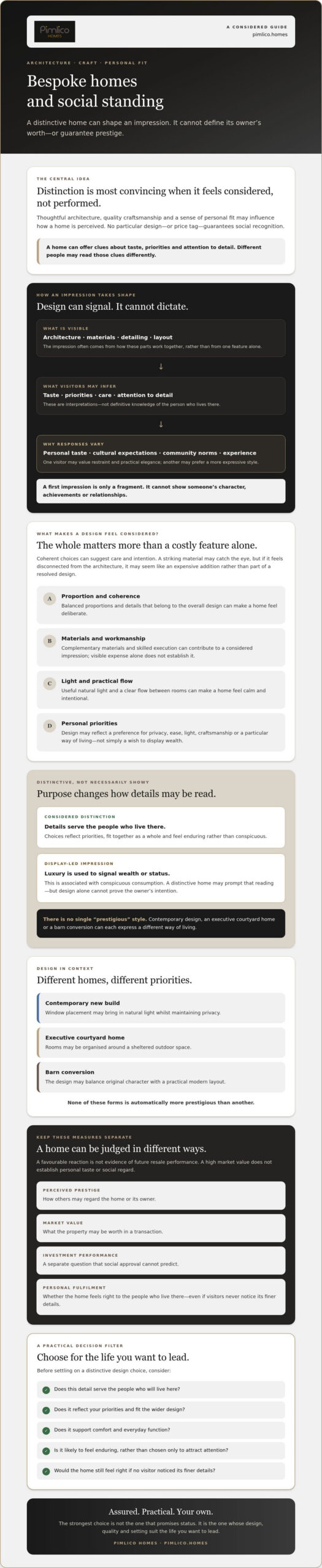
How to Choose Bespoke Design That Reflects You, Not Just Status
A considered choice begins with your priorities, not the impression a feature might make. Use these questions to test whether a distinctive detail belongs in the home you want to live in.
- 1. Define your priorities. Decide what matters most, such as privacy, natural light, space to gather or a particular relationship with the outdoors. Check whether each design choice supports those aims.
- 2. Identify lasting preferences. Think about materials, proportions and architectural details you have valued over time. Ask whether a choice reflects your taste or is driven mainly by a current trend or someone else’s expectations.
- 3. Assess daily use. Consider how rooms connect and support routines, relationships and possible future needs. Test prominent features against comfort and practical function, not just visual impact.
- 4. Consider the wider context. Ask how the design sits within its surroundings, what privacy it offers and what ongoing upkeep its materials and landscaping may require.
One useful question cuts through status pressure: would this choice still matter if no visitors ever saw it? If the answer is yes because it brings pleasure, ease or meaning to daily life, that is valuable information. Discuss practical constraints with relevant professionals before committing to decisions that affect layout, specification or maintenance.
How can buyers assess a home’s quality and fit?
Look for evidence rather than relying on prestige language. Review available plans and specifications, ask which materials and finishes are included, and inspect examples of workmanship where possible. During a viewing, notice how spaces connect, whether storage and circulation seem practical, and whether prominent details feel resolved. A premium finish may be attractive, but it does not by itself establish the quality of the work behind it.
A luxury new build buying guide can help you prepare questions and compare what is included. As you review a property, test each distinctive feature against three measures: does it feel comfortable, serve a practical purpose and seem likely to remain relevant to your life? This keeps how a bespoke home enhances social standing in perspective. Perception may matter, but the home’s everyday fit is what you will experience.
When a home aligns with your priorities, its distinction can feel assured without being designed for approval. Pimlico Homes develops and sells bespoke luxury homes, executive courtyard homes and premium barn conversions. Its developments can help you compare different design approaches and consider what suits your priorities.
Bespoke Homes and Social Standing: A Considered Route to the Right Choice
A home may influence first impressions, but it cannot determine your identity or earn respect on your behalf. Its social meaning is subjective, shaped by the people who see it and the values they bring. A more reliable basis for a confident decision is whether the architecture, specification and practical qualities suit the life you want to lead.
A bespoke home may feel like the right expression of you when its individuality supports real priorities. Perhaps the layout suits how you gather with family, the design makes the most of natural light or the materials reflect preferences you have held for years. Recognition from others may be welcome, but it is uncertain and should not be the only measure of success. Consider whether you would still value the home if outside approval played no part. Personal satisfaction is a firmer foundation.
What should you explore before taking the next step?
Review the available specification, design approach and purchase information. Clarify what is included, which details are confirmed and what questions remain. Consider how the spaces work in practice, what care the materials may require and whether the design feels right beyond the first impression. A considered decision rests on evidence as well as instinct.
If a conversion appeals to you, reading Modern Barn Conversion Interiors may help you think through how character and contemporary living can sit together. Focus on the particular home and its documented details rather than assuming every conversion, or every bespoke property, is designed or finished in the same way.
The question of how a bespoke home enhances social standing has no guaranteed answer. Design can contribute to the impression a home makes, but it cannot prescribe how others respond. Pimlico Homes develops and sells bespoke luxury homes alongside luxury detached homes, executive courtyard homes and premium barn conversions. Its portfolio offers a point of reference as you consider different approaches, without implying that every home is commissioned to order or that a particular design will be available.
Review Pimlico Homes’ residential developments and the available information to decide whether the homes and their design approach align with your priorities. A measured choice is one that feels coherent on paper, works in daily life and remains meaningful to you, regardless of the impression it makes.
Choose a Home That Feels Distinctively Yours
Architecture can influence first impressions, but no property can guarantee admiration or define its owner. Lasting distinction comes from a home where thoughtful design, craftsmanship and personal priorities sit in balance. Proportion, coherent detailing and practical spaces may communicate care without relying on display.
That is the useful perspective on how a bespoke home enhances social standing: it may shape how others perceive a home, yet those impressions remain subjective. Let comfort, function and enduring personal fit guide your decision. Social recognition is a possible by-product, not a measure of success.
Pimlico Homes develops and sells bespoke luxury homes and high-end new builds, alongside luxury detached homes, executive courtyard homes and barn conversions. Explore its residential developments to review the available information and consider whether the homes align with your priorities.
Explore Pimlico Homes’ residential developments and review the available homes to see whether their design and features suit what matters most to you.
Frequently Asked Questions
Can a bespoke home improve your social standing?
A bespoke home can influence how others perceive your taste and priorities, but it cannot guarantee greater respect or social standing. The phrase “how a bespoke home enhances social standing” describes a possible effect, not a certain outcome. Visitors may notice thoughtful architecture or careful detailing, yet their response depends on personal preference and context. A sound decision should also reflect comfort, function and how well the home suits your life.
What makes a bespoke home feel prestigious?
A sense of prestige may come from coherent architecture, well-resolved details and a specification suited to the home, rather than expense alone. Balanced proportions, considered materials and rooms that work naturally together can create an impression of care. Craftsmanship matters too, but look for evidence, such as the available specification or visible finish, instead of relying solely on descriptions like “premium” or “exclusive”.
Does a bespoke home always look more impressive than a standard home?
No. Bespoke design allows for individual choices, but it does not automatically make a home more impressive or appealing. A tailored feature may feel out of place if it conflicts with the wider architecture or setting. Equally, a home with a less individual design may be thoughtfully composed and beautifully maintained. Impressions depend on the observer’s taste, as well as proportion, materials, upkeep and how the home is experienced.
Can a bespoke home look elegant without seeming ostentatious?
Yes. Elegance can come from coherence, restraint and careful detailing, rather than features intended chiefly to attract attention. Materials that complement one another and a layout designed around daily life may feel assured without being showy. Restraint is not a universal standard of good taste, however. Some owners prefer more expressive architecture; the key is choosing a design that feels intentional and true to your priorities.
How does architecture affect the way people perceive a home?
Architecture shapes first impressions through elements such as scale, proportion, form, natural light and the relationship between spaces. A clear design approach may suggest thoughtfulness, while a dramatic feature might be read as confident by one visitor and excessive by another. The setting and expectations around privacy also influence interpretation. Architecture can offer cues about a home and its owner, but it cannot establish character or dictate how others respond.
Is choosing a bespoke home for social status a good idea?
Social recognition alone is an uncertain basis for choosing a home, because other people’s reactions cannot be controlled. Before committing to a distinctive feature, ask whether you would still value it without visitors’ approval. Consider how the home supports your routines, relationships, comfort and future needs. A bespoke property may be compelling when its design reflects your priorities; status is more wisely treated as a possible impression than a promised result.
Does a bespoke home necessarily have a higher resale value?
No. Bespoke design does not necessarily mean a higher resale value or stronger investment performance. A distinctive layout or specification may appeal to some future buyers and not others, and social approval does not predict a sale price. If resale matters to your decision, assess it separately from prestige and personal fulfilment. Review the property’s details and seek suitably qualified professional advice rather than treating bespoke design as a guarantee of financial return.
What should I look for when assessing a bespoke home?
Review the available plans, specification and purchase information, and ask which materials and finishes are included. Look at how rooms connect, how natural light enters and whether the layout supports your daily routines. Inspect visible workmanship where possible, paying attention to how finishes meet and details are resolved. Also consider privacy, ongoing maintenance and the home’s relationship with its surroundings. Judge each distinctive feature by its comfort, function and relevance to you.





