
Nearly 95 per cent of all new-build purchasers log at least one snag during their initial months of occupancy. When you have invested in a bespoke luxury property, even a minor cosmetic blemish can feel like a significant disruption to your peace of mind. It’s natural to feel a sense of frustration when responses are slow; you might even worry that these small defects hint at deeper structural concerns. You’re likely asking yourself exactly how long should a developer take to fix snags before the delay becomes unreasonable. You deserve a partner who views your home with the same meticulous care as a master craftsman.
This article provides a definitive timeline for rectification, detailing the industry standards that protect your investment. You’ll discover the 14-day and 30-day benchmarks used by elite developers to ensure every detail meets the highest specifications. We’ll outline the formal framework for prioritising repairs, offering you the clarity and reassurance needed to maintain the enduring value of your property. By understanding these professional expectations, you can move forward with the confidence that your vision of excellence is being carefully guarded.
Key Takeaways
- Identify the industry-standard benchmarks of 14 and 30 days to understand exactly how long should a developer take to fix snags depending on the urgency of the repair.
- Discern the difference between natural building settlement and genuine construction defects, ensuring your property’s structural integrity is meticulously preserved.
- Understand how the use of bespoke, high-specification materials and the scheduling of specialist contractors may influence the pace of rectification in luxury developments.
- Learn the value of a formalised snagging report and professional communication in maintaining a collaborative, productive relationship with your developer.
- Discover how a dedicated approach to aftercare protects the long-term value and aesthetic excellence of your life’s significant investment.
Understanding Industry Standard Timelines for Snagging Rectification
In the sphere of luxury residential construction, the pursuit of perfection doesn’t end at the handover. Snagging is the meticulous process of identifying minor cosmetic or functional imperfections that fall short of the intended high specification. It’s a vital phase of quality assurance, often referred to through formal punch list and snagging procedures. For a discerning homeowner, these details represent the difference between a house and a masterpiece.
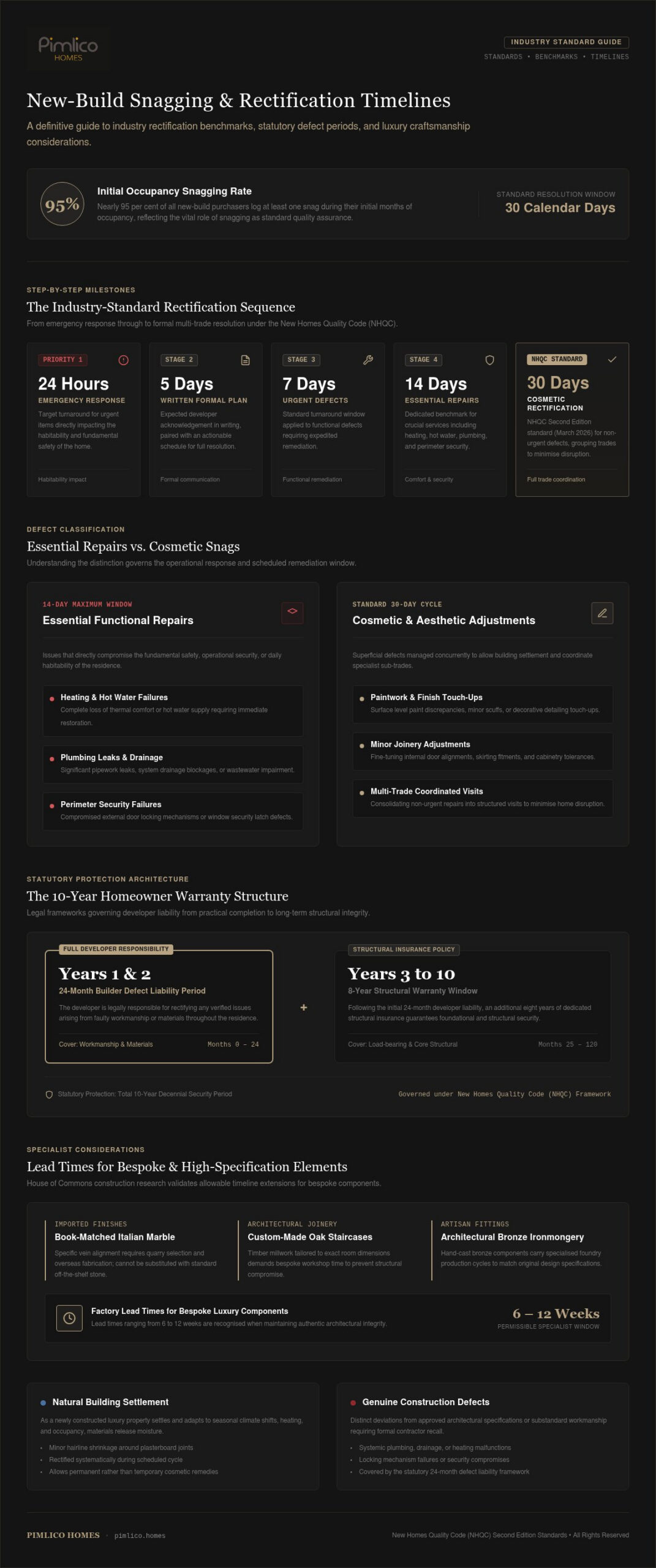
A common concern for those moving into executive properties is exactly how long should a developer take to fix snags once they’ve been identified. Under the New Homes Quality Code (NHQC) Second Edition, which came into effect on March 2, 2026, registered developers are required to resolve reported issues within 30 calendar days. This framework provides a clear structure, ensuring that your expectations for excellence are met with a professional and timely response.
Beyond the initial move-in period, your investment remains protected by a statutory two-year builder defect liability period. During these 24 months, the developer is legally responsible for rectifying any issues related to faulty workmanship or materials. This period is followed by a further eight years of structural insurance, providing a decade of security. It’s a commitment to longevity that reflects the enduring value of a premium detached home.
The 14-Day Window for Essential Repairs
When considering how long should a developer take to fix snags, it’s vital to distinguish between cosmetic flaws and essential repairs. Essential repairs are those that impact the fundamental safety, security, or comfort of your residence. This category typically includes:
- Complete loss of heating or hot water.
- Significant plumbing leaks or drainage blockages.
- Failures in external door locks or window security.
Developers prioritise these items to ensure immediate habitability, often aiming for a 24-hour turnaround on emergencies and a seven-day window for urgent functional defects. You should expect a written acknowledgement within five days and a formal plan for resolution shortly after. This swift response ensures that the sanctuary of your new home is never compromised.
The Standard 30-Day Cycle for Cosmetic Snags
Cosmetic snags, such as paint touch-ups or minor joinery adjustments, are managed with a different rhythm. Grouping these minor tasks allows the developer to organise a coordinated visit from multiple trades, minimising disruption to your daily life. This period also allows the property to settle as materials adapt to the internal climate and occupancy. The 30-day standard represents a deliberate balance between prompt service and the enduring quality of the final finish. By allowing this time, the developer ensures that rectifications are permanent rather than temporary fixes.
Factors That Influence the Speed of Luxury Home Repairs
Precision is rarely a product of haste. While industry benchmarks provide a useful guide, the reality of maintaining a high-specification residence involves complexities that standard housing projects simply do not encounter. When considering how long should a developer take to fix snags, one must account for the bespoke nature of the materials involved. A custom-made oak staircase or a specific vein of book-matched marble cannot be replaced with a trip to a local merchant. These elements require time to source, fabricate, and install to the original exacting standard.
This focus on quality over speed is supported by a deeper understanding of the legal landscape. According to House of Commons research on construction defects, the framework for developer liability is robust, yet it allows for justifiable delays when specialist components are required. This ensures that the remedy is as permanent as the build itself. At Pimlico Homes, we believe that every bespoke luxury home we create deserves a level of aftercare that mirrors its initial construction.
Material Lead Times and Specialist Craftsmanship
The timeline for rectification is often dictated by the very elements that make a property unique. Imported bespoke items, such as custom Italian marble or architectural bronze ironmongery, often carry factory lead times of six to twelve weeks. Rushing these orders or settling for a near-match would compromise the aesthetic integrity of the home. In the context of luxury barn conversions, sourcing reclaimed materials to match existing heritage features adds another layer of logistical care. True excellence lies in the seamless nature of the repair, where the fix is indistinguishable from the original artistry.
Coordination of Premium Sub-contractors
Consistency of finish is paramount. We believe in honouring the original vision by using the same master craftsmen who initially worked on the property. These specialists understand the specific nuances of your home’s design and systems. Coordinating their schedules requires a methodical approach to ensure minimal disruption to your daily life. This nuanced approach explains why the question of how long should a developer take to fix snags often depends on the specificity of the finish. A “right first time” philosophy is always preferable to the sporadic, low-quality visits associated with volume builders.
External factors also play a significant role. Certain tasks, such as applying specialist render or finishing delicate landscaping, are weather-dependent. Attempting these repairs in damp or freezing conditions would lead to premature failure. A patient, weather-aligned schedule protects the long-term value of your investment, ensuring that every detail remains as resilient as it is beautiful.
Categorising Snags: From Cosmetic Imperfections to Essential Rectification
Precision is a hallmark of excellence. It demands a discerning eye and a structured approach to quality control. When you take possession of a high-specification residence, it’s vital to distinguish between the natural settling of a new structure and genuine construction defects. Every building breathes. As materials such as timber and plaster adjust to their new environment, minor hairline cracks may appear. These are rarely a cause for alarm; they are simply a part of the house’s journey toward permanence.
A recent Competition and Markets Authority housebuilding market study highlighted fundamental concerns regarding build quality across the industry, reinforcing the need for clear communication between developers and homeowners. By categorising your observations, you help the developer organise their team with greater efficiency. This clarity is essential when determining how long should a developer take to fix snags, as it allows for the triage of emergency repairs whilst scheduling cosmetic adjustments for a single, coordinated visit.
Identifying Cosmetic Snags and Aesthetic Adjustments
Cosmetic snags are the small, surface-level imperfections that don’t impact the property’s function but do affect its visual perfection. Common examples include paint splashes on skirting boards, minor plaster scuffs, or slightly misaligned trim. To maintain a fair standard, the industry often employs the “two-metre rule”. This involves inspecting surfaces in natural daylight from a distance of two metres. If a blemish isn’t visible under these conditions, it’s typically considered within acceptable tolerances. However, in a bespoke home, the finish is the signature of the craftsman. Ensuring these details are flawless is critical for maintaining the long-term resale value of new build homes, where first impressions remain paramount.
Prioritising Functional and Structural Rectifications
Functional defects require a more immediate response. These issues impact the building envelope or the essential systems that make modern life seamless. You should prioritise any concerns regarding the integrity of windows, external doors, or the roof structure. In an era of sophisticated architecture, this also extends to the calibration of smart home technology and energy-efficient climate systems. These installations must be perfectly balanced to deliver the comfort expected of luxury detached living. If you encounter a defect that seems “hidden” or systemic, such as a recurring damp patch or electrical fault, it may require a formal survey rather than a simple snagging list. Understanding these distinctions ensures that your investment remains a secure and beautiful sanctuary for years to come.
Best Practices for Managing the Snagging Process with Your Developer
A collaborative spirit is the foundation of a successful handover. While it’s natural to feel protective of your significant investment, viewing your developer as a partner rather than an adversary creates a smoother path to perfection. This shared commitment to excellence defines the luxury experience. When you approach the rectification phase with professional clarity, you empower the craftsmen to deliver their best work. It’s about maintaining a standard that reflects the prestige of the property itself.
Clear communication is the most effective tool when determining how long should a developer take to fix snags. By establishing a structured dialogue from the outset, you remove the ambiguity that often leads to frustration. This methodical approach ensures that every detail, no matter how small, is addressed with the care it deserves. Our approach at Pimlico Homes is built on this transparency, ensuring every bespoke luxury home we deliver is supported by a meticulous aftercare programme.
Organising a Comprehensive and Professional Snagging List
Precision in reporting leads to precision in repair. When documenting issues, you should provide clear locations and high-resolution photographs for every item. Instead of a vague note about a scuff, specify “Master Suite, North Wall, lower skirting.” Categorising these items by trade—such as plumbing, joinery, or decorating—allows the developer to deploy the correct specialists immediately. Industry observations suggest that a trade-categorised list is often resolved significantly more efficiently than a disorganised one. This level of detail respects the time of the craftsmen and ensures that the right tools are brought to the site on the first visit.
Formal Documentation and Agreed Timelines
Verbal agreements can lead to misunderstandings. You should always seek written confirmation for all agreed repair dates and scopes of work. Many premium developers now use digital portals or shared spreadsheets to track progress in real-time, providing a transparent record of every fix. If a developer consistently misses agreed deadlines, refer back to your formal documentation. Having a timestamped record of communication is vital if you ever need to escalate a concern. This paper trail protects the integrity of your home and ensures that your expectations for a high-specification finish are met.
Finally, remember the importance of the end-of-defects inspection. This typically occurs at the 12 or 24-month mark, allowing the house to have experienced a full cycle of seasons. This is the moment to address any final settling issues or latent defects that only become apparent over time. It’s the final step in ensuring your residence remains a masterpiece of enduring quality.
The Pimlico Homes Standard: Excellence Beyond the Handover
Legacy defines us. With over 25 years of industry experience, Pimlico Homes understands that the true measure of a developer is found in the years following the keys’ handover. We don’t view our properties as mere structures; they’re significant life investments that demand a reliable guardian of quality. This perspective transforms the aftercare phase from a logistical necessity into a final act of craftsmanship. While the broader industry debates how long should a developer take to fix snags, our focus remains on the permanence and artistry of the solution.
Expertise ensures security. Our dedicated site managers oversee every stage of the snagging phase, acting as a bridge between your vision and our master craftsmen. They manage the technical nuances that protect the long-term value of your executive courtyard home, including:
- Rigorous quality audits conducted well before the final handover.
- Direct coordination with specialist sub-contractors for bespoke finishes.
- Transparent progress tracking for every functional and cosmetic adjustment.
We believe that excellence is a continuous process, not a static destination. This methodical oversight ensures that every detail—from the weight of a bespoke door to the precision of a smart home sensor—remains flawless for the duration of your occupancy.
A Meticulous Approach to High-Specification Finishes
Anticipation is our standard. We strive for a “zero-snag” move-in experience, conducting rigorous internal inspections long before you cross the threshold. For our bespoke barn conversions, this process is particularly intricate, as heritage materials require a specialised understanding of their unique characteristics and maintenance needs. By identifying potential issues early, we reduce the need for post-handover disruption. Every element is cross-referenced against our luxury new build warranty, providing you with total peace of mind that your home is built to endure.
Dedicated Support for Discerning Homeowners
The Pimlico promise is built on transparent communication and expert rectification. We understand that your time is as valuable as your property. When questions arise regarding how long should a developer take to fix snags, our team provides clear, definitive timelines that respect your schedule. We invite you to explore our executive courtyard developments to see how this commitment to quality manifests in every project we undertake.
Excellence is within reach. Whether you’re seeking a bespoke detached residence or a uniquely restored heritage space, our team is ready to guide you through a seamless journey from vision to reality. Contact Pimlico Homes today to begin a conversation about your future home.
Securing the Legacy of Your Bespoke Residence
Your journey into a high-specification home should be defined by the joy of discovery, not the frustration of delay. By understanding the 14-day window for essential repairs and the 30-day benchmark for cosmetic adjustments, you gain the clarity needed to protect your investment. You now have a practical framework for categorising defects and maintaining a professional dialogue that ensures your vision remains uncompromised. While the industry provides a guide for how long should a developer take to fix snags, a premium partner goes further by treating every rectification as an act of artistry.
Pimlico Homes brings 25 years of luxury development experience to every project. Whether you’re settling into a high-specification executive home or one of our bespoke barn conversions, our dedicated aftercare ensures your property remains a masterpiece. We invite you to discover the Pimlico Homes standard of excellence and see how we prioritise the long-term satisfaction of our clients. Your home is more than a residence; it’s a sanctuary built to endure.
Frequently Asked Questions
Is there a legal time limit for a developer to fix snags?
Under the New Homes Quality Code, registered developers are required to resolve reported snags within 30 calendar days. Urgent functional defects should be addressed much faster, typically within a week, whilst emergencies require a 24-hour response. You should receive a formal path to resolution notice within 10 days of your report. This structured timeline provides a clear answer to how long should a developer take to fix snags while ensuring quality isn’t compromised.
Can a developer refuse to fix certain snags?
A developer can decline a request if the item falls within acceptable industry tolerances. For example, hairline settlement cracks under 2mm are often considered natural building behaviour. Cosmetic marks only visible under specific lighting or from further than two metres may also be refused. At the executive level, we pride ourselves on exceeding these minimum standards to protect the prestige and artistry of your significant life investment.
Should I move into my new home before the snags are fixed?
Moving in before every minor blemish is rectified is standard practice. Most developers aim for a zero-snag handover, yet the settling process often reveals new items once the heating is active. You must ensure that all essential functional systems are fully operational before taking possession. It’s often more efficient to group non-urgent cosmetic adjustments into a single, coordinated visit once you’ve lived in the property for several weeks.
What happens if a snag reappears after it has been repaired?
Reappearing issues are covered under your two-year builder liability period. If a previous repair fails or a latent defect emerges, the developer is contractually obligated to return and rectify the matter at no cost to you. This protection ensures that the structural integrity and aesthetic excellence of your residence are maintained. Consistent failures in repair should be documented formally to ensure the developer remains accountable for a permanent, high-quality solution.
How many snags are considered “normal” in a luxury new build?
Industry data indicates that over 93 per cent of new-build buyers log at least one snag. Whilst the volume of defects can vary, luxury properties demand a much higher level of scrutiny. It’s not uncommon for a professional report to identify several minor cosmetic adjustments. The focus should always be on the quality of the rectification rather than the quantity of the items, ensuring the home meets its original high-specification design.
Does the developer have to fix snags found after the first two years?
Builder liability typically concludes at the two-year mark. After this point, your protection shifts to a structural warranty provider for the remaining eight years of the ten-year policy. This later coverage is strictly limited to major structural failures, such as foundations or load-bearing walls, rather than cosmetic snags. Understanding this transition helps you prioritise reporting any minor imperfections well before the initial 24-month period expires to ensure they are covered.
Can I withhold payment until all snags are completed?
Withholding payment at legal completion is rarely permitted under standard residential contracts. Attempting to do so could lead to a breach of contract and significant financial penalties. Instead, the New Homes Quality Code provides a robust framework for redress if repairs are delayed. This system ensures you have a clear understanding of how long should a developer take to fix snags without the legal complications of delaying the final settlement of your property.
What is the difference between a snagging list and a home survey?
A snagging list is a detailed inventory of cosmetic and minor functional imperfections found in a new build. It focuses on the quality of finish and adherence to specifications. In contrast, a home survey is a broader assessment of structural health and market value. While a surveyor looks for major risks, a snagging inspector focuses on the intricate details that ensure your executive home feels like a completed masterpiece.





